
Non-Stick Pan Safety Checker
Assess Your Pan's Safety
Answer these questions to determine if your non-stick pan is safe to use.
For years, non stick pans were the go-to for easy cleanup and low-fat cooking. But then came the headlines: non stick pans are toxic. Cancer links. Chemical leaks. Environmental disasters. You started wondering-should you throw out your favorite skillet? The truth isn’t as simple as yes or no. In 2025, the answer depends on what kind of non stick pan you own, how you use it, and what’s really in the coating.
What changed with non stick coatings?
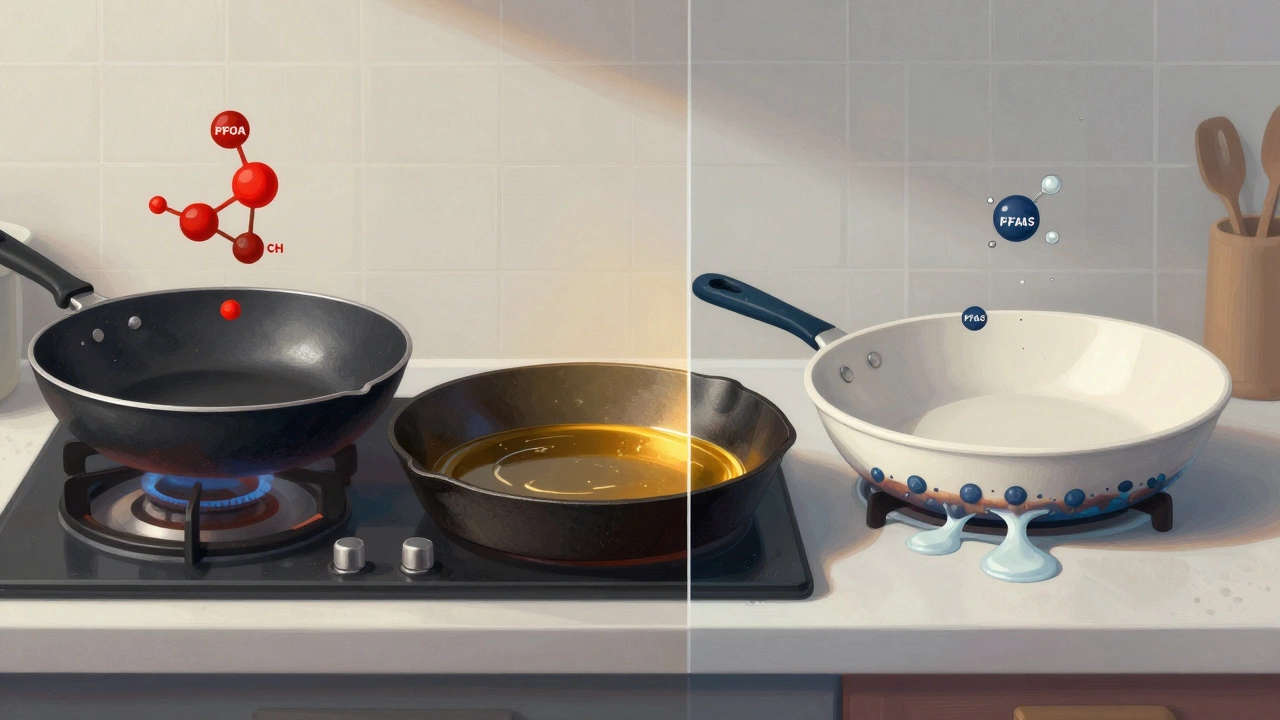
Back in the 1990s and early 2000s, most non stick pans used PTFE (polytetrafluoroethylene), better known by the brand name Teflon. The problem wasn’t the PTFE itself-it’s stable and safe when used correctly. The real issue was PFOA (perfluorooctanoic acid), a chemical used to make PTFE stick to metal pans. PFOA doesn’t break down in the environment. It builds up in bloodstreams. Studies linked it to thyroid disease, kidney cancer, and high cholesterol.
By 2015, major manufacturers like DuPont and 3M stopped using PFOA in the U.S. and Europe. Today, virtually every brand selling non stick pans in North America and the EU claims to be PFOA-free. That’s a big win. But here’s what most people don’t realize: just because it’s labeled "PFOA-free" doesn’t mean it’s free of all harmful chemicals.
What’s in your pan now?
Modern non stick coatings mostly use newer PFAS chemicals like PFBS or GenX. These were designed to replace PFOA, but they’re still part of the PFAS family-"forever chemicals" that don’t degrade. The EPA has flagged several of these as potential health risks. The problem? There’s no federal requirement to list the exact chemicals on cookware packaging. You’ll see "PFOA-free" on the box, but nothing about PFBS, PFHxS, or other substitutes.
Independent testing by the Environmental Working Group in 2023 found that 7 out of 10 popular non stick pans still released PFAS chemicals when heated above 500°F. That’s not a crazy-high temperature. A dry pan on medium-high heat can hit that in under five minutes. If you’ve ever left a pan on the stove while answering the door? You’ve likely exposed yourself.
Ceramic non stick: safer or just marketing?
Ceramic-coated pans exploded in popularity as the "healthy" alternative. They’re marketed as being made from sand, free of PFAS, and eco-friendly. But here’s the catch: many ceramic coatings still contain PFAS to improve durability. A 2024 study by the University of California tested 15 ceramic pans. Half showed detectable levels of fluorine-a marker for PFAS-on the surface. Some even released more PFAS than older Teflon pans when scratched.
And ceramic coatings wear out fast. After 6-12 months of regular use, the non stick surface starts flaking. That’s not just messy-it’s risky. If you’re swallowing tiny bits of coating, you’re ingesting whatever chemicals are in it. There’s no long-term data on what happens when you eat ceramic particles mixed with PFAS. But we do know one thing: your body doesn’t like foreign particles.
How heat and scratches change the game
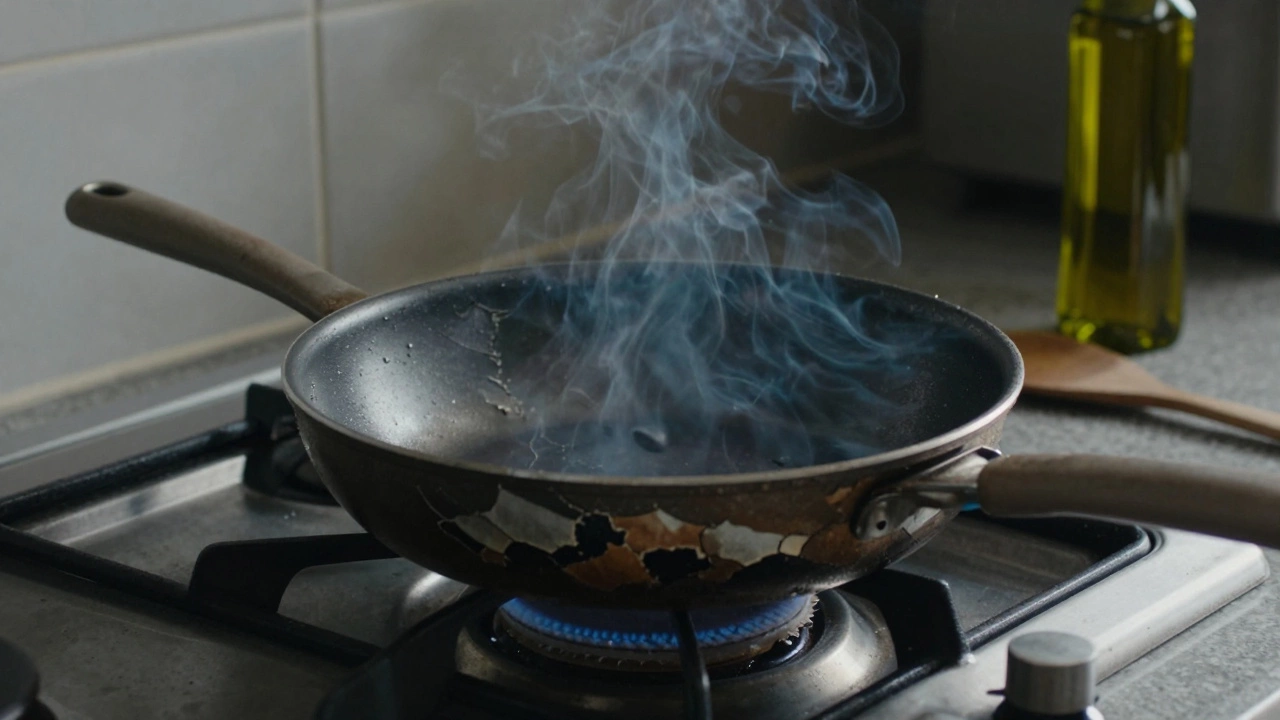
Even the safest non stick pan becomes dangerous if misused. The biggest risk isn’t the coating-it’s overheating. When any non stick surface hits 500°F or higher, it starts to break down and release toxic fumes. These fumes can cause flu-like symptoms in humans (called "polymer fume fever") and are deadly to pet birds.
Here’s what actually causes damage:
- Preheating an empty pan on high heat
- Using metal utensils that scratch the surface
- Cleaning with steel wool or abrasive pads
- Putting the pan in the dishwasher
One 2022 experiment by the Consumer Reports lab showed that a pan labeled "non stick" released measurable levels of PFAS after just 30 dishwasher cycles. That’s less than a year of normal use. If you’re using your pan the way most people do-quick washes, metal spatulas, high heat-you’re accelerating its breakdown.
What about newer technologies?
Some brands are trying to fix the problem. Brands like GreenPan and Caraway now use a silicone-based ceramic coating called "Thermolon." Independent labs have tested it and found no PFAS in the material itself. But here’s the twist: the base layer-the part that sticks to the aluminum-still contains trace amounts of PFAS in some models. The coating on top may be clean, but the bond underneath isn’t.
Another option is cast iron or carbon steel with a natural seasoning. These aren’t "non stick" by design-they become non stick over time from layers of oil. No chemicals. No coatings. No worries about fumes. And they last decades. If you’re willing to learn how to season and care for them, they’re the safest long-term choice.
What should you do right now?
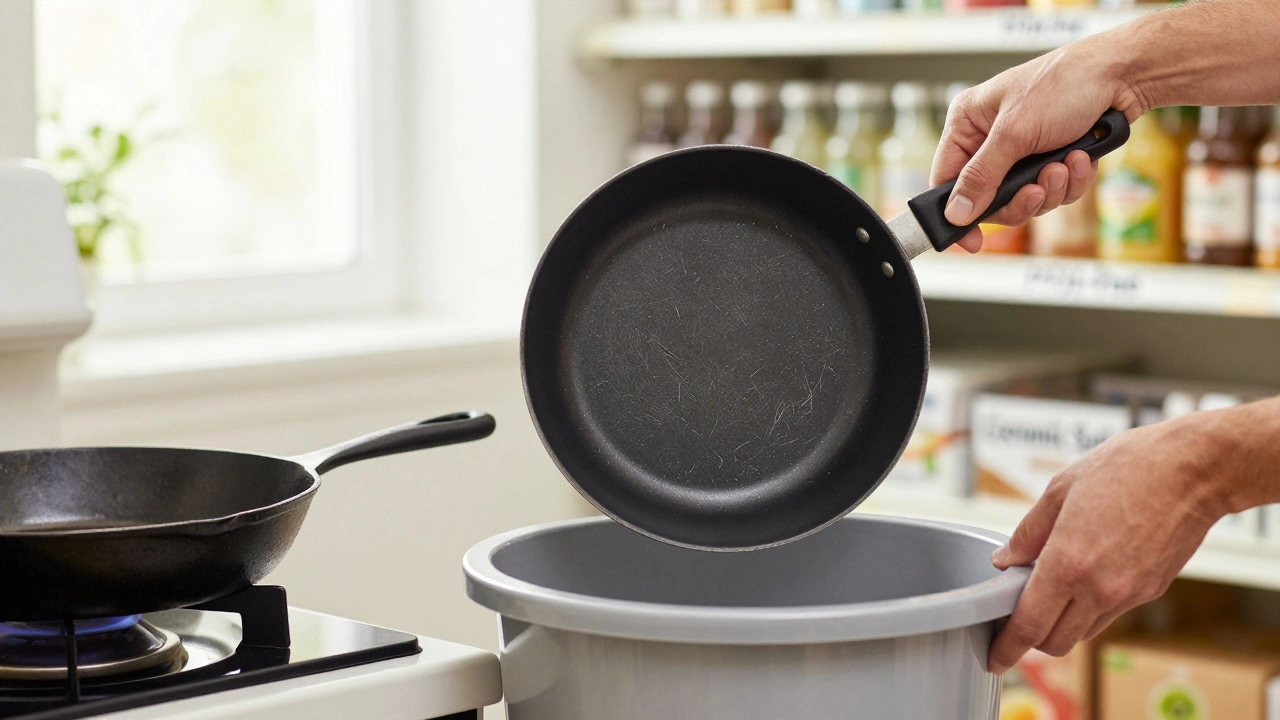
You don’t need to trash every non stick pan you own. But you do need to change how you use them.
- Never preheat an empty pan. Always add oil or food first.
- Keep heat at medium or lower. If smoke appears, turn it off.
- Use wooden, silicone, or plastic utensils. No metal.
- Hand wash with soft sponges. Never use steel wool.
- Replace pans if the coating is scratched, peeling, or discolored.
- Don’t use non stick pans for searing, broiling, or baking at high temps.
If you’re replacing your pans, look for brands that publish third-party lab results showing PFAS-free status. Ask for test reports-not just marketing claims. Brands like Xtrema, Le Creuset’s enamel-coated cast iron, and some stainless steel lines with textured surfaces are good alternatives.
Is it worth the hassle?
Let’s be real: non stick pans are convenient. Scrambled eggs slide out. Pancakes don’t stick. Cleanup takes 30 seconds. But convenience has a cost. If you’re cooking for kids, pregnant family members, or elderly relatives, the risk isn’t worth it. PFAS exposure accumulates over time. Even small daily doses add up.
Stainless steel and cast iron take a little more effort. You need to preheat properly, use enough oil, and be patient. But once you get the hang of it, you’ll realize: your food tastes better. You don’t have to worry about chemicals. And your pan will outlive your kitchen.
The real question isn’t whether non stick pans are still unhealthy. It’s whether you’re okay with taking a small risk every time you cook. For most people, the answer is no. And that’s why sales of traditional non stick pans dropped 22% in the U.S. between 2023 and 2025, while cast iron and stainless steel sales jumped 41%.
Final verdict
Non stick pans aren’t automatically toxic-but they’re not safe either. The coatings have changed, but the risks haven’t disappeared. If you use them carefully, they can last a few more years. But if you want true peace of mind, switch to materials that don’t rely on synthetic chemicals to work. Your body will thank you.
Are all non stick pans dangerous?
No, not all are dangerous-but most still contain PFAS chemicals, even if labeled "PFOA-free." The real risk comes from overheating, scratching, or using old, worn pans. Newer ceramic and silicone-based coatings are safer, but many still have hidden PFAS in their base layers. Always check for third-party lab reports before buying.
Can I still use my old Teflon pan?
If it’s scratched, peeling, or over 5 years old, replace it. Even if it was made before PFOA was banned, older pans are more likely to flake and release particles. If it’s in good condition and you only use it on low heat with wooden utensils, you can keep it for now-but don’t expect it to last much longer.
Is ceramic cookware really safer?
Some ceramic pans are safer, but many still contain PFAS. A 2024 study found that half of ceramic-coated pans tested had detectable fluorine, indicating PFAS presence. The coating may be clean, but the bond underneath often isn’t. Look for brands that publish independent PFAS-free test results-not just "natural" or "eco-friendly" labels.
What’s the safest cookware to use?
Cast iron, carbon steel, and stainless steel are the safest options. They don’t rely on chemical coatings. Cast iron builds a natural non stick layer over time with oil. Stainless steel works well with enough fat and proper preheating. Both last decades, improve with use, and don’t release toxins-even at high heat.
How do I know if my pan is releasing toxic fumes?
If you see smoke rising from your pan, it’s already too hot. That’s the first sign of coating breakdown. You might also notice a strange odor-like burning plastic. If you or your pets feel dizzy, nauseous, or have trouble breathing after cooking, get out of the kitchen and open windows. These are signs of polymer fume fever, caused by overheated non stick surfaces.