
Curtain & Couch Balance Calculator
Recommendation:
Why It Works:
Staring at a wall of fabric swatches while your expensive sofa sits in the corner can feel like a trap. You’ve heard the rule: curtains should be lighter than the walls. But what about that massive chunk of furniture dominating the room? The question isn’t just about aesthetics; it’s about balance. If you get the relationship between your curtains is window treatments used to control light and add style to a room and your couch is a large upholstered seat for more than one person wrong, the room will feel either heavy and cave-like or floaty and unfinished.
The short answer? There is no strict law saying curtains must be lighter or darker than your couch. In fact, the most successful designs often break this binary choice entirely. Instead of focusing on lightness versus darkness, focus on weight, texture, and visual hierarchy. Your goal is to create a cohesive look where neither element fights for attention unnecessarily.
The Weight Rule: Visual Mass Matters More Than Shade
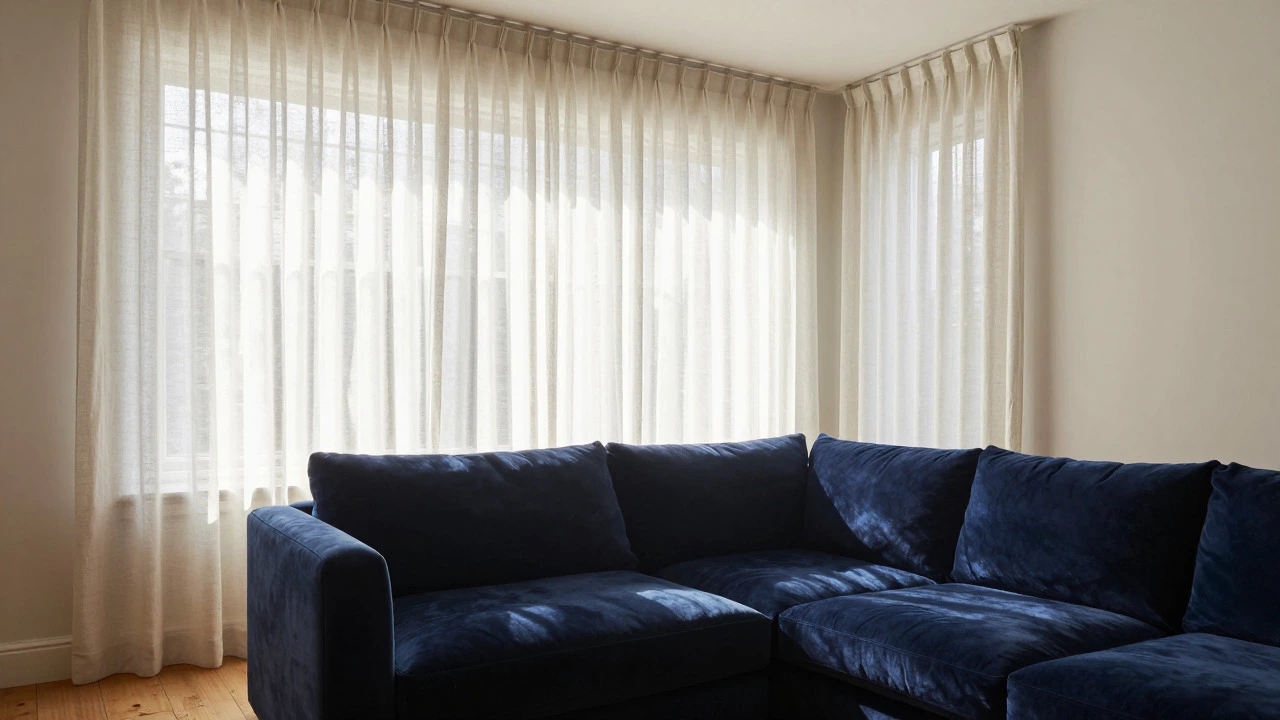
When designers talk about "weight," they aren’t talking about pounds. They are talking about how much visual space an object takes up. A dark, velvet sectional has high visual weight. A sheer, white linen drape has low visual weight. If you pair a heavy, dark couch with equally heavy, dark curtains, you risk boxing yourself in. This is especially true in smaller rooms or spaces with limited natural light.
Think of your room like a scale. If your couch is the anchor-solid, dark, and imposing-you need something to lift the other side. Lighter curtains act as a counterbalance. They draw the eye upward toward the windows and the sky, making the ceiling feel higher and the room feel airier. Conversely, if you have a light-colored, minimalist sofa, pairing it with very light curtains might make the room feel sterile. Here, slightly darker or textured curtains add the necessary depth without overwhelming the space.
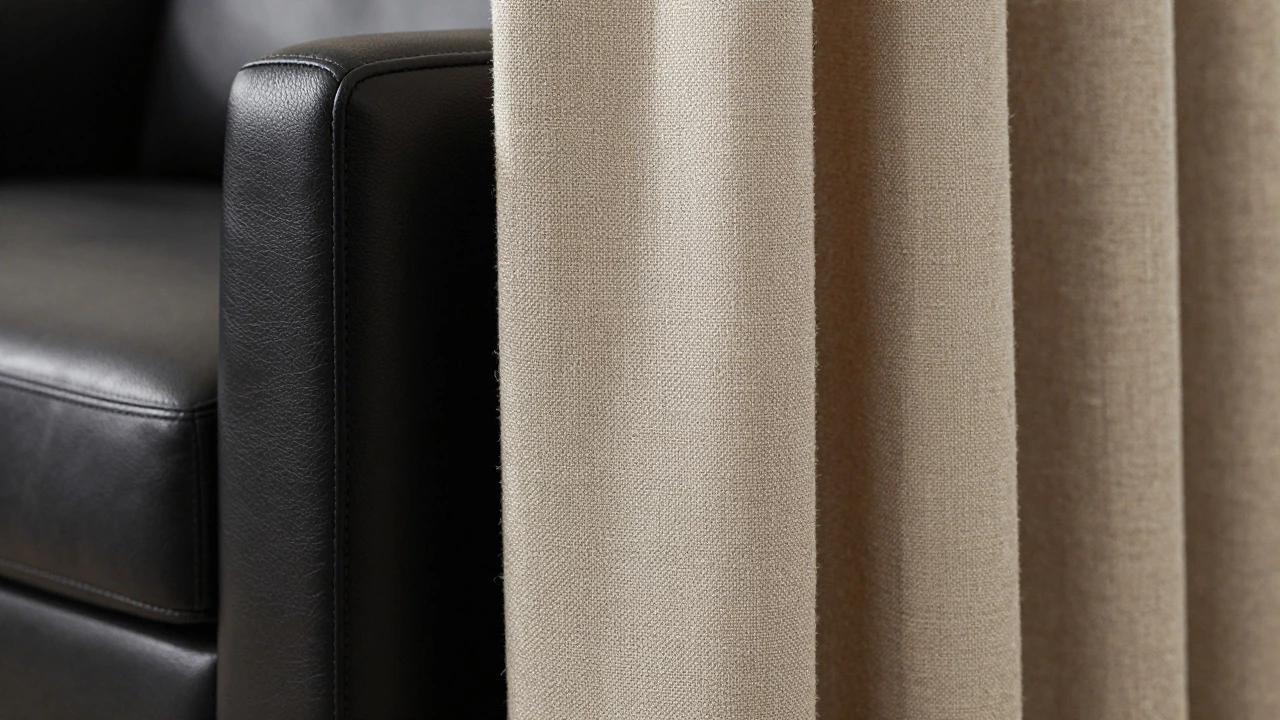
Consider the material. A thick, opaque blackout curtain feels heavier than a thin voile curtain, even if both are the same color. So, a dark gray cotton curtain might actually work better with a black leather sofa than a dark gray silk blend would, because the matte finish reduces visual density.
The Safe Bet: Matching the Neutrals
If you’re unsure where to start, the safest route is to ignore the couch entirely and look at your walls. The traditional design guideline suggests that curtains should be within two shades of your wall color. This creates a seamless backdrop that allows your furniture to stand out.
Let’s say your walls are off-white and your couch is a deep navy blue. If you choose navy curtains, you’re creating a bold, moody statement. If you choose off-white curtains, you’re keeping the focus on the architecture and the window frames. Both work, but they achieve different vibes. The off-white option makes the navy couch pop as the star of the show. The navy option creates a cozy, enveloping atmosphere.
Here is a quick breakdown of how different combinations affect the mood:
- Light Curtains + Dark Couch: Creates contrast and highlights the furniture. Best for small rooms or north-facing rooms with less light.
- Dark Curtains + Light Couch: Adds drama and definition. Good for large rooms with lots of natural light that needs grounding.
- Same Color (Monochromatic): Creates a sophisticated, unified look. Requires mixing textures (e.g., wool couch + linen curtains) to avoid looking flat.
- Contrasting Colors: High energy and eclectic. Works best when the colors complement each other on the color wheel, rather than clashing.
Texture Over Tone: Why Fabric Choice Changes Everything
You can have a dark couch and dark curtains, and it won’t look gloomy if the textures differ significantly. This is where many people go wrong-they match the color perfectly but forget about the surface quality. If your couch is smooth leather and your curtains are also smooth polyester, the room will feel cheap and monotonous.
Instead, mix it up. Pair a sleek, modern leather sofa with rough-hewn linen curtains. Or match a plush, bouclé armchair with crisp, tailored cotton drapes. The variation in how light hits these surfaces breaks up the monotony. Even if the hex codes are identical, the human eye perceives them as distinct layers. This technique adds richness and complexity without needing to introduce new colors.
In Bristol, where we deal with plenty of grey skies, I often see clients opt for warm, textured neutrals. A cream-colored chenille couch paired with oatmeal-colored jute-blend curtains feels inviting despite the lack of sunlight. The warmth comes from the fiber, not just the hue.
Using Patterns to Bridge the Gap
If solid colors feel too risky, patterns offer a middle ground. A patterned curtain contains multiple colors, which means it doesn’t have to be strictly "lighter" or "darker" than your couch to work. It just needs to share a common thread.
Look at your couch cushions or throw pillows. Is there a subtle stripe or a hint of green in the weave? Choose a curtain pattern that picks up that secondary color. For example, if you have a beige couch with olive-green piping, a white curtain with an olive leaf print ties everything together. The dominant white keeps the window area bright, while the olive connects to the furniture.
This approach works particularly well with statement sofas. If your couch is a vibrant red, don’t panic and reach for plain white curtains. Instead, look for a subtle geometric pattern that includes red accents. This creates a dialogue between the window treatment and the seating area, making the design feel intentional rather than accidental.
| Couch Type | Recommended Curtain Style | Why It Works |
|---|---|---|
| Dark Velvet / Leather | Light Linen / Cotton | Balances visual weight; prevents room from feeling closed in. |
| Light Pastel / White | Medium Grey / Taupe | Adds necessary depth and structure to airy spaces. |
| Bold Patterned | Solid Neutral (matching base tone) | Calms the visual noise; lets the couch be the focal point. |
| Solid Neutral (Beige/Grey) | Textured or Subtle Pattern | Introduces interest without clashing with the safe base. |
Don't Forget the Hardware
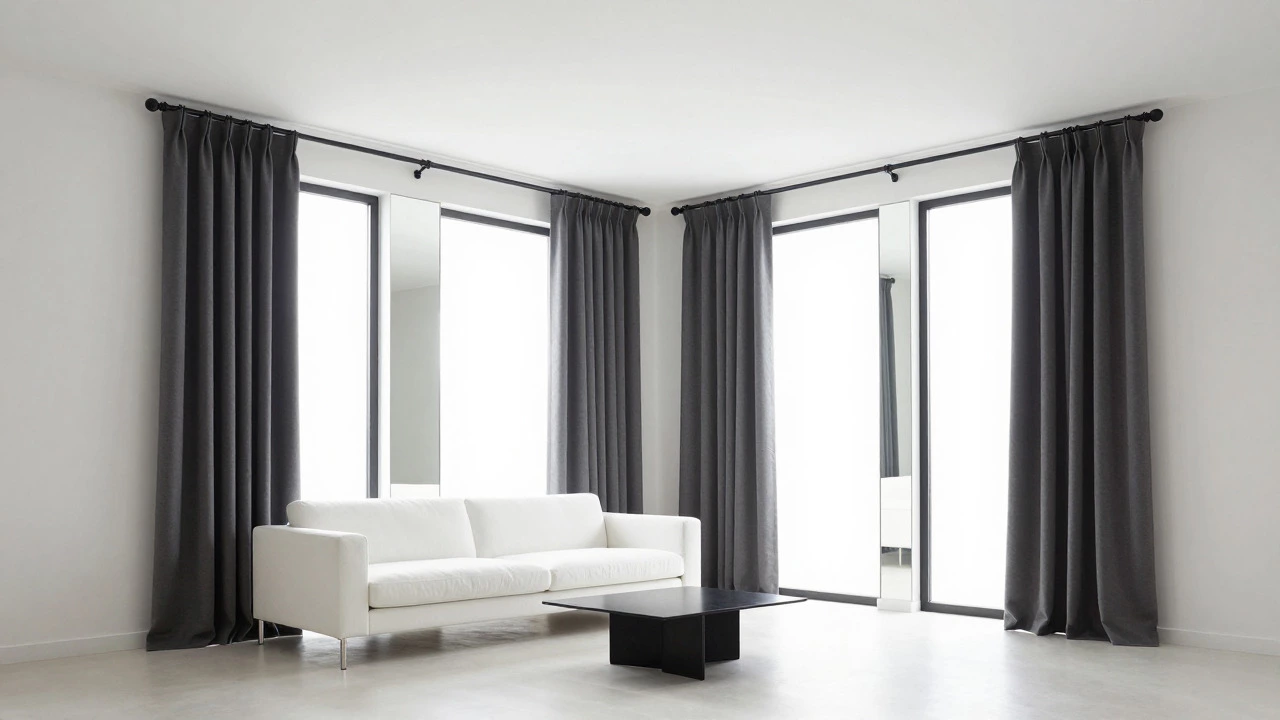
We often obsess over the fabric and forget the metal holding it up. Your curtain rod plays a surprising role in the overall balance. If you have a heavy, dark couch and light curtains, a thick, black metal rod can help ground the window treatment, visually connecting it to the darker furniture below. A delicate brass rod might get lost against a dark background, making the curtains look like an afterthought.
Match the finish of your rod to other metals in the room, such as lamp bases, table legs, or hardware on the coffee table. This creates a triangular connection across the room: couch to table to window. It’s a subtle trick that makes the space feel curated and complete.
Practical Considerations: Light Control and Privacy
Aesthetics aside, function dictates form. If your bedroom faces a busy street, you might need blackout curtains regardless of your couch color. In this case, accept that the window will be a dark zone. To prevent the room from feeling like a cave, keep the rest of the palette light. Use light rugs, light walls, and reflective surfaces like mirrors to bounce whatever light you do get around the room.
Conversely, if you have a south-facing living room flooded with light, sheer curtains might suffice. These allow light to filter through while providing privacy. In this scenario, the brightness of the room naturally balances any dark furniture, so you don’t need to worry as much about the "light vs. dark" rule.
Testing Before You Commit
Before buying ten yards of fabric, do a test. Hold the curtain sample next to your couch in the actual room. Do it at different times of day. Morning light looks different from evening artificial light. A fabric that looks grey in the store might look blue under your warm tungsten bulbs.
Also, consider the height. Hang your curtains as high as possible, ideally near the ceiling cornice. This draws the eye up and makes the room feel taller. Long, floor-grazing curtains add elegance and length, which helps offset bulky furniture. Short, sill-length curtains can make a room look cramped and cut off the vertical flow.
Ultimately, trust your gut. Design rules are guidelines, not commandments. If you love the way dark charcoal curtains look against your emerald green velvet sofa, do it. Just ensure you’ve balanced it with enough light elsewhere-perhaps through art, lighting fixtures, or a light-colored rug-to keep the space feeling open and breathable.
Should curtains match the couch exactly?
Not necessarily. Exact matches can look dated or overly uniform unless you are aiming for a specific hotel-suite aesthetic. It is usually better to coordinate by choosing complementary tones or contrasting textures. For example, a navy couch pairs beautifully with cream curtains, creating a classic nautical or coastal vibe without being matchy-matchy.
Can I have darker curtains than my couch?
Yes, absolutely. Darker curtains work well if your room is large, has high ceilings, or receives ample natural light. They add drama and coziness. However, in small or dark rooms, very dark curtains can make the space feel smaller and more enclosed. If you choose dark curtains with a light couch, ensure the walls are light to maintain balance.
What if my couch is a bright color?
If your couch is a bold statement piece (like red, yellow, or electric blue), keep your curtains neutral. Whites, creams, greys, or taupes work best. This allows the couch to be the focal point without competition. Alternatively, pick a secondary color from a patterned cushion on the couch to use in a subtle striped or geometric curtain pattern.
Do curtain rods affect the color balance?
Yes. The hardware acts as a frame for your window treatment. A thick, dark rod can anchor light curtains, making them feel more substantial. A thin, metallic rod can make dark curtains feel lighter and more elegant. Always try to match the rod finish to other metal accents in the room for a cohesive look.
How do I choose curtains for a small living room?
In small rooms, lighter colored curtains generally help the space feel larger and airier. Hang them high and wide to maximize the appearance of window size. Avoid heavy, dark fabrics that absorb light. Opt for lightweight materials like linen or cotton blends that let light filter through during the day.