
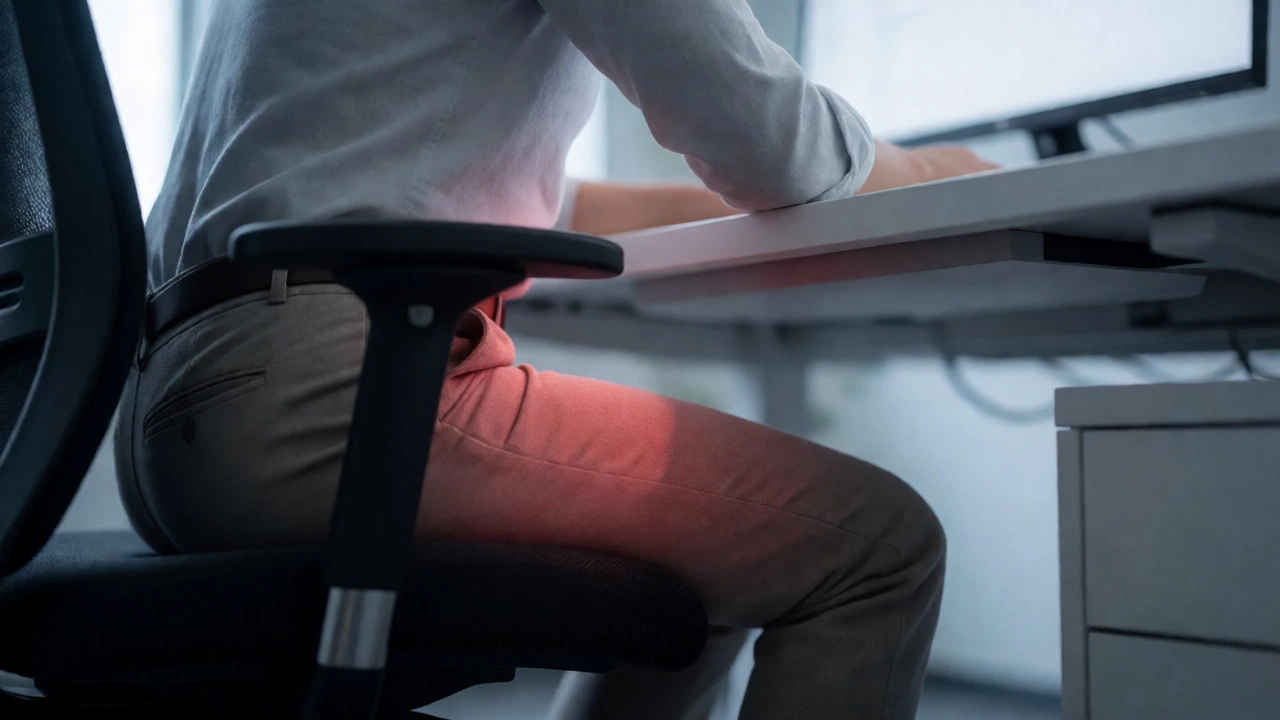
Sciatica Cushion Selector
Not sure which cushion will help? Sciatica isn't one-size-fits-all. Answer these two questions to find the right mechanical support for your situation.
You’re sitting at your desk, shifting your weight from one hip to the other for the tenth time in an hour. A sharp, electric jolt shoots down your leg, reminding you that sciatica is not just a buzzword-it’s a daily battle for millions of people. You’ve probably seen those wedge-shaped foam blocks or U-shaped donuts online, promising instant relief. But do they actually fix the problem, or are they just expensive pillows?
The short answer is: it depends entirely on why your sciatic nerve is angry. These cushions aren’t magic wands that dissolve herniated discs. Instead, they act as mechanical tools to change how your spine loads while you sit. If used correctly, they can significantly reduce pressure on the lower back and hips. If used incorrectly, they might make things worse by forcing your body into unnatural angles. Let’s break down exactly what these devices do, who they help, and when you should keep your money in your pocket.
What Actually Causes That Shooting Pain?
To understand if a cushion works, you first need to know what you’re treating. Sciatica isn’t a condition itself; it’s a symptom. It happens when the sciatic nerve, which runs from your lower back down through your hips and buttocks and into each leg, gets compressed or irritated. This compression usually stems from a few common culprits:
- Herniated Discs: The soft center of a spinal disc pushes out through a crack in the tougher exterior casing.
- Piriformis Syndrome: The piriformis muscle, located deep in the buttock, spasms or tightens and compresses the sciatic nerve.
- Spinal Stenosis: Narrowing of the spinal canal puts pressure on the nerves.
- Spondylolisthesis: One vertebra slips forward over another.
Most office workers suffer from postural issues that exacerbate these conditions. Sitting for long periods increases intradiscal pressure-the force inside your spinal discs-by up to 40% compared to standing. When you slouch, you round your lumbar spine, pushing the disc material backward toward the nerve roots. This is where a well-designed seat insert comes into play.
The Mechanics of Relief: How Wedges and Donuts Differ
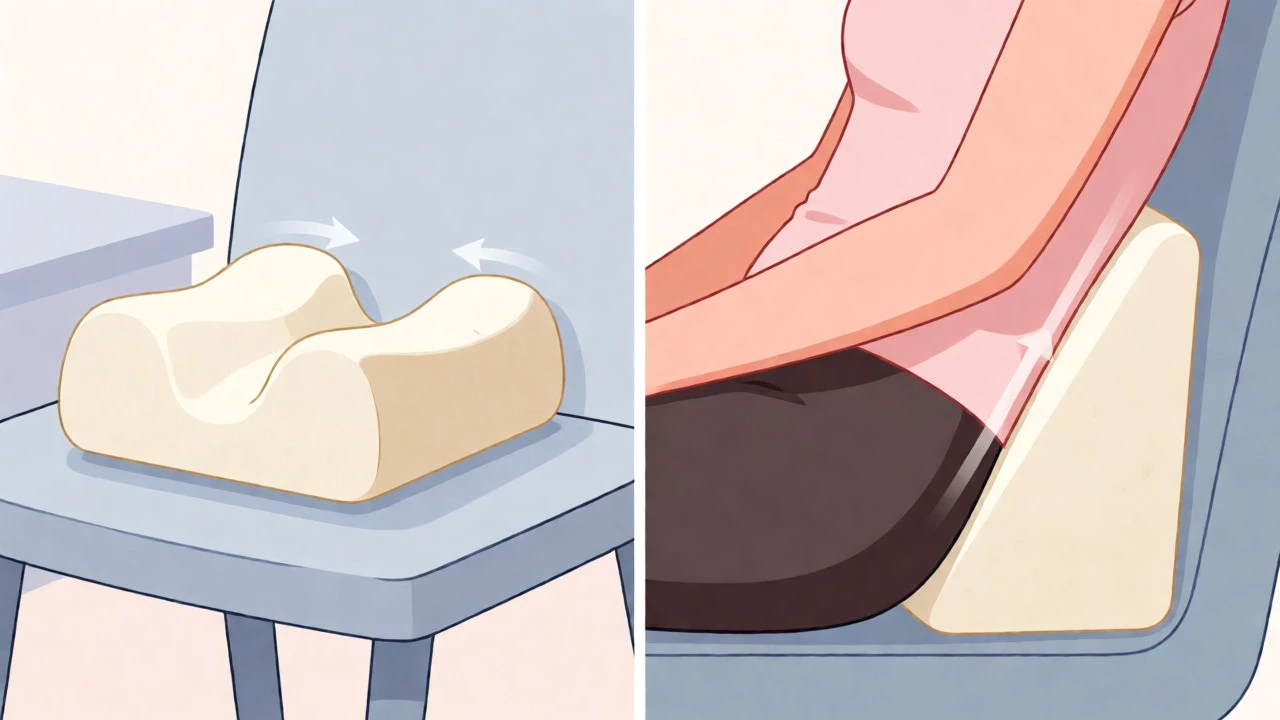
Not all "sciatica cushions" are created equal. There are two main types, and they work via completely different mechanisms. Choosing the wrong one for your specific issue is the most common reason people say these products "don't work."
The Coccyx (Tailbone) Cutout Cushion
This is the classic U-shaped or horseshoe design with a hollow center at the back. Its primary job is to remove pressure from the coccyx (tailbone). If your pain is localized right at the base of your spine, especially when sitting on hard surfaces, this cushion allows the tailbone to float without touching the chair. By relieving direct contact pressure, it reduces inflammation in the surrounding tissues and muscles, which can indirectly ease tension on the sciatic nerve.
The Lumbar Wedge Cushion
This is a thicker, often triangular foam block placed under the thighs or behind the lower back. Unlike the cutout cushion, this one actively changes your pelvic tilt. Many people sit with a posterior pelvic tilt (slouching), which flattens the natural curve of the lower back. A wedge lifts the pelvis slightly higher than the knees, encouraging an anterior tilt. This restores the natural lordotic curve of the spine, opening up the spaces between vertebrae and reducing compression on the nerve roots.
When Do They Help? Real-World Scenarios
Let’s look at specific situations to see where these tools fit in. Imagine Sarah, a graphic designer who spends eight hours a day at her computer. She feels a dull ache in her lower back that radiates down her left leg after lunch. Her MRI shows mild disc bulging but no severe stenosis. For Sarah, a lumbar support wedge is likely highly effective. By correcting her slouch, she reduces the mechanical load on the bulging disc, allowing the inflammation to subside during work hours.
Now consider Mike, a truck driver who recently fell off a ladder and bruised his tailbone. His pain is sharp and localized directly at the bottom of his spine, worsening when he sits on the cab seat. He doesn’t have a herniated disc; he has trauma-induced inflammation. For Mike, a coccyx cushion is the clear winner. It removes the physical pressure point causing the pain. Using a wedge here wouldn’t help much because his issue isn’t about spinal alignment; it’s about surface contact.
| Feature | Coccyx Cutout Cushion | Lumbar Wedge Cushion |
|---|---|---|
| Primary Function | Pressure relief for tailbone | Corrects pelvic tilt and posture |
| Best For | Tailbone injuries, coccydynia, hemorrhoids | Slouching, disc issues, general lower back strain |
| Material Preference | High-density memory foam | Firm foam or adjustable air bladders |
| Risk if Misused | Minimal risk, mostly ineffective | Can cause hip flexor tightness if too steep |
The Science: What Studies Say About Seat Inserts
Is there hard evidence backing this up? Research published in journals like Spine and Applied Ergonomics consistently highlights the link between seated posture and low back pain. While few studies test branded "sciatica cushions" specifically, many analyze the effects of lumbar support. One key finding is that active sitting or using supports that maintain neutral spine alignment reduces muscle fatigue in the erector spinae (the muscles running along your spine). When these muscles are less fatigued, they stabilize the spine better, preventing micro-movements that irritate nerves.
However, science also warns against passive reliance. A study involving office workers showed that while cushions improved comfort scores, they did not permanently cure chronic pain unless combined with movement breaks. The cushion is a tool to make sitting tolerable, not a replacement for walking around every 45 minutes. Think of it as a crutch that helps you walk while your injury heals, rather than a cast that fixes the bone.
Potential Pitfalls: Why Some People Hate Them
If you read reviews, you’ll see plenty of one-star complaints. Here’s why some users end up disappointed:
- Too Soft: Cheap foam bottoms out quickly. If the cushion compresses completely within ten minutes, it offers zero structural benefit. Look for high-density foam (typically 50kg/m³ or higher).
- Wrong Angle: A wedge that is too steep (over 10 degrees) can tilt the pelvis so far forward that it strains the hip flexors and lower back muscles, creating new pain points.
- Chair Compatibility: If your office chair already has built-in lumbar support, adding a thick cushion might push you too far forward, leaving your feet dangling or unsupported.
- Underlying Conditions: If your sciatica is caused by severe spinal stenosis or a large tumor, changing your angle won’t decompress the nerve enough to provide relief. In these cases, medical intervention is required.
How to Choose and Use Your Cushion Correctly
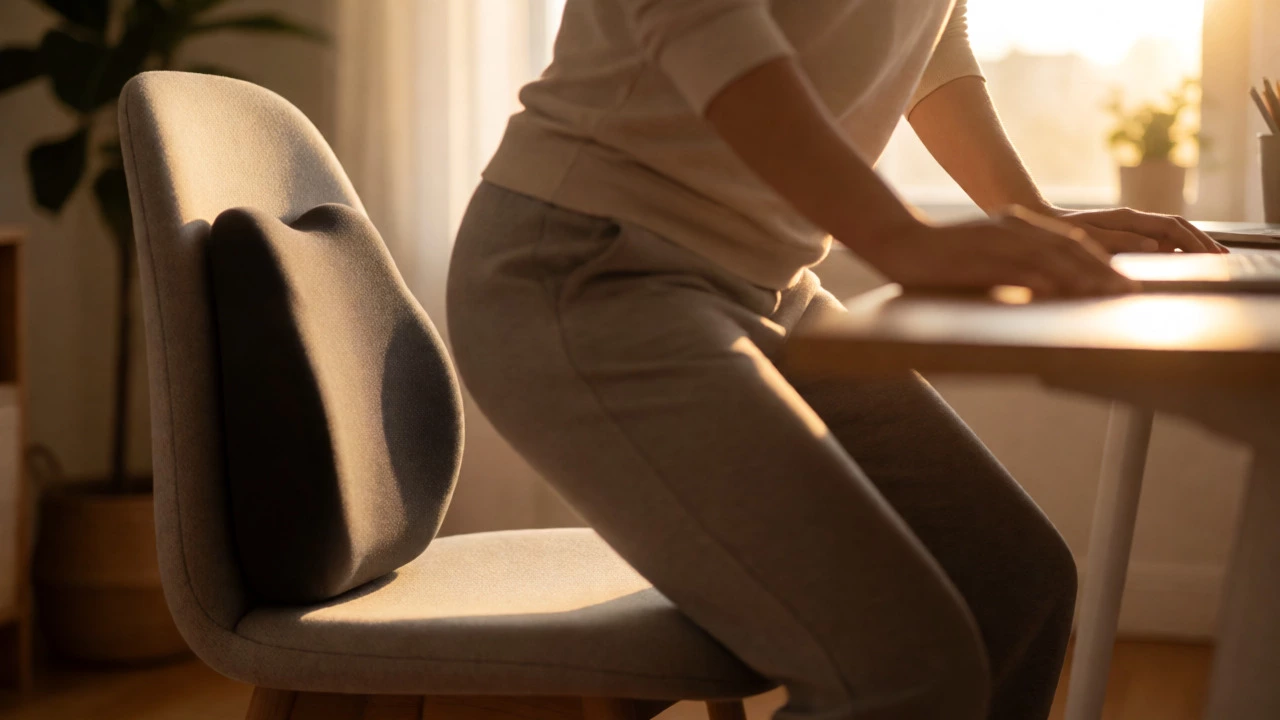
Don’t just buy the cheapest option on Amazon. Follow this checklist to maximize your chances of success:
- Identify Your Pain Source: Is it deep in the lower back/spine (choose wedge) or at the very bottom/tailbone (choose cutout)?
- Check Density: Press firmly on the foam. It should resist and bounce back slowly. If it feels like marshmallow fluff, skip it.
- Test the Height: When sitting, your hips should be level with or slightly higher than your knees. This opens the hip angle and relieves lower back tension.
- Combine with Movement: Set a timer. Every 30-60 minutes, stand up. The cushion buys you comfort, but movement flushes out inflammatory fluids.
- Give It Two Weeks: Your body needs time to adjust to new postural habits. If you feel increased pain after two weeks of consistent use, stop. It’s likely aggravating your specific condition.
Beyond the Cushion: Holistic Approaches
A cushion is just one piece of the puzzle. To truly manage sciatica, you need to address the root causes. Strengthening your core muscles provides internal support for your spine, reducing the load on your discs. Stretching the hamstrings and glutes prevents them from pulling on the pelvis and irritating the nerve. Many physical therapists recommend a combination of ergonomic adjustments (like the cushion) and targeted exercises, such as bird-dogs or cat-cows, for long-term relief.
Also, consider your mattress. If you wake up with stiffness, your sleep setup might be undoing the daytime benefits of your cushion. A medium-firm mattress generally supports spinal alignment best for side sleepers with sciatica.
Can a sciatica cushion cure my herniated disc?
No, a cushion cannot physically push a herniated disc back into place. However, it can create an environment where the disc is less compressed, allowing the body's natural healing processes to work more effectively by reducing inflammation and irritation.
Should I wear a sciatica cushion while driving?
Yes, driving is one of the worst positions for sciatica due to vibration and static posture. A cushion can help maintain proper alignment. Just ensure it doesn't interfere with your ability to reach the pedals comfortably or move your foot quickly to the brake.
How long does it take for a sciatica cushion to start working?
You may feel immediate pressure relief, especially with coccyx cushions. For postural correction and reduced nerve irritation, it typically takes 1-2 weeks of consistent use for your muscles to adapt to the new alignment and for inflammation to decrease noticeably.
Are gel cushions better than foam for sciatica?
Gel distributes heat and pressure evenly, which can be soothing for inflammation. Foam provides better structural support for posture. Hybrid models (gel-infused foam) often offer the best balance of cooling comfort and firm support for sciatica sufferers.
Who should avoid using a sciatica cushion?
People with acute fractures, severe skin ulcers, or certain neurological conditions should consult a doctor before using any seat insert. Additionally, if the cushion causes numbness in the legs or worsens the shooting pain, discontinue use immediately.