
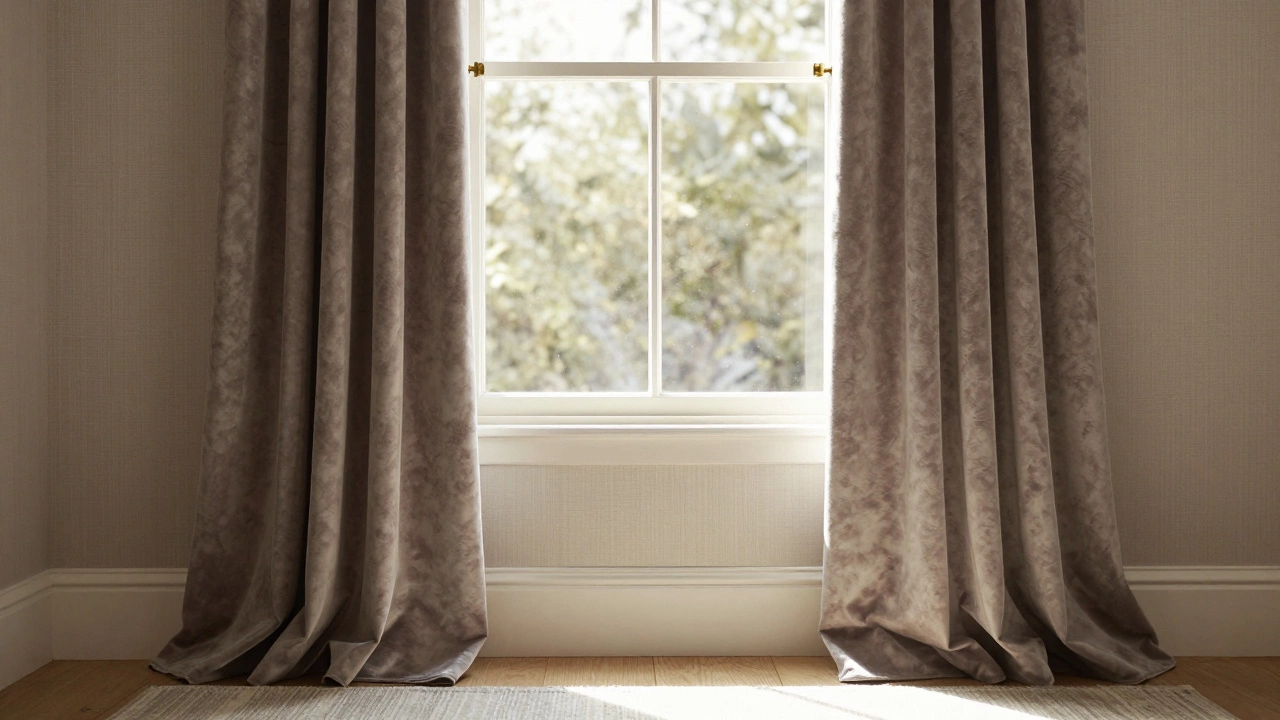
Curtain Sizing Calculator
Get the perfect curtain width for your space using our simple calculator. Based on the article's guidelines for proper curtain extension and fullness.
Visual Preview
Your Curtain Width
inches
This is the minimum width you need for proper fullness and appearance
Sheer
Cotton/Linen
Velvet/Blackout
Getting curtains to look right isn’t just about picking a nice fabric. It’s about how far they extend past the window. Too short, and they look cheap. Too narrow, and they disappear against the wall. The right width makes your window feel bigger, your room feel taller, and your whole space feel intentional.
Why curtain width matters more than you think
Most people assume curtains should just cover the window. That’s the bare minimum. But if your curtains stop right at the edge of the window frame, they look like an afterthought. They don’t frame the window-they hide it. When curtains extend past the window, they create the illusion of a larger opening. It’s a trick interior designers use all the time, and it works because of how light and shadow play on the wall.
Think about it: when sunlight hits a window, it doesn’t just shine through the glass. It spills onto the wall beside it. If your curtains block that spill, the room feels cramped. But if they pull back far enough to let the light flow freely, the space opens up. That’s why width isn’t just about aesthetics-it’s about function.
The golden rule: 6 to 12 inches on each side
The standard recommendation is to extend curtains at least 6 inches past the window frame on each side. That’s 12 inches total. For larger windows, or if you want a more dramatic look, go for 12 inches on each side-24 inches total. This rule applies whether you’re using rod pockets, tab tops, or grommets.
Here’s why this range works:
- 6 inches is the minimum needed to avoid a ‘boxed-in’ look
- 9 inches gives you a balanced, clean appearance
- 12 inches or more creates luxury and depth
Don’t just measure the window. Measure the wall space. If you have 18 inches of bare wall on either side, go for the full 12-inch extension. You’re not wasting space-you’re using it.
How to measure correctly
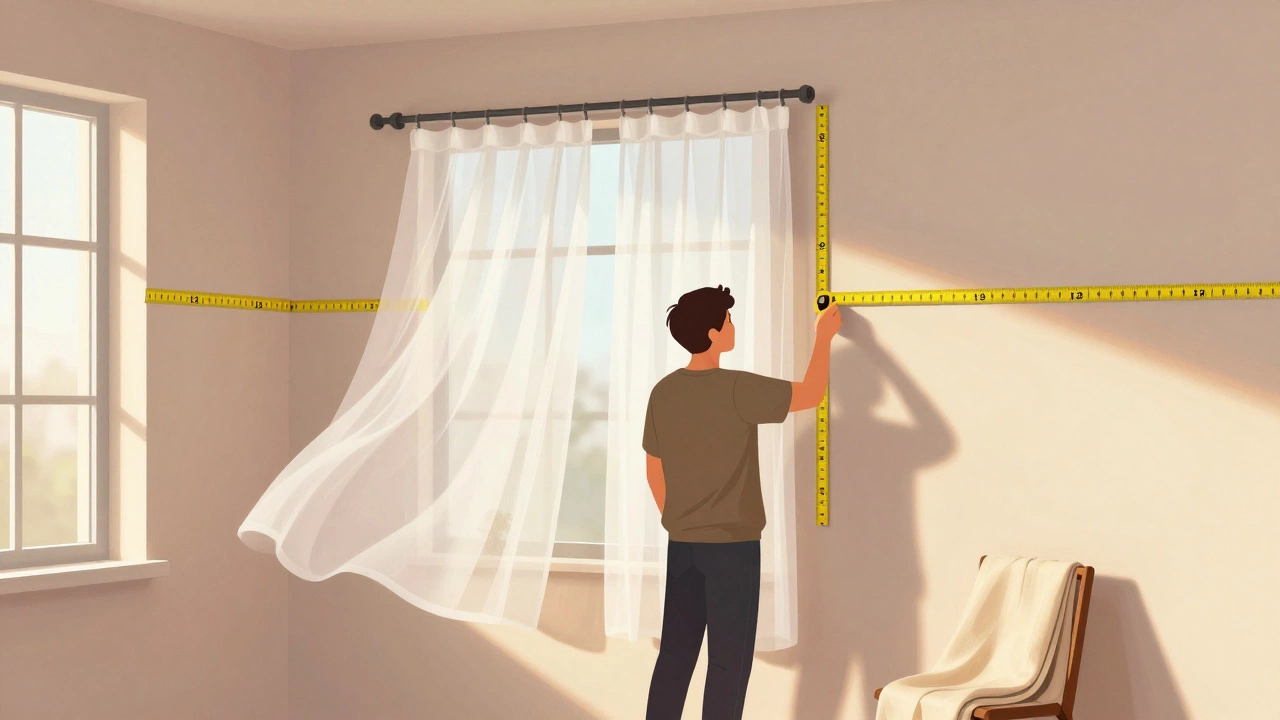
Stop measuring from the edge of the trim. That’s where most people mess up. Instead:
- Place your curtain rod so it’s mounted 4 to 6 inches above the window frame. This lifts the visual height of the room.
- Extend the rod 6 to 12 inches beyond the window’s outer edge on both sides.
- Measure the total width of the rod, not just the window.
- Choose curtains that are at least 1.5 times the rod width for proper fullness.
For example: if your window is 36 inches wide and you mount the rod 8 inches beyond each side (total rod length = 52 inches), your curtains should be at least 78 inches wide (52 × 1.5). That’s enough fabric to drape softly when open.
What about really wide windows?
Large windows-like sliding glass doors or bay windows-need more than just width. They need multiple panels. A single curtain panel on a 96-inch window will look thin and stretched. Two panels, each 60 inches wide, hung on a 108-inch rod (extending 6 inches on each side), give you fullness and movement. The extra width lets the fabric pool slightly when drawn, which adds texture and softness.
For extra-large windows, consider a center-divide setup. Two panels, each covering half the window, meet in the middle. This creates symmetry and lets you open one side without disturbing the other.
What if your walls are too narrow?
You’re not stuck. If you only have 3 inches of wall space on each side, you still have options:
- Use a return rod-it bends back toward the wall, so the curtains hang closer to the window without needing extra space.
- Mount the rod directly on the window frame and choose curtains that are just wide enough to cover the glass with minimal overlap.
- Go for blackout liners with decorative outer panels. The liner covers the glass, and the outer panel adds style without needing width.
Even in tight spaces, you can make curtains look intentional. It’s about working with what you have, not forcing a rule.
Don’t forget the hardware
The rod matters just as much as the curtain. A thin, flimsy rod will sag under heavy fabric. A thick, sturdy rod with end caps keeps the curtains aligned and gives a polished finish. If you’re going for that 12-inch extension, make sure your brackets are mounted into wall studs. Otherwise, the rod will pull away over time.
Also, don’t use tension rods for wide extensions. They’re designed for small windows and narrow gaps. For anything over 48 inches, use a fixed rod with wall brackets. It’s more expensive, but it lasts.
How fabric weight affects curtain width
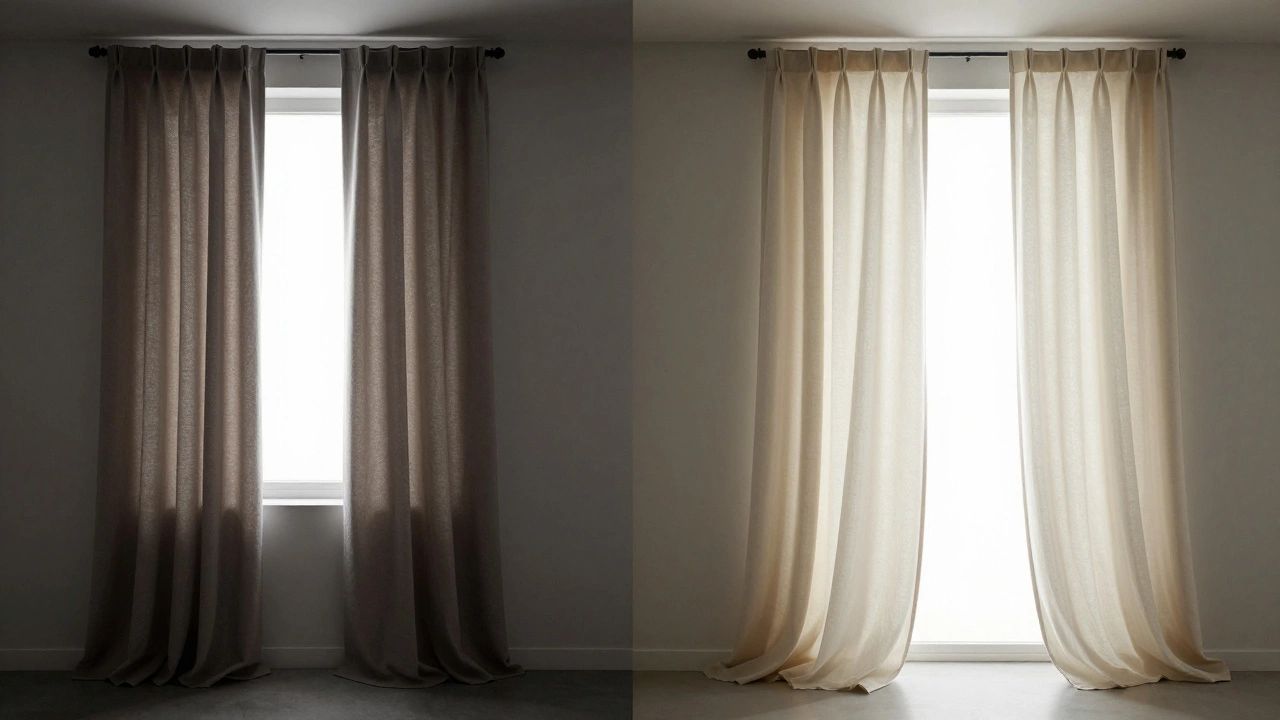
Lightweight sheers need less width to look full. A 1.2x multiplier might be enough. But thick velvet, blackout fabric, or layered drapes need more. That’s why the 1.5x rule is standard-it works for most mid-weight materials.
Here’s a quick guide:
| Material Type | Fullness Multiplier | Best for |
|---|---|---|
| Sheer, voile | 1.2x | Light filtering, bedrooms |
| Cotton, linen | 1.5x | Living rooms, casual spaces |
| Velvet, blackout, thermal | 2.0x | Formal rooms, home theaters |
If you’re unsure, go with 1.5x. It’s the sweet spot for most homes.
Common mistakes to avoid
- Buying curtains based on window width alone-never do this.
- Mounting the rod too low-always raise it to the top of the window trim or higher.
- Using curtains that are too short-floor-length is standard, but if you’re using a rod with a long extension, make sure the length still works.
- Ignoring the return-curtains that don’t fully open to the wall look unfinished.
One mistake I see all the time: people hang curtains that are too narrow because they think it’s ‘tidy’. But tidy doesn’t mean beautiful. A slightly wider curtain that pools gently on the floor looks luxurious. A too-narrow one looks like a rental unit.
Final tip: Test before you buy
Before you order curtains, take a tape measure and mark the wall with painter’s tape. Stick the tape where the rod will go, then stretch out a piece of fabric or even a bedsheet along the same line. Stand back. Does it look right? Does it feel balanced? If it looks too tight, add more width. If it looks too heavy, trim it down.
This is the easiest way to avoid buyer’s remorse. You’re not guessing anymore-you’re seeing it.
Should curtains touch the floor?
Yes, curtains should lightly touch the floor-or hover 1/2 inch above it. Anything longer creates a tripping hazard and looks messy. Anything shorter makes the ceiling feel lower. For a modern look, aim for just above the floor. For a classic look, let them kiss the floor.
Do I need to extend curtains past the window if I have blinds?
Yes. Blinds are functional. Curtains are decorative. Even if you keep the blinds open, curtains should still frame the window properly. They add warmth, texture, and depth. Without them, the window looks bare, even with blinds.
Can I use curtain panels that are too wide?
Yes, and sometimes it’s better. Extra width creates softer folds and better drape. If your rod is 80 inches wide, 120-inch panels will look fuller and more luxurious than 96-inch ones. Just make sure the hardware can support the weight.
What if my window is asymmetrical?
Extend the rod to balance the space visually. If one side has a wall and the other has a corner, extend the rod further into the wall side. This creates symmetry even if the window isn’t centered. Your eye follows the rod, not the window frame.
Is there a difference between curtain width and rod width?
Yes. Rod width is the total length from end to end. Curtain width is the total fabric width. Always buy curtains that are 1.5x the rod width for fullness. A 60-inch rod needs 90-inch curtains. Never match them directly.
Next steps: What to do now
Grab a tape measure. Measure your window’s width. Add 12 inches total-6 on each side. That’s your minimum rod length. Then multiply that number by 1.5 to find your curtain width. Write it down. Go to the store or your online cart. Compare what you’ve measured to what you’re about to buy. If it doesn’t match, don’t click ‘add to cart’.
It’s that simple. No guesswork. No regrets. Just a window that looks like it belongs in your home.