
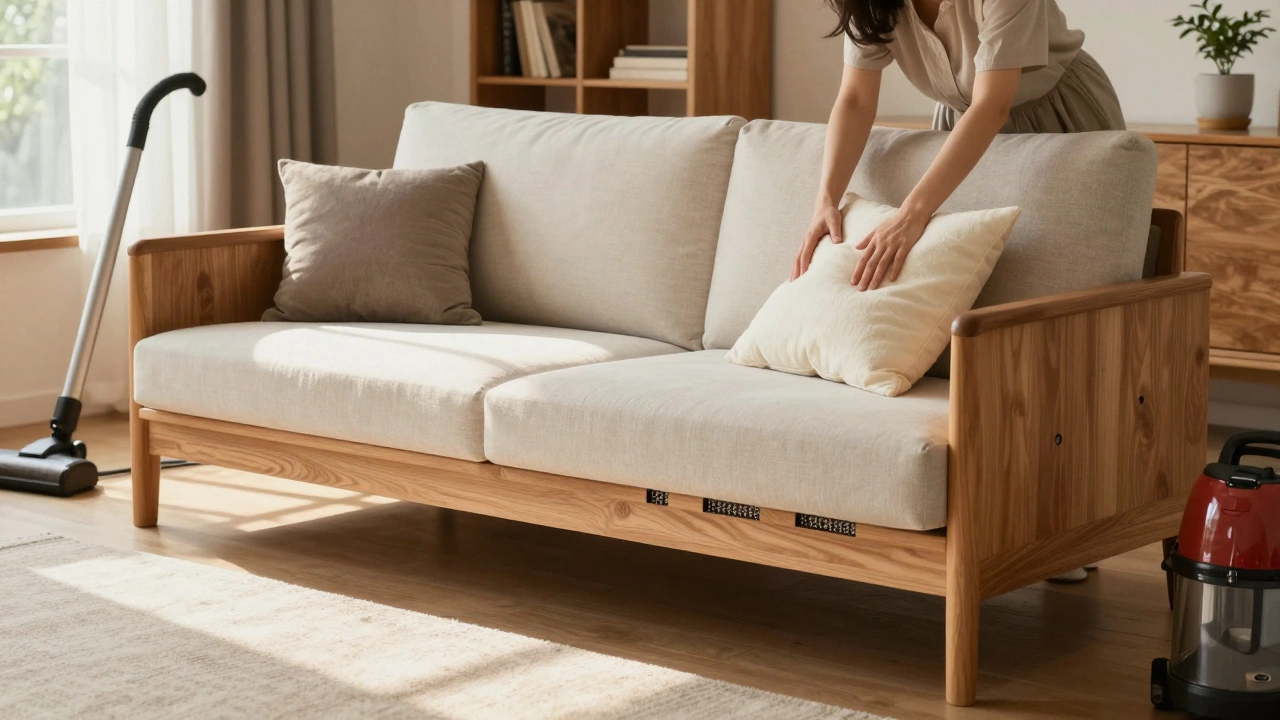
Sofa Lifespan Estimator
Your Sofa's Expected Lifespan
Based on your sofa's construction, usage, and care habits, we'll estimate how long it should last.
A good sofa should last between 7 and 15 years-but that’s not a guarantee. Many people replace theirs after just 3 or 4 years because the cushions have flattened, the frame has creaked, or the fabric is worn out. The truth? Your sofa’s lifespan depends on how it was made, how often it’s used, and how you treat it. This isn’t about luxury brands or price tags-it’s about the hidden details that actually determine how long your sofa will hold up.
What Makes a Sofa Last?
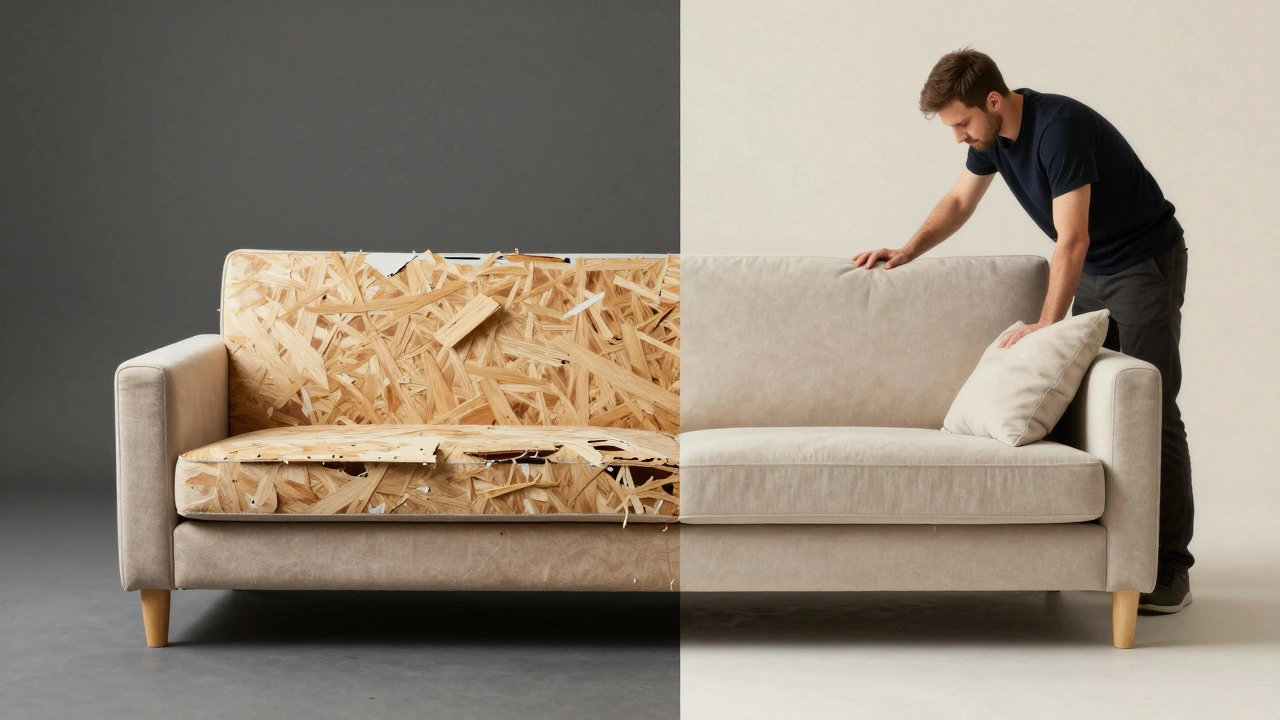
Not all sofas are built the same. A sofa with a particleboard frame and glued joints will start to fall apart long before one with a solid hardwood frame and reinforced corners. Look for these signs of quality:
- Frame material: Hardwoods like oak, beech, or maple last longer than softwoods or engineered wood. A well-built frame won’t wobble when you sit down.
- Joint construction: Screws and corner blocks are better than glue alone. If you can see the joints, they should be reinforced with wooden blocks, not just nailed.
- Spring system: Eight-way hand-tied springs or sinuous steel springs are the gold standard. Cheap sofas use cheap coil springs that sag after a year.
- Cushion fill: High-density foam (at least 1.8 lb/ft³) with a down or fiber wrap lasts longer than low-density foam. Down-only cushions look nice but flatten fast.
- Fabric: Performance fabrics like Crypton, Sunbrella, or tightly woven microfiber resist stains and wear better than linen or silk.
These details don’t always show up in the product description. If you’re shopping in person, sit on the sofa. Does it feel solid? Does the backrest move when you lean back? Lift one corner-if the frame flexes, it’s not built to last.
How Usage Changes the Clock
Even the best sofa won’t survive if it’s used like a bed, a play structure, or a dog couch. Here’s how daily habits affect longevity:
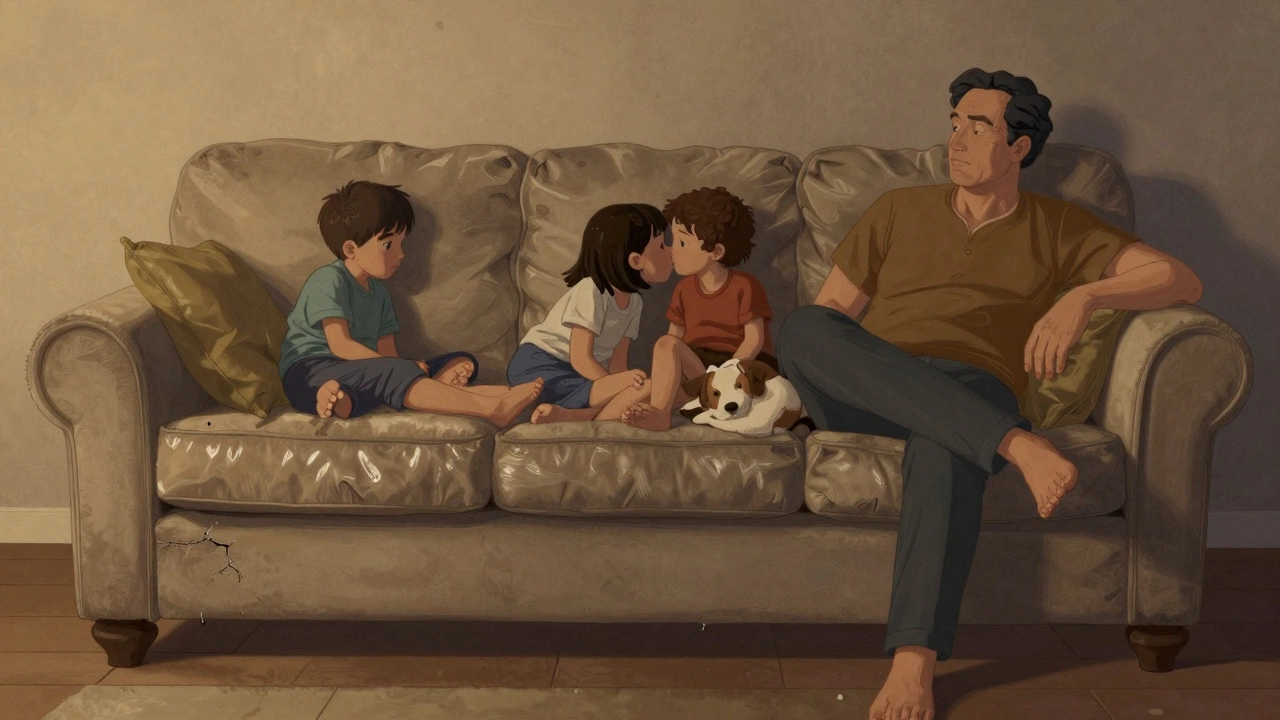
- Heavy daily use: A family with kids and pets can wear out a sofa in 5 years-even if it’s high-end. The cushions compress, the fabric pills, and the arms get shiny from constant contact.
- Occasional use: A formal living room sofa used only on weekends might last 15+ years. The fabric fades, but the structure stays intact.
- Outdoor use: Indoor sofas left on patios or balconies can rot in under a year. Moisture, sun, and temperature swings destroy fabrics and frames.
- Weight load: A sofa rated for 250 lbs per seat will break down faster if regularly occupied by people over 300 lbs. Frame stress cracks over time.
There’s no magic number. A sofa in a busy household might need replacing in 6 years. In a quiet home, it could still look new after 12. Track how it feels, not just how it looks.
Signs It’s Time to Replace Your Sofa
You don’t need to wait until it collapses. Here are clear warning signs:
- Cushions won’t bounce back: Press down hard. If the foam stays indented for more than 10 seconds, it’s lost its resilience.
- Frame makes noise: Squeaking, cracking, or popping sounds mean joints are loosening. Glued or nailed frames can’t be fixed.
- Arms or legs are wobbly: If you can move them with your hand, the attachment is failing. This is a structural issue, not a cosmetic one.
- Fabric is thinning or tearing: Especially around the arms and seat. If you can see the inner padding through the fabric, it’s beyond repair.
- Odor or stains won’t come out: Deep stains from pets, spills, or sweat can’t be cleaned. They attract dust mites and degrade fabric over time.
These aren’t just annoyances-they’re signs the sofa is no longer safe or comfortable. A sagging cushion can cause back pain. A wobbly frame can tip over. Don’t ignore them.
How to Make Your Sofa Last Longer
There are simple habits that add years:
- Rotate cushions weekly: Flip them end-to-end and top-to-bottom. This evens out wear and prevents permanent dips.
- Use slipcovers: A removable, washable slipcover protects the original fabric. You can change the look every season without buying new.
- Keep it away from direct sunlight: UV rays fade fabric and dry out leather. Move the sofa a few feet if it’s near a window.
- Vacuum regularly: Dust and dirt grind into fabric like sandpaper. Use the brush attachment every two weeks.
- Fix small issues early: A loose screw, a frayed seam, or a sinking cushion can be fixed for $20. Wait too long, and the whole sofa is ruined.
One homeowner in Ohio had her 2012 sofa last 14 years. She rotated cushions, vacuumed weekly, and replaced the cushions once after 8 years. The frame was still solid. She didn’t replace the whole thing-just the parts that wore out.
Cost of Replacement vs. Repair
Replacing a sofa costs $800 to $3,000. Reupholstering or replacing cushions? $300 to $800. That’s a big difference.
If your sofa’s frame is still solid and the springs are intact, reupholstering is almost always worth it. You get a new look, better fabric, and the same structure. A professional can even rebuild the cushions with higher-density foam.
But if the frame is cracked, the joints are loose, or the springs are uneven, repair isn’t worth it. You’re paying to fix something that’s already failing. In those cases, replace it.
Here’s a quick rule: If the cost of repair is more than 40% of a new sofa’s price, replace it. If it’s less, repair.
What About Leather Sofas?
Leather lasts longer than fabric-often 15 to 25 years-if it’s full-grain and properly cared for. But not all leather is equal.
- Full-grain leather: The most durable. It develops a patina and resists scratches. It’s also the most expensive.
- Top-grain leather: Sanded and treated. Looks good but wears faster. Can crack after 8-10 years if not conditioned.
- Bonded leather: Made from scraps and glue. It peels, cracks, and looks fake. Avoid it.
Leather needs conditioning every 6-12 months with a pH-balanced product. Dry leather cracks. Sunlight bleaches it. Pets’ claws can scratch it. But with care, a leather sofa can outlast multiple generations.
What to Do When It’s Time to Go
Don’t just toss it. Old sofas can be recycled.
- Check with local charities-they may take it if it’s clean and structurally sound.
- Some cities offer bulk pickup for furniture. Call your waste department.
- Look for upholstery recyclers. They take apart sofas and reuse the foam, springs, and fabric.
- Don’t leave it on the curb. It’s illegal in many places and attracts pests.
Recycling helps. One ton of sofa material can be broken down into 80% reusable parts. That’s more than most people realize.
Can a sofa last 20 years?
Yes-but only if it’s made with a solid hardwood frame, high-density foam cushions, and quality fabric or full-grain leather. It also needs regular care: rotating cushions, cleaning, and avoiding direct sun. Most people don’t maintain their sofas this way, which is why 20-year-old sofas are rare. But they exist.
Is it worth reupholstering an old sofa?
It depends on the frame. If the structure is solid-no cracks, no wobble, no broken springs-then yes. Reupholstering costs 30-50% of a new sofa and gives you a custom look. If the frame is weak or the springs are sagging, it’s not worth it. You’re paying to fix a foundation that’s already failing.
Why do cheap sofas fall apart so fast?
They use particleboard frames, glue joints, low-density foam, and thin fabric. The frame flexes under weight. The foam turns to mush in 1-2 years. The fabric pills and tears. These sofas are designed to be replaced, not used. They’re built for a 2-4 year lifespan, not 10.
Does sofa weight matter for durability?
Yes. Heavier sofas usually have thicker frames, better springs, and denser cushions. A sofa under 100 lbs is likely made with cheap materials. A sofa over 150 lbs is more likely to be built to last. Weight alone isn’t proof-but it’s a strong clue.
How often should I replace sofa cushions?
If you use the sofa daily, replace cushions every 5-7 years. High-density foam lasts longer, but it still compresses. Replacing just the cushions can extend the sofa’s life by another 5-10 years. It’s cheaper than buying a whole new sofa and keeps the frame you already trust.
If you want your sofa to last, treat it like furniture-not a disposable item. Buy well. Use wisely. Care for it. And don’t wait until it’s falling apart to act.