
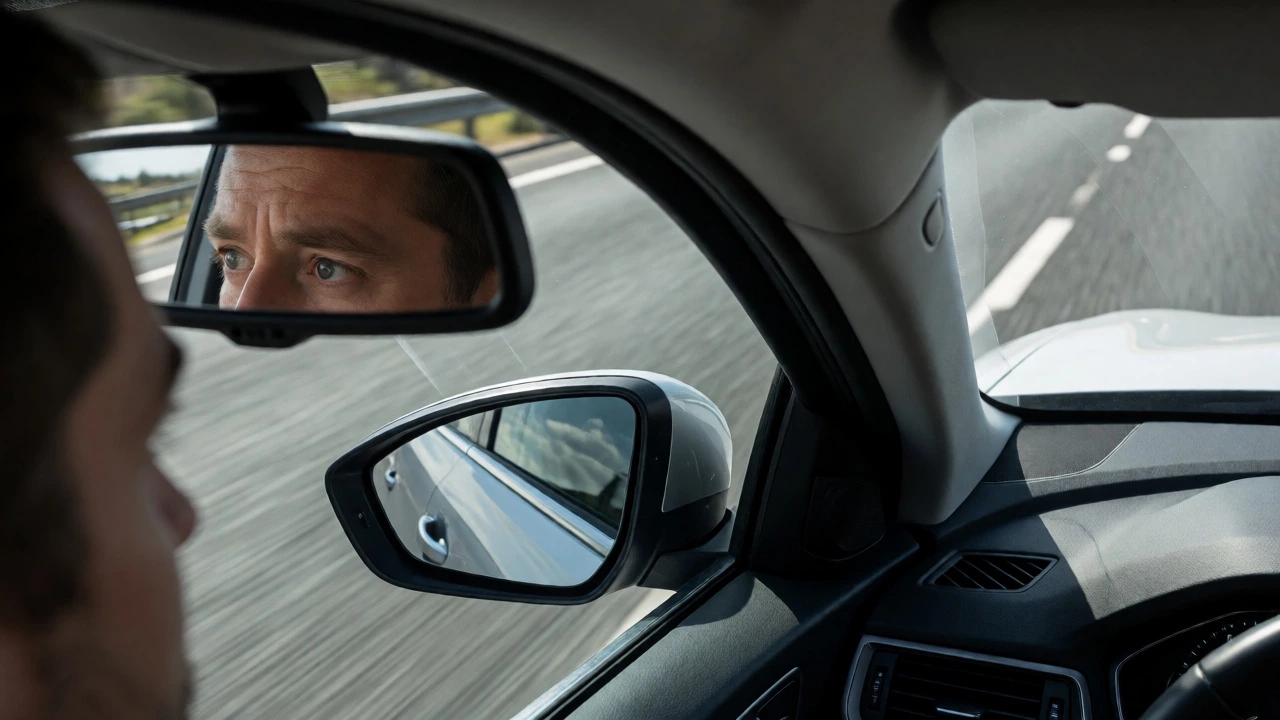
Mirror Check Rhythm Trainer
Select a driving scenario below. The timer will indicate when you should check your mirrors based on optimal scanning intervals. Click the corresponding button (or press Space) when the indicator lights up.
You’re cruising down the M5 at 70 mph. The road ahead looks clear. You glance in your rearview mirror, see nothing but empty tarmac behind you, and think you’re safe. But have you actually checked? Or did you just look without seeing? Most drivers check their mirrors too rarely or at the wrong times, leaving dangerous blind spots unmonitored until it’s almost too late.
Mirror checks are not just a habit; they are a critical survival skill that dictates how safely you navigate traffic. It’s not about staring into them every second, which would be distracting and unsafe. It’s about knowing exactly when to look so you maintain full situational awareness without taking your eyes off the road for more than a split second.
The Golden Rule: Every Five to Eight Seconds
If there is one number to remember, make it this: scan your mirrors every five to eight seconds. This rhythm creates a continuous loop of information gathering. Think of it like breathing-you don’t hold your breath for minutes, and you shouldn’t hold your visual focus on the road ahead for too long either. A quick flick of the eyes to the interior mirror, then the side mirrors, and back to the road takes less than two seconds if practiced correctly.
Why this specific timeframe? Human attention spans drift. After about ten seconds of staring straight ahead, your brain starts to zone out, a phenomenon known as "highway hypnosis." By resetting your gaze every few seconds, you keep your brain engaged with your surroundings. If you wait longer than eight seconds, a car can travel nearly half a mile at motorway speeds. That’s enough time for a faster vehicle to close the gap from three cars back to right on your bumper without you noticing.
When Specific Actions Demand Immediate Checks
Beyond the routine scan, certain maneuvers require mandatory, deliberate mirror checks. These aren’t optional; skipping them is where most lane-change accidents happen. The sequence is always Mirror-Signal-Manoeuvre. Never signal before checking your mirrors, because signaling doesn’t change the fact that a truck might be in your blind spot.
- Before Changing Lanes: Check the relevant side mirror first. Then, perform a shoulder check (looking over your shoulder) to cover the blind spot. Only then do you move.
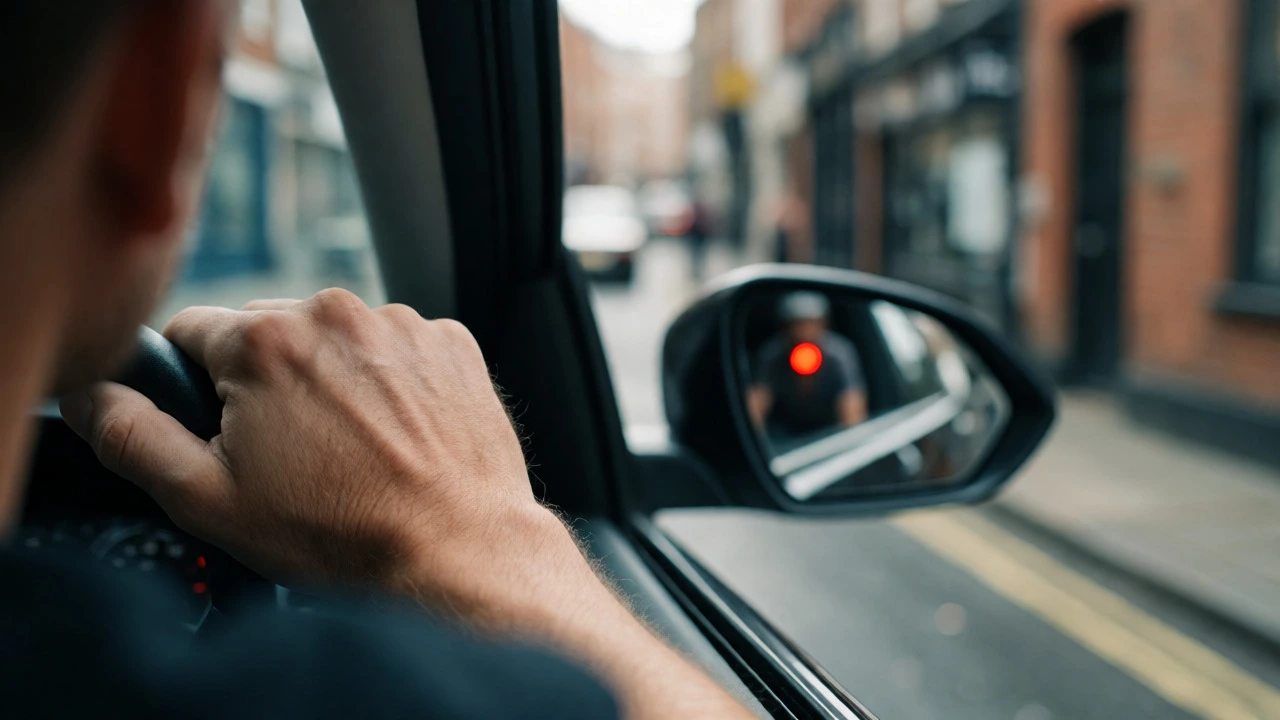
- Before Turning: Check both side mirrors and the interior mirror. Pedestrians and cyclists often approach from unexpected angles, especially in urban areas like Bristol’s narrow streets.
- Before Braking Hard: Glance in the interior mirror. If someone is tailgating you, you might need to ease off the brake slightly to avoid being rear-ended, provided it’s safe to do so.
- When Approaching Hazards: If you see debris or a stalled car ahead, check your mirrors before slowing down. You need to know if anyone is trying to overtake you just as you decelerate.
Understanding Blind Spots and Mirror Angles
Many drivers fail to check mirrors effectively because their mirrors are set up incorrectly. If you can see the side of your own car in your side mirror, you’ve wasted valuable viewing space. The goal is to eliminate blind spots, not admire your paintwork.
Try this adjustment method next time you’re parked:
- Sit in your normal driving position.
- Lean your head against the driver’s side window.
- Adjust the left side mirror so you can barely see the side of your car.
- Lean your head toward the center of the car (between the seats).
- Adjust the right side mirror similarly.
This setup creates overlapping fields of view. When you sit upright, objects disappear from your side mirror and reappear in your interior mirror. This transition point is crucial. It means you don’t need to turn your head sharply to see what’s beside you; you just need to shift your gaze. However, even with perfect mirrors, a small blind spot remains directly alongside your rear doors. That’s why the physical shoulder check is non-negotiable for lane changes.
| Driving Context | Check Frequency | Primary Focus |
|---|---|---|
| Motorway / Highway | Every 5-8 seconds | Rearview & fast-approaching vehicles |
| City / Urban Traffic | Every 3-5 seconds | Cyclists, pedestrians, sudden stops |
| Rural Roads | Every 8-10 seconds | Oncoming traffic, wildlife |
| Maneuvering (Parking) | Continuous scanning | All mirrors + direct line of sight |
The Psychology of Distraction vs. Awareness
We often fear that looking away from the road will cause an accident. In reality, it’s the lack of peripheral awareness that causes crashes. Your eyes have a central vision field for detail and a peripheral field for motion detection. Checking mirrors utilizes your central vision briefly to identify threats, while your peripheral vision keeps track of the road edges. If you never look in your mirrors, you rely solely on peripheral cues for what’s behind you, which are often insufficient for judging speed and distance accurately.
Consider the cognitive load. New drivers often feel overwhelmed by the sheer amount of information coming at them. Experienced drivers automate the mirror check process. It becomes a reflex, like blinking. If you find yourself forgetting to check, try pairing it with another action. For example, whenever you adjust the air conditioning volume or change radio stations, take a quick mirror scan. This anchors the habit to existing behaviors.
Common Mistakes Drivers Make
Even attentive drivers fall into traps. Here are the most frequent errors observed during advanced driving courses:
- The "Glance and Forget": Looking once and assuming the situation hasn’t changed. Traffic conditions evolve rapidly. A quick glance confirms the current state, but constant monitoring is needed if a threat persists.
- Ignoring the Interior Mirror: Many drivers rely heavily on side mirrors. The interior mirror provides the best view of what’s directly behind you, including headlights at night. Ignoring it leaves a significant gap in your rear coverage.
- Dazzle Management: At night, high beams from following cars can blind you. Know how to use your anti-dazzle feature (the little tab under the interior mirror). Failing to adjust it forces you to look away entirely, breaking your awareness loop.
- Dirty Mirrors: It sounds trivial, but a smudged mirror reduces clarity. Rain, dust, and fingerprints distort reflections. Clean them regularly, especially before long trips.
Adapting to Weather and Night Conditions
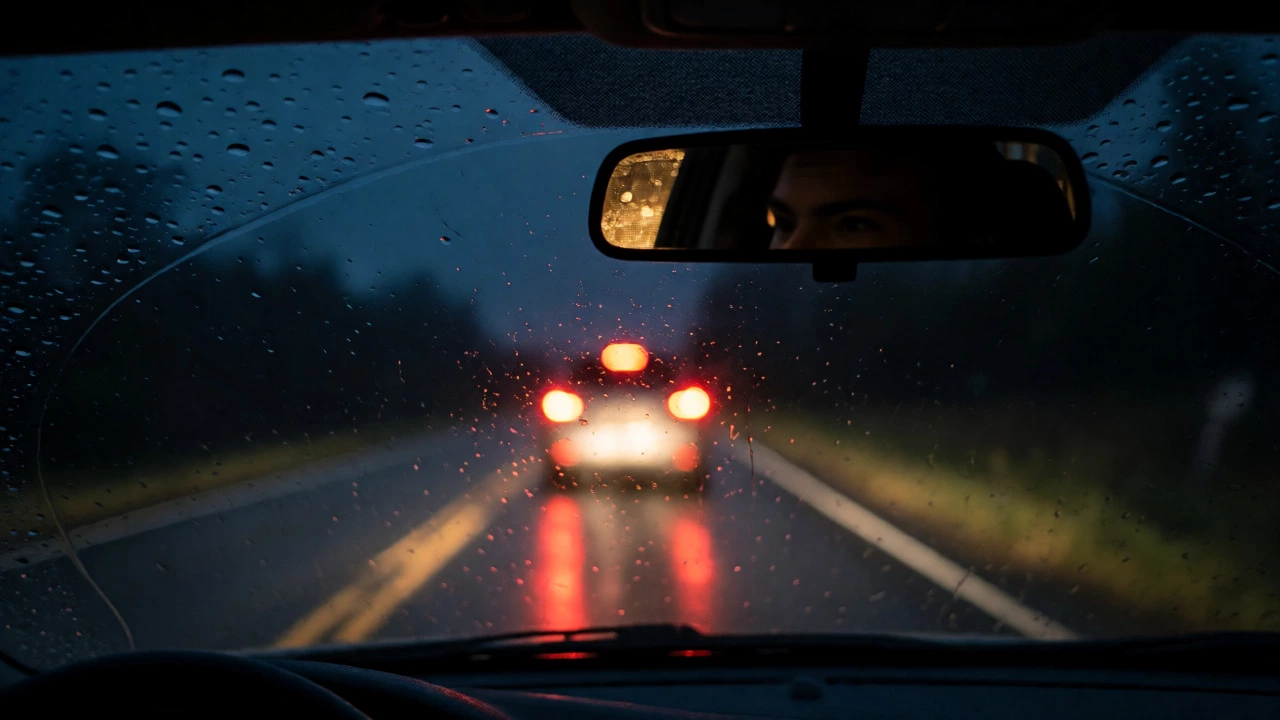
Your mirror-checking strategy must adapt to visibility. In heavy rain or fog, your effective range shrinks. You might need to check more frequently because reaction times increase and stopping distances lengthen. At night, glare becomes a major issue. Instead of looking directly at bright lights, look slightly to the edge of the mirror to see the reflection without being blinded. This technique preserves your night vision while keeping you aware of trailing vehicles.
In winter, ice and snow can obscure mirrors completely. Before setting off, ensure all mirrors are clear. During the drive, watch for spray from large vehicles. If your mirror fogs up due to temperature differences, use your defroster immediately. A blocked mirror is worse than no mirror because it gives a false sense of security.
Building the Habit: Practical Drills
To make mirror checks automatic, practice deliberately. On a quiet residential street, drive slowly and count out loud: "Left, Center, Right" as you scan each mirror. Do this for ten minutes daily. Once comfortable, increase your speed. The goal is to make the movement smooth and minimal. Your head should barely move; only your eyes should dart.
Another useful drill is the "Hazard Perception" game. As you drive, try to predict what other drivers will do based on their position relative to you. If a car is closing fast in your right mirror, anticipate they might want to overtake. Prepare by moving to the left lane if safe. This proactive approach turns passive observation into active defense.
Is it bad to stare at my mirrors?
Yes, staring is dangerous. You should perform quick glances lasting no more than 1-2 seconds per mirror. Staring fixes your attention on a single point, causing you to miss hazards appearing in your peripheral vision or directly ahead. The key is rapid scanning, not prolonged fixation.
Do I need to check mirrors when parking?
Absolutely. Parking requires constant awareness of all directions. Use your mirrors to gauge distance from curbs and other cars, but always combine this with direct line-of-sight checks over your shoulders. Relying solely on cameras or mirrors can lead to misjudging proximity, especially with low obstacles like bollards or children's toys.
What if I wear glasses or contact lenses?
Vision correction impacts depth perception. Ensure your prescription is up to date, particularly for distance vision. Bifocals or progressive lenses can sometimes blur the mirror image depending on where you look through the lens. Practice adjusting your head angle slightly to find the clearest part of the lens for mirror checks, ensuring you don't strain your neck or lose focus on the road.
Can technology replace manual mirror checks?
No. While blind-spot monitors and reversing cameras are excellent aids, they are not infallible. Sensors can fail, get dirty, or malfunction in extreme weather. They also lack the nuanced judgment humans provide regarding speed and intent. Treat tech as a backup system, not a replacement for your eyes.
How does mirror checking affect fuel efficiency?
Indirectly, good mirror habits improve fuel economy. By anticipating traffic flow and braking events earlier through regular scans, you avoid harsh acceleration and deceleration cycles. Smooth driving, enabled by better awareness, typically saves 5-15% on fuel consumption compared to erratic driving patterns.