
Sofa Durability Estimator
Select the specifications of the sofa you are considering to estimate its expected lifespan and overall durability score.
Estimated Lifespan
Expert Analysis
Enter your sofa details to receive specific recommendations.
You’ve probably seen it happen. You buy a sofa that looks stunning in the showroom photos, bring it home, and within eighteen months, the cushions are flat pancakes and the legs wobble when you sit down. It’s frustrating because you spent good money expecting comfort for years, not just seasons. The truth is, most people shop for sofas with their eyes, but if you want one that survives family life, pets, and time, you need to shop with your hands and your knowledge.
Choosing a durable sofa isn't about picking the most expensive brand or the trendiest color. It’s about understanding the skeleton beneath the skin. If you know what to look for inside the seams, you can spot a piece of furniture that will last ten years versus one that will end up on the curb in three. Here is how you actually choose a sofa that holds up.
The Frame: Hardwood is Non-Negotiable
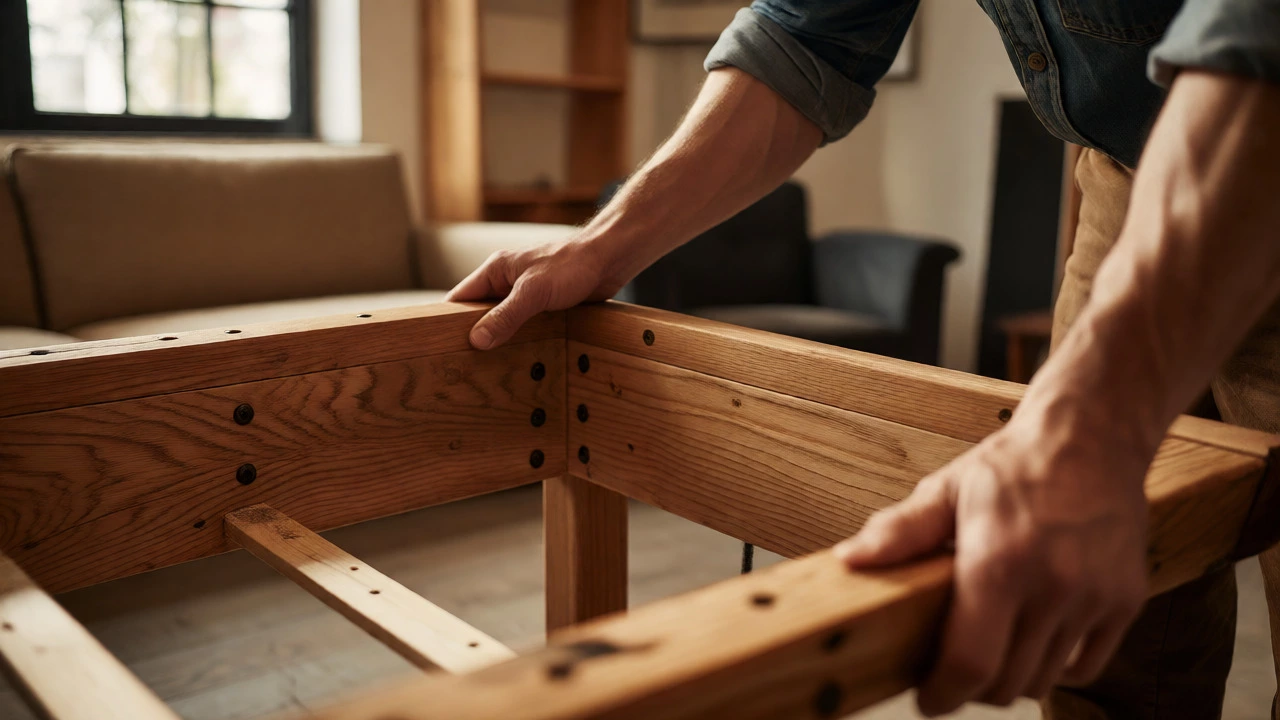
Think of the frame as the bones of the sofa. If the bones are weak, everything else collapses. When you’re in the store, lift the back corner of the sofa. If it feels light and flimsy, walk away. A quality frame should feel substantial. You are looking for kiln-dried hardwood, specifically oak, ash, maple, or walnut. These woods have been dried in an oven to remove moisture, which prevents warping and cracking over time.
Avoid frames made from softwoods like pine or spruce. They dent easily and splinter under stress. Even worse are frames made from particleboard, MDF (medium-density fiberboard), or plywood staples. Particleboard disintegrates if it gets damp, and staples pull out of plywood much faster than screws hold into solid wood. If the salesperson says it’s "engineered wood," ask specifically what kind. If they hesitate, assume it’s cheap composite material.
Check the joinery. The corners where the arms meet the back should be joined with dowels, mortise-and-tenon joints, or screwed blocks. Staples and glue alone will fail. You can often tell by turning the sofa upside down or looking at the bottom rails. If you see visible screws and wooden blocks reinforcing the corners, that’s a good sign. If you only see metal brackets held on by thin screws, be cautious.
Suspension Systems: The Hidden Support
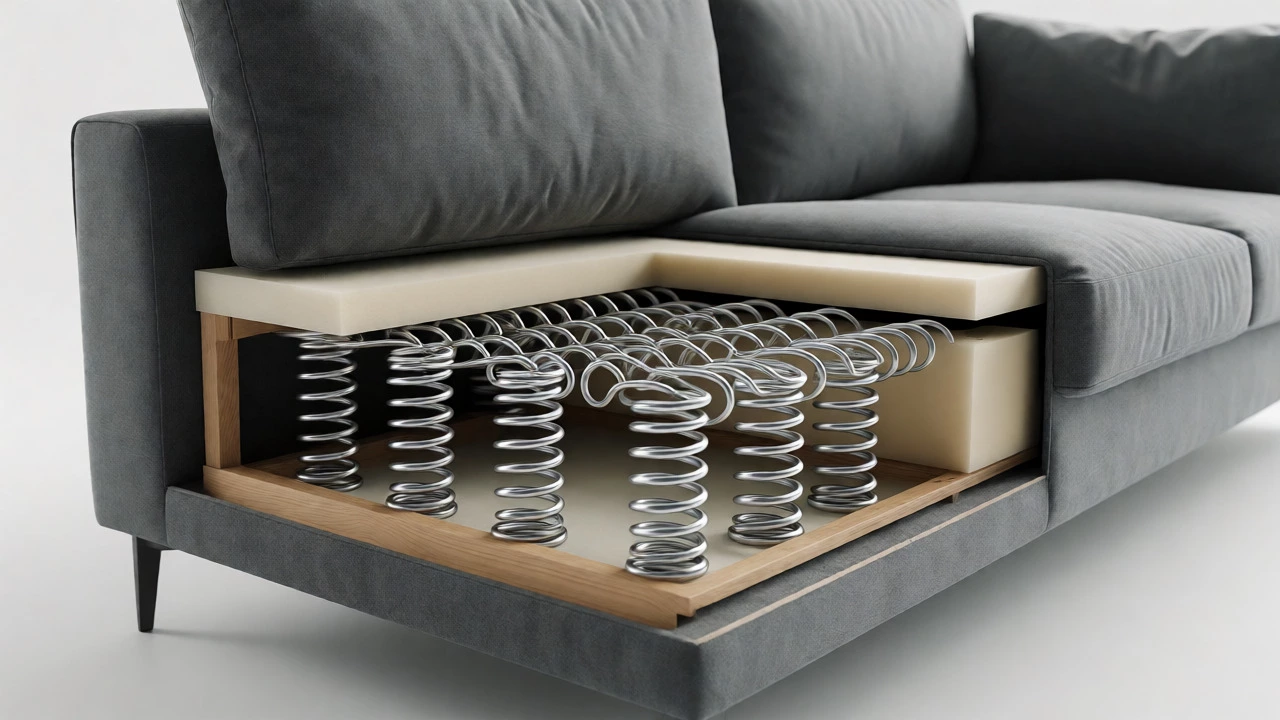
Once you have a strong frame, you need something to support the weight of the cushions and your body. This is called the suspension system, and it’s usually hidden under the seat deck, so you won’t see it unless you lift the fabric or ask the staff. There are three main types, and they vary wildly in lifespan.
The gold standard is eight-way hand-tied springs. This involves tying steel coils together with jute twine in eight directions. It provides even support and resists sagging for decades. However, it’s labor-intensive, so it’s mostly found in luxury heritage brands. If you see this, you’re paying for craftsmanship.
A more common, yet still excellent option is sinuous spring suspension. These are S-shaped steel wires stretched across the frame and clipped into place. They offer great support and durability if they are heavy-gauge steel and properly spaced. Look for springs that are close together; wide gaps mean less support and more strain on the clips.
The budget killer is webbing. This is elastic straps woven across the frame. While some high-end manufacturers use reinforced webbing with foam pads, cheap webbing stretches out quickly. Within a year or two, you’ll feel the wooden slats below your thighs. If you want longevity, avoid pure webbing suspension unless it’s part of a hybrid system with foam encasement.
Cushion Fill: Foam Density Matters More Than Brand
Here is where most buyers get tricked. Salespeople love to talk about "memory foam" or "down-filled" because they sound luxurious. But comfort fades if the fill breaks down. For long-lasting sofas, you need to look at foam density, measured in pounds per cubic foot (PCF).
Low-density foam (1.5-1.8 PCF) is what you find in big-box store sofas. It feels soft initially but loses its shape within two years. Medium-density foam (1.8-2.0 PCF) is better but still prone to sagging in high-use areas. High-resilience (HR) foam with a density of 2.5 PCF or higher is what you want. It bounces back after every sit and maintains its structure for five to ten years.
High-resilience foam is a polyurethane foam that has been processed to increase its elasticity and durability compared to standard foams.
| Foam Type | Density (PCF) | Expected Lifespan | Best For |
|---|---|---|---|
| Budget Polyfoam | 1.5 - 1.8 | 1 - 3 Years | Rarely used guest rooms |
| Standard Polyfoam | 1.8 - 2.0 | 3 - 5 Years | Occasional seating |
| High-Resilience (HR) | 2.5+ | 7 - 10+ Years | Daily living rooms |
| Dual-Density Core | Core 2.5 / Top 1.8 | 7 - 10+ Years | Comfort + Durability balance |
If you prefer the cloud-like feel of feathers or down, know that they require constant fluffing and maintenance. Pure down cushions flatten quickly. A smart compromise is a dual-density core wrapped in a down-proof ticking layer filled with feather blend. This gives you the structural integrity of HR foam with the soft exterior touch of natural fibers.
Upholstery Fabric: Rub Counts and Fiber Types
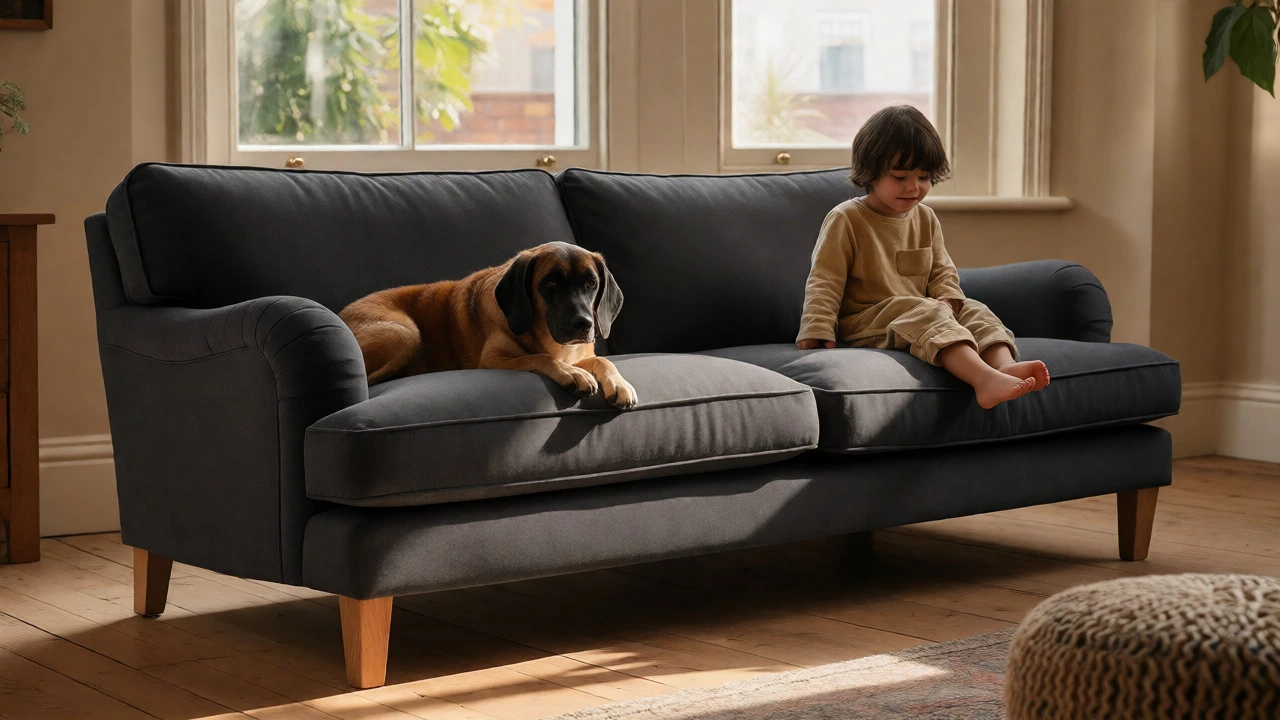
The fabric is the first thing you touch, but it’s also the first thing to wear out. In the UK and Europe, fabrics are tested using the Martindale abrasion test. The result is a number indicating how many rubs the fabric can withstand before showing signs of wear. For domestic use, anything under 15,000 double rubs is considered decorative-think pillows or headboards, not daily sofas. You want a minimum of 20,000 double rubs for everyday use, and 40,000+ for heavy-duty family homes with kids or pets.
Natural fibers like cotton and linen breathe well but stain easily and fade in sunlight. Silk is beautiful but impractical for most households. Synthetic fibers have come a long way. Performance velvets and microfibers are now incredibly durable and easy to clean. Crypton and Sunbrella are branded performance fabrics known for stain resistance and UV stability, making them ideal for conservatories or busy living rooms.
Leather is another contender. Genuine leather develops a patina and lasts decades if conditioned. However, bonded leather-which is scraps glued onto a backing-will crack and peel within a few years. Always check the label for "top-grain" or "full-grain" leather. Avoid "corrected grain" if you hate plastic-feeling surfaces, though it is more scratch-resistant.
Legs and Base Construction
Don’t ignore the legs. Plastic legs attached to a lightweight frame often snap or wobble. Solid wood legs, especially those bolted directly into the hardwood frame rather than screwed into a particleboard base, provide stability. If the legs are removable, check the screw size. Thin screws strip easily. Thick bolts indicate a manufacturer who cares about structural integrity.
Also, consider the clearance under the sofa. If you plan to vacuum underneath, ensure there’s enough space for your vacuum head. Low-profile sofas might look sleek but can trap dust and pet hair in hard-to-reach spots, leading to hygiene issues over time.
Practical Testing: What to Do in the Showroom
You can’t rely on specs alone. You need to physically test the sofa. Sit on it. Not just gently perched on the edge, but sink into it. Lean back. Stand up. Does it bounce back immediately? If the cushion stays depressed for several seconds, the foam is too low-density.
Press your hand firmly into the side of the armrest. You should feel firm resistance. If you can easily push your fingers through to the frame, the padding is too thin, and you’ll feel the wood edges after a year of use. Ideally, there should be at least 2 inches of foam padding around the internal frame.
Ask for the warranty details. A reputable manufacturer stands behind their product. Look for warranties that cover the frame for 10+ years and the foam/cushions for 3-5 years. Beware of warranties that exclude "normal wear and tear" without defining it, or those that require you to ship the entire sofa back to the factory for repairs-that’s a dealbreaker for large items.
Maintenance for Longevity
Even the best sofa needs care. Rotate your seat cushions weekly. Most sofas have identical left and right cushions; swapping them ensures they wear evenly. If you have non-removable cushions, rotate the entire sofa position relative to sunlight and traffic patterns every six months.
Vacuum the fabric monthly with an upholstery attachment to remove grit. Dust particles act like sandpaper against fabric fibers, accelerating abrasion. For spills, blot immediately-never rub. Rubbing pushes the liquid deeper into the foam and damages the weave.
Is a more expensive sofa always more durable?
Not necessarily. You are often paying for brand name, design aesthetics, or retail markup rather than materials. A mid-priced sofa with a hardwood frame, high-density foam, and sinuous springs will often outlast a designer sofa with a softwood frame and low-density foam. Always inspect the construction details rather than relying on the price tag.
How do I know if the foam is high quality?
Ask the retailer for the foam density rating in pounds per cubic foot (PCF). Anything below 1.8 PCF is likely to sag quickly. High-quality sofas typically use HR foam with a density of 2.5 PCF or higher. If they don't know the density, press firmly on the cushion; if it feels airy and compresses completely to the frame, it's likely low quality.
What is the best fabric for pets?
Tightly woven synthetic fabrics like microfiber, canvas, or performance velvet are best. They resist claws and are easier to clean than loose-weave linen or silk. Leather is also good for cats as claws slide off, but dogs may scratch it. Look for fabrics with a Martindale count above 40,000 double rubs for maximum durability.
Should I buy a sofa with exposed legs or a skirt?
Exposed legs allow for better airflow and easier cleaning underneath, which helps prevent dust mites and mold. Skirts hide imperfections in the base construction but can trap dirt and make it harder to vacuum. From a longevity standpoint, exposed legs are generally more practical unless you have a specific aesthetic requirement.
How long should a good sofa last?
A well-constructed sofa with a hardwood frame and high-density foam should last between 7 and 15 years with regular use. Budget sofas often last 2 to 4 years. Heritage-grade sofas with hand-tied springs and premium materials can last 20+ years if maintained properly.