
Hidden Storage Finder
Select what you want to hide and your skill level to find the perfect hidden storage solution.
1. What do you want to hide?
2. What is your DIY/Skill Level?
Recommended Solution
Pro Tips for This Location:
You know that feeling when you walk into your bedroom and the visual noise hits you immediately? Clothes on the chair, books on the floor, cables tangling around the nightstand. It’s not just messy; it drains your energy. The secret to a calm bedroom isn’t necessarily buying more furniture-it’s about hidden storage. This approach lets you tuck away the chaos so your room feels spacious and serene, even if you’re living in a compact flat in Bristol or a larger suburban home.
| Location | Best For | Effort Level |
|---|---|---|
| Under Bed | Seasonal clothes, shoes | Low (Buy bins) |
| Headboard | Books, phone chargers | Medium (DIY/Install) |
| Ottoman/Foot of Bed | Bulky items like duvets | Low (Buy furniture) |
| Wall Nooks | Decor, small essentials | High (Carpentry) |
| Behind Doors | Robes, bags, accessories | Low (Hooks/Racks) |
The Under-Bed Opportunity You’re Ignoring
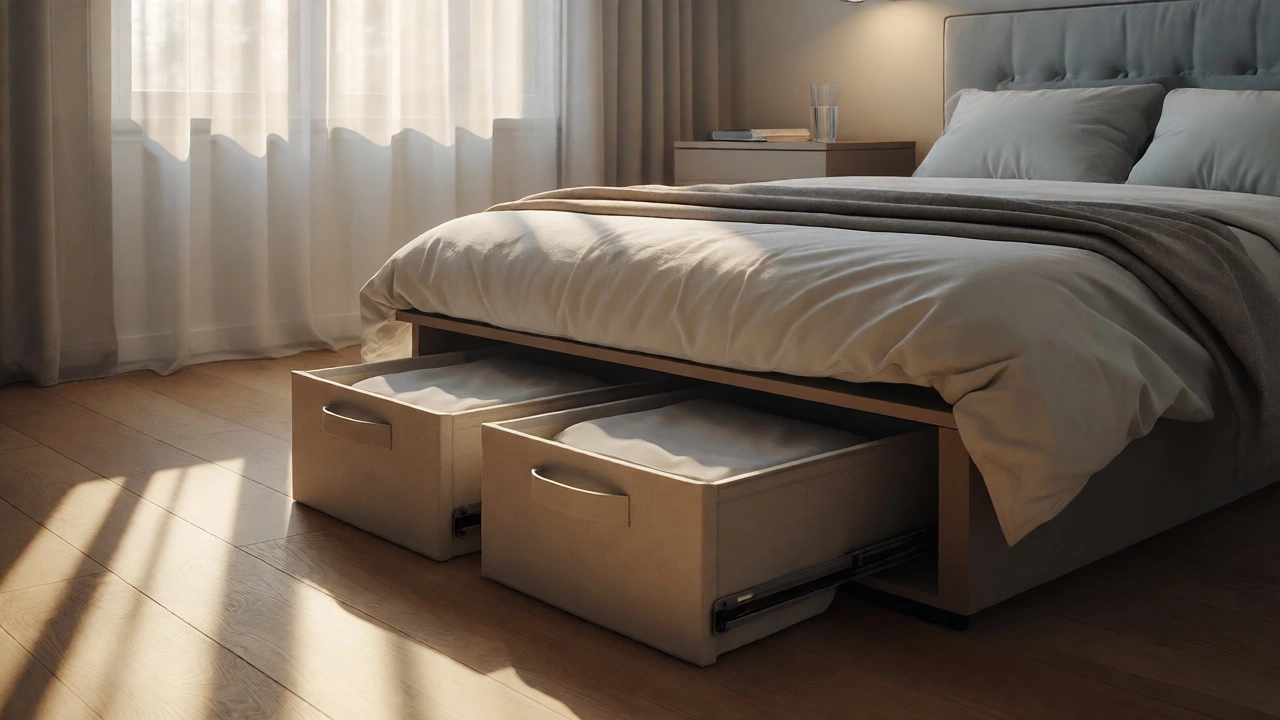
Let’s start with the biggest empty space in most bedrooms: the area beneath your mattress. On average, a standard bed frame leaves about 20-30 centimetres of clearance. That is prime real estate. If you don’t have built-in drawers, you can easily utilize this gap without major renovations. Start by measuring the height clearance carefully. You don’t want to buy expensive boxes only to find they won’t slide under. For seasonal items like winter coats or summer linens, soft fabric storage bags are excellent because they compress slightly and have handles. They fit neatly into tight gaps where rigid plastic might jam. If you prefer rigidity for shoes or heavy books, look for low-profile plastic containers with wheels. These make retrieval effortless-you won’t be crawling across the floor every time you need a pair of trainers. One trick I use often is labeling everything clearly. Since you can’t see what’s inside, guesswork leads to digging through five boxes to find one scarf. Use clear labels or color-coded tags. This turns a dark void into an organized archive.
Furniture That Doubles as Storage
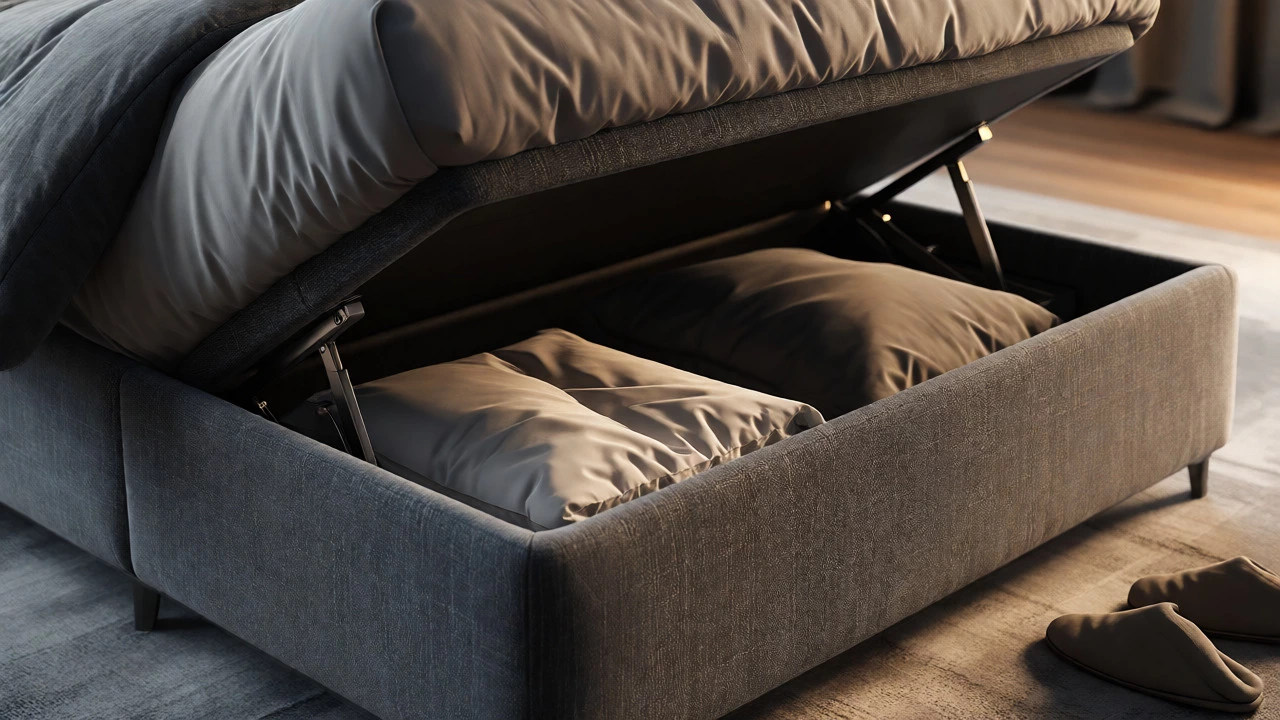
Sometimes the best way to hide storage is to disguise it as something else. An ottoman is a padded footstool or low seat that typically features a hinged lid revealing internal storage space at its base. Unlike a regular stool, an ottoman can swallow up blankets, pillows, or even laptop chargers while looking like a stylish design element. When choosing an ottoman, consider the mechanism. Hydraulic lift systems are smoother and safer than simple hinges, which can slam shut. Check the weight limit too; some cheaper models sag under heavy loads. Place it at the foot of your bed or near a window. It serves as extra seating when friends visit, but mostly, it acts as a silent keeper of clutter. Another underrated piece is the storage bench. If you have a bay window or a narrow alcove, a custom-built bench with a lift-up top fits perfectly. It hides unsightly radiators or pipes behind it while giving you a place to sit and put on shoes. In smaller rooms, a storage headboard replaces the need for bedside tables entirely. Many modern beds come with hollow headboards featuring open shelves or closed cabinets. Keep daily essentials like water glasses, books, or phones here, and keep the rest hidden behind doors.
Using Vertical Space Without Visual Clutter
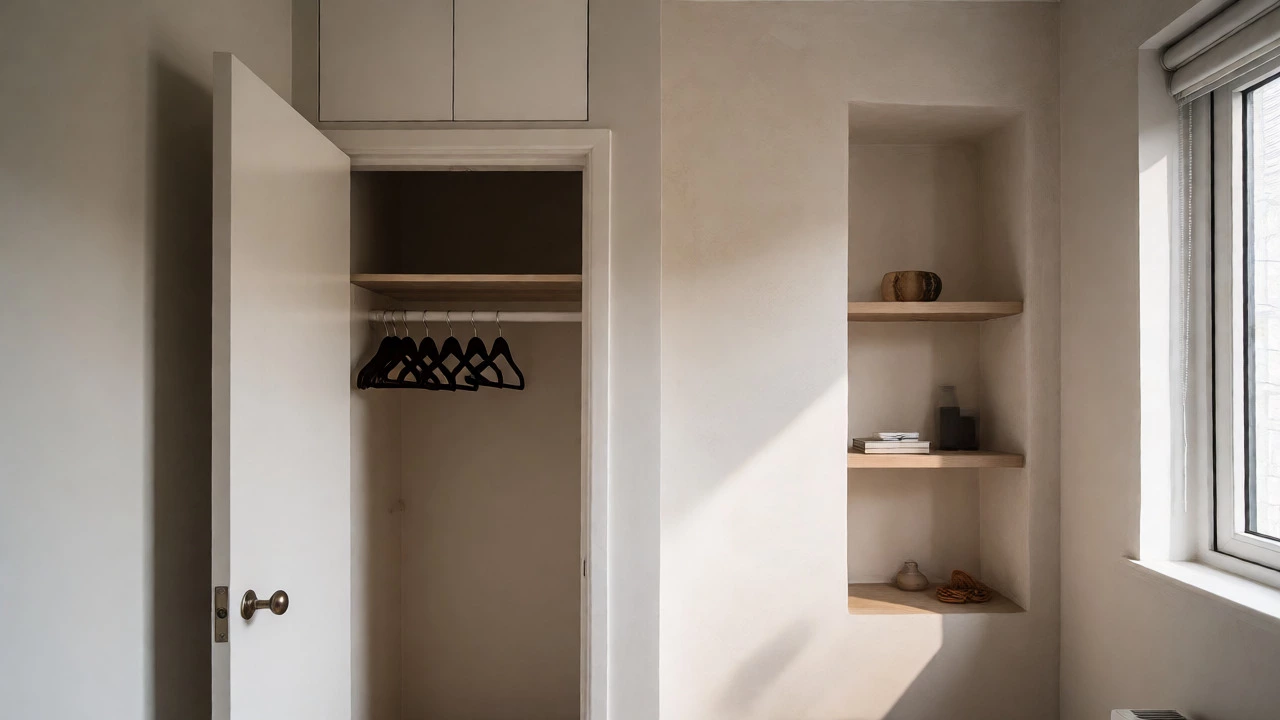
Most people think of vertical storage as tall bookshelves that block light and feel imposing. But hidden vertical storage is subtler. Think about recessed shelving. If you have a non-load-bearing wall, cutting out a section to create a flush shelf allows you to display decor without it protruding into the room. This requires some DIY skill or a carpenter, but the result is sleek and modern. If renovation isn’t an option, use the backs of doors. Over-the-door organizers are cheap and effective for accessories like scarves, belts, or jewelry. Hang them on the inside of your wardrobe door so they remain invisible when the wardrobe is closed. Similarly, install hooks on the back of the bedroom door itself. This is perfect for robes, bags, or tomorrow’s outfit. It keeps these items off chairs and floors, maintaining a clean line of sight. Don’t forget the space above door frames. A shallow cabinet installed there can store rarely used items like suitcases or holiday decorations. Because it’s high up, it doesn’t intrude on your living space, yet it utilizes cubic volume that usually goes to waste.
Smart Wardrobe Hacks
Your wardrobe is likely the primary source of visible clutter. To hide storage within it, focus on uniformity. Mismatched hangers create visual noise. Switching to slim, velvet, or wooden hangers instantly makes the interior look tidier. But beyond aesthetics, structural changes help. Double hanging rails are a game-changer for short garments. Instead of one long rail, install two shorter ones stacked vertically. This doubles your capacity for shirts, trousers, and skirts. Use the bottom rail for folded items in pull-out baskets. These baskets slide out easily, letting you access deep-stored clothes without pulling everything forward. Consider the top shelf of your wardrobe. It’s often hard to reach, so people throw things there haphazardly. Install a drop-down rod system. With a gentle tug, the rod lowers to eye level, allowing you to grab stored items without a step stool. When pushed back up, it disappears into the ceiling of the wardrobe. This is particularly useful for tall wardrobes in older UK homes with high ceilings.
DIY Projects for Budget-Conscious Homeowners
You don’t need a massive budget to create hidden storage. Simple DIY projects can yield big results. One favorite is turning old crates into storage. Paint them to match your walls or leave them rustic. Stack them in a corner to create a makeshift nightstand or side table. They hold books and magazines securely but look intentional rather than chaotic. Another idea is using tension rods inside cabinets or cupboards. If you have a cupboard with wasted vertical space, add a second tension rod lower down. Hang spray bottles or cleaning supplies from S-hooks. Or use it to hang roll-up mats or yoga equipment. This divides the space efficiently without drilling holes. For a quick fix, use decorative boxes. Buy three identical woven baskets or wooden boxes. Place them on open shelves or under windowsills. Toss loose items-cables, remotes, spare keys-into them. The key is consistency. Three matching boxes look like a design choice; five random boxes look like a mess.
Maintaining Your Hidden Systems
Hiding stuff isn’t enough; you need to maintain the system. The danger of hidden storage is "out of sight, out of mind." Items get buried and forgotten until they become obsolete. Set a rule: if you haven’t used something from your hidden storage in six months, donate or discard it. Schedule a quarterly review. Open those under-bed bins. Check the ottoman. See if anything needs washing or sorting. This prevents the accumulation of junk that defeats the purpose of having a tidy room. Also, ensure accessibility remains easy. If you have to move three other boxes to get to the one you want, you’ll stop using the storage. Keep frequently used items accessible and reserve deep hiding spots for truly occasional needs. Finally, lighting matters. Dark corners attract clutter. Ensure your bedroom has adequate ambient lighting. A well-lit room encourages tidiness because you can actually see the state of your space. Add battery-operated LED strips inside wardrobes or under shelves to illuminate hidden zones. It helps you find things quickly and discourages tossing items into shadows.
How much weight can under-bed storage hold?
It depends on the container material. Plastic bins with reinforced bottoms can typically hold 15-20 kg safely. Fabric bags are better suited for lighter items like bedding and clothing, usually up to 10 kg. Always check the manufacturer's weight limit to prevent breakage.
What is the best hidden storage for small bedrooms?
Vertical solutions are best for small spaces. Look for storage headboards, over-the-door organizers, and tall, narrow cabinets that fit in alcoves. Ottomans with storage also work well as they provide seating without taking up extra footprint.
Can I make my own under-bed drawers?
Yes. You can build simple sliding trays using plywood runners attached to the bed frame. Alternatively, use sturdy cardboard boxes wrapped in contact paper or fabric for a low-cost, customizable solution. Ensure the wheels or slides are smooth to avoid scratching the floor.
How do I keep dust out of hidden storage?
Use lidded containers for all hidden storage. Even if the space is enclosed, dust settles over time. Sealed plastic bins or zippered fabric cases protect contents effectively. Vacuum the storage areas annually to remove accumulated debris.
Are ottomans durable for heavy storage?
Quality varies widely. Look for ottomans with solid wood frames and hydraulic lifts. Cheap particleboard models may sag or break under heavy weights like books or tools. For bulky items like duvets, most standard ottomans are sufficient.