
Bathroom Luxury Upgrade Calculator
Flooring
Lighting
Fixtures
Storage
Scent & Sound
Details
Select upgrades to see your bathroom luxury transformation
£200-£500: Great combination of comfort and style
Over £500: Luxury bathroom achieved
"Real luxury isn't about price tags—it's about how the space feels." - Article Insight
Most people think a luxurious bathroom means marble floors, gold faucets, and a freestanding tub you see in magazines. But real luxury isn’t about price tags-it’s about how the space feels. It’s the warmth underfoot in the morning, the quiet when you close the door, the way steam lingers just right around a towel rack that doesn’t drip. You don’t need a full renovation to turn your bathroom into a sanctuary. Here’s how to do it-with smart, real-world upgrades that actually matter.
Start with the floor
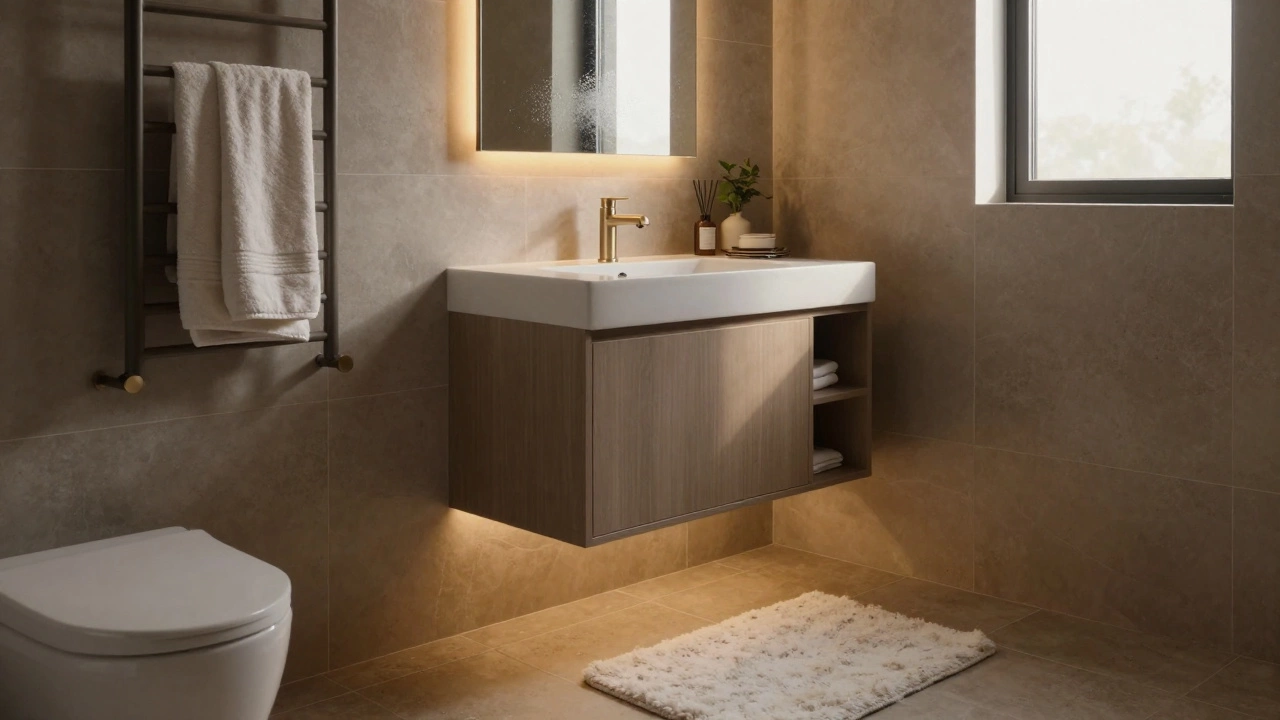
Think about how many times you step onto that bathroom floor in the morning. Cold tiles? That’s not luxury. That’s a shock. Heated floors are the quietest upgrade you’ll ever make. Not the kind that costs thousands-modern electric underfloor heating mats start under £200 for a standard-sized bathroom. They warm up in 15 minutes, stay at 28°C, and cut condensation. Pair them with natural stone or porcelain tiles that mimic stone. Avoid glossy finishes-matte or honed textures feel richer and don’t show water spots.
And don’t forget the rug. A thick, plush, 100% cotton rug with a non-slip backing does more than absorb water. It signals comfort. Look for one with a minimum 12mm pile height. Brands like The Rug Company or even John Lewis’s own range have options that look expensive but don’t cost a fortune. Place it right in front of the sink and tub. That’s your daily luxury ritual.
Lighting is everything
Fluorescent bulbs in the ceiling? That’s not lighting. That’s punishment. Luxury bathrooms use layered lighting: ambient, task, and accent. Start by replacing your main fixture with a dimmable LED ceiling light-preferably with a warm white tone (2700K to 3000K). Then add wall sconces on either side of the mirror. This eliminates shadows under your eyes when you’re applying makeup or shaving. You’ll notice the difference immediately.
For accent lighting, install LED strips under the vanity or behind the mirror. It creates a soft halo effect that feels like a spa. You can buy smart LED strips for under £50 that sync with your phone or voice assistant. No rewiring needed. Just peel and stick. The glow at night? Pure calm.
Upgrade your fixtures-smartly
Fixtures are the jewelry of your bathroom. You don’t need gold-plated everything. But you do need quality. A single-lever mixer tap with a ceramic disc valve lasts longer and feels smoother than cheap plastic handles. Look for brass or brushed nickel finishes-they age gracefully and don’t show fingerprints like chrome.
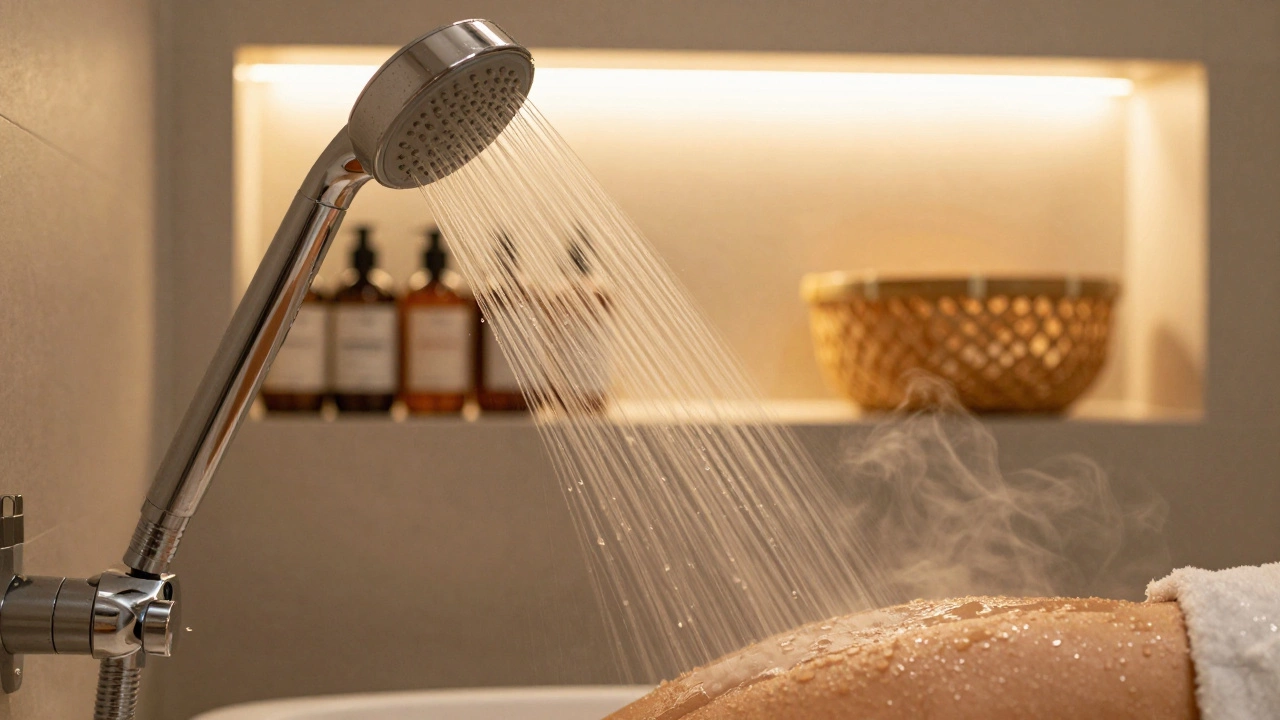
Replace your showerhead. A high-pressure, rainfall-style head with a pause function (yes, they exist) makes every shower feel like a spa. Brands like Hansgrohe or Grohe have models under £200 that deliver 1.5 GPM with excellent pressure. Pair it with a slide bar so you can adjust height. That’s luxury you can feel on your shoulders.
And the towel warmer? Don’t skip it. A simple electric towel rail, mounted near the tub, takes the chill off towels in seconds. It also reduces mildew. You’ll find yourself drying off slower-because you don’t want to leave.
Storage that disappears
Luxury doesn’t mean clutter. It means everything has a place-and you never see it. Built-in vanity storage with soft-close drawers is the gold standard. If your vanity is old, replace it with one that has a solid surface top (quartz or engineered stone) and integrated sink. No seams. No water pooling. Just clean lines.
For extra storage, install recessed wall niches in the shower. You can do this during a tile job, or retrofit with adhesive-backed shelves. Store shampoo, body wash, and loofahs inside. No more bottles on the ledge. No clutter. Just smooth, seamless surfaces.
Use baskets-woven cotton or bamboo-for towels and linens. Place them on open shelves or inside a cabinet. They soften the space and make everything feel more organic.
Scent and sound
What does your bathroom smell like? Bleach? Mildew? That’s not luxury. Luxury smells like lavender, sandalwood, or just clean linen. Use a small, plug-in diffuser with essential oils. Choose one with a timer so it runs only during morning and evening use. Avoid overpowering scents-subtlety is key.
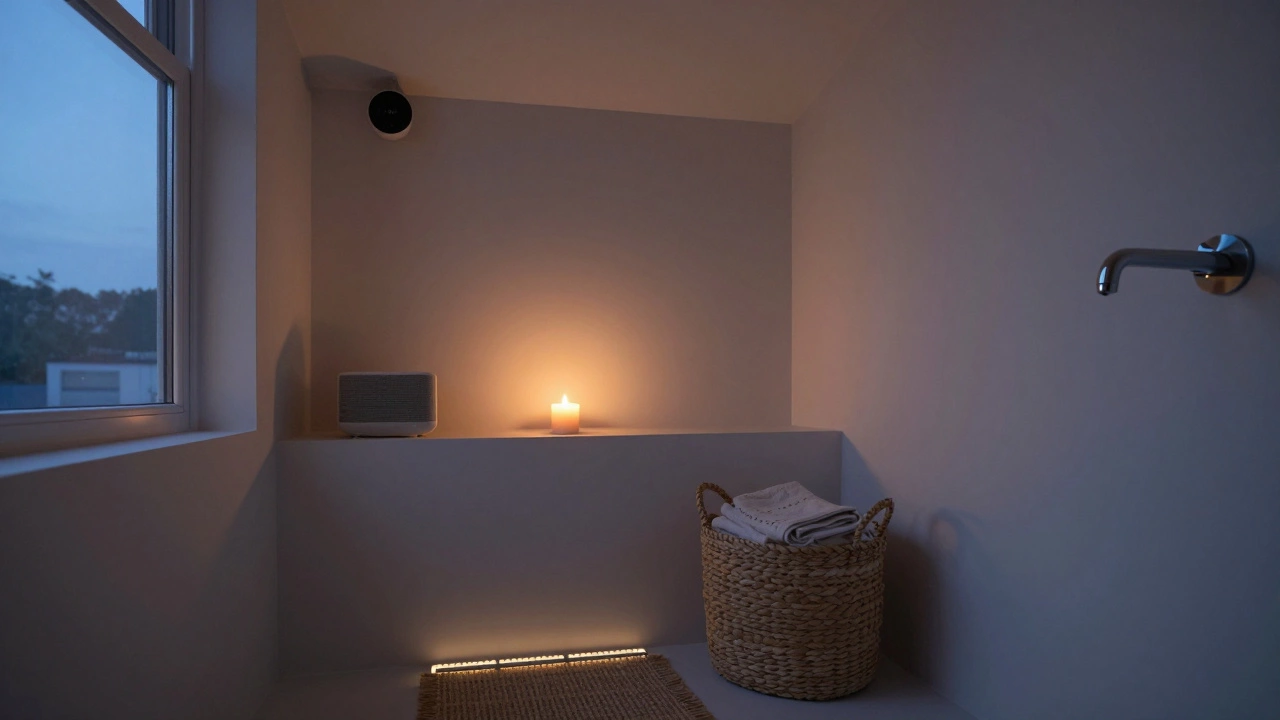
Sound matters too. Install a small Bluetooth speaker (water-resistant, IP67 rated) near the ceiling. Play soft ambient music or nature sounds while you bathe. No need for loud speakers. Just enough to drown out the hum of the boiler or the neighbour’s dog. It transforms the space from functional to immersive.
Details that make you pause
Luxury lives in the details. A soap dispenser that matches your faucet. A toothbrush holder with a built-in drying tray. A mirror with a defogger-yes, those exist, and they’re under £150. A bath tray for your coffee or book. A single, high-quality candle on the windowsill. A small plant-like a snake plant or peace lily-that thrives in humidity.
These aren’t decorations. They’re invitations. To slow down. To breathe. To enjoy.
What not to do
Don’t go overboard. A 24-karat gold showerhead? It looks cheap. Too many patterns? It feels chaotic. A vanity with 10 drawers? You’ll never use half of them. Luxury is restraint. It’s the absence of noise-visual, auditory, and emotional.
Don’t install trendy items just because they’re Instagrammable. That heated bidet seat? Only if you’ll use it daily. A steam shower? Only if you’re going to use it more than once a month. Choose upgrades that match your routine, not your fantasy.
Real results, real cost
Here’s what one Bristol homeowner did last year, on a £1,800 budget:
- Underfloor heating mat: £190
- Brushed nickel tap and showerhead: £320
- LED mirror with defogger: £140
- Towel warmer: £110
- Woven cotton rugs (2): £120
- Wall niches and storage baskets: £80
- Diffuser and candles: £40
- Speaker: £70
That’s it. No demolition. No plumbing overhaul. Just smart swaps. The result? A bathroom they now use for 45 minutes at a time-instead of 8 minutes. They say it’s the only room in the house they don’t rush through.
Start small. Stay consistent.
You don’t need to do it all at once. Pick one area. Do it well. Then wait a month. Notice how you feel in that space. Then pick the next. Luxury isn’t built in a weekend. It’s built over time, one quiet moment at a time.
What’s the cheapest way to make a bathroom feel luxurious?
The cheapest upgrade is lighting. Replace your ceiling bulb with a warm white LED (2700K-3000K) and add two wall sconces on either side of the mirror. That alone cuts shadows, adds warmth, and makes the space feel instantly more expensive. Total cost: under £100.
Do I need to re-tile to get a luxurious bathroom?
No. You can achieve luxury without re-tiling. Focus on the surfaces you touch: the floor, the faucet, the towel rail. A heated floor mat and a new showerhead can transform the experience. If your tiles are in good condition, just clean them with a stone-safe cleaner and seal them. That’s often enough.
Is a freestanding tub worth it?
Only if you have the space and use it regularly. A freestanding tub takes up room, needs extra plumbing, and costs £1,000-£3,000. If you only bathe once a week, a deep soaking tub in a corner with a good showerhead will give you the same feeling. Save the freestanding tub for when you’re doing a full remodel.
What materials last longest in a bathroom?
Brass, brushed nickel, and ceramic are the top performers. Brass resists corrosion and develops a patina over time. Brushed nickel hides water spots better than chrome. Ceramic tiles with a matte finish don’t scratch easily and don’t show grime. Avoid plastic, polished chrome, and cheap laminates-they look dated fast.
Can I make a small bathroom feel luxurious?
Absolutely. Use mirrors to create depth, choose light colours, and install recessed lighting. A single high-quality towel rail, a good soap dispenser, and a small diffuser can make a tiny bathroom feel intentional and calm. Clutter kills luxury-so keep surfaces clear. Less is more, especially in small spaces.