

Small Space Storage Calculator
Measure Your Space
Enter your room dimensions to see how much space you could save
Living in a small house doesn’t mean you have to live with clutter. It just means you need to work smarter-not harder-with the space you have. I’ve seen too many people buy fancy organizers that collect dust, or cram boxes under the bed only to forget what’s inside. The real trick isn’t buying more stuff. It’s using every inch of your home like it’s a puzzle, and you’re the one solving it.
Start with what you already own
Before you buy a single shelf or bin, go through your stuff. Not just a quick tidy-up. A real audit. Take everything out of your closets, drawers, cabinets. Put it all on the floor. Then ask yourself: Have I used this in the last year? If the answer’s no, it’s not storage-it’s storage debt.
A 2023 study by the UK’s National Storage Association found that the average British household keeps 17% of items they never use. That’s like paying rent for a second closet you never open. Donate, sell, recycle. Be ruthless. You’ll be amazed how much space opens up just by letting go.
Use vertical space like a pro
Walls aren’t just for pictures. They’re for storage. Floor-to-ceiling shelves are the easiest win. But even if you’re renting and can’t drill holes, there are options. Adhesive hooks, tension rods, and over-the-door organizers work wonders in bathrooms, kitchens, and bedrooms.
In the kitchen, hang pots and pans from a ceiling rack. Mount a magnetic strip for knives. Use wall-mounted spice racks instead of stacking jars in a cabinet. In the bedroom, install a tall, narrow bookshelf beside your bed. It holds books, lamps, and even small bins for socks or jewelry. You’re not losing floor space-you’re gaining it.
Think beneath the surface
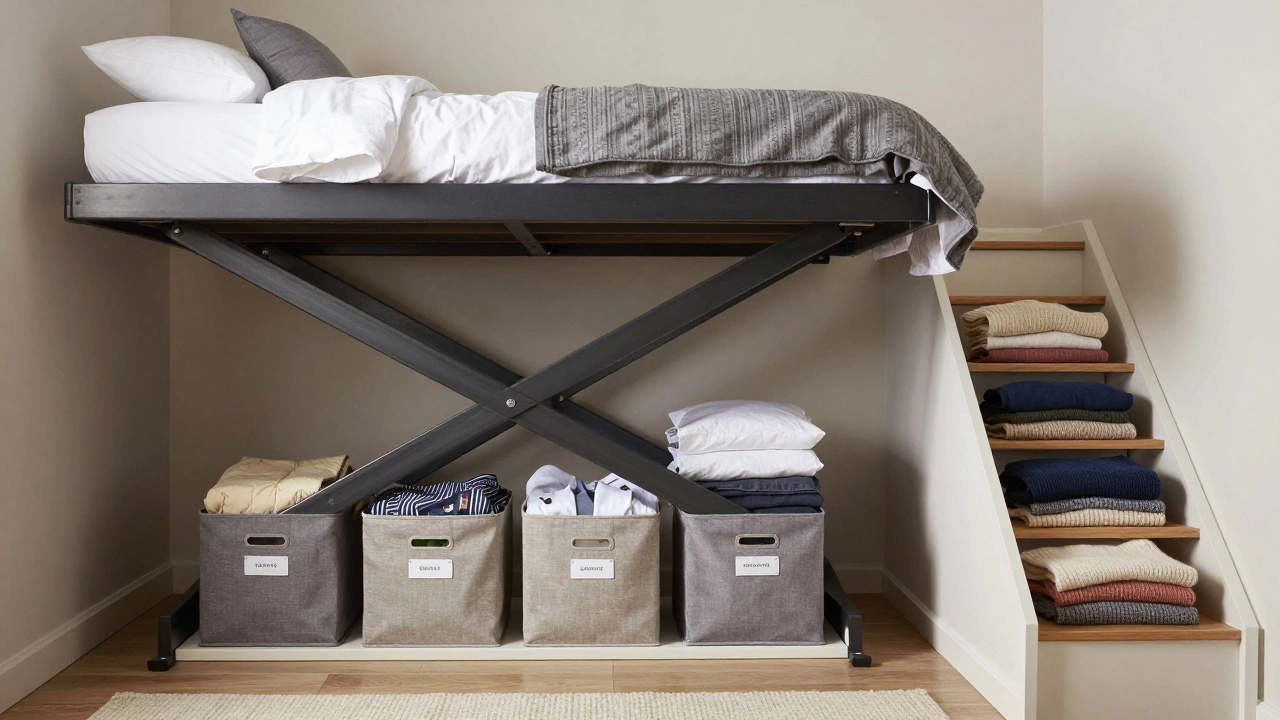
Your bed is a goldmine. Not just the space underneath, but the bed itself. Choose a bed frame with built-in drawers. Or get a hydraulic lift mattress that raises to reveal a full storage compartment. These aren’t just for luxury homes-they’re affordable now, starting under £200.
Staircases in small houses? Don’t ignore them. If you have stairs, build drawers into the risers. It’s a classic trick in UK cottages and modern flats alike. You can buy ready-made stair storage kits, or hire a local carpenter for a few hundred pounds. Suddenly, you’ve got hidden space for off-season clothes, linens, or holiday decorations.
Transform furniture into storage
Every piece of furniture should pull double duty. A bench at the front door? Make it a trunk with a padded lid. It holds shoes, scarves, and gloves. A coffee table with lift-top? Perfect for stashing board games, remote controls, or extra blankets.
Look for ottomans with storage inside. Find a TV stand with closed cabinets instead of open shelves. Even a simple side table can become a storage unit if you add a basket underneath. The key is hiding the mess. Clutter looks worse in small spaces. Closed storage keeps things calm.
Use the space above cabinets
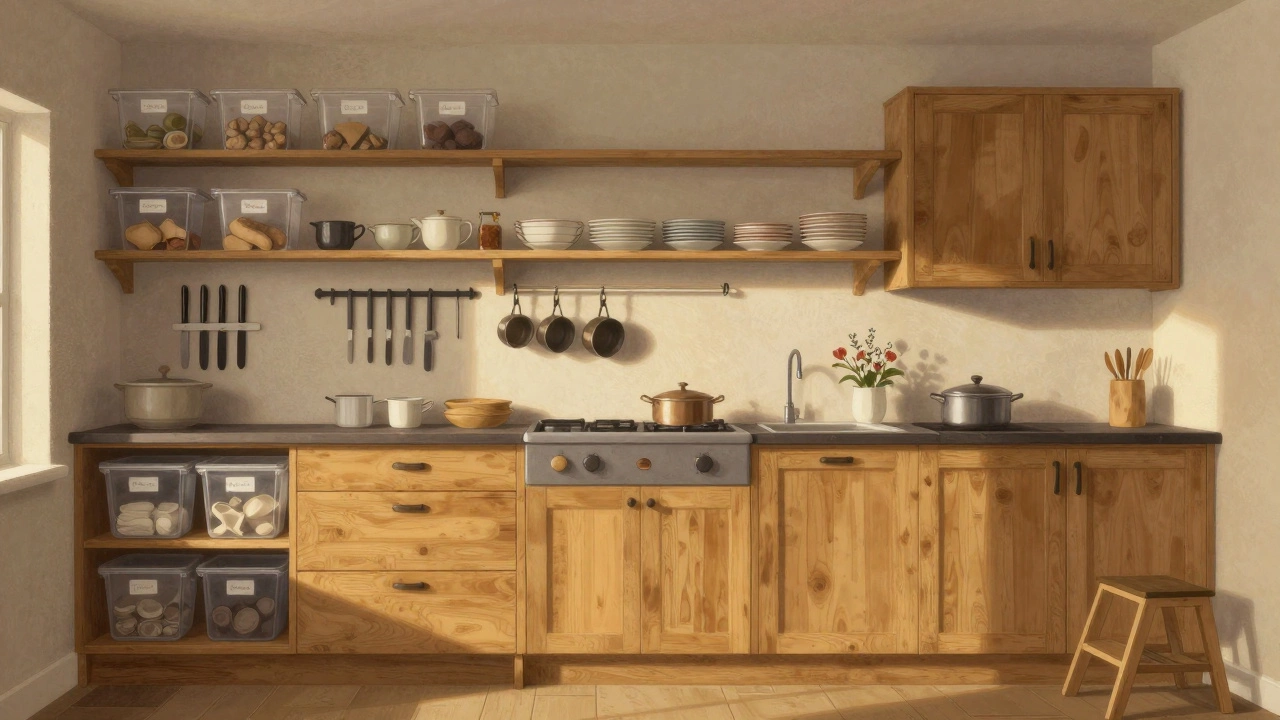
How often do you look up at the top of your kitchen cabinets? Probably never. But that’s where you’re wasting the most vertical space. Install a narrow shelf above your upper cabinets. Use it for rarely used items-holiday dishes, bulk pantry goods, or extra glasses.
Just make sure you can reach it safely. A step stool you keep nearby is better than a ladder you never grab. And don’t pile it too high. Keep it to one or two rows of bins. Label them clearly. If you can’t see what’s inside, you won’t remember it’s there.
Go slim and stackable
Not all storage bins are created equal. Thick plastic bins take up too much space. Look for slim, stackable containers made of rigid fabric or thin plastic. They fit better in tight corners and slide easily under beds or into narrow cabinets.
Use drawer dividers in dressers. They turn one drawer into four neat sections. Same with kitchen utensil drawers. Buy expandable organizers that adjust to fit your space. And always choose clear bins. You’ll save time hunting for things when you can see what’s inside.
Declutter by category, not room
Don’t tackle the living room one day and the bedroom the next. Instead, pick one category: all your T-shirts. Gather every single one-from your bedroom, the guest room, even the attic. Lay them out. Keep only what fits, flatters, and you wear regularly. Then store them together in one place.
This method works for books, shoes, toys, tools. You’ll realize you own three pairs of winter boots you never wear. Or five coffee mugs you never use. Grouping like items makes it easier to see what you really need. And you’ll stop buying duplicates because you forget what you already have.
Use doors and hidden corners
Door backs are empty real estate. Hang a slim shoe organizer on the back of your closet door. It holds socks, underwear, hair ties, or makeup. Use the space beside your fridge for a narrow pull-out cart. It’s perfect for spices, snacks, or cleaning supplies.
Don’t forget corners. A corner shelf unit or a triangular storage cabinet can turn a wasted nook into useful space. Even a simple floating shelf in the corner of your bathroom holds towels, toiletries, or extra toilet paper.
Label everything
Storage only works if you can find things. And if you can’t find them, you’ll buy duplicates. Use clear labels on every bin, box, and drawer. A simple label maker costs £15. Or write on masking tape with a permanent marker. Write what’s inside-not just “miscellaneous.” Write “Winter Scarves,” “Kids’ Art Supplies,” “Backup Chargers.”
Color-code labels if it helps. Blue for clothes, green for kitchen, red for tools. It’s a tiny habit that saves hours every year.
Plan for change
Small homes need flexibility. Your storage system shouldn’t be set in stone. Buy modular units you can rearrange. Use baskets instead of fixed bins. Keep a few empty containers on hand for seasonal swaps-like moving summer clothes to the attic and pulling out winter gear.
Every six months, do a quick review. What’s not working? What’s gathering dust? Adjust. Your needs change. Your storage should too.
| Storage Type | Best For | Space Saved | Cost Range |
|---|---|---|---|
| Bed with drawers | Clothing, linens | Up to 30% of floor space | £150-£400 |
| Wall-mounted shelves | Books, decor, kitchen items | Free up cabinets | £20-£100 |
| Over-the-door organizers | Shoes, toiletries, cleaning supplies | Unused door surface | £10-£30 |
| Stackable bins (clear) | Seasonal items, pantry goods | Maximizes vertical space | £5-£25 each |
| Staircase drawers | Linens, holiday decor | Turns stairs into storage | £100-£500 (DIY or custom) |
What not to do
Don’t buy storage solutions before you’ve decluttered. You’ll just be organizing clutter. Don’t use bulky, decorative baskets that take up more space than they save. Don’t ignore the ceiling-install hooks for bikes or ladders. And don’t pretend you’ll remember where everything is. If it’s not labeled, it’s lost.
The biggest mistake? Thinking you need more space. You don’t. You need better systems. A small house with smart storage feels bigger than a large house full of junk.
What’s the most important storage tip for small homes?
The most important tip is to declutter first. You can’t maximize storage if you’re holding onto things you don’t use. Get rid of duplicates, broken items, and unused gifts. Only then should you invest in storage solutions.
Can I use storage in a rented apartment?
Absolutely. You don’t need to drill holes. Use adhesive hooks, tension rods, over-the-door racks, and freestanding shelves. Furniture with built-in storage-like ottomans or beds with drawers-is perfect for renters. Just make sure you can move everything out when you leave.
How do I store seasonal clothes without a closet?
Use under-bed storage bins with wheels. Or stack slim, labeled bins on a high shelf. Vacuum-sealed bags save space but can damage delicate fabrics over time. For wool or silk, use breathable cotton bags instead. Rotate items every season.
Is it worth buying a storage bed?
Yes, if you’re short on space. A storage bed gives you the equivalent of a full closet without taking up floor space. Look for ones with gas-lift hydraulics-they’re easier to open than manual drawers. Brands like IKEA and Wayfair offer affordable options under £300.
How do I keep storage from looking messy?
Use closed storage whenever possible-cabinets, drawers, bins with lids. Avoid open shelves for everyday clutter. If you must display items, group them by color or material. Keep surfaces clear. A clean top of a dresser or shelf makes the whole room feel bigger.
Next steps
Start today. Pick one area-your junk drawer, the hallway closet, or the top shelf in the kitchen. Clear it out. Sort what stays. Put it back neatly. Label it. Then move to the next spot. In a week, you’ll have reclaimed 30% more usable space without spending a penny.
Storage isn’t about buying more. It’s about thinking differently. Every inch of your home has potential. You just have to see it.