
Small Space Storage Calculator
Calculate Your Storage Needs
Enter your room dimensions and items to store to get personalized recommendations from the article's proven techniques.
Your Optimal Storage Solution
Living in a small house doesn’t mean you have to live with clutter. It just means you need to be smarter about how you use every inch. I’ve helped friends in Bristol turn their 700-square-foot flats into tidy, functional homes - no magic required. Just practical, proven tricks that work in real life.
Start with what you already own
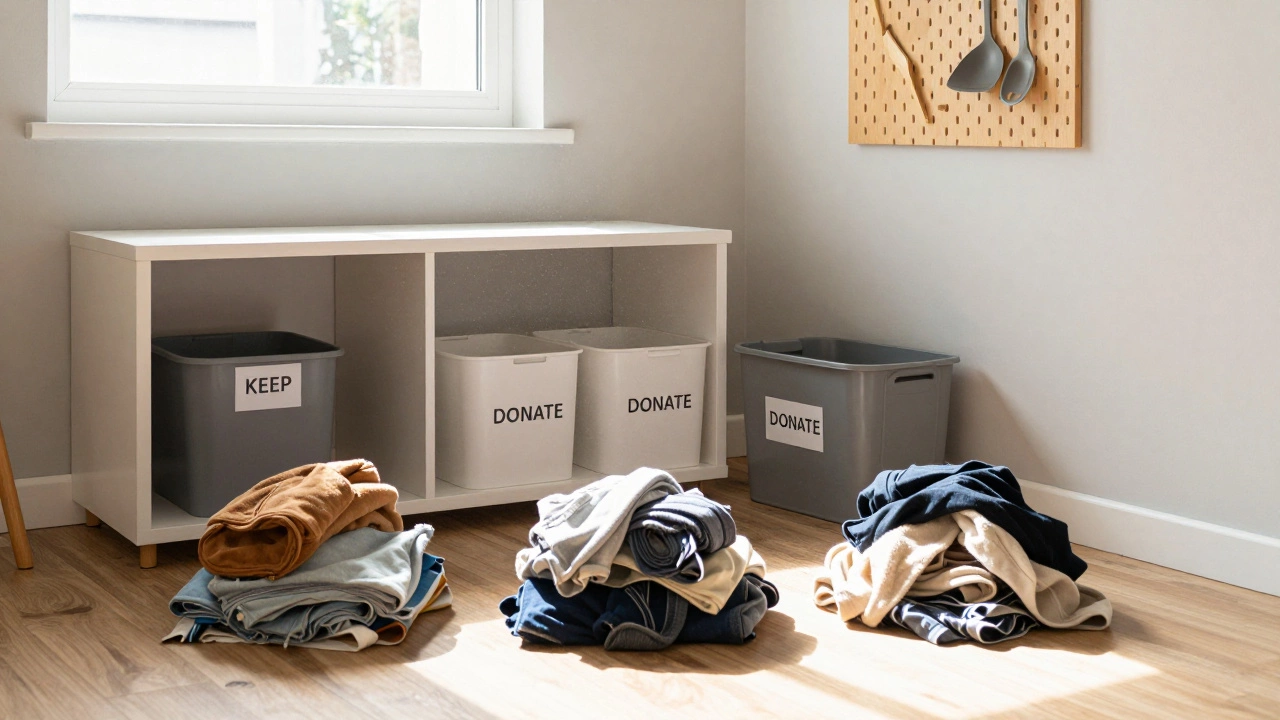
Before you buy a single shelf or bin, take everything out. Seriously. Empty every closet, drawer, and cupboard. Lay it all on the floor. Now sort it into three piles: keep, donate, toss. Most people are shocked by how much they don’t use. One client kept five pairs of shoes she hadn’t worn in seven years. Another had three sets of holiday dishes she never used. If you haven’t used it in 12 months, ask yourself: does it really belong here?Be ruthless. Storage isn’t about having more places to hide stuff - it’s about keeping only what adds value to your life.
Use vertical space like a pro
Floor space is limited. Ceiling space? Free. Install shelves all the way up to the ceiling - especially in the living room, bedroom, or home office. You can store seasonal items, books, or decorative baskets up top. Use step stools or pull-down ladders for hard-to-reach spots. I’ve seen people turn a 6-foot wall into 12 feet of usable storage just by going vertical.Wall-mounted pegboards aren’t just for garages. Hang one in the kitchen for pots, pans, and utensils. In the entryway, use it for keys, bags, and hats. They’re cheap, customizable, and make everything visible so you don’t buy duplicates.
Choose furniture that works double duty
Every piece of furniture in a small home should earn its place. A sofa with hidden storage underneath? That’s a win. A bed with drawers built into the frame? Even better. Look for ottomans that open up to store blankets or shoes. Coffee tables with lift-tops reveal extra space inside. I’ve seen people store winter coats, board games, and even extra linens inside their coffee tables without anyone noticing.Buy furniture with legs. It lets you slide bins or baskets underneath for extra storage. A bed with 8 inches of clearance? Perfect for sliding out plastic bins with off-season clothes. No need to lift heavy boxes - just pull and go.
Don’t ignore the doors
Doors are wasted space. Hang over-the-door organizers in the bathroom for toiletries. In the closet, use hanging shoe racks or slim hooks for belts and scarves. Even the back of your kitchen door can hold spices, cleaning supplies, or measuring cups. I’ve used a narrow over-the-door rack to store all my baking sheets - no more stacking them in a cabinet where they slide around and scratch each other.Use magnetic strips for metal tools. In the kitchen, mount one on the wall for knives, spatulas, or can openers. In the garage or workshop, hold screwdrivers and wrenches. It’s clean, accessible, and frees up drawer space.

Rethink your kitchen
Kitchens are the #1 storage headache in small homes. Start by clearing the countertops. Keep only what you use daily - coffee maker, toaster, maybe a knife block. Everything else goes inside. Use drawer dividers for utensils so you don’t have to dig through a mess. Install pull-out shelves inside cabinets so you can see everything at once. No more forgotten cans at the back.Stackable containers are your best friend. Buy clear, uniform bins and label them. You’ll know exactly what’s inside without opening every box. And don’t forget the inside of cabinet doors - adhesive hooks or racks can hold measuring spoons, spice jars, or foil rolls.
Make the most of awkward corners
Corners are where storage goes to die. But they don’t have to be. Install a corner shelf unit or a rotating carousel in the pantry. In the bathroom, a corner sink cabinet with a swing-out shelf makes towels and toiletries easy to reach. Even a triangular shelf in the living room corner can hold books or plants without taking up floor space.Turn unused nooks into mini-storage zones. That space between the fridge and the wall? Perfect for a narrow pull-out pantry. Behind the toilet? A tall, slim cabinet for extra towels or cleaning supplies. Measure first, then build or buy to fit.
Use under-bed storage the right way
Under-bed storage is great - if you do it right. Flat, low-profile bins with wheels are the key. Avoid bulky boxes that are hard to slide in and out. Keep them labeled and use the same size for stacking. Store off-season clothes, extra bedding, or shoes. I’ve seen people store 20 pairs of shoes under their bed using just six slim bins.Don’t use plastic bins unless they’re clear. If you can’t see what’s inside, you’ll forget it’s there - and end up buying duplicates. Clear bins with labels are non-negotiable.
Think outside the box: hidden storage
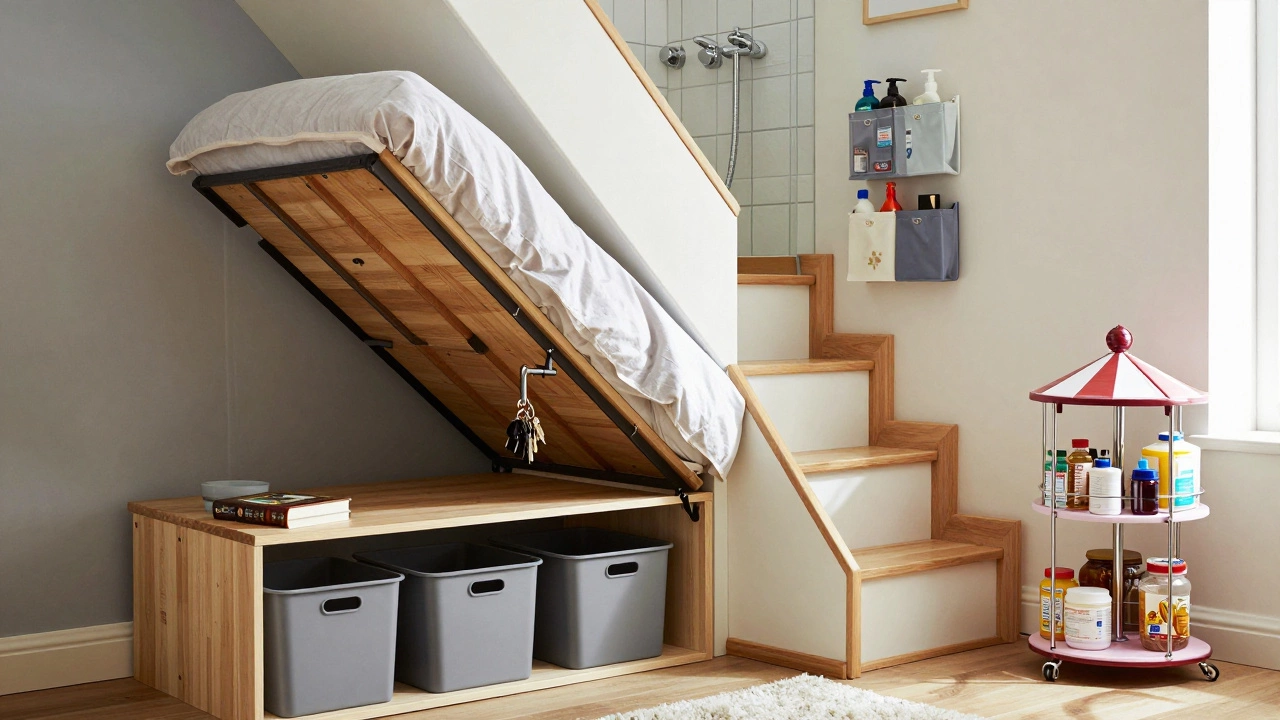
Some of the best storage solutions aren’t obvious. A bench at the end of the bed? Lift the seat and store blankets inside. A hollowed-out book on your shelf? Perfect for hiding keys, cash, or jewelry. A TV stand with closed cabinets hides wires and media boxes. Even your staircase can be turned into storage - pull-out drawers under each step are a game-changer in tiny homes.Custom solutions don’t have to be expensive. IKEA’s KUNGSBACKA kitchen cabinets, for example, have hidden compartments in the doors. Or buy a simple wooden crate, sand it down, and turn it into a side table with a lid. DIY storage doesn’t mean messy - it means personalized.
Keep it organized - not just stored
Storage isn’t just about putting things away. It’s about making them easy to find and return. Use labels on every bin, drawer, and shelf. Color-code if it helps - blue for clothes, green for kitchen, red for tools. Stick to one system and stick with it.Set a 10-minute rule: every night, spend 10 minutes putting things back where they belong. No exceptions. It stops clutter from creeping back in. In a small space, 10 minutes a day saves you 5 hours a month.
What not to do
Don’t buy storage solutions you don’t need. That fancy 10-drawer dresser? If you only use three drawers, it’s just taking up space. Don’t stack things higher than your eye level - you’ll never reach them. Avoid flimsy shelves that sag under weight. And never store heavy items on high shelves - safety matters.Also, don’t ignore airflow. Don’t block vents or windows with storage units. In a small home, ventilation matters just as much as space.
Final tip: Measure everything
Before you buy anything - a shelf, a cabinet, a bin - measure the space. Then measure the item. Then measure again. I’ve seen too many people buy something that looks perfect online, only to find it’s 2 inches too wide. A tape measure costs £5. It saves you time, money, and frustration.Small houses aren’t about sacrifice. They’re about intention. Every item you keep should have a home. Every shelf should serve a purpose. And every corner? It should work for you - not against you.
What’s the most effective way to store clothes in a small bedroom?
Use vertical space: install tall, narrow wardrobes with sliding doors to save floor space. Add hanging organizers on the back of the door for scarves, belts, or folded sweaters. Use slim, uniform hangers to maximize hanging room. Under-bed storage bins with wheels hold off-season clothes. Label everything so you don’t forget what’s inside.
Can I use floating shelves in a small living room?
Yes - but be selective. Floating shelves look clean and take up zero floor space. Use them for books, small plants, or decorative items you actually love. Avoid overcrowding - too many shelves make a room feel cluttered. Stick to 3-5 shelves max, spaced evenly. Mount them at eye level or higher to keep the lower area open.
How do I store seasonal items without taking up closet space?
Use under-bed storage bins, the top shelf of a closet, or a dedicated storage bench in the hallway. Vacuum-seal bulky items like winter coats or comforters to shrink their size. Label each bin clearly with the season and contents. Store them in a cool, dry place - not the attic if it gets too hot or damp.
Is it better to buy storage bins or build custom shelves?
It depends on your budget and skills. Pre-made bins are affordable, easy to move, and come in uniform sizes - great for renters or those who change layouts often. Custom shelves are better if you have permanent walls and need to fit awkward spaces. You can get good-quality bins from IKEA or The Range for under £20. Custom builds cost more but offer maximum efficiency.
How do I keep a small kitchen from feeling cramped?
Keep countertops clear. Store rarely used appliances in a cabinet or on a rolling cart. Use magnetic strips for knives and metal tools. Install pull-out drawers inside cabinets so you can see everything. Hang pots and pans from a ceiling rack. Use stackable, clear containers for dry goods - and label them. A small kitchen feels bigger when it’s organized, not stuffed.
What’s the best way to store toys in a small home with kids?
Use low, open bins labeled with pictures so kids can find and put away toys themselves. Store them under the bed, inside a bench, or in a closet with sliding doors. Rotate toys every few weeks - put 70% away and bring out a few at a time. This keeps things fresh without needing more storage. Avoid plastic bins with lids - they’re hard for kids to open and close.
Can I store items in my hallway?
Absolutely. Hallways are often unused space. Install a narrow console table with drawers or a bench with hidden storage. Add wall hooks for coats and bags. Use a slim shoe rack on the floor. Even a tall, narrow cabinet can hold cleaning supplies, extra towels, or emergency gear. Just make sure it doesn’t block the path - leave at least 30 inches of walking space.
How do I store holiday decorations without a garage or attic?
Use under-bed storage bins or a closet shelf designated for holidays. Invest in clear, stackable plastic bins with lids. Label them with the holiday and contents (e.g., “Christmas Lights - Tree Ornaments”). Wrap fragile items in bubble wrap or old towels. Store them flat or upright - never on top of heavy boxes. You can even repurpose a tall, narrow bookshelf in the living room as a holiday storage unit.