
Sofa Space & Fit Calculator
Room & Sofa Dimensions
Fit Analysis
- Prioritize "leggy" designs to create visual floor space.
- Measure your pathways-leave at least 30 inches for walking.
- Choose neutral colors or light fabrics to open up the room.
- Avoid oversized arms to maximize actual seating area.
- Consider multi-functional pieces like sleeper sofas for guests.
Stop Guessing and Start Measuring
Before you look at a single fabric swatch, you need a map. Most people measure their walls, but they forget to measure the path of travel. If you put a sofa in the room and leave only 12 inches between the edge of the seat and your coffee table, you're going to be bumping your shins every single day. A good rule of thumb is to leave about 30 to 36 inches for main walkways.
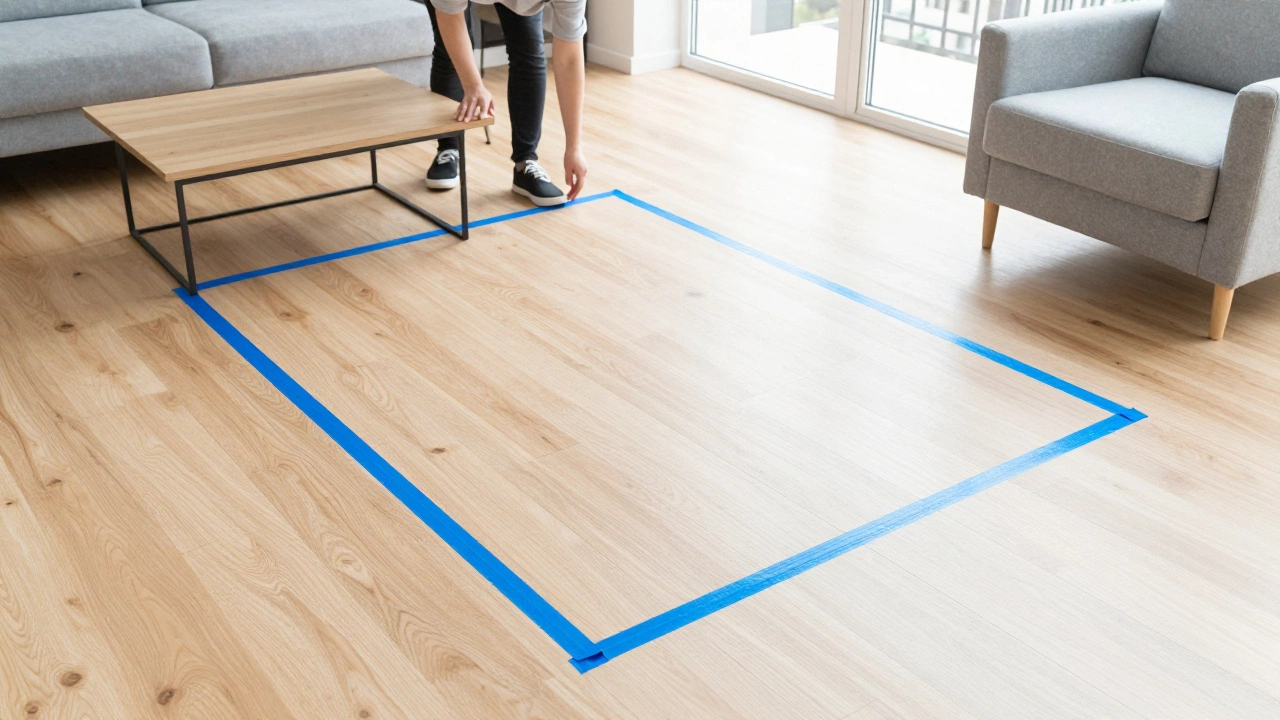
You also need to think about the "visual weight" of the piece. A Sofa is a long upholstered seat with a back and arms, designed for multiple people that can either swallow a room or blend into it. Use painter's tape on the floor to outline the dimensions of the sofa you're considering. Walk around the tape for a day. If you find yourself stepping over it or feeling squeezed, that couch is too big, regardless of what the salesperson tells you.
The Magic of Legs and Low Profiles
If you want a room to feel bigger, you need to see more of the floor. This is why a Mid-Century Modern style a design movement characterized by clean lines, organic shapes, and tapered legs is such a powerhouse for small spaces. When a sofa sits flat on the ground (like a traditional tuxedo sofa), it creates a solid block that stops the eye. When it's lifted on tapered wooden or metal legs, the eye travels underneath the furniture, tricking your brain into thinking the room is more spacious.
Similarly, look for low-profile backs. A massive, overstuffed backrest acts like a wall in the middle of your room. A lower back keeps the sightlines open, allowing you to see across the entire space from the entrance. It sounds like a small detail, but in a 10x12 foot room, an extra 6 inches of visible wall space above the sofa can be the difference between feeling cozy and feeling claustrophobic.
| Sofa Type | Visual Weight | Seating Efficiency | Best For... |
|---|---|---|---|
| Loveseat | Low | Medium (2 people) | Tiny apartments |
| Apartment Sofa | Medium | High (3 people) | Standard small living rooms |
| Sectional (Small) | High | Very High | Corner-focused layouts |
| Armless Sofa | Very Low | Maximum | Ultra-narrow rooms |
Avoid the 'Arm Trap'
One of the biggest mistakes people make is choosing a sofa with wide, rolled arms. Those chunky arms might look luxurious in a showroom, but in a small living room, they are wasted real estate. Imagine a 75-inch sofa where each arm is 10 inches wide. You've just lost 20 inches of actual sitting space to fabric and foam.
Go for track arms-those are the thin, square-shaped arms that run vertically. They provide the same support but take up half the space. If you're really tight on room, consider an armless design. It makes the transition from the sofa to the rest of the room seamless and allows you to squeeze in an extra person during a game night without everyone feeling like they're sardines in a tin.
Color Psychology and Fabric Choices
Color is your secret weapon. Dark, heavy colors like charcoal or navy are stunning, but they absorb light and make a piece of furniture feel like a giant boulder in the center of the room. If you want to maximize the feel of your square footage, lean toward lighter palettes. Think oatmeal, light gray, or even a pale sage green. These colors reflect more light and blend more easily with the walls.
As for fabric, consider the texture. A heavy, chunky velvet might look great, but it adds a lot of visual bulk. A tighter weave or a linen blend keeps the look crisp and lean. If you're worried about stains in a high-traffic area, look into Performance Fabrics, which are textiles treated to resist stains, water, and wear . These allow you to go for those lighter colors without the constant fear that a spilled glass of red wine will ruin your entire investment.
Smart Layout Strategies
Where you put the sofa is just as important as what you buy. The instinct is to push the sofa flat against the wall to "save space." Ironically, this often makes a room feel smaller and more rigid. If you have even 3 or 4 inches of breathing room, pull the sofa slightly away from the wall. This creates a shadow line that adds depth to the room.
If your room is long and narrow, avoid the temptation to put a giant sectional across the middle, which effectively cuts your room in half. Instead, use a slim sofa and add a Accent Chair-a smaller, standalone seat-at an angle. This keeps the center of the room open and allows for a more natural flow of movement. Also, swap out a heavy coffee table for a pair of small, round nesting tables. They can be tucked away when not in use and don't create the same visual barrier as a large rectangular block.
Multi-Functional Options for the Hustle
In many small homes, the living room has to double as a guest room, an office, and a cinema. This is where the Sleeper Sofa comes in. But be careful: not all sofa beds are created equal. Some are so heavy that you'll need a gym membership just to pull the mattress out. Look for "click-clack" styles or those with a simple pull-out mechanism that doesn't require you to move every other piece of furniture in the room to operate.
Another great option is a sofa with built-in storage underneath. If you're struggling with where to put extra blankets or seasonal pillows, a lift-up base is a lifesaver. It keeps the clutter out of sight, which is essential because visual clutter is the enemy of a small space. The less you see on the floor and surfaces, the larger the room feels.
What is the best sofa size for a small living room?
There is no single "best" size, but generally, a loveseat (approx 60-75 inches) or an apartment-sized sofa (72-84 inches) works best. The most important metric is the 30-inch rule: ensure you have at least 30 inches of walking space around the sofa to avoid the room feeling cramped.
Can I put a sectional in a small room?
Yes, but choose a "small-scale" sectional. Look for a chaise lounge instead of a full L-shape. A chaise provides the lounging comfort of a sectional without blocking the entire flow of the room. Avoid oversized wedges or corner pieces that eat up too much floor space.
Which fabric is best for a small space?
Light-colored, breathable fabrics like linen blends or light-colored performance fabrics are ideal. They reflect light and don't feel as "heavy" as dark velvets or thick leathers. Performance fabrics are especially useful if you have pets or children, as they allow you to maintain a light color palette without worrying about stains.
Should I get a sofa with arms or armless?
If space is extremely limited, armless is the way to go. If you prefer the look of arms, choose "track arms" (thin, square edges) over "rolled arms." Track arms maximize the seating area while minimizing the footprint of the furniture.
How do I make my sofa look smaller?
Pick a sofa with exposed legs rather than a skirt or a solid base. By showing the floor underneath the piece, you create a sense of openness. Using a color that is close to your wall color also helps the sofa "blend in," making it less of a focal point and the room feel larger.
Next Steps for Your Space
If you're still feeling unsure, start by clearing the room of all non-essential furniture. It's much easier to visualize a new small living room sofa when you aren't fighting with an old coffee table or a bulky armchair. Try sketching your room on graph paper-one square equals six inches. This allows you to test different layouts and sofa sizes without moving heavy furniture.
If you've already bought a sofa that feels a bit too large, don't panic. You can balance the scale by adding a large mirror on the opposite wall to bounce light and create the illusion of depth. Adding a light-colored rug that extends slightly beyond the edges of the sofa can also help anchor the piece and make the seating area feel like a deliberate zone rather than a cramped corner.