
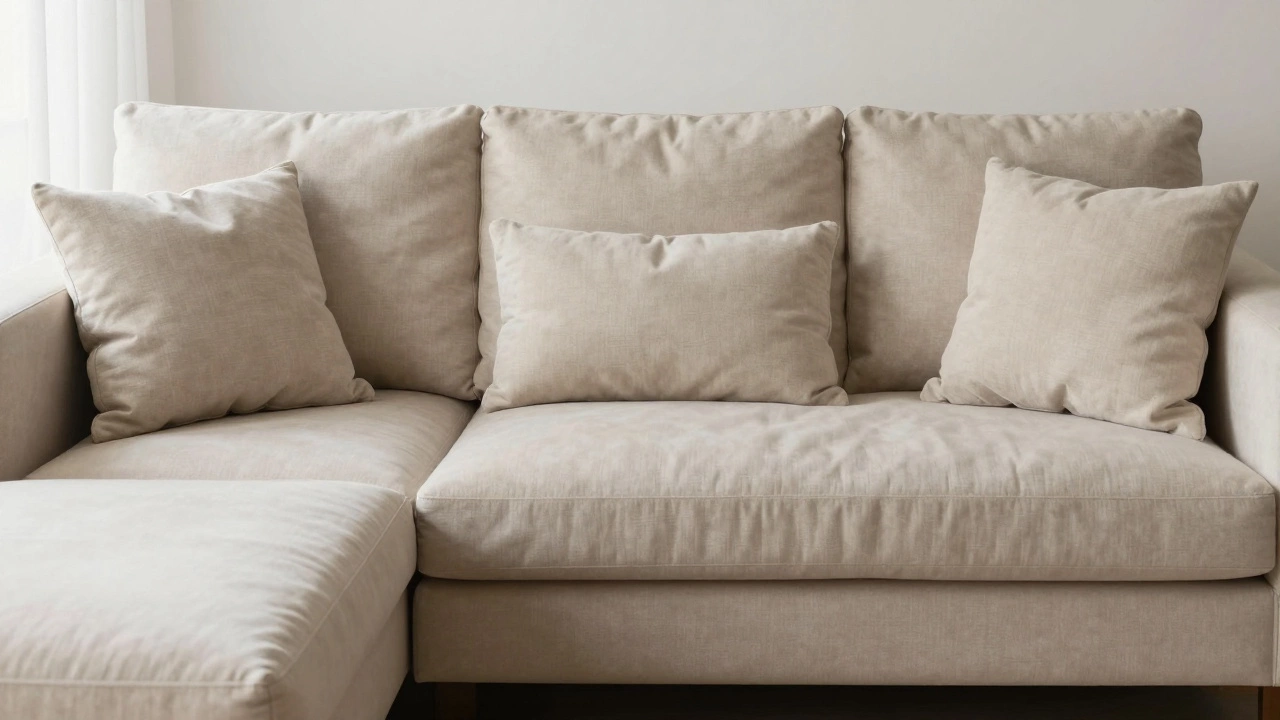
Sofa Cushion Layout Simulator
Quick Tips for Immediate Results:
- Use the "Rule of Three" for color palettes.
- Layer different sizes (Large, Medium, Small).
- Mix textures like linen, velvet, and wool.
- Always fluff your cushions before guests arrive.
- Balance the visual weight on both ends of the sofa.
The Science of Cushion Sizing
Before you start tossing pillows, you need to understand that not all cushions are created equal. Using only one size makes a sofa look flat and monotonous. To create depth, you need a hierarchy of scales. Start with your Throw Pillows is decorative pillows used primarily for aesthetic appeal and comfort on furniture. For a standard 3-seater, your base layer should consist of large squares, typically 20x20 inches or 50x50 cm. These act as your anchors.
Once your anchors are in place, bring in the mid-size cushions. These are usually 18x18 inches. They bridge the gap between the large backs and the smaller accent pieces. Finally, add the "jewelry" of the sofa: the lumbar pillows. These are rectangular cushions, often 12x20 inches, that sit in the center or lean against the larger squares. If you only use one size, the eye doesn't have a path to follow, and the arrangement feels stagnant.
| Cushion Type | Standard Size | Purpose | Placement |
|---|---|---|---|
| Anchor Pillow | 20" x 20" | Structure & Support | Back corners |
| Accent Pillow | 18" x 18" | Color & Contrast | In front of anchors |
| Lumbar Pillow | 12" x 20" | Detail & Comfort | Center focus |
Mastering the Color Palette
One of the biggest mistakes is matching your cushions exactly to the color of your sofa. If you have a grey couch and you use grey pillows, you've created a monochrome blur. To style a 3 seater couch effectively, you need contrast. Use the 60-30-10 rule: 60% dominant color (your sofa), 30% secondary color (primary cushions), and 10% accent color (small details or a single bold pillow).
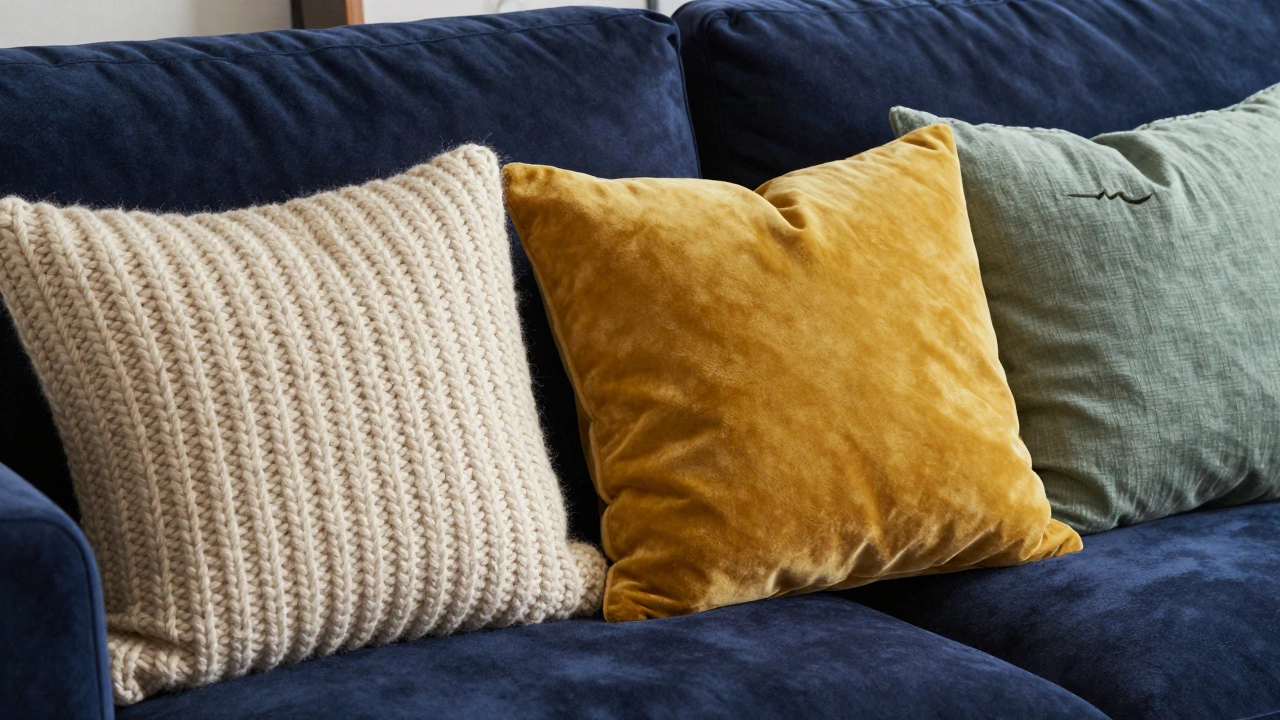
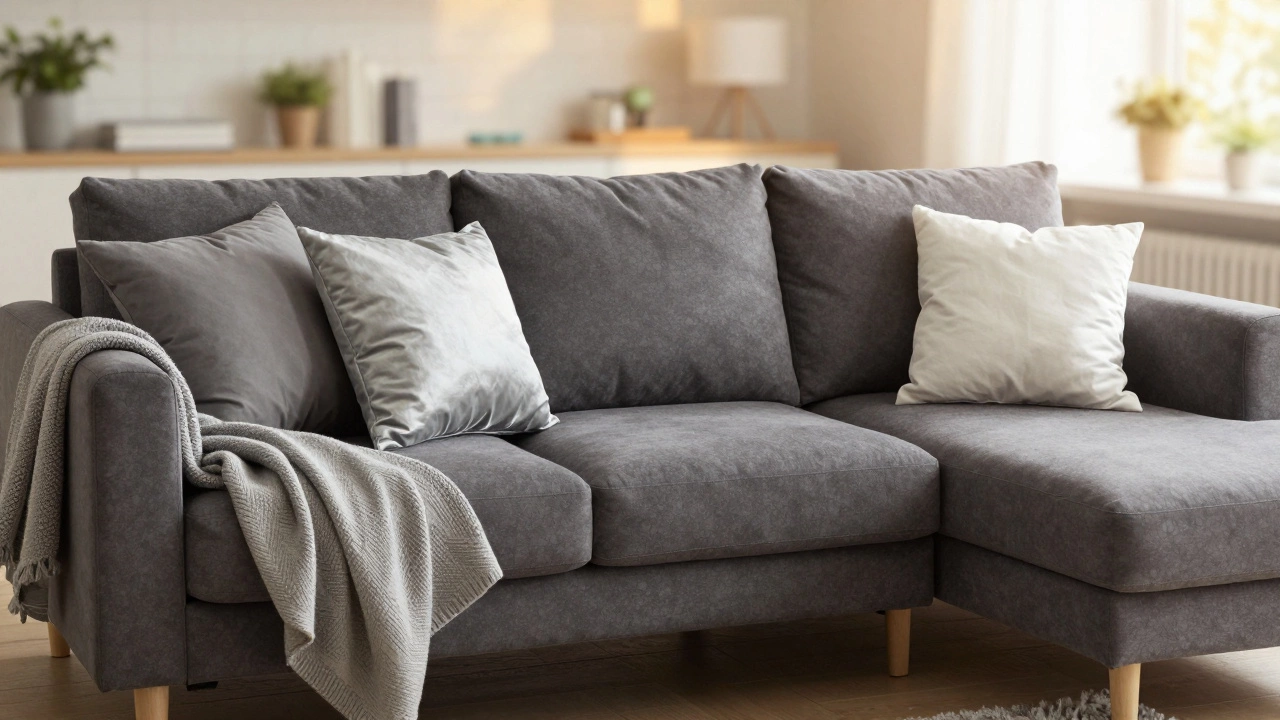
If your sofa is a neutral tone, like cream or charcoal, you have a blank canvas. Try a "tonal" approach by choosing different shades of the same color. For instance, on a light grey sofa, use a mix of charcoal, slate, and silver cushions. It feels sophisticated and intentional. If you want more energy, pick a complementary color. A navy blue sofa looks incredible with burnt orange or mustard yellow accents, as these opposites on the color wheel make each other pop.
For those who prefer a curated look, try the "Nature Palette." Look at a photo of a forest or a beach. You'll see sage greens, sandy beiges, and deep browns. Mimicking these natural combinations ensures that your cushion choices feel harmonious rather than random. Avoid using more than three distinct colors, or your living room will start to look like a candy shop.
Texture Mixing for a High-End Feel
Colors get the attention, but textures provide the luxury. If all your cushions are made of the same smooth cotton, the arrangement feels one-dimensional. To make your sofa look like it belongs in a magazine, you need to contrast "hard' and 'soft' textures. Imagine pairing a chunky Knit Fabric, which is a textile created by interlocking loops of yarn, often used for cozy, weighted textures, with a sleek, shiny Velvet, which is a closely woven fabric with a thick short pile, known for its softness and sheen. The contrast between the rustic knit and the glamorous velvet creates visual interest.
Consider adding a linen cushion for a breathable, organic feel. Linen works well as a neutral base that doesn't compete with more aggressive patterns. If you have a leather sofa, texture is even more critical because leather is cold and smooth. Adding faux fur or a heavy wool weave offsets the stiffness of the leather and makes the space feel invitingly warm.
Don't forget the patterns. A common pro tip is to mix one large-scale pattern (like a wide stripe) with one small-scale pattern (like a tiny floral or a herringbone). If both patterns are the same size, they fight for attention. If one is dominant and the other is subtle, they complement each other. Just make sure they share at least one common color to tie the look together.
Three Proven Layout Strategies
Depending on how you actually use your sofa, you'll want a different arrangement. You can't have a "show home" look if you actually have three kids and a golden retriever who treat the couch like a bed. Here are three ways to set up your pillows:
The Symmetrical Classic: This is for the formal living room. Place two large cushions in each corner, followed by two medium cushions, and one lumbar pillow exactly in the center. This creates a mirror image that feels balanced and orderly. It's the safest bet for those who like a clean, traditional aesthetic.
The Casual Cluster: Perfect for a family room. Instead of mirroring both sides, load one side with a variety of sizes and textures, and keep the other side relatively clear or with just one single accent pillow. This "asymmetrical' balance feels more relaxed and lived-in. It suggests that the room is for lounging, not just for looking at.
The Minimalist Lean: If you hate the feeling of having to move ten pillows just to sit down, go for the minimalist approach. Use two oversized cushions in the corners and a single, high-quality throw blanket draped over one arm. This highlights the architecture of the Sofa, which is a long upholstered seat for more than one person, typically featuring a back and arms, while still providing a touch of softness.
Common Pitfalls to Avoid
The biggest mistake people make is the "Pillow Overload." When you have so many cushions that you can't even see the sofa, the room feels claustrophobic. A 3-seater generally looks best with 3 to 5 cushions. Anything more and you're essentially creating a fabric wall. If you love your pillows, keep a few on the floor or in a basket nearby and swap them out as the seasons change.
Another error is neglecting the "Karate Chop." You've seen it in design photos-that little indent at the top of the cushion. This isn't just for show; it proves the cushion has a high-quality feather or down fill rather than a stiff polyester foam. To achieve this, push the top center of the pillow down firmly with your hand. This gives the cushion a more organic, plump shape and prevents it from looking like a rigid square block.
Lastly, avoid the "Matching Set" trap. Buying a pre-packaged set of four identical pillows from a big-box store is the fastest way to make your home look generic. Instead, buy your cushions individually. Mix a pillow from a local craft market with one from a high-end boutique and a basic one from a budget store. This eclectic mix makes your home feel curated over time, rather than bought in a single afternoon.
How many cushions are too many for a 3 seater couch?
Generally, once you hit 6 or 7 cushions on a 3-seater, you've crossed into "too many" territory. The goal is to enhance the sofa, not hide it. A balanced look usually consists of 3 to 5 pillows. If you have more, try placing some on a nearby armchair or in a decorative basket to keep the space open.
What is the best way to arrange cushions for a small living room?
In a small room, less is more. Use a minimalist lean layout-two large cushions in the corners and perhaps one small accent. Stick to a light color palette to make the space feel larger and avoid bulky, oversized pillows that physically crowd the walking paths around the furniture.
Should I buy cushions with inserts or just covers?
Buying covers separately is usually the better move. It allows you to choose higher-quality inserts, such as down or feather fills, which provide that luxury "sink-in" feel and allow for the karate-chop look. Cheap polyester inserts often look too stiff and don't hold their shape as well over time.
How do I choose colors for a dark grey sofa?
Dark grey is a versatile neutral. For a moody, modern look, go with deep emerald green or navy. For a brighter, more energetic space, use mustard yellow, coral, or cream. If you want something timeless, a mix of white, light grey, and a touch of black creates a sophisticated monochrome vibe.
How do I stop cushions from sliding off the couch?
If you have a leather or slippery fabric sofa, try using non-slip cushion liners or adhesive Velcro strips on the back of the pillows. Additionally, placing a textured throw blanket across the seat before adding cushions provides more friction, which helps the pillows stay upright and in place.