
Sofa Quality Score Calculator
Use this tool to score a specific sofa you are considering. Select the options that best match the specifications or your physical inspection findings.
Quality Assessment
You just walked into a showroom, or maybe you're scrolling through an online catalog at 2 AM. The price tag makes your eyes water, but the salesperson (or the website copy) swears this couch is "luxury" and "built to last." How do you know they aren't lying? It’s frustrating because most people judge a sofa by how it looks in photos or how soft it feels for the first ten seconds of sitting. But that initial squish is often a trap. Real quality hides inside the structure, not on the surface.
Here is the uncomfortable truth: many mid-range sofas are designed to look expensive while falling apart within three years. They use cheap foam that collapses and frames made of low-grade plywood that wobbles. If you want a piece of furniture that survives kids, pets, and decades of movie nights, you need to look past the fabric. You need to inspect the bones. This guide breaks down exactly what to check-frame, suspension, cushions, and upholstery-so you don't waste thousands on a decorative object that can't handle daily life.
Check the Frame First: Wood vs. Particleboard
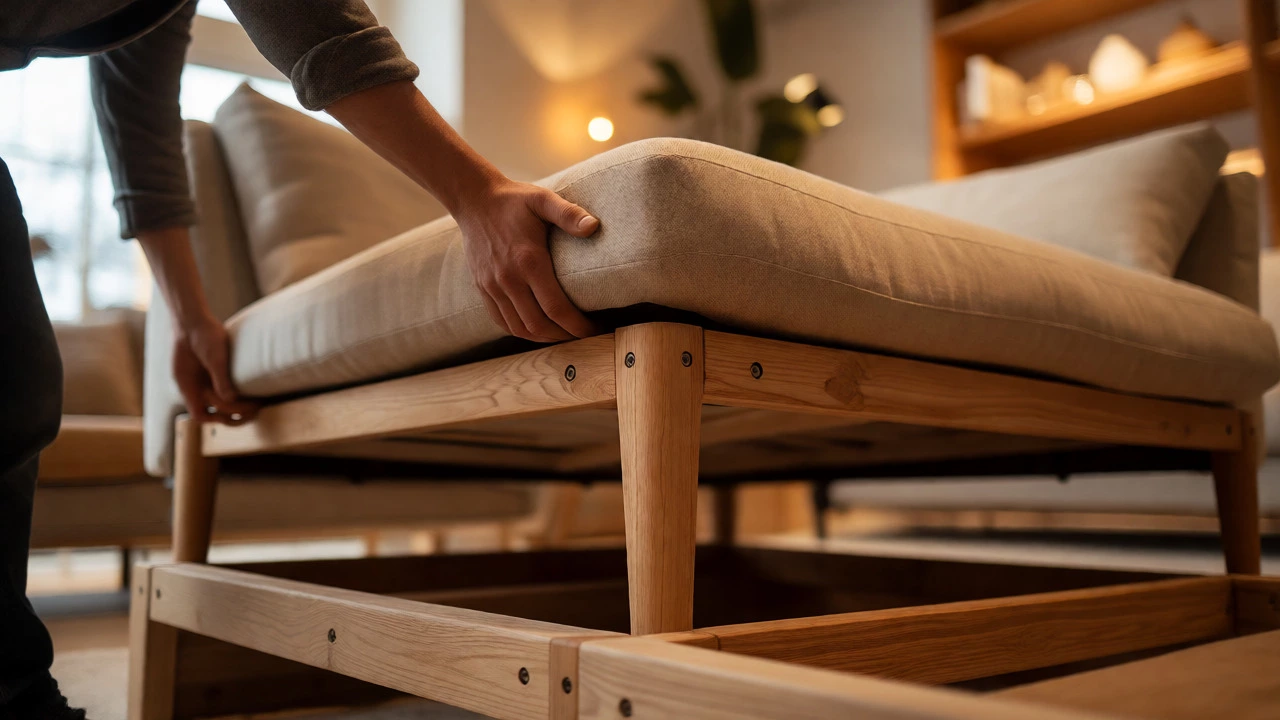
The frame is the skeleton of your sofa. If the skeleton is weak, everything else fails. When you buy a high-quality couch, you want a kiln-dried hardwood frame. Why kiln-dried? Because wood with high moisture content shrinks as it dries in your living room, causing joints to loosen and the sofa to creak. Kiln-drying removes that moisture before construction.
Ask the retailer specifically: "Is the frame solid hardwood, engineered wood, or particleboard?" Hardwoods like oak, maple, or ash are excellent. Engineered woods like plywood or laminated veneer lumber (LVL) are acceptable if they are thick and well-constructed. Avoid particleboard or chipboard entirely. These materials absorb moisture, swell, and crumble under stress. In humid climates like Bristol, particleboard frames are particularly risky; they warp over time, leading to uneven seating.
How do you test this without seeing inside? Lift one corner of the sofa. If it feels flimsy or flexes significantly, the frame is likely thin pine or particleboard. A solid hardwood frame should feel heavy and rigid. Also, check the legs. Are they screwed in from the bottom? If yes, good. If they are glued or stapled, replace them immediately-they will snap. Look for dowels or metal screws joining the frame pieces. Staples alone are a red flag for durability.
Evaluate the Suspension System: Springs Matter
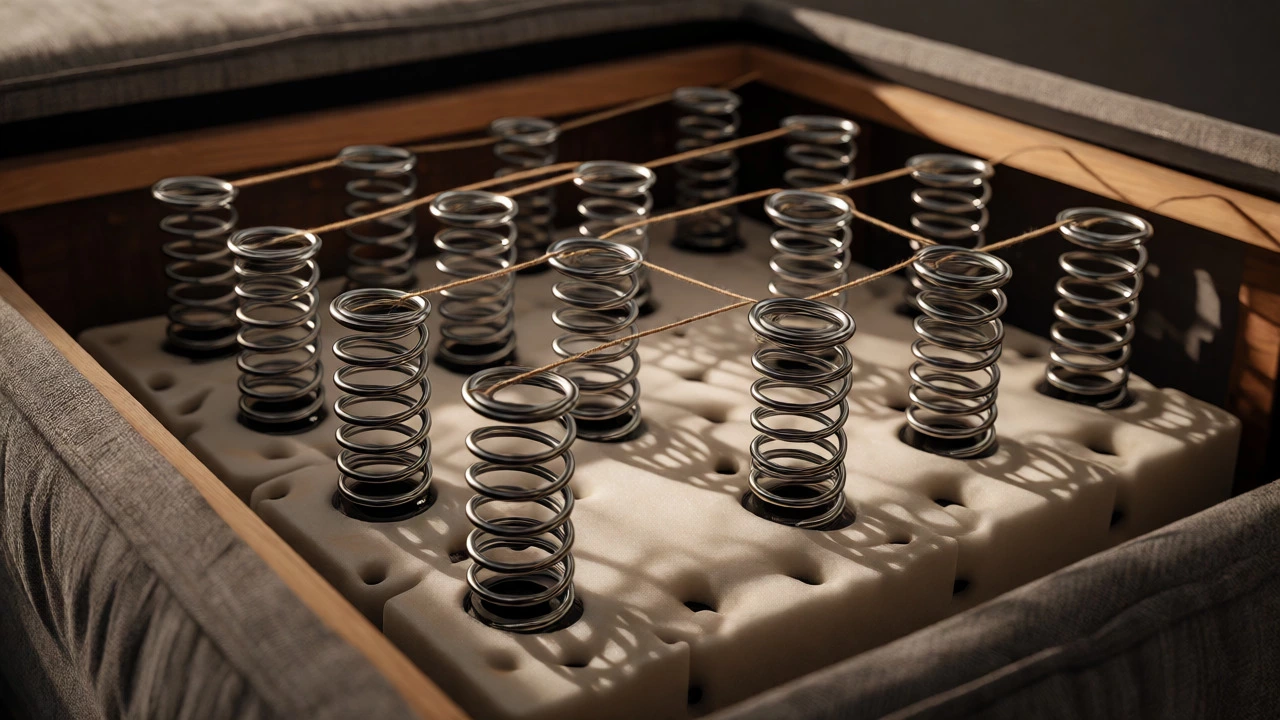
Once you lift the seat cushions, look at what supports them. This is the suspension system, and it dictates how comfortable the sofa remains after five years. There are three main types, ranked from best to worst:
- Serpentine Springs: S-shaped wires running front-to-back. These are common in mid-to-high-end sofas. They provide consistent support and resist sagging better than cheaper options.
- Eight-Way Hand-Tied Springs: Individual coils tied together in eight directions. This is the gold standard for luxury sofas. They offer superior resilience and comfort but cost significantly more.
- No-Sag Webbing: Elastic bands stretched across the frame. Common in budget and some mid-range sofas. Over time, these stretch out, causing the seat to dip in the middle.
If you see webbing, ask if there is foam padding underneath it. Without dense foam, webbing sags quickly. If you find serpentine springs, check if they are covered by a layer of non-woven fabric. This prevents the springs from poking through the upholstery. Never buy a sofa where you can feel individual springs through the cushion. That means the protective layers are too thin, and you'll be feeling every coil within a year.
Cushion Construction: Foam Density and Fill
This is where most buyers get fooled. A cushion might feel incredibly soft in the store, but that softness often comes from low-density polyurethane foam. Low-density foam (under 1.8 pounds per cubic foot) compresses rapidly. After six months of use, it turns into a flat pancake. High-quality sofas use high-resilience (HR) foam with a density of at least 1.8 lbs/ft³, preferably 2.0+.
How do you check density? Press firmly into the center of the cushion. If it bounces back instantly, it has good resilience. If it leaves a handprint that slowly fades, the foam is too soft and will collapse. For back cushions, you have more flexibility. Down feathers or feather-blend wraps add luxury and moldability, but they require regular plumping. Synthetic alternatives like polyester fiberfill are easier to maintain but flatten faster. The best combination? A high-density foam core wrapped in a thin layer of down or fiber. This gives you structural support with a plush exterior.
| Material Type | Durability Rating | Maintenance Level | Best For |
|---|---|---|---|
| High-Density HR Foam | High (5-10 years) | Low | Seat cores, everyday use |
| Standard Polyurethane | Low (1-3 years) | Low | Budget sofas, guest rooms |
| Down Feathers | Medium (requires care) | High | Back cushions, luxury feel |
| Polyester Fiberfill | Low-Medium | Medium | Decorative pillows, budget backs |
Upholstery Fabric: Rub Counts and Performance
The fabric is your sofa's armor. Not all fabrics are created equal. When shopping, look for the "double rub" count. This measures abrasion resistance. One double rub is one cycle of a machine rubbing back and forth against the fabric. For residential use, aim for at least 15,000 double rubs. For heavy use (families, pets), go for 30,000+. Anything below 9,000 is considered decorative only and will wear through quickly.
Natural fibers like linen and cotton are breathable and beautiful but stain easily and wrinkle. Synthetics like polyester and olefin are tougher and more stain-resistant. Blends often offer the best balance. Check the weave tightness. Hold the fabric up to a light source. If you can see gaps between threads, the fabric is loosely woven and less durable. Tight weaves resist snagging and hold their shape longer.
Also, consider colorfastness. Dark blues and blacks can fade if exposed to direct sunlight. Ask about UV treatment if your sofa sits near a window. And always ask for a sample. Take it home. Spill coffee on it. Scratch it with your keys. See how it behaves in your actual environment, not under showroom lights.

Joinery and Finishing Details
Small details reveal big truths about manufacturing quality. Flip the sofa over. Is the dust cover made of sturdy fabric or thin plastic? Plastic covers tear easily and let dust accumulate inside. Sturdy fabric allows airflow and protects internal components.
Check the stitching. Double-stitched seams are stronger than single-stitched ones. Look for even spacing in the stitches. Uneven stitching indicates rushed factory work. Inspect the corners. Are they neatly tucked, or is there excess fabric bunching up? Poor tailoring leads to premature wear at stress points.
Finally, smell the sofa. A strong chemical odor suggests volatile organic compounds (VOCs) from adhesives or finishes. While some off-gassing is normal, a pungent smell might indicate lower-quality glues used in assembly. High-end manufacturers often use water-based adhesives which have minimal scent.
Test It Yourself: The Sit-and-Stand Test
Don't just sit politely. Get aggressive. Sit hard. Lean back fully. Cross your legs. Stand up abruptly. Listen for squeaks or groans. A high-quality frame should remain silent. If you hear noise, joints are loose or materials are rubbing incorrectly.
Press your hands into the armrests. Do they collapse? Armrests should be firm enough to lean on comfortably. If they feel hollow or crush easily, the internal padding is insufficient. Try to move the sofa slightly while seated. Does it shift awkwardly? Stability is key. Wobbling indicates uneven leg lengths or a warped frame.
Remember, comfort is subjective, but durability is measurable. Trust your instincts during testing. If something feels precarious now, it will feel worse later.
What is the best material for a long-lasting sofa frame?
Kiln-dried hardwood is the best material for a long-lasting sofa frame. Woods like oak, maple, and ash are resistant to warping and cracking. Engineered woods such as plywood or laminated veneer lumber (LVL) are also durable if constructed properly. Avoid particleboard and chipboard, as they degrade quickly under weight and humidity.
How much foam density should I look for in sofa cushions?
For seat cushions, look for high-resilience (HR) foam with a density of at least 1.8 pounds per cubic foot (lbs/ft³). Densities between 2.0 and 2.5 lbs/ft³ offer superior durability and support. Lower densities compress quickly, leading to sagging seats within a few years of regular use.
Are down-filled cushions better than foam?
Down-filled cushions offer a luxurious, moldable feel but require frequent plumping and maintenance. Foam provides better structural support and requires less upkeep. Many high-quality sofas combine both: a high-density foam core wrapped in a layer of down or synthetic fiber to balance comfort and durability.
What is a good double rub count for sofa fabric?
For general residential use, choose fabric with at least 15,000 double rubs. For households with children, pets, or heavy traffic, select fabrics rated for 30,000 double rubs or higher. Fabrics under 9,000 double rubs are considered decorative and may wear out quickly with daily use.
How can I tell if a sofa has a solid wood frame without taking it apart?
Lift one corner of the sofa. A solid wood frame will feel heavy and rigid, with little to no flex. Particleboard or thin pine frames will feel lighter and may bend or creak. Additionally, check the legs; if they are securely screwed into the base rather than glued or stapled, it is a strong indicator of a robust frame construction.