
Sofa Quality Checker
Check Your Sofa Quality
Answer these questions based on your sofa's construction. Get an instant quality assessment.
Frame Construction
Cushion Quality
Upholstery Quality
Craftsmanship
Warranty & Price
Quality Assessment
Buying a sofa is one of the biggest furniture investments you’ll make. It’s not just a place to sit-it’s where you unwind after work, host friends, and maybe even catch a nap. But with so many options out there, how do you know you’re not paying for a sofa that’ll sag, squeak, or fall apart in two years? The truth is, most people focus on color and style, and skip the real signs of quality. Here’s what actually matters.
Check the Frame First
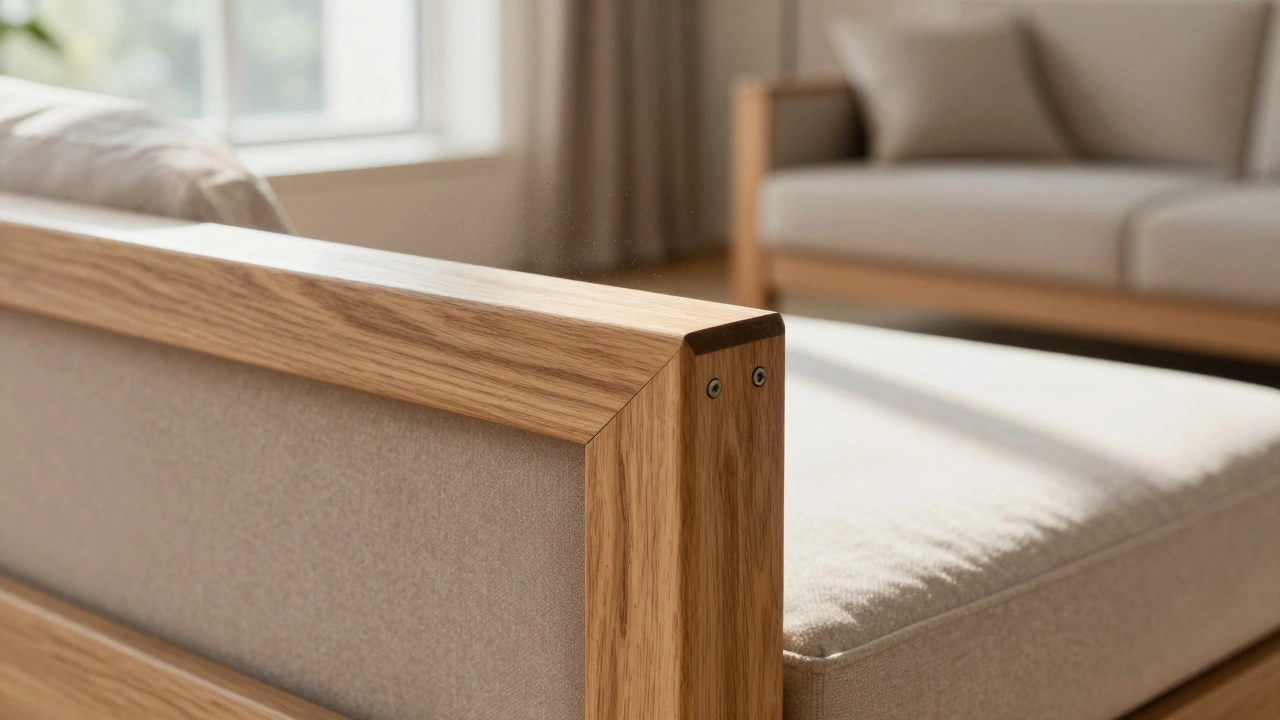
The frame is the skeleton of your sofa. If it’s weak, nothing else matters. High-quality sofas use hardwood frames-think kiln-dried oak, maple, or beech. These woods don’t warp or crack easily. Avoid sofas with particleboard, plywood, or softwoods like pine. They’re cheaper, but they bend under weight and don’t last.
Look under the sofa. If you can see the frame, check for corner blocks. These are triangular wood pieces nailed or screwed into the joints. They add stability. No blocks? That’s a red flag. Also, make sure the frame is held together with screws, not just staples or glue. Staples loosen over time. Screws hold.
Here’s a simple test: lift one corner of the sofa off the floor. If the opposite corner lifts too, the frame is solid. If it doesn’t, the frame is likely flimsy or poorly assembled.
Feel the Cushion Construction
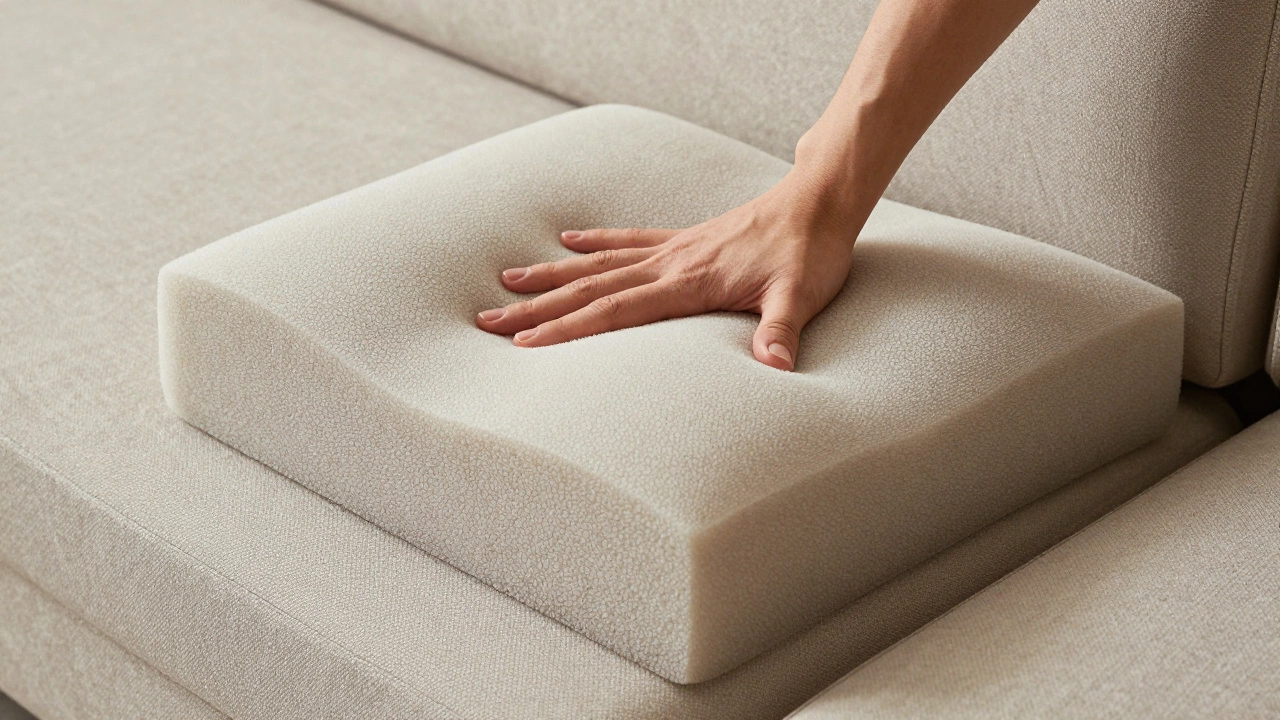
Cushions are where most sofas fail. A high-quality sofa doesn’t just have thick foam-it has the right kind of foam layered with other materials. Look for cushions that use high-density foam (at least 1.8 lb/ft³) as the base. Lower density foam (under 1.5 lb/ft³) compresses fast and turns flat within months.
The best sofas combine that foam with down or feather wraps. Down adds softness and lets the cushion mold to your body. But if the cushion is just feathers with no foam core, it’ll collapse like a pillow. Ask if the cushion is reversible. If yes, that’s a good sign-it means the manufacturer expects you to use it regularly and wants it to last.
Press your hand into the cushion. If it feels firm but springs back slowly, that’s ideal. If it feels mushy or doesn’t bounce back at all, it’s probably low-grade foam. And if you feel springs through the fabric, that’s a sign of poor padding underneath.
Examine the Upholstery
Fabric choice makes a huge difference in durability. For everyday use, look for tightly woven fabrics like performance microfiber, linen blends, or Crypton. These resist stains, fading, and wear. Avoid cheap polyester that pills easily or loosely woven cotton that stretches out.
Check the fabric’s rub count-this is called the Martindale test. Anything under 15,000 rubs is for decorative use only. For a family sofa, aim for 30,000 or higher. Leather? Go for full-grain or top-grain. Avoid bonded leather-it’s just scraps glued together with a plastic coating. It cracks within a year and peels off.
Run your hand over the fabric. If it feels thin, flimsy, or overly shiny, it’s likely low quality. High-quality fabric has texture and weight. It doesn’t feel like plastic.
Look at the Stitching and Details
Stitching is a silent indicator of craftsmanship. On a good sofa, seams are straight, even, and tight. Look for double stitching on stress points like armrests and seat edges. Single stitching? That’s a sign the manufacturer cut corners.
Check the piping. If it’s neat and snug against the seams, that’s a good sign. If it’s crooked, loose, or bulging, the sofa was rushed through assembly. Also, look at the back of the sofa. Is it finished? A high-quality sofa has a clean, upholstered back. If it’s just raw fabric or cardboard, it’s meant to be pushed against a wall-and you’ll regret it if you ever move it.
Don’t overlook the legs. Solid wood or metal legs are sturdy. Plastic or thin metal legs that wobble? They’re not built to last. Try wiggling the sofa. If it moves or creaks, the frame or joints aren’t secure.
Test the Reclining or Moving Parts
If you’re looking at a recliner, power sofa, or sectional with chaise, test the mechanisms. Sit down and recline it. Does it glide smoothly? Or does it grind, stick, or make a loud noise? High-quality mechanisms use steel frames and ball bearings. Cheap ones use plastic gears that snap under pressure.
Check the tension. A good recliner should hold your weight without sagging or leaning too far back. If the footrest doesn’t lock in place or the armrests shift when you lean on them, walk away. These aren’t just annoyances-they’re safety risks over time.

Ask About the Warranty
A good warranty tells you what the manufacturer believes in. Look for at least a 5-year warranty on the frame and 2 years on cushions and fabric. Some premium brands offer 10-year frame warranties. That’s a strong signal they stand by their work.
Read the fine print. Some warranties only cover manufacturing defects, not wear and tear. That’s normal. But if the warranty doesn’t mention the frame at all, that’s a warning. Also, avoid sofas with warranties that require you to pay for shipping or labor to make a claim. A true high-quality sofa comes with hassle-free support.
Compare Prices Honestly
You can’t buy a truly high-quality sofa for £300. It’s just not possible. The materials alone-hardwood frame, high-density foam, durable fabric, skilled labor-cost more than that. A decent sofa starts around £800-£1,200. Premium ones go from £2,000 up.
Don’t fall for sales that make you feel like you’re getting a bargain. A sofa marked down from £2,500 to £1,200 might still be overpriced if it was never worth £2,500 to begin with. Instead, compare similar models across brands. Look for the same frame materials, cushion density, and fabric ratings. The one with better specs and a longer warranty is the real deal.
Remember: a sofa is a long-term purchase. You’ll sit on it every day for years. Spending more upfront saves you from replacing it in three years. And if you care about comfort, durability, and not having to live with a squeaky, lumpy mess-then quality isn’t optional. It’s essential.
Can a sofa last 10 years or more?
Yes, but only if it’s built well. Sofas with hardwood frames, high-density foam cushions, and durable upholstery can easily last 10 to 15 years with normal use. Many people replace their sofas after 5-7 years because they bought cheap ones. The right sofa doesn’t just sit there-it holds up.
Is leather better than fabric for a sofa?
It depends. Full-grain leather is durable, ages beautifully, and is easy to clean. But it’s expensive and shows scratches. Fabric like performance microfiber is more forgiving with kids and pets, resists stains, and comes in more colors. Neither is universally better-choose based on your lifestyle. Just avoid bonded leather-it’s not real leather and won’t last.
Should I buy a sofa online?
It’s risky unless you’ve tested the exact model in person. Online sofas often look different in photos, and you can’t feel the cushions or check the frame. If you must buy online, look for brands with free returns and detailed specs: frame material, foam density, fabric rub count. Stick to companies that show close-up photos of construction details.
What’s the best sofa for families with kids or pets?
Choose a sofa with tightly woven, stain-resistant fabric like Crypton or Sunbrella. Avoid velvet or light-colored cotton. Darker colors hide dirt better. Look for removable, washable cushion covers. High-density foam cushions hold up to constant use. And skip recliners or delicate designs-go for simple, sturdy shapes.
How often should I replace sofa cushions?
If the cushions are removable and the frame is still solid, you can replace them every 5-7 years. High-density foam lasts longer, but even the best foam flattens over time. Reupholstering or swapping cushions costs less than buying a whole new sofa. Many local upholsterers offer this service.