
Living Room Seating Calculator
Measure Your Space
Enter your room dimensions in feet to see what seating works best for you.
Recommendation
When you’re shopping for a new living room seat, you’ll probably run into two options: the loveseat and the couch. At first glance, they look similar - both are upholstered, both have arms, both sit in front of the TV. But they’re not the same thing. And choosing the wrong one can leave you with too much space… or not enough.
What’s the real difference between a loveseat and a couch?
A loveseat is designed for two people. That’s it. Most measure between 48 and 60 inches wide - just enough for two adults to sit side by side without crowding. A couch, on the other hand, is built for three or more. Standard couches start at 72 inches and can go up to 96 inches or more. That’s a full yard of seating difference.
In the UK, where homes are often smaller than in the US, the loveseat isn’t just a cute option - it’s a practical one. Many flats in Bristol, Manchester, or Leeds have living rooms under 200 square feet. A full-size couch can eat up half that space. A loveseat? It leaves room for a side table, a floor lamp, and still lets you walk around.
Space matters more than you think
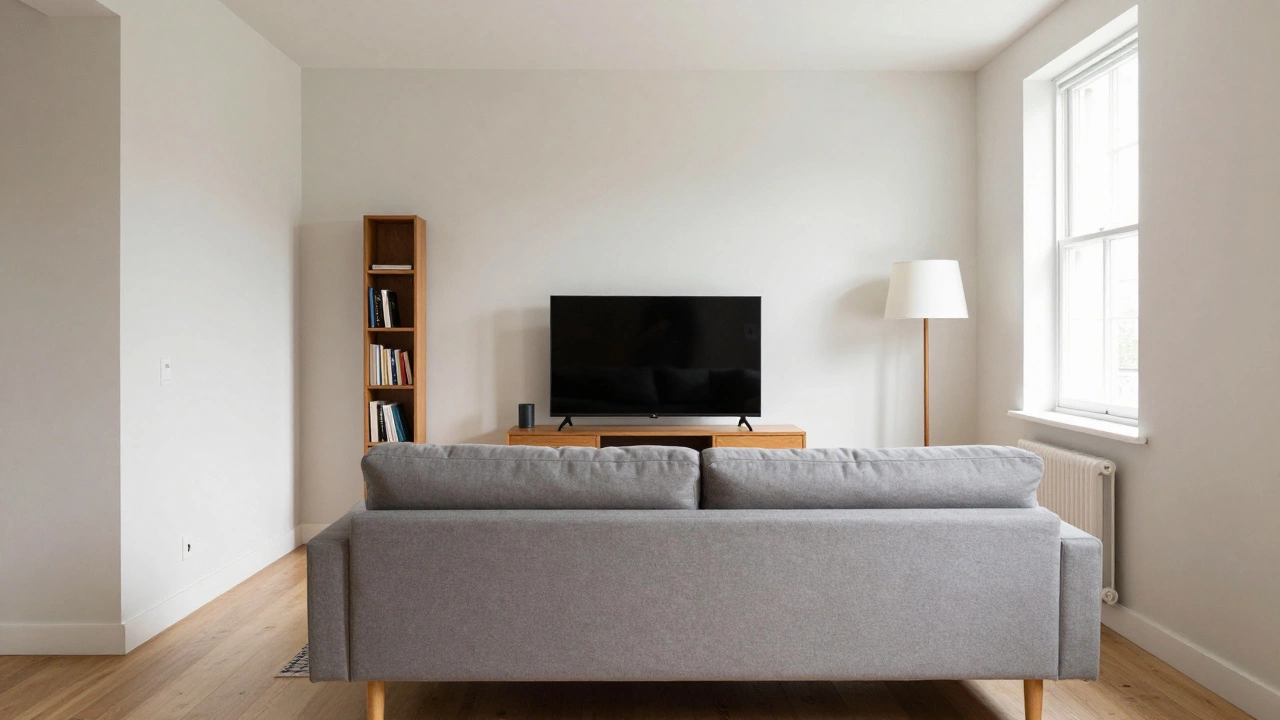
Let’s say you’ve got a 12x14 foot living room. That’s 168 square feet. Add a 3-seater couch (84 inches wide), and it takes up nearly 6 feet of wall space. Now add a coffee table, a TV stand, and a rug - suddenly, you’re tripping over your own furniture. A loveseat (58 inches wide) leaves 2.5 feet of breathing room on either side. That’s enough for a narrow bookshelf or a standing lamp.
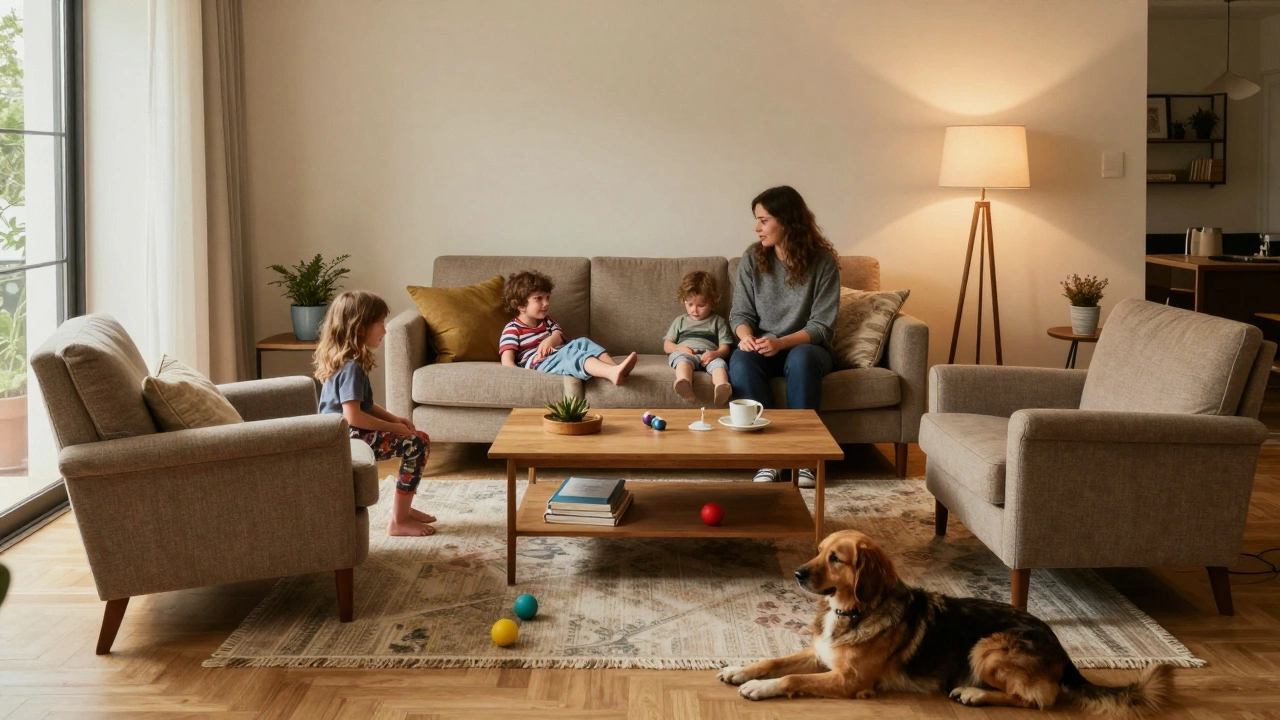
Real-world example: A couple in Clifton, Bristol, replaced their 80-inch sofa with a 56-inch loveseat. They added two matching armchairs. Now they have flexible seating - one for reading, one for movie night, and space to move. They didn’t lose comfort. They gained usability.
Who really needs a couch?
If you’re single, or if your household rarely has more than two people over at once, a couch is overkill. But if you have kids, regularly host friends, or love having the whole family sprawled out on Sunday afternoons, then a couch makes sense. The average UK family watches TV together for 2.5 hours a day - according to Ofcom’s 2025 media report. If you’re one of them, a loveseat might leave someone on the floor.
Also, think about your lifestyle. Do you have pets? A couch gives you more surface area for furry friends to claim. Do you like to read? A loveseat lets you curl up with a blanket and a book without feeling cramped. But if you need to stretch out your legs or nap on the sofa, a couch gives you the length.
Cost isn’t the deciding factor
Many assume a loveseat is cheaper. It usually is - but not always. A high-end loveseat from a brand like Heal’s or Sofas Direct can cost £800. A basic 3-seater couch from IKEA? £550. So price doesn’t tell you which is better. What matters is how you use the space.
Also, don’t forget about style. A loveseat often has a more refined silhouette - think mid-century modern or Chesterfield designs. It can act as a statement piece. A couch? It’s usually the anchor of the room. Both can look great. But if you’re going for a minimalist look, the loveseat’s smaller footprint helps.
Flexibility and future-proofing
Here’s something most people don’t consider: what happens if your life changes? If you move to a smaller home, a loveseat is easier to fit. If you have a baby, you can still use it as a nursing chair. If you start working from home, it becomes a quiet reading nook.
But if you buy a couch now, and two years later your partner moves out? You’re stuck with a 7-foot piece of furniture that takes up too much space. A loveseat doesn’t lock you into a lifestyle. It adapts.
What about adding chairs?
Here’s the smart trick: you don’t have to pick just one. Many people in Bristol and beyond are skipping the couch entirely and going with a loveseat + two accent chairs. This setup gives you flexibility. You can arrange them in a triangle for conversation, or push the chairs aside for movie night with just two people.
It’s also easier to replace. If one chair gets stained or worn out, you replace it. Not the whole seating set. That’s a long-term savings.

When a loveseat is the clear winner
- Your living room is under 150 square feet
- You live alone or with one other person
- You entertain rarely
- You value clean lines and uncluttered space
- You plan to move in the next few years
When a couch still makes sense
- You have kids or pets who need room to sprawl
- You host weekly dinners or game nights
- You like to lie down and nap on the sofa
- Your home has an open-plan layout with lots of wall space
Final thought: It’s not about better - it’s about right
A loveseat isn’t "better" than a couch. And a couch isn’t "worse" than a loveseat. It’s about matching the shape of your life. If you’re trying to make a small space feel bigger, a loveseat gives you breathing room. If you need to seat a crowd, a couch delivers.
Don’t buy based on what looks good in a catalog. Buy based on how you actually live. Measure your room. Count your regular guests. Think about your future. Then choose.
Can a loveseat fit in a studio flat?
Yes - and it’s often the best choice. Most studio flats in the UK are between 300 and 500 square feet. A loveseat (50-60 inches wide) leaves enough room for a dining area, a workspace, and movement. A full couch can make the space feel cramped and unlivable. Many renters in cities like Bristol and London prefer loveseats for this exact reason.
Do loveseats come in different styles?
Absolutely. You’ll find loveseats in modern, traditional, mid-century, and even industrial styles. Brands like DFS, Made.com, and Sofas Direct offer loveseats with detachable cushions, reversible backs, and even hidden storage. The style you pick should match your home’s overall look - not just your seating needs.
Is a loveseat more comfortable than a couch?
Comfort depends on the cushioning and frame, not the size. A well-made loveseat can be just as plush as a couch - sometimes more so, because it’s designed for two people to sit close together. The key is to test the seat depth and firmness. Sit on it for five minutes. If your legs don’t dangle and your back feels supported, it’s comfortable - regardless of whether it’s called a loveseat or a couch.
Can you use a loveseat as a bed?
Some loveseats come with pull-out mechanisms or fold-out beds, but most don’t. If you need occasional guest sleeping space, look for a sleeper loveseat - these have hidden mattresses and are built with reinforced frames. Regular loveseats aren’t designed for nightly use as beds. For regular guests, a sofa bed or air mattress on the floor is more practical.
Are loveseats easier to move than couches?
Yes. A loveseat typically weighs between 80 and 120 pounds. A standard 3-seater couch can weigh 180-250 pounds. That makes a huge difference when you’re moving, rearranging, or carrying it up stairs. In UK flats without elevators, a loveseat is far more manageable. Many people choose loveseats specifically because they can move them alone.