
Sofa Cost Per Use Calculator
Stop looking at the sticker price. Start looking at the Cost Per Use (CPU). Enter your two sofa options below to see which one actually offers better value over time.
Option A CPU
£0.00
per hour of use
StandardOption B CPU
£0.00
per hour of use
Standard💡 Expert Insight
You stare at the price tag. It has more digits than your monthly grocery bill. Your friend just bought a beige sectional for £400 that looks... fine. So why is this one costing £2,500? Is it vanity? Is it marketing fluff? Or is there actual engineering hiding under those cushions?
Here’s the uncomfortable truth: most cheap sofas are designed to fail within three years. Most expensive sofas are designed to survive fifteen. But does that math always add up for your living room? Let’s break down where your money actually goes when you buy premium seating.
The Anatomy of Quality: What You’re Actually Paying For
When you pay extra for a sofa, you aren’t just buying fabric. You’re buying structural integrity and material science. The difference between a £300 sofa and a £3,000 sofa usually hides in four specific areas: the frame, the suspension, the foam density, and the upholstery grade.
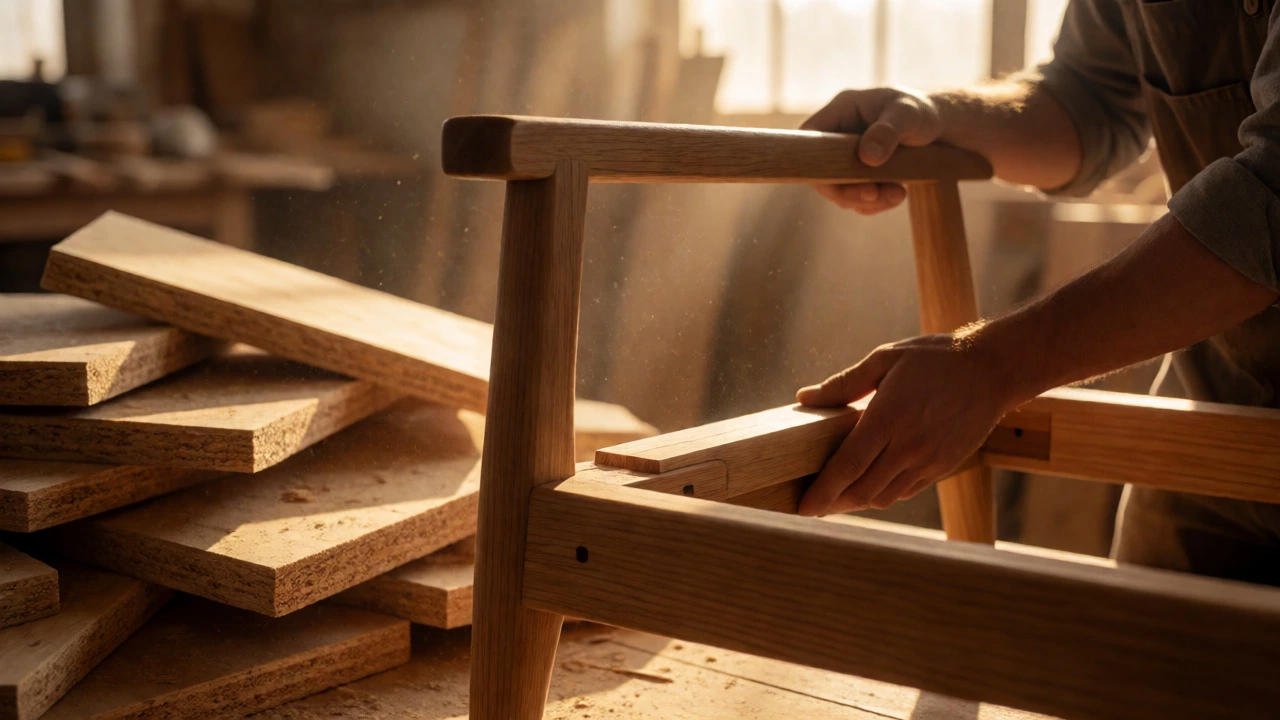
Let’s look at the frame first. Budget sofas often use particleboard or soft pine. These materials warp over time, especially if you live in a humid climate like Bristol’s. High-end frames use kiln-dried hardwoods like oak, ash, or beech. Kiln drying removes moisture, preventing warping and cracking. If you shake a cheap sofa and hear creaking, that’s particleboard joints failing. A hardwood frame joined with dowels, screws, and glue blocks will stay silent for decades.
Then there’s the suspension system. This is what holds you up. Cheap sofas use sinuous springs (S-shaped wires) or webbing. Webbing sags quickly. Sinuous springs can squeak and lose tension. Premium sofas often use eight-way hand-tied springs. Each spring is tied to its neighbors in eight directions. This creates a uniform surface that distributes weight evenly. You won’t feel the wooden frame through the cushion after five years of sitting on it.
| Component | Budget Sofa (£300-£600) | Premium Sofa (£1,500+) |
|---|---|---|
| Frame Material | Particleboard, Soft Pine, Plywood | Kiln-Dried Hardwood (Oak, Ash, Beech) |
| Suspension | Webbing, Basic Sinuous Springs | Eight-Way Hand-Tied Springs, Elastic Webbing Reinforced |
| Foam Density | Low Density (<1.8 lb/ft³), Polyfill Wrapped | High Resiliency (>2.0 lb/ft³), Feather/Down Toppers |
| Upholstery | Microfiber, Low Martindale Count Fabric | Full-Grain Leather, Performance Velvet, High Martindale (20k+) |
| Expected Lifespan | 2-4 Years | 10-20 Years |
The Foam Factor: Why Comfort Degrades
You’ve probably sat on a sofa that felt amazing in the shop but became a lumpy mess six months later. That’s low-density foam. Manufacturers use cheap polyurethane foam wrapped in polyester fiberfill to create a "cloud-like" initial feel. It’s deceptive. The fiberfill clumps. The foam collapses. Suddenly, you’re sitting on wood slats.
High-quality sofas use High Resiliency (HR) foam. Look for a density rating above 2.0 pounds per cubic foot. HR foam bounces back. It retains its shape. Some luxury brands mix HR foam with feather or down toppers. This gives you the softness of luxury without the structural collapse. If you see "polyester wrap" as the primary filling method rather than a secondary comfort layer, walk away. It’s a sign of cost-cutting.

Cost Per Use: Doing the Real Math
Stop looking at the sticker price. Start looking at the Cost Per Use (CPU). This is the only metric that matters for long-term investments.
Imagine two scenarios:
- Sofa A: Costs £400. Lasts 3 years. Used 2 hours a day. CPU = £0.18 per hour.
- Sofa B: Costs £2,000. Lasts 15 years. Used 2 hours a day. CPU = £0.18 per hour.
In this simple model, they cost the same. But wait-Sofa A likely costs you mental energy. You replace it sooner. You deal with sagging. You throw away landfill waste. Sofa B offers consistency. Plus, high-quality materials age better. A full-grain leather sofa develops a patina. It looks better in year ten than year one. A microfiber sofa looks worn out by year three.
If you plan to move frequently every two years, the math changes. You might prefer the lower upfront cost. But if you own your home or plan to stay put for five years, the premium option almost always wins financially.
Lifestyle Fit: Who Should Buy Expensive?
Not everyone needs a £3,000 sofa. In fact, some people shouldn’t buy one. Here’s how to decide based on your household dynamics.
Buy Premium If:
- You have pets or kids: High-performance fabrics (like Crypton or Sunbrella) resist stains and claws. Cheap fabric tears. Premium fabric cleans.
- You host regularly: Durability matters when strangers sit on your furniture. Sagging cushions look bad to guests.
- You value repairability: Many high-end brands offer replacement covers and cushion refills. You can refresh the look without buying a new frame.
- You prioritize health: Cheap foams off-gas volatile organic compounds (VOCs). Natural latex and high-density foams have fewer chemical emissions.
Skip Premium If:
- You redecorate constantly: If you change your style every three years, tie-up capital in a long-lasting sofa is inefficient.
- You rent short-term: Moving heavy hardwood frames is a nightmare. Lightweight budget sofas are easier to transport.
- Budget is tight now: Don’t go into debt for furniture. A decent mid-range sofa is better than no sofa.

Brand Myths vs. Reality
Does the brand name matter? Sometimes. Brands like La-Z-Boy or Habitat have different reputations for quality control. However, don’t pay purely for the logo. Many luxury brands manufacture in the same factories as mid-tier brands.
Instead of chasing logos, inspect the goods. Flip the sofa over. Look at the underside. Can you see the frame? Good sofas expose the wood so you can verify its quality. Bad sofas hide everything behind dust covers. Check the stitching. Double-stitched seams last longer. Single-stitched seams rip.
Also, consider custom makers. In the UK, local upholsterers often provide better value than big-box retailers. They use solid wood frames and allow you to choose fabric grades directly. You avoid the retail markup for the showroom experience.
The Verdict: When to Splurge
Buying an expensive sofa is worth it if you view furniture as infrastructure, not decoration. It’s about supporting your body daily. We spend roughly 30% of our waking hours sitting. If that chair hurts your back or sinks unevenly, it affects your posture and comfort.
However, "expensive" doesn’t mean "most expensive." There’s a sweet spot. For most households, a well-made sofa between £1,000 and £1,800 offers the best balance of durability and cost. Beyond £2,500, you’re paying for exotic leathers, designer names, or intricate carving. Unless you specifically need those aesthetic features, the functional gains diminish.
Ask yourself: Will I still love this in five years? Will it survive my dog? Can I fix it if it breaks? If the answer is yes, the premium price tag is justified. If the answer is no, save your money.
How many years should a good sofa last?
A high-quality sofa with a hardwood frame and high-density foam should last 10 to 15 years with regular use. Budget sofas typically last 2 to 4 years before significant sagging or structural failure occurs.
Is leather better than fabric for durability?
Full-grain leather is generally more durable than fabric because it resists punctures and cleans easily. However, high-performance synthetic fabrics (like olefin or nylon blends) can rival leather in stain resistance and are often more pet-friendly. Fabric is easier to replace via reupholstery; leather repairs are harder.
What is the best foam density for a sofa?
Look for foam with a density of at least 1.8 pounds per cubic foot for seat cushions. For premium durability, aim for 2.0 to 2.5 pounds per cubic foot. Lower densities compress quickly and lose support.
Can I negotiate the price of an expensive sofa?
Yes, especially at independent furniture stores or during clearance events. Big-box retailers may have fixed prices, but boutique shops often have 10-20% margin flexibility. Ask about floor models or discontinued colors for deeper discounts.
Do expensive sofas hold their resale value?
Generally, no. Furniture depreciates rapidly. Even luxury sofas sell for 20-30% of their original price second-hand. Exceptions include iconic design pieces from heritage brands like Herman Miller or vintage mid-century modern items.