
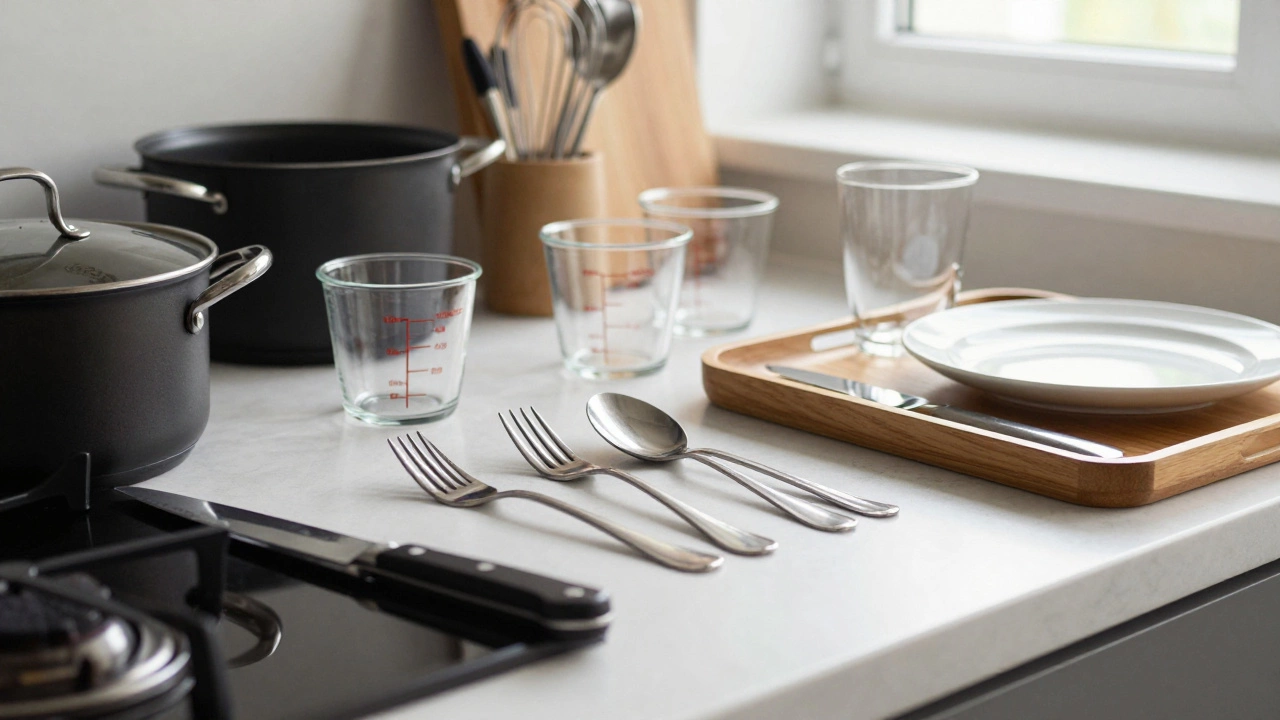
Kitchenware vs. Tableware Classification Quiz
Test Your Knowledge
Identify whether each item is kitchenware (for food preparation) or tableware (for eating). Based on the article content:
Kitchenware includes tools used for cooking, chopping, mixing, and food prep. Tableware includes items used for serving and eating food.
1. Cheese knife
2. Wooden spoon
3. Salad servers (tongs)
4. Butter knife
5. Chef's knife
Your Results
0/5 correct
Ever stood in front of a drawer full of spoons, forks, and knives and wondered - is this really kitchenware? It feels like it belongs there, but maybe it’s just for the table. You’re not alone. Many people mix up kitchenware with tableware, and the confusion isn’t just semantic - it affects how you shop, store, and even clean your things.
What Exactly Is Kitchenware?
Kitchenware refers to tools, utensils, and equipment used to prepare, cook, or store food inside the kitchen. Think pots, pans, mixing bowls, whisks, measuring cups, can openers, and peelers. These are the things you grab when you’re chopping, boiling, baking, or meal-prepping. They’re functional, often heavy-duty, and meant for active use in food preparation.
Now, cutlery - spoons, forks, knives, and sometimes chopsticks - doesn’t do any of that. You don’t use a fork to stir soup on the stove. You don’t carve a roast with a butter knife while it’s still in the oven. Cutlery’s job starts after the food is ready. It’s for serving and eating.
Where Cutlery Fits In
Cutlery is more accurately called dining utensils or tableware. Tableware includes everything you put on the table during a meal: plates, bowls, glasses, napkins, and yes - cutlery. It’s part of the dining experience, not the cooking process.
In stores, you’ll often find cutlery sold alongside dinnerware in the ‘tabletop’ section, not next to the saucepans. Retailers like IKEA, John Lewis, and Williams Sonoma separate these categories for a reason. Cutlery is grouped with plates and mugs. Kitchenware is grouped with blenders, spatulas, and baking sheets.
Why the Confusion?
The line blurs because both types of items live in the same space - your kitchen. You keep your cutlery in a drawer under the counter. You store your pots on a rack near the stove. Both are used for food-related tasks. But function defines category, not location.
Think of it like this: a hammer is a tool, even if you keep it in your garage. A toothbrush is a personal care item, even if you leave it on the bathroom counter. Where you store something doesn’t change what it is.
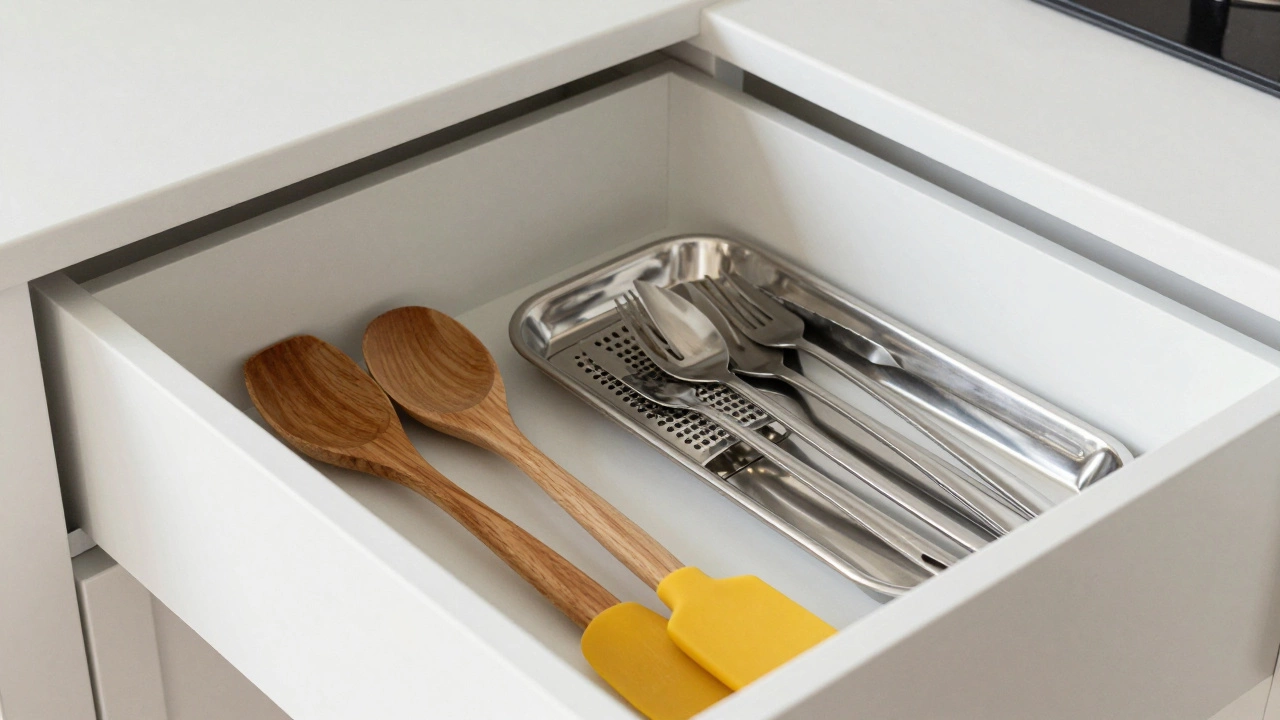
In British households, especially in places like Bristol, it’s common to have a cutlery tray in the kitchen drawer. That doesn’t make it kitchenware - it just means you’re being practical. You keep what you use often within easy reach.
What About Specialized Cutlery?
Some cutlery blurs the line a little. Take a fish knife or a cheese knife. These are designed for specific foods, and sometimes used during preparation - like slicing cheese before serving. But even then, they’re still used for serving, not cooking. You don’t use a cheese knife to grate the cheese - you use a grater.
Then there’s the butter spreader. It’s small, it’s for table use, but it’s not for cutting. Still, it’s not kitchenware. It’s tableware. Same with dessert spoons or oyster forks. They’re specialized dining tools, not cooking tools.
What about salad servers? Tongs? Spatulas with long handles? Those are kitchenware - because you use them to move food from pot to plate, not to eat it. The difference is in the action: preparation vs. consumption.
Does It Matter How You Classify It?
Yes - and here’s why.
If you’re organizing your kitchen, knowing the difference helps you group items logically. You don’t want to dig through your spatulas to find your dessert spoons. Grouping by function - cooking tools vs. eating tools - makes your space more efficient.
It also matters when you’re shopping. If you’re looking for a new set of pots, you don’t want to scroll through a hundred forks. If you’re buying cutlery, you don’t need to sift through silicone spatulas. Clear categories save time and reduce clutter.
Even in cleaning, it matters. Some cutlery is dishwasher-safe, but not all. Some kitchenware, like wooden spoons, shouldn’t go in the dishwasher. Mixing them up can damage your tools.
Real-World Examples
Let’s break it down with common items:
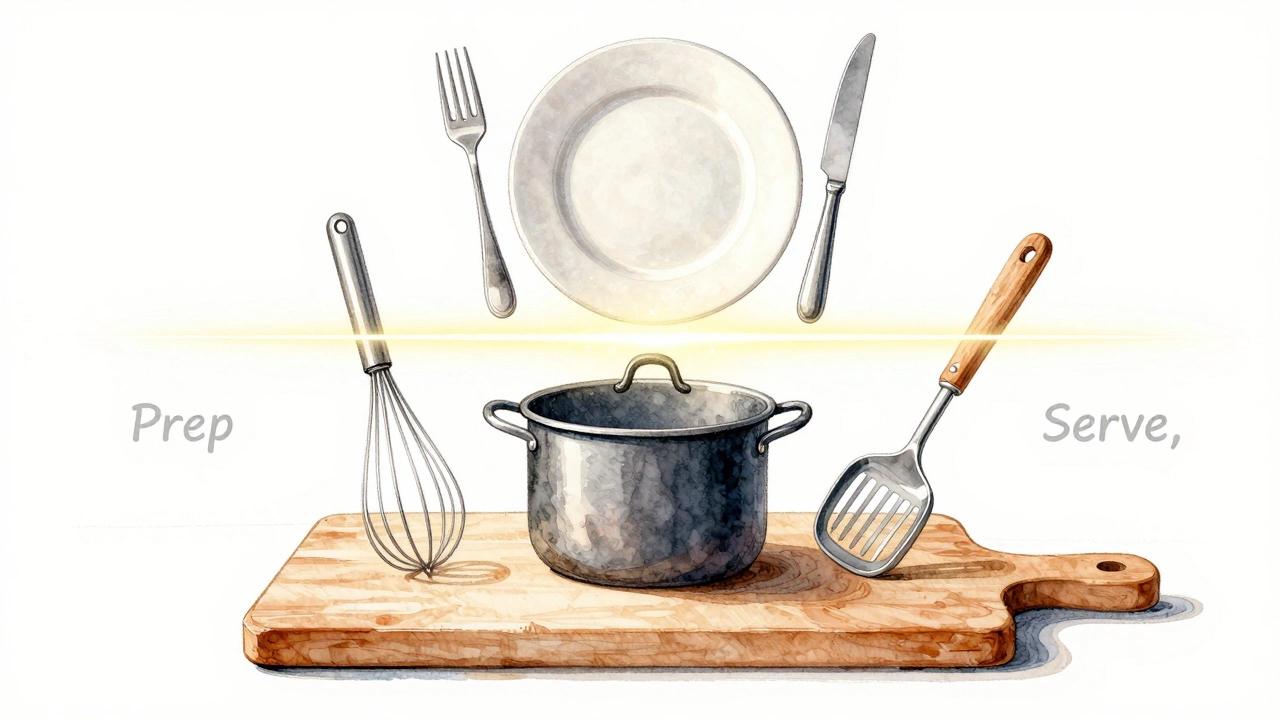
- Kitchenware: Chef’s knife (used for chopping), wooden spoon, whisk, rolling pin, grater, can opener, measuring spoons, silicone spatula, colander, baking tray
- Dining utensils (cutlery): Dinner fork, soup spoon, butter knife, dessert spoon, steak knife, chopsticks
Notice how the chef’s knife is kitchenware - because it’s used to prep food. A steak knife? Tableware - because it’s used to eat food. Same shape, different job.
Even the word ‘knife’ doesn’t automatically mean kitchenware. A bread knife is kitchenware. A steak knife isn’t. Context matters.
What About Sets Sold as ‘Kitchen Sets’?
Some brands sell ‘kitchen sets’ that include cutlery. That’s marketing, not classification. They’re bundling items to make it easier for you to buy everything at once. But just because they’re packaged together doesn’t mean they’re the same thing.
Think of it like buying a ‘car kit’ that includes a GPS, seat covers, and floor mats. The GPS is tech, the seat covers are upholstery, the mats are accessories. They’re sold together, but they’re not the same category.
Same with kitchen sets. The cutlery inside is still tableware. The pots are kitchenware. The label doesn’t change the function.
Bottom Line
Cutlery is not kitchenware. It’s tableware. It belongs on the table, not in the prep zone. Calling it kitchenware isn’t wrong in casual conversation - but if you care about organization, shopping smart, or keeping your tools in good condition, the distinction matters.
Next time you’re sorting drawers or buying new items, ask yourself: Do I use this to make food, or to eat it? If it’s the latter, it’s not kitchenware. And that’s perfectly fine.
Is a fork considered kitchenware?
No, a fork is not kitchenware. It’s dining utensil or tableware. You use it to eat food, not to prepare it. Kitchenware includes tools like whisks, spatulas, and peelers - things you use while cooking or chopping. A fork stays on the table.
What’s the difference between kitchenware and tableware?
Kitchenware is used to prepare and cook food - think pots, pans, knives for chopping, mixers. Tableware is used to serve and eat food - plates, bowls, glasses, and cutlery. The key difference is when and how you use them: kitchenware = prep, tableware = consumption.
Can cutlery be stored in the kitchen?
Absolutely. Most people store cutlery in kitchen drawers because it’s convenient. But location doesn’t change function. Just because you keep your forks in the kitchen doesn’t make them kitchenware. It’s like storing your toothbrush in the bathroom - it doesn’t turn it into a cleaning tool.
Are all knives kitchenware?
No. Only knives used for food prep are kitchenware - like chef’s knives, paring knives, and bread knives. Steak knives, butter knives, and dessert knives are for eating and are classified as tableware. The same tool can be both, depending on how it’s used - but context decides the category.
Why do stores sell cutlery with kitchenware?
It’s for convenience and sales. Stores bundle items people often buy together - like pots, pans, and cutlery - so you can get a full set in one go. But that doesn’t mean they’re the same category. It’s like selling socks with shoes. They go together, but they’re not the same thing.