
Shelf Cost Calculator
Enter your specific details below to see if buying shelves or building them yourself saves you money. The calculator includes all hidden costs like tool rentals and your time value.
Includes materials, hardware, and assembly. Typical cost for a standard 36" shelf: $40-$120.
Calculate costs for materials and your time value.
Buy Ready-Made
Total Cost: $0
Build Yourself
Total Cost: $0
Time Value Your hourly rate has the biggest impact on DIY costs.
Tool Rental Most people don't realize rental costs add 30-50% to DIY projects.
Material Quality Cheap materials often lead to premature failure and higher costs.
Let’s cut to the chase: if you’re trying to save money on shelves, you’re probably wondering whether buying ready-made ones or building your own will actually save you cash. The answer isn’t simple. It depends on what kind of shelves you want, how much time you have, and whether you already own the tools. Most people assume building shelves is cheaper - but that’s not always true. Let’s break down the real numbers, step by step.
What You’re Really Paying For
When you buy a shelf, you’re not just paying for wood or metal. You’re paying for design, precision, hardware, and labor - all done by someone else. A basic 36-inch wide bookshelf from IKEA costs around $40. A solid wood floating shelf from Wayfair runs $70-$120. These prices include everything: pre-cut boards, pre-drilled holes, brackets, screws, even instructions. You open the box, follow the steps, and it’s done in 20 minutes.
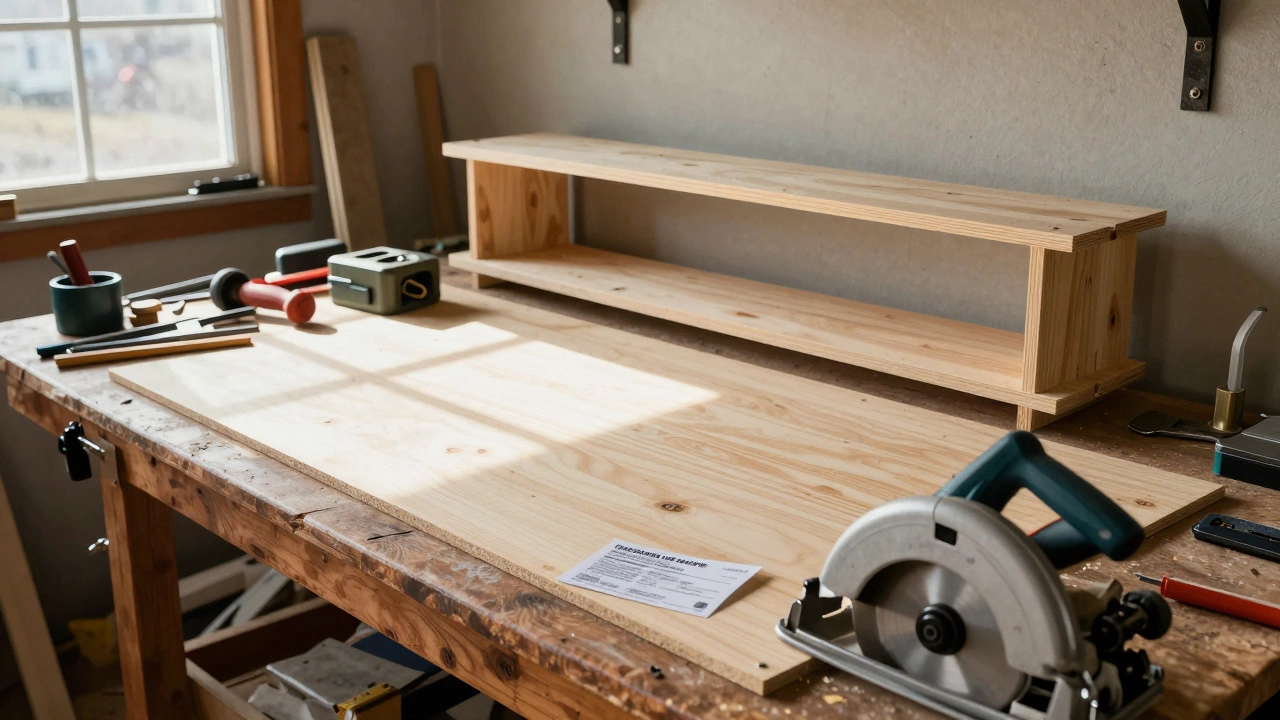
When you build your own, you’re paying for raw materials and your time. A 4x8-foot sheet of 3/4-inch plywood - the kind most DIYers use - costs about $55 at Home Depot. That’s enough for two or three shelves. But then you need brackets, screws, wall anchors, sandpaper, wood glue, stain or paint, and maybe a drill. Add those up, and you’re already at $60-$80 before you even start cutting.
And here’s the kicker: if you don’t own a saw, you’ll need to rent one. A circular saw rental is $35 for four hours. A miter saw? $50. Most people don’t realize how often they end up paying just to access tools they only use once.
The Hidden Time Cost
Time isn’t free. If you make $25 an hour at your job, and you spend four hours building one shelf, you’ve already spent $100 in labor - even if you didn’t get paid for it. That’s more than the price of two store-bought shelves.
DIY shelving sounds fun until you realize how many steps are involved. You have to:
- Measure your wall accurately (and trust me, walls are rarely straight)
- Mark drilling points
- Find studs or install anchors
- Cut the wood to size
- Sand every edge
- Apply finish (and wait for it to dry)
- Install it without it wobbling or falling
One person I talked to spent six weekends trying to build a single floating shelf. She finally gave up and bought a $90 one. “I could’ve had three shelves by now,” she said. “And I’d still have my weekends.”
When DIY Actually Saves Money
There are real cases where building your own saves cash. Here’s when it works:
- You already own all the tools - saw, drill, sander, level, clamps
- You have scrap wood lying around (old pallets, leftover flooring, broken furniture)
- You’re making multiple shelves - like for a whole garage or basement
- You’re okay with a rustic, imperfect look
For example, a guy in Ohio turned five old pallets into six heavy-duty shelves for his workshop. He spent $15 on screws and $10 on wood conditioner. Total cost? $25. He saved $400 compared to buying industrial shelves.
But that’s the exception. Most people don’t have piles of free wood. They don’t have a workshop. And they definitely don’t have six weekends to spend.
Quality and Longevity
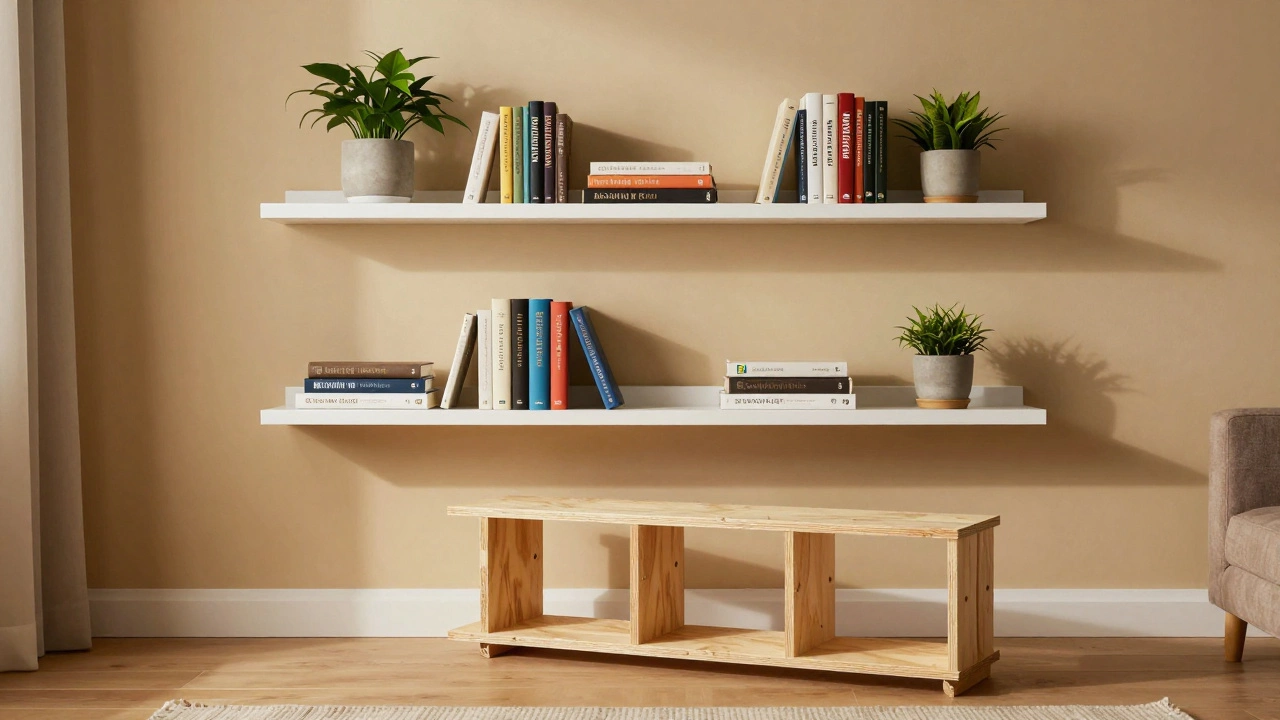
Built-to-last shelves aren’t cheap. A solid oak bookshelf from a furniture brand like Sauder or Ashley can cost $300-$500. But it’ll last 20 years. A $40 IKEA shelf? It might sag under heavy books after three years. The particleboard warps. The screws strip. The finish chips.
DIY shelves made from plywood and cheap brackets? They’re not much better. Unless you’re using hardwood and real wall anchors, your shelf might not hold up. I’ve seen too many DIY shelves collapse under stacks of textbooks or canned goods.
Store-bought shelves use reinforced joints, metal brackets rated for 100+ pounds, and moisture-resistant finishes. You can’t replicate that with a $10 bracket from the hardware aisle.
What About Adjustable Shelves?
If you need flexibility - like shelves you can move up and down - buying is almost always the better choice. Adjustable shelving systems like those from ClosetMaid or Elfa cost $80-$150 for a full unit. But they’re engineered to slide, lock, and support weight evenly. Building your own adjustable system? You’d need precision drilling, metal tracks, and sliders. Most people end up buying the parts anyway - then paying extra to assemble them.
Real-World Cost Comparison
Here’s a side-by-side look at two common scenarios:
| Item | Buy Ready-Made | Build Your Own |
|---|---|---|
| Material (plywood or MDF) | $0 (included) | $25 |
| Brackets & Hardware | $0 (included) | $20 |
| Finish (paint/stain) | $0 (included) | $15 |
| Tool Rental (saw, drill) | $0 | $35 |
| Time Cost (3 hours @ $20/hr) | $0 | $60 |
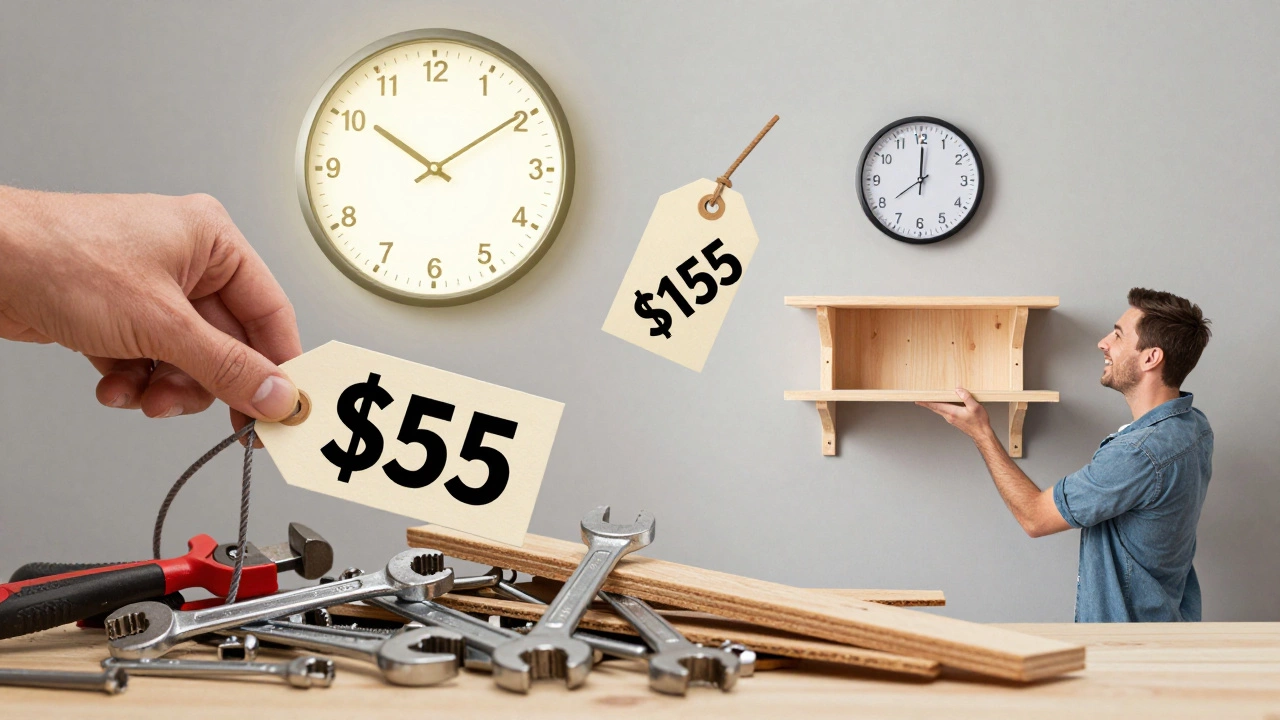
| Total | $55 | $155 |
Even if you skip tool rental and use free scrap wood, you’re still looking at $40-$60 in materials and time. That’s not cheaper than buying - it’s just different.
When to Skip DIY
You should skip building your own shelves if:
- You’re on a tight schedule
- You’ve never used a power tool
- You’re installing in a rental (landlords hate nail holes)
- You want a clean, modern look
- You’re hanging heavy items (TVs, books, appliances)
In those cases, buying is safer, faster, and often cheaper when you count your time.
When DIY Makes Sense
Build your own if:
- You’re making several shelves (5+)
- You have tools and space
- You’re using free or recycled materials
- You enjoy building and don’t mind imperfections
- You want custom sizes (like for an odd corner or slanted wall)
One woman in Austin turned her 12-foot-long garage wall into a custom storage system using leftover lumber from a deck project. She spent $40 on brackets and a can of paint. The result? A system that holds tools, bins, and boxes - and cost less than $100 total. She says it’s the most useful thing she’s ever built.
Final Verdict
For most people, buying shelves is cheaper. Not just in cash - in time, stress, and risk. You’re not just paying for wood. You’re paying for reliability, safety, and convenience.
But if you’ve got the tools, the time, and the scrap wood? Go for it. Just don’t assume it’ll save you money. Most of the time, it doesn’t. But it might give you something better: pride.
Is it cheaper to buy shelves or make them?
For most people, buying shelves is cheaper. Even if materials seem low-cost, hidden expenses like tool rentals, time, and mistakes add up. A ready-made shelf often costs less than the total effort and materials needed to build one. DIY only saves money if you already have tools, free materials, and time to spare.
What’s the cheapest material for DIY shelves?
Plywood is the most affordable option for DIY shelves. A 4x8-foot sheet costs around $55 and can make two or three shelves. MDF is cheaper but weaker and doesn’t hold screws well. Particleboard is even worse - it swells with moisture. If you can find free or reclaimed wood, that’s your best bet.
Do store-bought shelves last longer than DIY ones?
Generally, yes. Store-bought shelves use engineered materials, reinforced joints, and hardware rated for heavy loads. DIY shelves made with basic plywood and cheap brackets often sag or fail under 50 pounds. Unless you’re using solid hardwood and proper wall anchors, your DIY shelf won’t match the durability of a name-brand product.
Can I save money by using old furniture for shelves?
Absolutely. Old bookshelves, drawers, or even ladder-style furniture can be repurposed into sturdy shelves with minimal cost. Sand them, paint them, and mount them securely. This approach cuts material costs to nearly zero and gives you unique, character-filled storage.
What’s the biggest mistake people make when building shelves?
Skipping wall anchors and not finding studs. Most people drill into drywall and think a few screws will hold. That’s how shelves fall. Always use wall anchors rated for the weight you’re hanging - or better yet, mount into studs. A shelf that falls can damage floors, break items, or even hurt someone.