
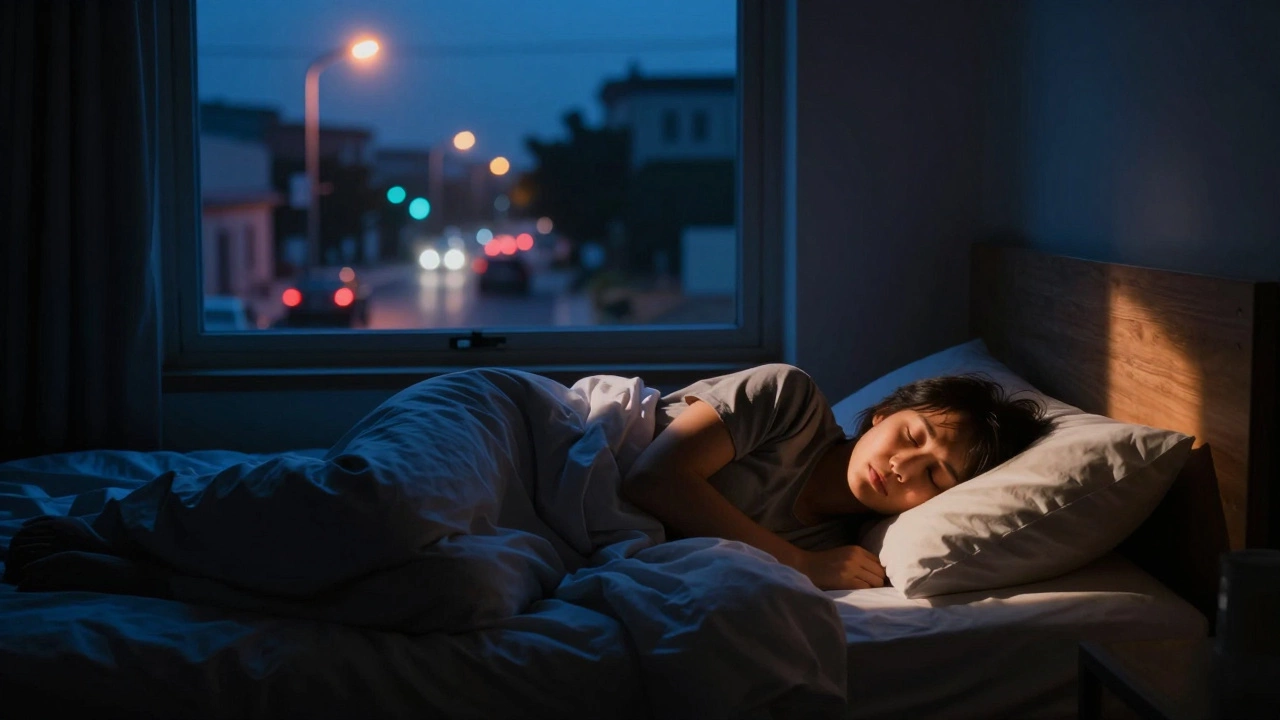
Ever woken up at 4 a.m. because the sun hit your eyes like a spotlight? Or felt like someone could see right into your bedroom from the street? If you’re sleeping without curtains, you’re not alone-but you might be missing out on some key benefits most people don’t talk about.
Light Is Your Sleep’s Worst Enemy
Your body doesn’t care if it’s 2025 or 1925-it still runs on the same ancient clock. When light hits your retina, it tells your brain to stop making melatonin, the hormone that tells you it’s time to sleep. Even a little bit of light from streetlamps, passing cars, or early morning sun can mess with your deep sleep cycles. A 2023 study from the University of Bristol found that people who slept in rooms with no window coverings had 27% less deep sleep than those using blackout curtains. That’s not just feeling tired-it’s your body not getting the full repair cycle it needs. If you live in a city, light pollution doesn’t turn off at midnight. Neon signs, LED billboards, and neighbor’s porch lights all leak in. You might not notice it, but your brain does.Privacy Isn’t Just About Modesty
Think curtains are just for hiding your messy room? Think again. Without curtains, you’re basically broadcasting your life to anyone walking, driving, or flying past. A 2024 survey of 1,200 UK residents found that 68% of people felt anxious about being seen while sleeping or changing clothes, even in upper-floor apartments. That stress doesn’t vanish when you close your eyes. It lingers in your nervous system, keeping you in a low-grade state of alertness. And it’s not just strangers. Neighbors, delivery drivers, even drones are more common now than ever. In Bristol, reports of people spotting others through uncurtained windows increased by 40% between 2022 and 2025. You don’t need to be paranoid-you just need to know that privacy is a silent health factor.Temperature and Noise Don’t Care About Your Aesthetic
Curtains aren’t just fabric on a rod. They’re thermal insulators. In winter, a simple pair of blackout curtains can reduce heat loss through windows by up to 25%. That means your bedroom stays warmer, you use less heating, and your body doesn’t have to work overtime to stay cozy. And noise? Yes, curtains help with that too. Thick, layered fabrics absorb sound. If you live near a busy road, train line, or noisy neighbor, curtains can cut outside noise by 5 to 10 decibels. That’s the difference between a car horn that jolts you awake and one that barely registers.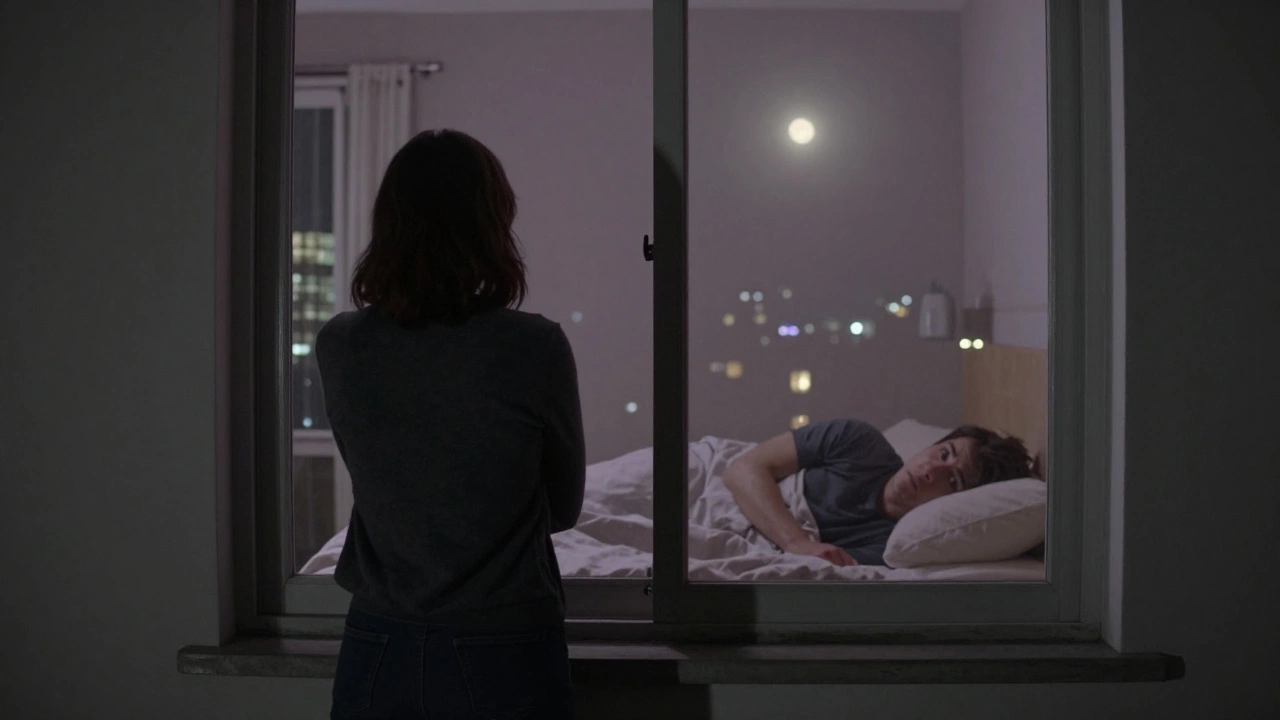
What About the People Who Swear They Sleep Better Without Curtains?
Some people say they love waking up with the sun. They call it natural, healthy, aligned with circadian rhythms. And they’re not wrong-for some. If you live in a rural area with no streetlights, no neighbors nearby, and you wake up naturally with the seasons, going curtain-free might work. But here’s the catch: most people who say this are either in the minority, or they’ve adjusted other parts of their routine to compensate. Maybe they use a sleep mask. Maybe they wake up at the same time every day. Maybe they’ve trained their body to ignore light. But if you’re just sleeping with no curtains because you think it’s “minimalist” or “modern,” you’re probably not getting the full picture.Alternatives to Traditional Curtains
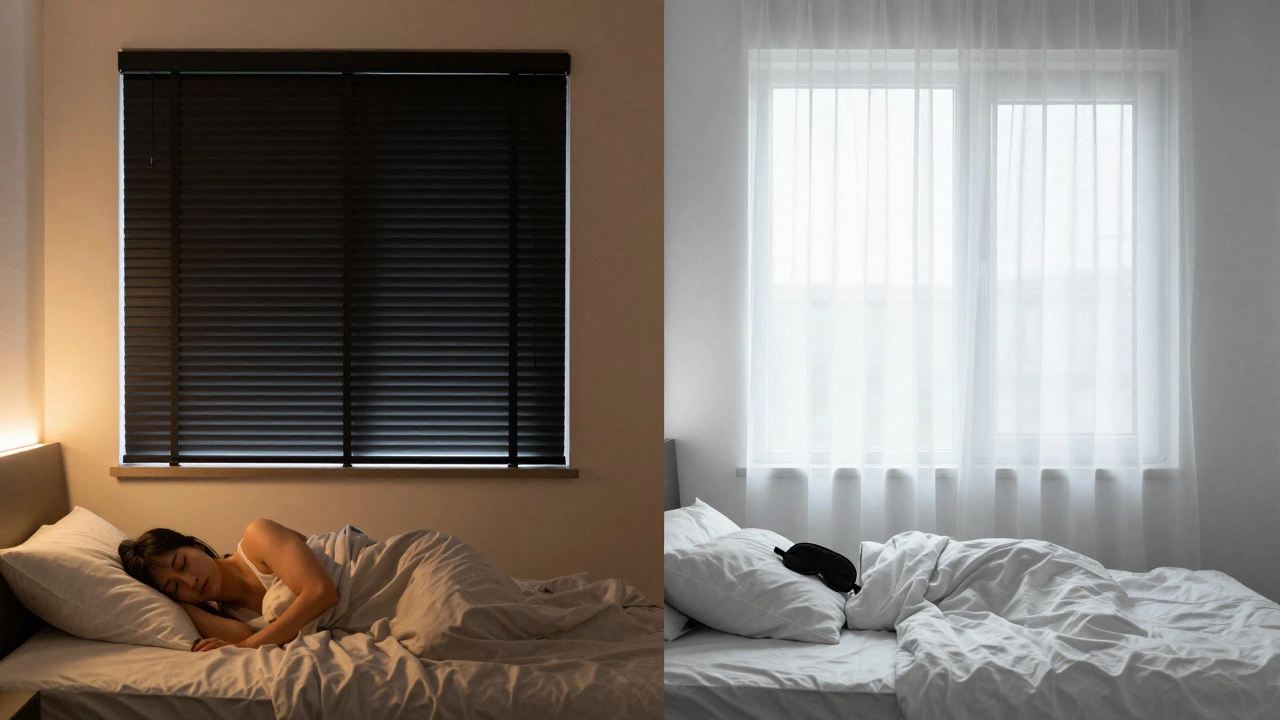
You don’t need heavy velvet drapes to solve this. There are smarter, simpler options:- Blackout roller blinds-easy to install, block 99% of light, and look clean.
- Window films-frosted or reflective films give privacy without blocking your view during the day.
- Sheer curtains with blackout liners-you get the soft look during the day and total darkness at night.
- Sleep masks-if you’re renting or can’t install anything, a good mask can be a game-changer.
When It’s Actually Fine to Skip Curtains
There are cases where sleeping without curtains makes sense:- You live in a remote cabin with no nearby buildings.
- Your bedroom faces a north wall with no windows (yes, that’s rare but possible).
- You’re using a sleep mask consistently and it works for you.
- You’re in a controlled environment like a sleep lab or a darkroom.
How to Test If You Need Curtains
Try this: for one week, sleep with a sleep mask. If you notice you’re falling asleep faster, waking up less, or feeling more rested, your bedroom light levels are the issue. You don’t need to buy anything yet-just test it. Then, try this: at night, walk around your house and look out your bedroom window from the outside. Can you see your silhouette? Can you see your bed? If yes, someone else can too. That’s not just privacy-it’s security.Final Thought: It’s Not About Style. It’s About Sleep.
Curtains aren’t a luxury. They’re a tool. Like a good mattress or a quiet room. You wouldn’t sleep on a broken bed and call it “bohemian.” Don’t sleep in a light-polluted room and call it “minimalist.” Your brain needs darkness. Your body needs privacy. Your peace needs a little fabric on the window.Is it unhealthy to sleep without curtains?
It can be. Exposure to artificial or natural light at night disrupts melatonin production, which affects sleep quality and long-term health. Studies show people without window coverings get less deep sleep and report more nighttime awakenings. It’s not dangerous in the short term, but over time, it can contribute to chronic fatigue, mood issues, and even weakened immunity.
Can I use a sleep mask instead of curtains?
Yes, a high-quality sleep mask can block light effectively and is a good temporary solution, especially if you rent or can’t install curtains. But masks don’t help with privacy, noise reduction, or insulation. Curtains address multiple issues at once. If you’re serious about sleep quality, combine both: use a mask for extra light blocking and curtains for everything else.
Do I need blackout curtains, or are regular ones enough?
Regular curtains block some light but usually let in 20-40% of ambient light. If you live in a city, near streetlights, or wake up early, that’s enough to disturb your sleep. Blackout curtains are designed to block 95-99% of light. For most people in urban or suburban areas, blackout is the minimum standard for good sleep.
Will curtains make my room feel smaller or darker during the day?
Not if you choose wisely. Light-colored blackout fabrics, sheer liners, or roller blinds that you pull up during the day keep the room bright and open. Many modern blackout options are slim, sleek, and don’t overwhelm the space. The key is to open them in the morning-curtains aren’t meant to stay closed all day.
Are curtains worth the cost?
Yes, if you value sleep. A good set of blackout curtains costs between £30 and £80, depending on size. That’s less than one month’s worth of coffee. Compare that to the cost of poor sleep: lost productivity, mood swings, higher stress, and even medical bills from sleep-related issues. Curtains are one of the cheapest, most effective upgrades you can make to your bedroom.
Can I install curtains if I rent?
Absolutely. No-drill options like tension rods, adhesive hooks, or magnetic curtain tracks work perfectly for renters. They’re easy to remove, leave no damage, and hold up just as well as fixed rods. Many people use them in rented flats across the UK without issue. Your landlord won’t even notice.