
Mirror Thickness & Weight Estimator
Select your project details below to estimate weight and receive a professional recommendation for thickness and mounting.
Estimated Total Weight
Recommended Thickness:
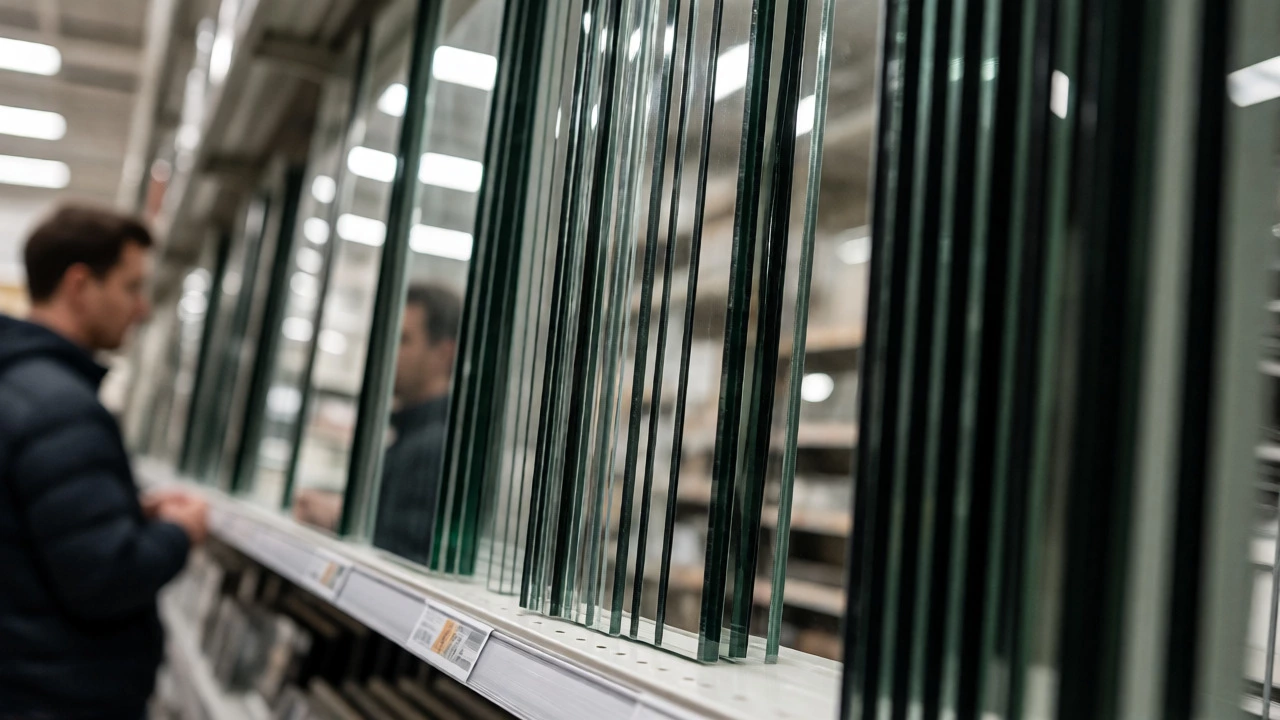
You walk into a hardware store, stare at a wall of glass sheets, and freeze. The clerk asks what you need, and you realize you have no idea if you should grab the thin stuff or the heavy-duty slabs. Choosing the wrong mirror thickness is one of those home improvement mistakes that doesn’t just look bad-it can actually be dangerous. A flimsy sheet on a big frame will warp your reflection like a funhouse ride, while an overly thick pane might crack under its own weight if the mounting isn't right.
Most people assume all mirrors are created equal, but the difference between 1/4-inch and 1/2-inch glass is massive in terms of clarity, durability, and installation requirements. This guide breaks down exactly which thickness works for different spots in your house, so you stop guessing and start hanging things correctly.
The Standard Sizes Explained
Glass manufacturers don’t make infinite options. You’ll typically see three main standards in residential settings: 1/8-inch (3mm), 1/4-inch (6mm), and 3/8-inch to 1/2-inch (10-12mm). Each serves a specific purpose, and picking the wrong one leads to headaches later.
1/8-inch mirror is the thinnest option commonly available. It’s lightweight, cheap, and often used for small decorative pieces or temporary setups. However, it has a major flaw: it flexes easily. If you mount this on a large surface, even slight vibrations from walking by or closing a door can cause the glass to ripple. This distortion makes faces look wavy and objects appear bent. It’s strictly for small applications, like makeup compacts or tiny accent tiles.
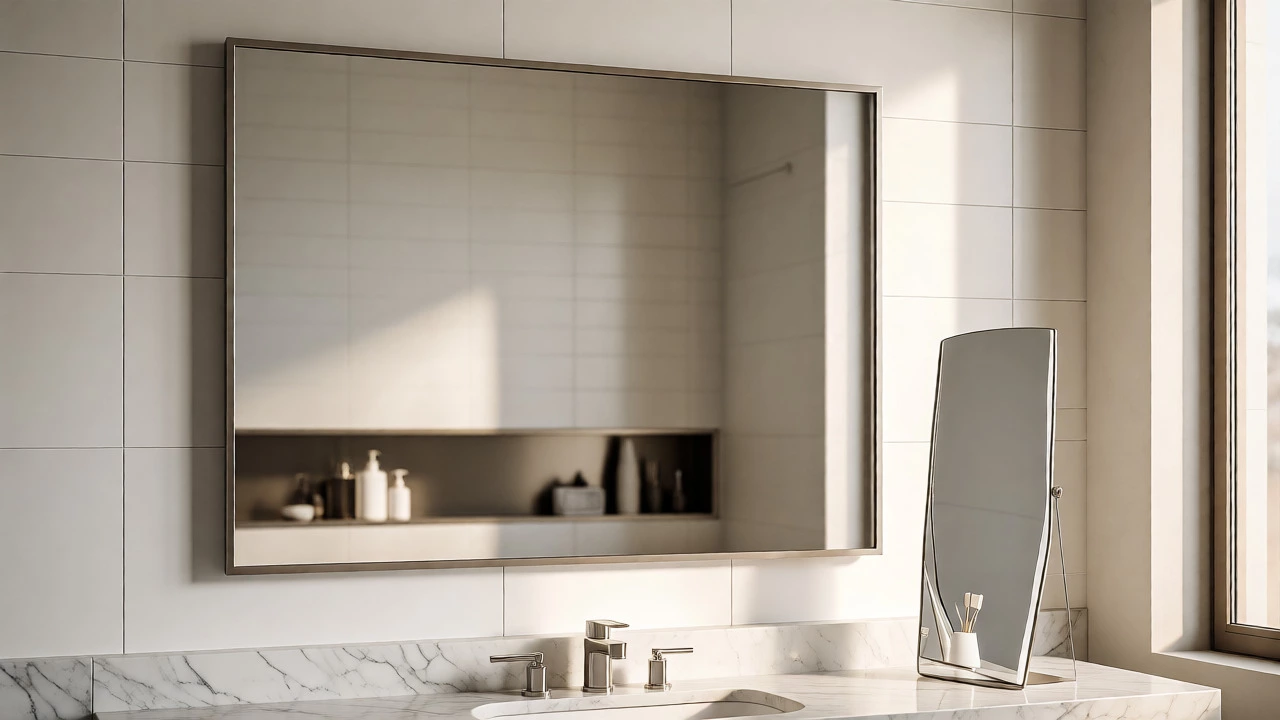
1/4-inch mirror is the industry standard for most home projects. It offers a solid balance between cost and performance. At this thickness, the glass is rigid enough to prevent significant distortion on surfaces up to about 4x6 feet when properly supported. It’s what you’ll find in most pre-made framed mirrors sold at retail stores. For a typical bedroom vanity or a hallway wall, this is usually the sweet spot. It’s light enough for standard drywall anchors but strong enough to stay flat.
3/8-inch and 1/2-inch mirrors are the heavy hitters. These are reserved for large installations, such as floor-to-ceiling panels in living rooms, gym walls, or commercial spaces. The extra mass prevents any bowing, ensuring a crystal-clear reflection across vast areas. But here’s the catch: they’re heavy. A 4x8-foot sheet of half-inch glass weighs nearly 50 pounds. You cannot just slap these on drywall with plastic anchors; they require robust structural support.
Matching Thickness to Location
Where you hang the mirror dictates how thick it needs to be. A bathroom medicine cabinet has different stress factors than a giant statement piece in the foyer.
| Application | Recommended Thickness | Why? |
|---|---|---|
| Small Vanity/Makeup Mirror (<2 ft) | 1/8" - 1/4" | Low risk of distortion; easy to mount. |
| Bathroom Medicine Cabinet | 1/4" | Standard size; fits existing frames; safe for drywall. |
| Bedroom Wardrobe Door Insert | 1/4" - 3/8" | Needs rigidity to avoid rattling when doors close. |
| Large Wall Art (4x6 ft) | 3/8" - 1/2" | Prevents "funhouse" warping over large spans. |
| Floor Leaning Mirror | 1/2"+ | Stability against tipping; resists bending. |
| Gym/Studio Full Wall | 1/2" | Vibration resistance from movement; long-term durability. |
In bathrooms, moisture is a factor. Thinner glass (1/8") can sometimes delaminate faster if the backing seal fails because it flexes more, breaking the adhesive bond with the silvering layer. Sticking to 1/4-inch gives you a better buffer against humidity-induced degradation.
For entryways, you want impact resistance. People bump into things. A 1/4-inch mirror can shatter if hit hard by a backpack or a dog tail. While thicker glass isn’t necessarily stronger against sharp impacts without tempering, it does hold together better if it does break. If you have kids or pets, consider tempered safety glass, which crumbles into small cubes rather than jagged shards. Tempering is possible at 1/4-inch and above, making it a smart upgrade for high-traffic zones.
The Hidden Cost of Thin Glass
People buy 1/8-inch mirrors because they’re cheap. A 24x36-inch sheet might cost $20 less than its 1/4-inch counterpart. But you pay for that savings in frustration. Have you ever looked at a large, thin mirror and felt slightly dizzy? That’s optical distortion. Thin glass sags under its own weight, especially if mounted only at the top corners. The bottom edges curve inward slightly, stretching the reflection vertically. It’s subtle, but your brain notices.
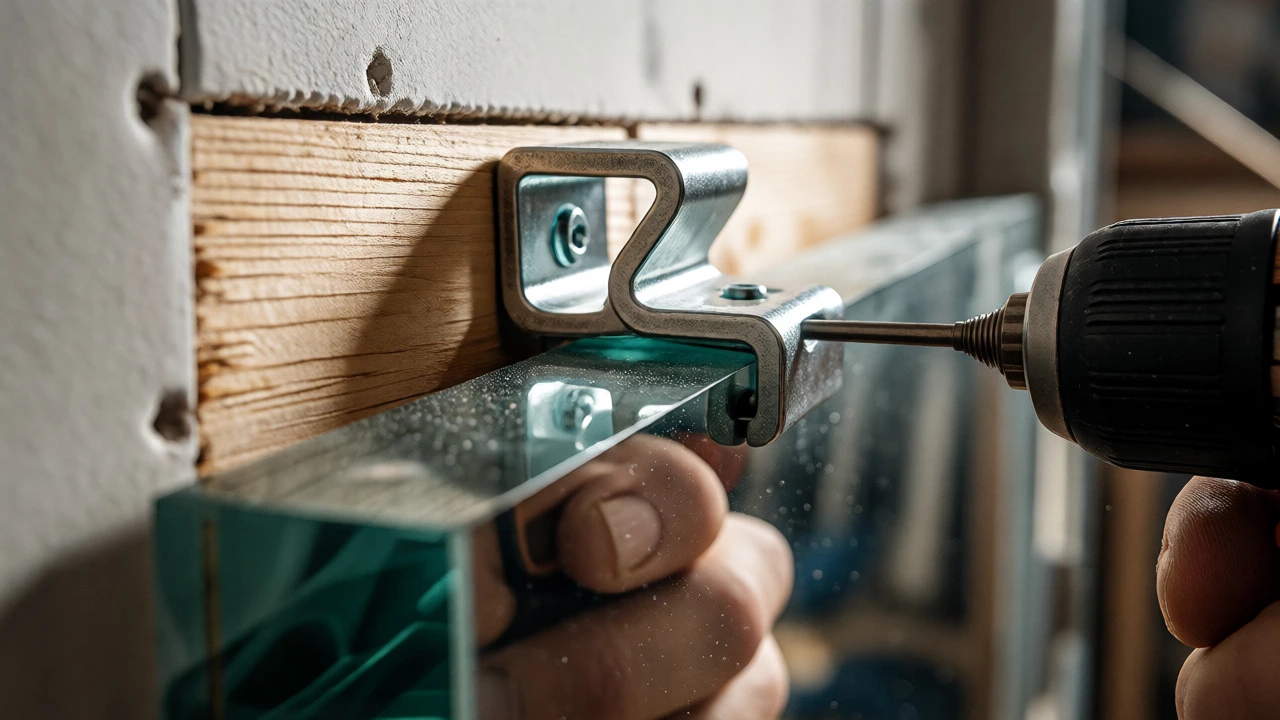
To fix this with thin glass, you’d need to use a full-sheet backing board (like plywood) glued directly to the back. This adds labor, materials, and complexity. By paying a little more for 1/4-inch or 3/8-inch glass, you get inherent rigidity. You can mount it with simple Z-clips or French cleats without worrying about the center sagging. The math favors the thicker option once you factor in installation time and peace of mind.
Installation Matters More Than You Think
Even the best-thickness mirror will fail if installed poorly. The rule of thumb: heavier glass requires closer anchor spacing. For a 1/4-inch mirror, two secure points are usually fine for sizes up to 3x4 feet. Once you hit 3/8-inch or larger, you need four points minimum, ideally spaced evenly around the perimeter.
Drywall alone is risky for anything over 1/4-inch. Always try to hit studs. If you must use drywall anchors, choose toggle bolts rated for double the mirror’s weight. For example, if your 3/8-inch mirror weighs 30 pounds, use anchors rated for at least 60 pounds total capacity. And never rely on adhesive alone for large vertical surfaces unless you’re using a specialized construction adhesive combined with mechanical fasteners. Adhesive creep-a slow sliding downward over months-is common with glue-only mounts.
Consider the substrate behind the mirror too. If you’re tiling a bathroom wall, ensure the tile adhesive is fully cured before mounting. Vibrations from drilling into tile can crack both the tile and the mirror if done hastily. Use diamond-tipped bits for ceramic or porcelain tiles to keep the hole clean and reduce stress on the surrounding area.
Safety and Building Codes
Do you need tempered glass? In many jurisdictions, building codes require safety glass in specific locations: near doors, in shower enclosures, and sometimes in bathrooms depending on local regulations. Check your local code, but generally, if a person could accidentally walk into the mirror (like next to a doorway), tempered glass is mandatory. This applies regardless of thickness. A 1/4-inch tempered mirror is safer than a 1/2-inch annealed (standard) mirror in a high-risk zone.
Shower doors almost always require 3/8-inch or 1/2-inch tempered glass. You wouldn’t use a 1/8-inch sheet there-it would shake violently every time water hits it, creating a safety hazard. The mass stabilizes the panel against water pressure and air currents.
How to Measure and Buy Correctly
When ordering custom cuts, specify the exact dimensions including the edge profile. Polished edges add cost but improve safety and aesthetics. Rough edges can chip during transport and handling. For DIYers buying stock sizes, check the packaging for "annealed" vs. "tempered." If it doesn’t say tempered, assume it’s not.
Also, account for the frame. If you’re putting the glass into an existing frame, measure the rabbet depth-the groove where the glass sits. Most standard frames accommodate 1/4-inch glass. If you try to squeeze a 3/8-inch pane into a shallow frame, it won’t sit flush, or worse, it’ll pop out. Conversely, a thin pane in a deep frame will rattle unless you add glazing points and putty or silicone pads.
Troubleshooting Common Issues
If your new mirror looks distorted, check the mounting. Are the clips too tight? Overtightening can bend the glass. Loosen them slightly. Is the wall uneven? Thick glass bridges gaps better than thin glass, which conforms to bumps in the wall, causing reflections to wobble. If you have a very uneven wall, stick to thicker glass or use adjustable mounting brackets.
Black edges appearing after a few years? That’s desilvering, often caused by moisture reaching the edges. Sealing the edges with clear silicone caulk after installation can prevent this, especially in bathrooms. This step is crucial for 1/4-inch and thinner mirrors, as their lower mass means less thermal stability, leading to condensation cycles that attack the backing.
Is 1/8 inch mirror good for walls?
Generally, no. 1/8-inch mirrors are prone to distortion and breakage. They are best suited for small decorative items or temporary displays. For permanent wall installations, 1/4-inch is the minimum recommended thickness to ensure a flat, undistorted reflection.
Can I use 1/4 inch mirror for a shower enclosure?
It depends on the design. Frameless showers typically require 3/8-inch or 1/2-inch tempered glass for stability. Framed shower doors can sometimes use 1/4-inch tempered glass, but check local building codes and manufacturer specifications, as many regions mandate thicker glass for wet areas.
Does thicker mirror cost significantly more?
Yes, but not exponentially. Moving from 1/4-inch to 3/8-inch might increase material costs by 20-30%. However, the improved durability and reduced need for complex backing structures often offset this expense. For large mirrors, the price difference is negligible compared to the value of a distortion-free reflection.
What happens if I hang a heavy mirror on drywall?
If you use standard plastic anchors, the mirror may pull out of the wall over time, especially if bumped. For mirrors heavier than 10-15 pounds, always use toggle bolts or anchor into wooden studs. Drywall alone cannot support significant point loads reliably.
Is acrylic mirror a good alternative?
Acrylic (plastic) mirrors are lighter and unbreakable, making them great for kids' rooms or travel. However, they scratch easily and tend to distort images more than glass, even in thicker gauges. Glass remains superior for clarity and longevity in permanent home installations.