

Cushion Size Visualizer
Walk into any furniture store or browse an online shop, and you will see hundreds of cushions is soft textile pads used for seating, decoration, or support in home interiors. But if you look closely at the sales data, a few specific dimensions dominate the market. Why do certain sizes sell out faster than others? It is not just about aesthetics; it is about how these pieces fit into the geometry of your living space. If you are buying new throw pillows is decorative cushions placed on sofas, beds, or chairs to add comfort and style., knowing the most popular sizes saves you money and ensures they actually look good when you place them.
The short answer is that 18x18 inches (45x45 cm) and 20x20 inches (50x50 cm) are the undisputed kings of the cushion world. These square formats appear in over 60% of all decorative cushion sales in North America and Europe. They offer the perfect balance between visual presence and practicality. However, the "best" size depends entirely on where you plan to put it. A 12x12 inch accent pillow looks great on a bed but disappears on a large sectional sofa. Let’s break down exactly which sizes work best for each part of your home.
Why Square Shapes Dominate the Market
Before we dive into numbers, it helps to understand why squares are so popular. Rectangular lumbar cushions and round bolster pillows have their place, but squares are the default choice for most homeowners. This is because square cushions stack easily, rotate without looking awkward, and fill corners neatly. When you arrange three or five pillows on a sofa, squares create a stable base layer. You can then layer different textures or colors on top without worrying about mismatched edges.
From a manufacturing perspective, square cuts minimize fabric waste. Fabric usually comes in bolts that are 44 to 60 inches wide. Cutting 18-inch or 20-inch squares allows factories to use nearly every inch of material. This efficiency keeps production costs lower, which translates to more affordable prices for consumers. That is why you see so many options in these sizes at budget-friendly retailers like IKEA and Target.
The Standard Size Hierarchy
Not all cushions are created equal. Here is the hierarchy of popularity based on retail volume and interior design trends for 2026:
- 18x18 Inches (45x45 cm): The global standard. This is the go-to size for medium-sized sofas and armchairs. It provides enough surface area to show off patterns while remaining compact enough not to overwhelm smaller seats.
- 20x20 Inches (50x50 cm): The premium choice. Slightly larger than the 18-inch version, this size feels more substantial. It works exceptionally well on deep-seated modern sofas and king-size beds. Many high-end brands favor this dimension for its luxurious drape.
- 16x16 Inches (40x40 cm): The compact option. Ideal for accent chairs, small loveseats, and children’s rooms. If your furniture is petite, stick to this size to avoid a cluttered look.
- 12x12 Inches (30x30 cm): The accent piece. These are rarely used as primary seating cushions. Instead, they serve as focal points on beds or as small accents in window nooks.
| Size (Inches) | Size (Cm) | Primary Use Case | Visual Impact | Best For Furniture Type |
|---|---|---|---|---|
| 12x12 | 30x30 | Bedding accents, chair backs | Subtle | Twin beds, accent chairs |
| 16x16 | 40x40 | Small sofas, armchairs | Moderate | Loveseats, reading chairs |
| 18x18 | 45x45 | Standard sofas, dining chairs | Strong | 3-seater sofas, standard beds |
| 20x20 | 50x50 | Large sofas, king beds | Bold | Sectionals, oversized recliners |
| 24x24 | 60x60 | Floor seating, pet beds | Oversized | Daybeds, floor lounges |
Matching Cushions to Your Sofa
Choosing the right size for your sofa is the most common mistake people make. A general rule of thumb is that the cushion should be roughly two-thirds the width of the seat cushion beneath it. If your sofa seat is 24 inches wide, an 18-inch pillow fits perfectly. If the seat is wider, say 30 inches, you might want to step up to a 20-inch or even a 22-inch pillow to maintain proportion.
Consider the depth of the seat as well. On deep, modern sofas with low backrests, larger cushions (20-24 inches) provide better support for leaning back. On traditional Chesterfield-style sofas with high, rolled arms, smaller cushions (16-18 inches) prevent the pillows from getting lost in the curves. Always measure your actual furniture before ordering. Do not rely on photos, as camera angles can distort scale significantly.
Bedding: Layering for Comfort and Style
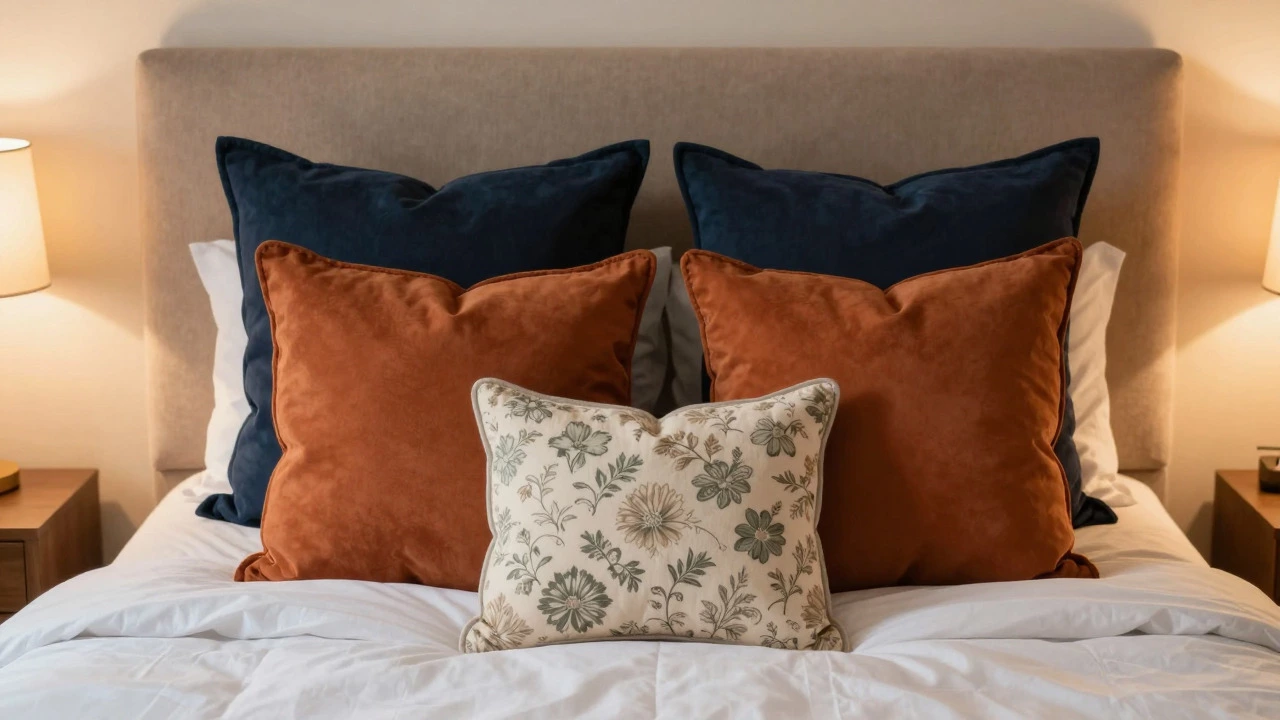
In the bedroom, cushion sizing follows a different logic. Here, you are creating layers rather than filling a single spot. The most popular arrangement for a queen or king bed involves a mix of sizes. Start with two large pillows (20x20 or 24x24) against the headboard. Then, add two medium pillows (18x18) in front of them. Finally, place one or two small accent pillows (12x12 or 14x14) at the very front.
This pyramid effect creates visual interest and functional comfort. The large pillows catch your head if you sit up to read. The medium pillows offer neck support. The small accents add a pop of color or texture. If you only buy one size for your bed, choose 20x20 inches. It is versatile enough to work as both a standard sleeping pillow and a decorative element.
Lumbar and Bolster: The Non-Square Options
While squares are the most popular, rectangular and cylindrical shapes serve specific purposes. Lumbar cushions are typically 12x20 inches (30x50 cm). They are designed to rest against the lower back of a chair or sofa. Because they are long and narrow, they do not take up much horizontal space, making them ideal for tight spaces. They are also excellent for adding a linear element to a room dominated by square shapes.
Bolster pillows are cylindrical, usually 12-16 inches in length and 6-8 inches in diameter. They are less common in mainstream decor but highly valued in Asian-inspired interiors and for children’s play areas. A bolster can serve as a footrest, a back support, or a playful accent. If you are aiming for a bohemian or eclectic style, mixing a square 18-inch pillow with a cylindrical bolster creates a dynamic, relaxed vibe.
Regional Differences and Metric Conversions
If you are shopping internationally, be aware of slight variations in standard sizes. In the UK and Australia, metric measurements are standard. An 18-inch cushion is often sold as 45cm x 45cm. A 20-inch cushion is 50cm x 50cm. While these conversions are close, they are not exact. An 18-inch pillow is actually 45.72 cm. Most manufacturers round to the nearest 5 cm for simplicity. This means a UK 45cm pillow is slightly smaller than a US 18-inch pillow. If you are mixing international brands, check the exact centimeter dimensions to ensure they match visually.
European standards often lean toward 40cm x 40cm (16x16 inches) as the standard sofa cushion, whereas American preferences skew larger at 45cm x 45cm (18x18 inches). This difference reflects broader design philosophies: European interiors often prioritize minimalism and clean lines, while American styles tend to embrace abundance and layering.
How to Choose the Right Size for Your Space
Here is a quick decision guide to help you pick the right size without overthinking it:
- Small Apartment or Studio: Stick to 16x16 inches. Larger pillows can make small rooms feel cramped. Use them sparingly, perhaps one per chair.
- Standard Living Room: Go with 18x18 inches. This is the safe, stylish choice that works in almost any setting. Buy in sets of three or five for symmetry.
- Large Open-Plan Space: Opt for 20x20 or 24x24 inches. In spacious rooms, smaller cushions can look lost. Larger pillows anchor the seating area and add weight to the design.
- Bedroom: Mix sizes. Use 20x20 inches for the main layer and 12x12 inches for accents. Avoid using 24x24 inches unless you have a king-size bed with plenty of wall space behind the headboard.
Remember, there are no hard rules in interior design. If you love a 24-inch pillow on your small sofa, use it. The goal is to create a space that makes you feel comfortable and happy. However, sticking to the popular sizes ensures that you will find replacement covers easily in the future. Since 18x18 and 20x20 are the most common, you will never run out of cover options in these dimensions.
What is the standard size for a sofa cushion?
The standard size for a sofa cushion is 18x18 inches (45x45 cm). This size fits most medium to large sofas and is the most widely available option in stores.
Are 20x20 inch cushions too big for a standard couch?
Not necessarily. 20x20 inch cushions work well on standard couches, especially if the seat depth is generous. They provide a more luxurious look. However, if your couch has narrow seats, 18x18 inches may be a better fit to avoid overcrowding.
What size cushion should I use on a twin bed?
For a twin bed, use 16x16 inch or 18x18 inch cushions. Larger sizes like 20x20 inches can overwhelm the smaller frame of a twin bed. Stick to one or two pillows maximum to keep the look clean.
Can I mix different cushion sizes on the same sofa?
Yes, mixing sizes is a popular design technique. Place larger cushions (20x20) at the back and smaller ones (12x12 or 16x16) in front. This creates depth and visual interest. Just ensure the total number of pillows does not exceed the capacity of the sofa seat.
What is the difference between 45cm and 50cm cushions?
A 45cm cushion (18 inches) is the standard size for most homes. A 50cm cushion (20 inches) is slightly larger and feels more plush. The 50cm size is better for deep-seated modern furniture or king-size beds. The 45cm size is more versatile for smaller spaces.