
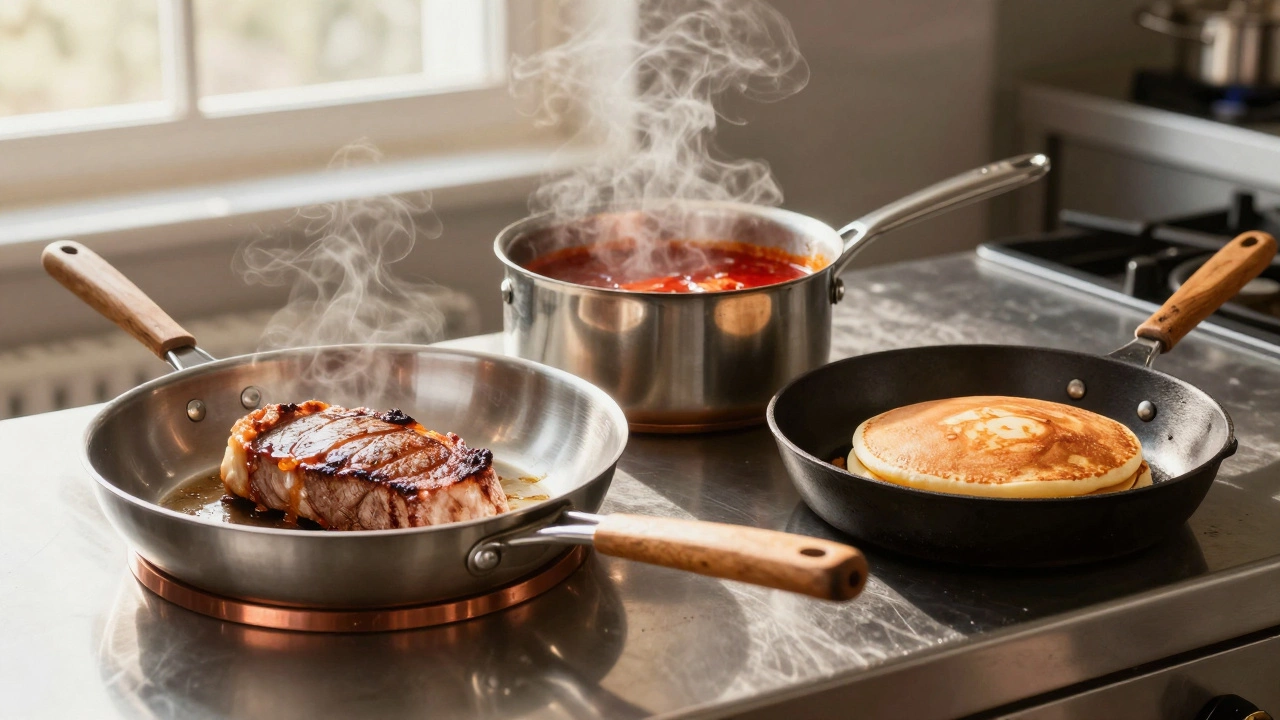
Professional Cookware Selector
Your Cooking Profile
Recommended Cookware
Your Best Match
Tri-Ply Professional Set
Ideal for your primary cooking style
Even Heating - Aluminum core for consistent temperature
Professional kitchens trust this for sauces and searing
Longevity - Lasts decades with proper care
No nonstick coating to scratch or peel
Multi-Purpose - Works for everything from frying to boiling
The undisputed king of professional kitchens
Cookware Comparison Guide
| Material | Best For | Durability | Heat Control | Maintenance |
|---|---|---|---|---|
| Stainless Steel | Everyday cooking, sauces, searing | Excellent (decades) | Very Good | Low (easy to clean) |
| Carbon Steel | Searing, stir-fries, eggs | Very Good | Excellent (fast response) | Moderate (requires seasoning) |
| Cast Iron | Braising, slow cooking, oven use | Excellent (centuries) | Poor (slow heat transfer) | High (requires seasoning) |
| Copper | Sauces, delicate reductions | Poor (requires lining) | Exceptional | Very High (polishing needed) |
When you watch a professional chef in action-whether on TV or in a bustling restaurant kitchen-you’ll notice something: they don’t use fancy, flashy gear. They use the same few pieces of cookware, over and over. Why? Because after years of testing, burning, and refining, they’ve learned what actually works. So what do most chefs prefer? It’s not one brand. It’s not one trend. It’s a handful of materials and designs that have stood the test of time.
Stainless Steel Is the Undisputed King
If you walk into any serious kitchen-from a Michelin-starred bistro to a neighborhood diner-you’ll find stainless steel pots and pans dominating the stove. It’s durable, doesn’t react with food, and heats evenly when layered properly. Most professional-grade stainless steel cookware has an aluminum or copper core sandwiched between layers of steel. This combo gives you the strength of stainless steel with the heat conductivity of aluminum or copper.
Brands like All-Clad, Mauviel, and Cuisinart MultiClad Pro are common in professional kitchens. These aren’t cheap-they can cost $200+ for a single frying pan-but they last decades. A chef doesn’t replace cookware every year. They invest in pieces that won’t warp, peel, or corrode. And unlike nonstick coatings that scratch after a few months, stainless steel just gets better with use.
Carbon Steel: The Quiet Workhorse
While stainless steel handles sauces and stews, carbon steel is the go-to for searing, frying, and high-heat cooking. Think of it as a lighter, more responsive cousin to cast iron. Carbon steel pans heat up faster, are easier to maneuver, and develop a natural nonstick surface over time with seasoning-just like a well-loved cast iron skillet.
Many chefs swear by carbon steel for cooking eggs, pancakes, stir-fries, and even roasting vegetables. The pan’s curved sides make flipping and tossing food effortless. Brands like de Buyer and Matfer Bourgeat are staples in French and American kitchens alike. A 12-inch carbon steel frying pan might cost $60, but it’s one of the most versatile tools in the kitchen. And unlike nonstick pans, you can use metal utensils on it without fear.
Cast Iron Still Has Its Place
Yes, cast iron is heavy. Yes, it takes time to season. But for slow braises, oven-baked dishes, and searing steaks, nothing beats it. Chefs who cook with fire or wood-fired ovens love cast iron for its ability to hold heat for hours. A well-seasoned cast iron Dutch oven can go from stovetop to oven to table without missing a beat.
Le Creuset and Lodge are the two names you’ll hear most. Le Creuset’s enameled versions are popular for their color and ease of cleaning, while Lodge’s bare cast iron is favored by chefs who want maximum heat retention and don’t mind the maintenance. It’s not for every task, but for braised short ribs, cornbread, or a perfect pizza crust? It’s irreplaceable.
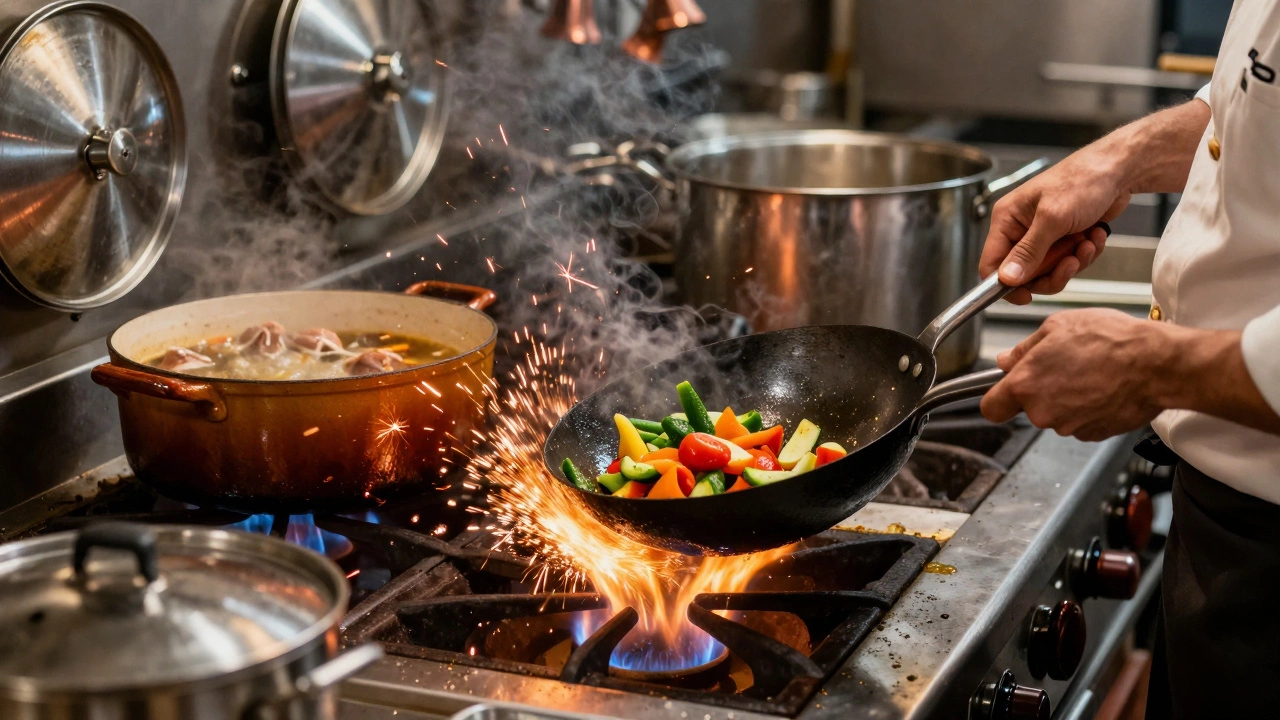
Why Nonstick Is Rarely Used in Professional Kitchens
You’ll rarely see a chef using a nonstick pan during service. Why? Because the coating breaks down under high heat, and metal utensils ruin it fast. Even the best nonstick pans last maybe a year in a busy kitchen. Plus, you can’t sear meat properly in nonstick-it doesn’t get hot enough to create a crust, and the coating can flake off over time.
Some chefs use nonstick for eggs or delicate fish, but even then, they often reach for a carbon steel or well-seasoned cast iron instead. The truth is, if you’re seasoning your pan right, you don’t need nonstick. And if you’re not? You’re not using it right.
What About Copper?
Copper cookware is beautiful. It heats up incredibly fast and responds instantly to temperature changes. That’s why it’s the gold standard for sauces, custards, and delicate reductions. But copper is expensive, requires polishing, and needs a tin or stainless steel lining to prevent reactions with acidic foods.
Most chefs who use copper do so for specific tasks-like making hollandaise or reducing wine for a sauce. Mauviel and Falk are the top brands, but you won’t find copper in every kitchen. It’s a specialist tool, not a daily driver. Still, if you’re serious about precision cooking, copper is worth the investment.
The Real Secret: Layered Construction Matters More Than Brand
Chefs don’t care about logos. They care about performance. The best cookware has multiple layers: a core of aluminum or copper for even heat, surrounded by stainless steel for durability and easy cleaning. You can tell good cookware by its weight-it should feel solid, not flimsy. The handle should be riveted, not glued. The base should be flat and thick enough to sit evenly on the burner.
Look for these signs of quality:
- Tri-ply or pent-ply construction (three or five layers)
- Full stainless steel construction on the inside
- Handles that stay cool and are securely attached
- A heavy, flat bottom that doesn’t warp
Brands like All-Clad, Demeyere, and Fissler are trusted because they stick to these standards. You can buy cheaper versions, but they’ll warp, stick, or lose their heat conductivity faster.
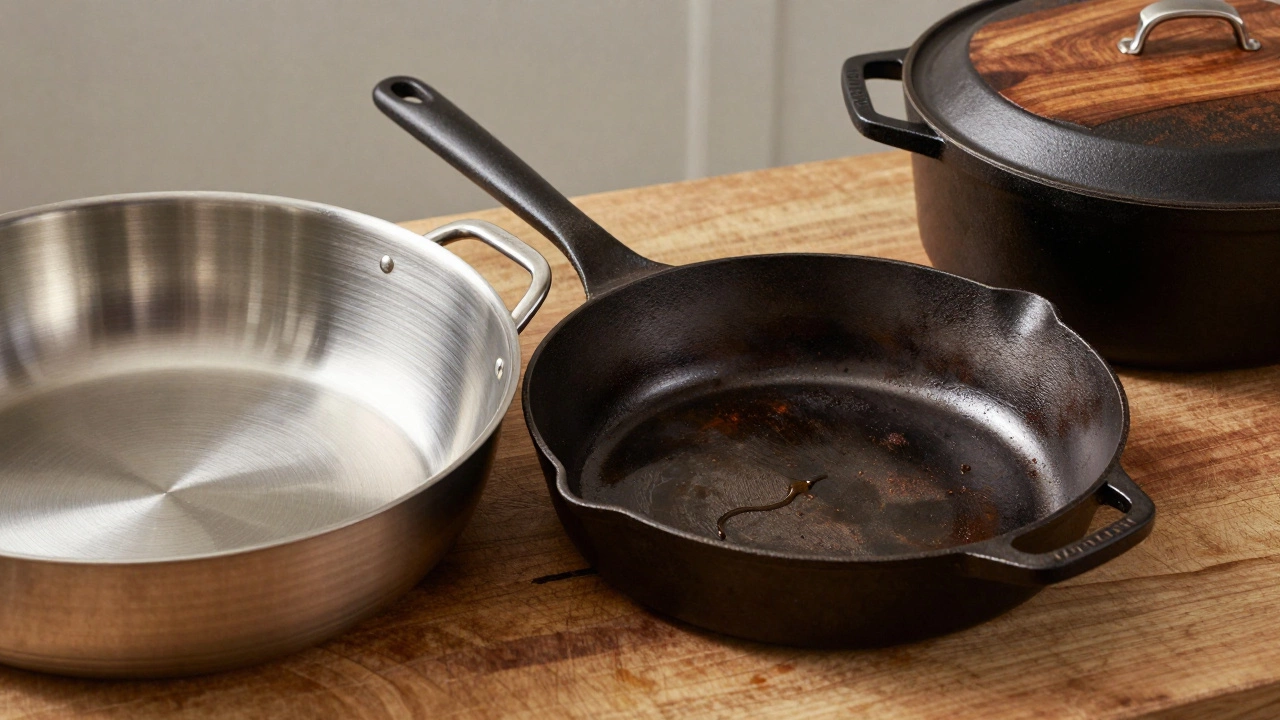
What Chefs Avoid
There are a few things you won’t find in a professional kitchen:
- Nonstick pans for high-heat cooking
- Thin, single-layer aluminum pots (they warp and burn food)
- Plastic handles (they melt near open flames)
- Overpriced gimmicks like ceramic-coated cookware that chips after a few uses
Chefs value function over form. A dull, scratched stainless steel pan is better than a shiny, new nonstick one that fails under pressure.
How to Start Building a Chef-Grade Set
You don’t need to buy everything at once. Start with these five essentials:
- A 10- or 12-inch stainless steel frying pan
- A 4- to 6-quart stainless steel saucepan with lid
- A 5- to 7-quart Dutch oven (cast iron or enameled)
- A 12-inch carbon steel skillet
- A large stockpot (8 quarts or more) for soups and pasta
Buy one piece at a time. Look for sales during holiday seasons. Many chefs build their collections over years. What matters isn’t how much you spend upfront-it’s how long your gear lasts.
Final Thought: It’s Not About the Brand, It’s About the Technique
Chefs don’t become great because they use expensive pots. They become great because they know how to use them. A well-seasoned carbon steel pan can make better pancakes than a $500 copper sauté pan if you don’t know how to control the heat. But if you pair good tools with good technique? That’s when cooking becomes effortless.
So if you’re looking to upgrade your kitchen, skip the flashy sets. Go for the basics. Get stainless steel. Add a carbon steel skillet. Maybe invest in a Dutch oven. And learn how to use them. That’s what most chefs did-and it’s why they still trust their gear after 20 years.