
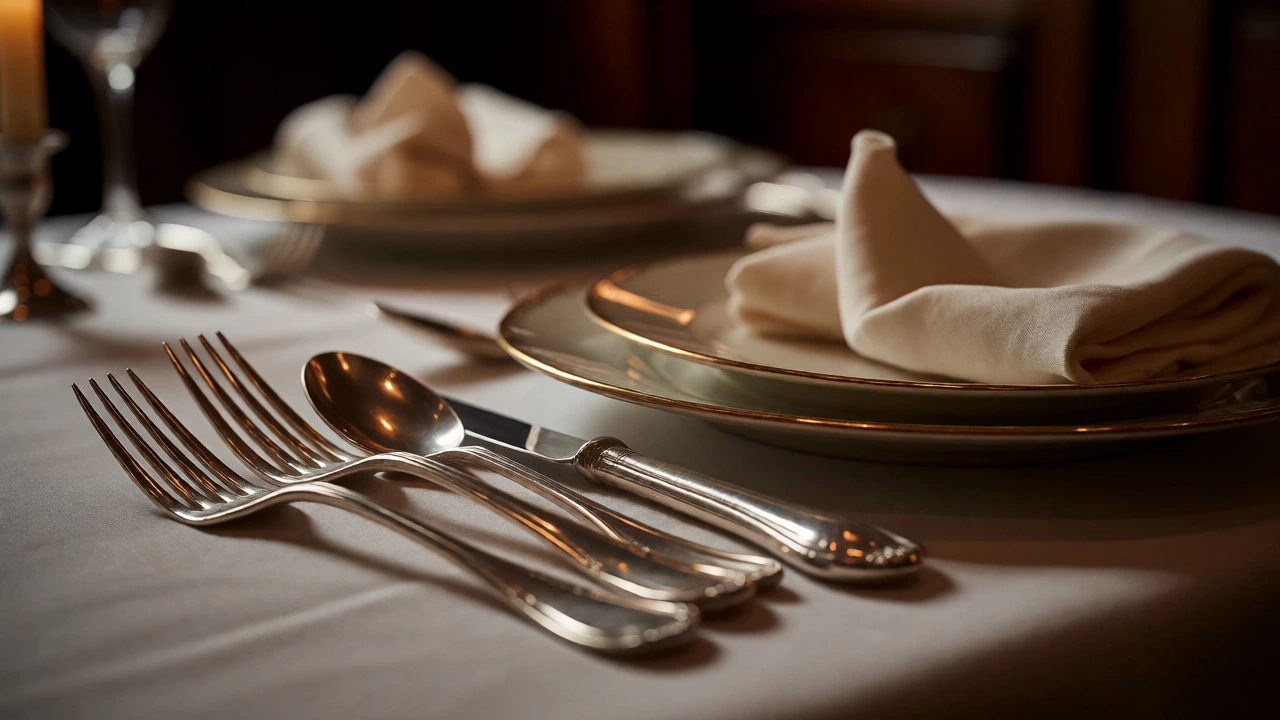
Cutlery Terminology Quiz
Are you ready to sound like a formal dining expert? Answer these 5 questions to determine if you know the difference between cutlery, flatware, and silverware.
Your Results
You are hosting a dinner party, the candles are lit, and you want to sound like you know your way around a formal dining room. You reach for the utensils on the table and think, "I should call these something more sophisticated than just forks and spoons." But what is that word? Is it cutlery? Or is it flatware? Or perhaps silverware?
The truth is, there isn't one single "fancy" word that works in every context. The right term depends entirely on where you live, what the items are made of, and how formal the occasion is. Using the wrong term can make you sound either pretentious or out of touch. This guide breaks down exactly when to use which term, so you never have to second-guess yourself at the table again.
Quick Summary: Which Word Should You Use?
- Cutlery: The standard British English term for all eating tools (forks, knives, spoons). It implies tradition and often metal construction.
- Flatware: The common American English term. It refers to the shape (flat) rather than the material, making it accurate for stainless steel, plastic, or silver.
- Silverware: Technically only applies if the items are made of sterling silver or silver-plated metal. In the US, people often use it loosely for any high-end set, but purists will correct you.
- Tableware: A broader category that includes plates, bowls, and cups, not just the handheld tools.
Cutlery: The Traditional Term with Sharp Roots
If you are in the United Kingdom, Australia, or Canada, cutlery is likely the word you hear most often. It comes from the Old French word *coutelier*, referring to a maker of knives (*couteau*). Historically, the knife was the primary tool, and forks and spoons were later additions to the set. Because the knife requires cutting, the entire collection inherited the name.
In modern usage, cutlery specifically denotes the implements used for preparing, serving, and consuming food. While it technically includes kitchen knives used for chopping vegetables, in a dining context, it exclusively refers to the table settings. If you ask a waiter in London for "the cutlery," they will bring you forks, knives, and spoons. They won't bring you a ladle or a peeler.
Why does this matter? Because calling your everyday stainless steel forks "cutlery" sounds perfectly normal in Bristol or Manchester. However, if you try to use this term in New York, people might understand you, but they’ll likely think you’re trying too hard to sound European. It’s not wrong, but it’s distinctively non-American.
Flatware: The Modern American Standard
Cross the Atlantic, and the language shifts. In the United States, flatware is the go-to term for eating utensils. Why "flat"? It distinguishes these items from hollowware (like teapots, sugar bowls, and creamers) and hollow-bodied vessels. Even though a spoon has a bowl, the handle is flat, and historically, many early utensils were stamped from thin sheets of metal.
The term gained popularity in the mid-20th century as mass production made eating tools accessible to everyone, not just the wealthy. Since most sets were no longer made of solid silver, calling them "silverware" became inaccurate. Flatware is neutral regarding material. You can have plastic flatware for a picnic, stainless steel flatware for daily use, or gold-plated flatware for a gala. It describes the form factor, not the value.
Here is a practical rule of thumb: If you are shopping on Amazon.com or visiting a store like Bed Bath & Beyond (RIP), look for the "Flatware" section. If you see a sign for "Silverware," it usually means higher-end, gift-ready sets, often boxed individually. But technically, your $10 IKEA fork is still flatware.
Silverware: When Material Matters More Than Shape
This is where things get tricky. Many Americans use silverware interchangeably with flatware, but etymologically and strictly speaking, it refers to utensils made of sterling silver or silver plate.
Historically, owning silver was a status symbol. Families passed down their silverware through generations. Today, actual sterling silver is expensive and requires polishing. Most "silverware" sold in department stores is actually stainless steel designed to look like silver. So, is it fair to call stainless steel "silverware"?
In casual conversation, yes. If you tell your friend, "I’m bringing my silverware to the potluck," no one will judge you, even if it’s shiny steel. However, in professional contexts-like auction houses, antique dealers, or high-end wedding registries-the distinction is vital. Selling a set of stainless steel forks as "antique silverware" could lead to complaints. If your set is marked "925" or "Sterling," it’s true silverware. If it says "18/10 Stainless," it’s technically flatware, even if it looks like silver.
Comparing the Terms: A Quick Reference Guide
To help you decide which word fits your situation, here is a breakdown of how these terms compare across different contexts.
| Term | Primary Region | Material Implication | Formality Level | Best Used When... |
|---|---|---|---|---|
| Cutlery | UK, Commonwealth | Metal (usually) | Standard to Formal | You are in Europe or want to sound traditional. |
| Flatware | USA, Canada | Any (Steel, Plastic, Silver) | Neutral to Formal | You are describing the physical object regardless of cost. |
| Silverware | USA (Colloquial) | Silver or Silver-like | High Formality | The set is expensive, heirloom quality, or visually metallic. |
| Utensils | Global | Any | Informal/Functional | You need a generic term for cooking or eating tools. |
Beyond Forks and Spoons: Related Kitchen Entities
Understanding the main terms helps, but knowing related concepts makes you truly fluent in kitchen vocabulary. For instance, tableware is a broader umbrella term. It includes everything on the table: plates, saucers, mugs, and glassware. If you say, "We need new tableware," you might be expected to buy plates, not just forks.
Then there is hollowware. This refers to larger, hollow-serving pieces like soup tureens, gravy boats, and coffee pots. In a formal dining setup, the hollowware complements the flatware. If you are setting a Thanksgiving table, you arrange the flatware first, then place the hollowware in the center.
Another nuance is serveware. These are specialized tools for serving, such as salad servers, cake stands, and cheese boards. Unlike cutlery or flatware, serveware is rarely held by the diner during the meal. Mixing up serveware with flatware can cause confusion at a buffet line. Don’t hand someone a large serving spoon thinking it’s their personal eating spoon!
How to Choose the Right Set for Your Home
Now that you know the words, how do you pick the right items? Your choice of terminology often reflects your lifestyle and aesthetic preferences.
If you live in a historic home in Bristol or prefer classic aesthetics, you might lean toward cutlery. Look for sets with weighted handles and traditional patterns like "King's Pattern" or "Windsor." These names refer to specific historical designs dating back centuries. Weight matters here; heavier cutlery feels more substantial and luxurious in the hand.
If you prioritize durability and ease of care, flatware is your best bet. Search for "18/10 stainless steel flatware." The numbers refer to the chromium and nickel content. 18/10 offers the best resistance to rust and maintains its shine longest. It’s dishwasher safe, unlike sterling silver, which tarnishes quickly and requires hand-washing. For busy families, this practicality outweighs the prestige of silver.
For those who love the look of luxury without the maintenance, consider silver-plated flatware. This involves coating a base metal (usually copper or brass) with a thin layer of silver. It looks identical to sterling silver initially but costs significantly less. Just remember: once the plating wears off, the base metal shows through. It’s a temporary luxury, perfect for special occasions but not daily use.
Common Mistakes to Avoid
Even well-meaning hosts slip up. Here are three common pitfalls regarding eating utensil terminology and usage.
First, don’t confuse sporks with fancy options. A spork is a hybrid spoon-fork, typically found in fast-food chains or camping gear. Calling a spork part of your "fine dining cutlery" will raise eyebrows. It’s functional, but it lacks elegance.
Second, avoid using "silverware" to describe disposable plastic sets. If you are having a backyard BBQ and hand out blue plastic forks, calling them "plastic silverware" sounds ironic. Stick to "plastic cutlery" or simply "disposable utensils."
Third, remember regional expectations. If you invite American guests to a formal dinner in the UK and serve them on a set labeled "Flatware," they might feel underwhelmed if they expected "Silverware." Conversely, if you serve British guests on a set called "Silverware" that is clearly stainless steel, they might assume you are being modestly descriptive. Context is key.
Final Thoughts: Confidence Comes from Clarity
There is no single "fancy" word for fork and spoon because language evolves differently across borders. Cutlery carries heritage and weight. Flatware offers precision and neutrality. Silverware evokes luxury and tradition. Choose the word that matches your audience and your intent.
Next time you set the table, pause for a second. Are you arranging flatware for a casual Tuesday night? Or are you laying out cutlery for a formal celebration? Knowing the difference adds a layer of intentionality to your hospitality. And honestly, that attention to detail is far fancier than any single word could ever be.
Is there a difference between cutlery and silverware?
Yes. Cutlery is a general term for eating tools (forks, knives, spoons) regardless of material, commonly used in British English. Silverware specifically refers to utensils made of sterling silver or silver-plated metal, though it is often used colloquially in the US to describe any shiny, high-quality flatware set.
Why is it called flatware?
The term "flatware" originated in the US to distinguish eating utensils (which are largely flat or have flat handles) from "hollowware" (teapots, pitchers, and bowls). It also became popular as a neutral term for stainless steel sets, avoiding the implication that the items were made of precious metals like silver.
Can I use the word "utensils" instead of cutlery?
You can, but it is less precise. "Utensils" is a broad category that includes cooking tools like spatulas, whisks, and ladles. In a dining context, saying "pass me the utensils" might be ambiguous. "Cutlery" or "flatware" specifically indicates the tools meant for eating the meal currently on the table.
What is the most formal word for eating tools?
In very formal British contexts, "plate service" or referring to the specific pattern (e.g., "The Royal Doulton set") can sound more refined than generic terms. However, "cutlery" remains the standard formal term in the UK. In the US, "silverware" retains a connotation of formality due to its association with heirlooms and wealth, even if the items are stainless steel.
Does the material affect the name?
Absolutely. If it is plastic, it is rarely called cutlery or silverware in formal writing; it is "plastic ware" or "disposables." If it is wood, it is "wooden ware." "Silverware" mandates silver content. "Flatware" is the only term that comfortably spans plastic, steel, and silver without lying about the material.