
Sauté Pan Safety Calculator
Sauté Pan Weight Safety Calculator
Calculate whether your pan is safe to lift with one hand or if you need a two-handled sauté pan for safety.
Pan Safety Assessment
Weight Analysis
Recommendation
Ever reached for a pan and thought, Why does this have two handles? You’re not alone. It’s a common sight in home kitchens and professional kitchens alike - a sturdy pan with one handle on the side and another on the opposite side. But what’s it actually called? And why do chefs swear by it?
It’s Called a Sauté Pan
The pan you’re thinking of is most commonly called a sauté pan. Unlike a regular frying pan with one long handle, a sauté pan has two short handles - one on each side. These handles make it easier to lift, carry, and pour from the pan without straining your wrist or risking spills.
Don’t confuse it with a skillet. Skillets usually have one long handle and sloped sides for flipping food. Sauté pans, on the other hand, have straight, high sides and a flat bottom. That design lets you sear meat evenly and then add liquids to deglaze without splashing. The two handles? They’re not just for show. They turn a heavy pan into something you can move safely with both hands.
Why Two Handles? It’s All About Control
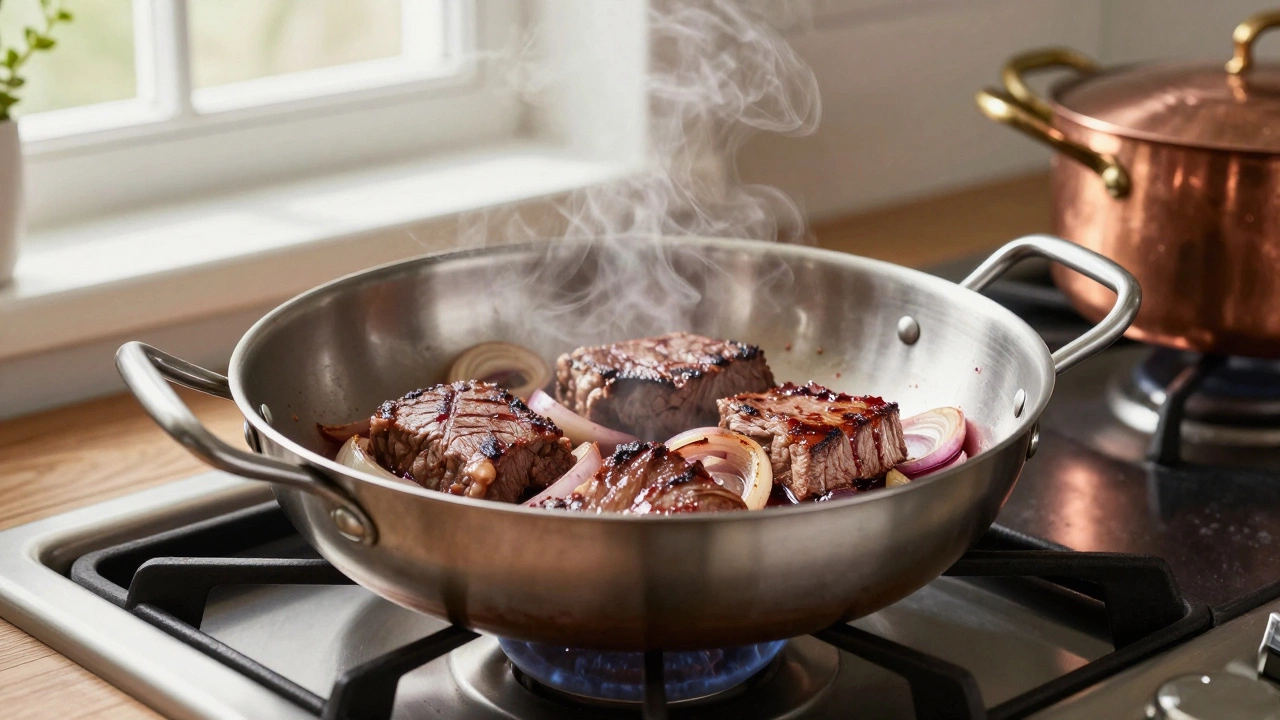
Imagine you’re making a beef stew. You’ve browned the meat in a heavy-bottomed pan, added onions, garlic, and wine. Now you need to move it from the stove to the oven. One handle? You’d be gripping it with one hand, balancing the pan with the other, praying it doesn’t tip. With two handles? You lift it with both hands - steady, balanced, no drama.
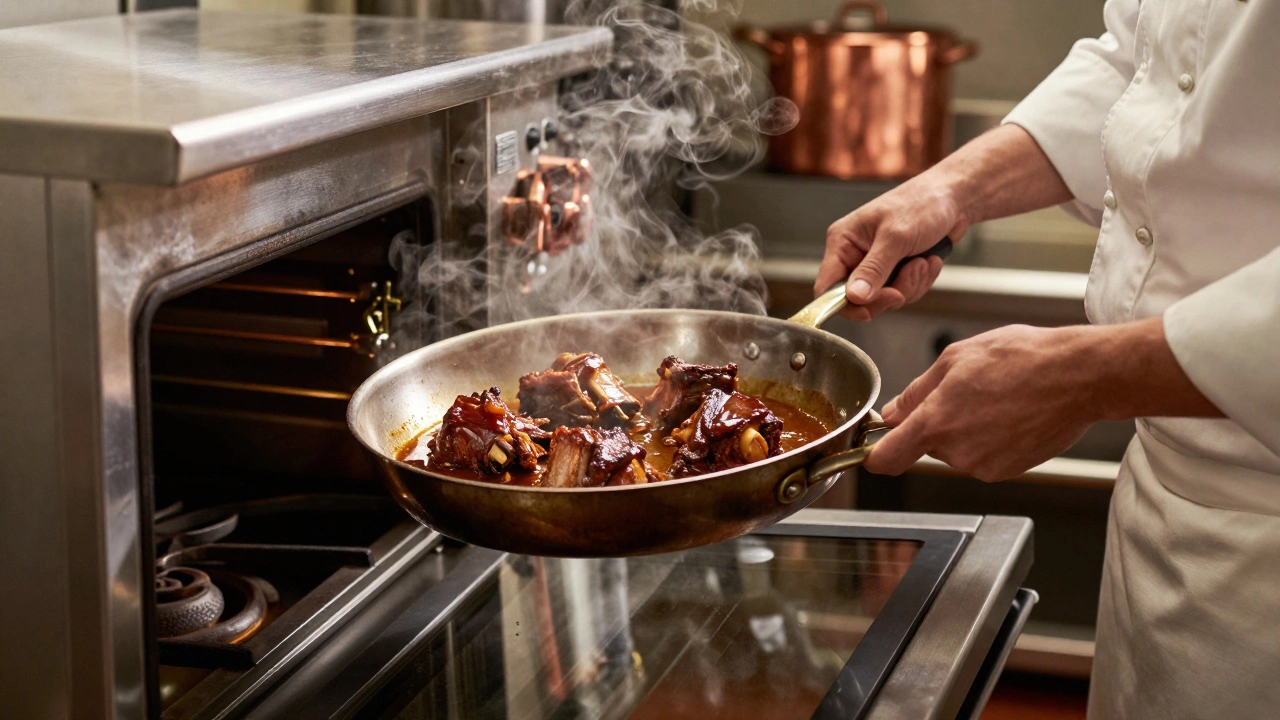
Professional kitchens rely on this design because it’s safer and more efficient. A 12-inch sauté pan filled with 5 pounds of food and liquid can weigh over 15 pounds. Trying to lift that with one hand is asking for burns, spills, or worse. Two handles give you leverage, control, and confidence.
Even at home, this matters. If you’ve ever spilled hot oil trying to move a pan with one handle, you know the risk. Two handles reduce that risk dramatically. It’s not a luxury - it’s a safety feature.
Other Names You Might Hear
You might hear this pan called different things depending on where you are or who you’re talking to:
- French frying pan - Sometimes used interchangeably with sauté pan, especially in older cookbooks. It usually means a pan with straight sides and two handles.
- Chef’s pan - A broader term that can include sauté pans, but also refers to larger, deeper pans with lids and two handles. Some chef’s pans are wider and shallower than traditional sauté pans.
- Double-handled pan - The most literal term. You’ll see this on packaging or in catalogs, especially for non-stick or enameled cast iron models.
None of these names are wrong - but if you want to be precise, sauté pan is the standard term used in culinary schools and cookware manuals.
What Makes a Good Sauté Pan?
Not all two-handled pans are created equal. Here’s what to look for:
- Material: Stainless steel with an aluminum or copper core is ideal for even heating. Cast iron works too, but it’s heavier. Enameled cast iron is great for slow cooking but not ideal for high-heat searing.
- Weight: A good sauté pan should feel substantial - not light and flimsy. Around 4 to 6 pounds for a 12-inch pan is normal.
- Handles: They should be riveted, not welded. Rivets hold up better over time. The handles should stay cool on the stove, or have heat-resistant grips.
- Lid: A tight-fitting lid is essential. You’ll want to steam, simmer, or braise, and a good lid keeps moisture in.
- Size: 10 to 12 inches is the sweet spot for most home cooks. Smaller pans don’t hold enough; larger ones are too heavy to lift.
Brands like All-Clad, Le Creuset, and Staub make top-tier sauté pans. But you don’t need to spend $300. Tramontina and Cuisinart offer solid stainless steel options under $80 that perform just as well for everyday use.
What Can You Cook in a Sauté Pan?
More than you think. This pan is the Swiss Army knife of the kitchen:
- Seared meats: Chicken breasts, pork chops, steaks - the flat bottom and high sides let you get a perfect crust without splatter.
- Vegetables: Sautéed mushrooms, onions, peppers, or green beans all benefit from the even heat and space to stir.
- Sauces: Deglazing with wine, stock, or vinegar? The high sides keep splashes contained.
- One-pot meals: Risotto, pasta sauces, braised short ribs, or even a full chicken dinner - all can start and finish in the same pan.
- Stir-fries: If you don’t have a wok, a sauté pan does the job fine, especially if you’re cooking for two or three people.
It’s not just for stovetop use. Many sauté pans are oven-safe up to 500°F. That means you can sear your salmon on the stove and slide it straight into the oven to finish cooking - no transfer needed.
Common Mistakes People Make
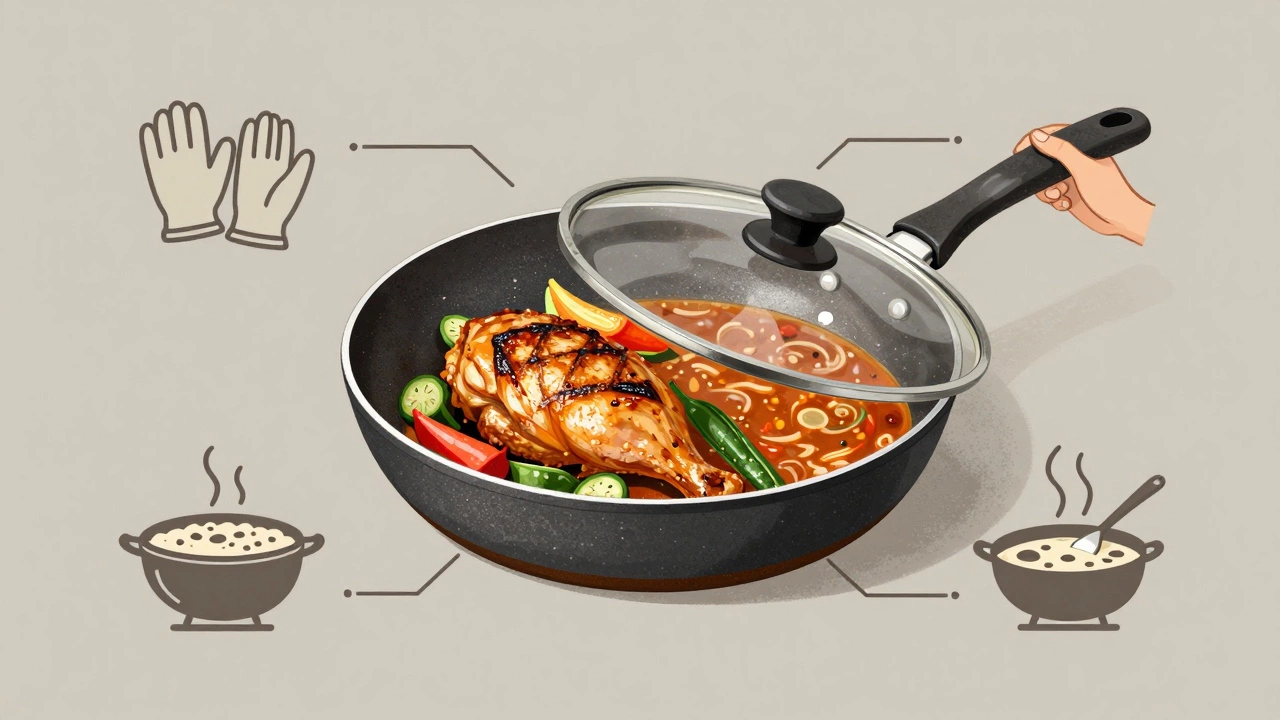
Even if you own a sauté pan, you might not be using it right:
- Using it like a skillet: Don’t try to flip pancakes or omelets in it. The high sides make flipping harder. Use a non-stick skillet for that.
- Putting it in the dishwasher: Stainless steel can handle it, but enameled cast iron and copper cores degrade faster. Hand-wash to keep it looking new.
- Using metal utensils on non-stick: If your pan has a non-stick coating, use silicone or wood. Scratches ruin the surface.
- Not preheating: Cold pans = sticking. Heat it up before adding oil or food.
Also, don’t assume all two-handled pans are sauté pans. Some are stockpots, Dutch ovens, or roasting pans. The key difference is the shape: sauté pans are wide and shallow, with straight sides and a flat bottom.
Where to Find One
If you’re shopping, look for "sauté pan" or "double-handled pan" in the cookware section. Avoid the term "frying pan" - that usually means a skillet with one handle. Check the product description for:
- "Straight sides"
- "Two handles"
- "Oven-safe"
- "Includes lid"
Most kitchen stores in the UK - from John Lewis to Lakeland - carry them. Online, Amazon and Wayfair have good selections with customer photos. Look for reviews that mention weight and handle comfort. That’s the real test.
Final Thought: It’s Not Just a Pan - It’s a Tool
A pan with two handles isn’t quirky. It’s thoughtful engineering. It’s designed for people who cook regularly, who care about safety, control, and results. Whether you’re making a quick weeknight stir-fry or a Sunday braise, this pan makes the job easier and safer.
Don’t let the name fool you. It’s not a fancy gadget. It’s a workhorse. And if you don’t have one yet, you’re missing out on one of the most practical tools in the kitchen.
Is a sauté pan the same as a frying pan?
No. A frying pan, or skillet, has sloped sides and one long handle, making it ideal for flipping food. A sauté pan has straight, high sides and two short handles, making it better for searing, simmering, and moving heavy loads safely.
Can I use a sauté pan in the oven?
Yes, most sauté pans are oven-safe up to 500°F, especially those made of stainless steel or enameled cast iron. Always check the manufacturer’s guidelines - some handles or lids may not be heatproof.
Why do some sauté pans have one handle?
They’re not sauté pans. If it has only one handle, it’s likely a skillet or a shallow frying pan. Sauté pans are defined by their two handles and straight sides. One-handle versions are designed for flipping, not lifting heavy loads.
Are two-handled pans only for professionals?
No. While chefs use them daily, home cooks benefit just as much. If you cook anything that requires liquid, heat, or movement - like stews, sauces, or roasted vegetables - a two-handled pan makes your life easier and safer.
What’s the best size for a home kitchen?
A 10- to 12-inch sauté pan is ideal for most households. It’s large enough for family meals but still manageable to lift with two hands. Pans larger than 12 inches get too heavy for casual use.