

Dinnerware vs. Tableware Identifier
Staring at a box of dishes and unsure what it's called? Select the items included in your set below to find the accurate industry term.
Recommended Term
Dinnerware
Note: "Service for X" refers to the number of people who can eat simultaneously (e.g., Service for 4 = 4 plates + 4 bowls). Check the itemized list to confirm piece counts.
You are standing in the kitchen aisle, staring at three boxes. One says "Dinnerware," another says "Tableware," and the third just screams "China." You want to buy plates for your family, but you have no idea which box actually contains what you need. Are they the same thing? Is one better than the other? Why does one cost £20 and the other £200?
This confusion is incredibly common. Most people use these terms interchangeably, but retailers and manufacturers do not. Knowing the difference saves you money and ensures you don't end up with a stack of decorative plates that shatter when you drop them, or sturdy everyday plates that look out of place at a formal dinner.
The Core Answer: It Depends on Context
There isn't one single word for a set of dishes. The correct term changes based on function, material, and occasion. If you are buying standard plates for daily meals, you are looking for Dinnerware. If you are equipping a restaurant or hosting a gala, you might be shopping for Tableware.
Here is the quick breakdown of the most common terms you will see:
- Dinnerware: Plates specifically designed for eating main courses and sides. This is what most households own.
- Tableware: A broader category that includes everything on the table-plates, bowls, glasses, cutlery, and serving dishes.
- China: Fine dining ware made from porcelain or bone china. It is usually delicate and reserved for special events.
- Service for X: Retail packaging language indicating how many people can eat simultaneously (e.g., "Service for 4").
- Place Setting: The specific arrangement of items for one person (plate, bowl, glass, napkin).
If you walked into a shop today and asked for a "set of dishes," a helpful assistant would likely ask: "Do you mean everyday plates or something fancy?" Here is why that distinction matters.
Dinnerware vs. Tableware: The Critical Distinction
Let's clear up the biggest myth: Dinnerware is a subset of Tableware.
Tableware is the umbrella term for all items used to serve and eat food at a table. This includes plates, bowls, cups, saucers, serving platters, and even flatware (forks, knives, spoons) and drinkware (glasses, mugs).
Dinnerware refers strictly to the dishware used for holding food during a meal. It typically consists of dinner plates, salad plates, soup bowls, and cereal bowls.
| Term | Scope | Includes | Best For |
|---|---|---|---|
| Tableware | Broadest | Plates, bowls, glasses, cutlery, linens, serving pieces | Setting a full table; hospitality industry |
| Dinnerware | Narrower | Eating vessels only (plates, bowls) | Home kitchens; everyday use |
| Flatware | Specific | Forks, knives, spoons | Eating utensils; often sold separately |
| Drinkware | Specific | Glasses, mugs, tumblers | Beverages; rarely included in plate sets |
When you buy a "16-piece set," check the contents list. Does it include forks? If yes, it is technically a tableware set. If it only has plates and bowls, it is a dinnerware set. Many budget brands blur this line, but high-end retailers keep them separate because materials differ vastly. Your ceramic plates should not match your stainless steel forks unless you are going for a very specific industrial look.
Understanding "Service For": How Sets Are Counted
Retailers do not sell plates by weight or volume. They sell them by "Service." This is an archaic term from large household staffing days, where a cook needed to know if they could feed the family and guests simultaneously.
A Service for 4 typically means:
- 4 Dinner Plates
- 4 Salad/Dessert Plates
- 4 Soup/Cereal Bowls
- 4 Mugs (sometimes)
That equals 16 pieces. But watch out. Some companies count a mug as a piece, others don't. Always check the itemized list. If you have a family of six, buying two "Services for 4" gives you eight settings, which provides a buffer for breakage or guests. Buying a single "Service for 8" is often more cost-effective per piece, but harder to store if you live in a small Bristol flat.
Why does this matter? Because replacement is easier with modular sets. If you chip a plate from a "Service for 4," you can often find matching replacements online. With mismatched bulk buys, you are stuck hunting for a needle in a haystack.
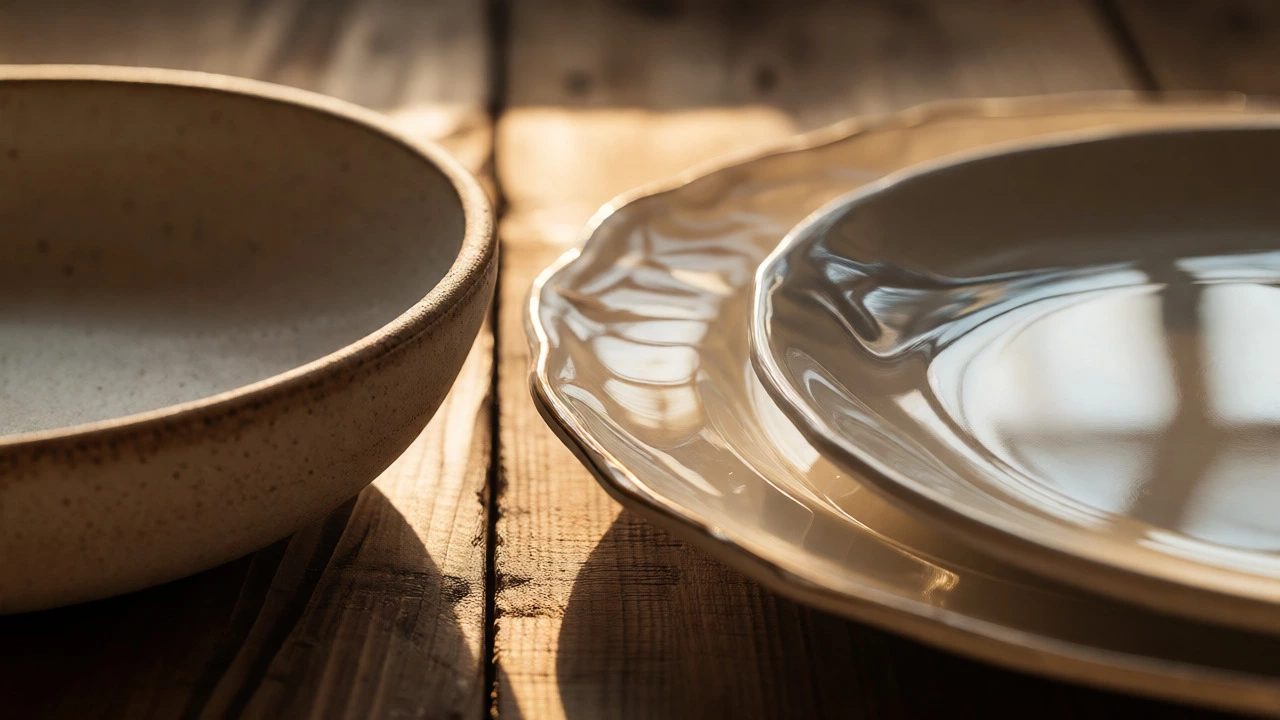
Materials Matter: China, Porcelain, Stoneware, and Melamine
The name of the set often hints at its durability and price point. Let's break down the four main material types you will encounter.
China (Bone China and Porcelain)
When people say "fine china," they usually mean Bone China. This is a translucent, white ceramic made with animal bone ash (typically cattle). It is strong despite being thin, chips less than regular porcelain, and feels luxurious.
Porcelain is similar but lacks bone ash. It is fired at higher temperatures, making it non-porous and durable. However, it is heavier and whiter than bone china. Both are dishwasher-safe but require careful handling to avoid thermal shock (pouring boiling water into a cold cup).
Stoneware
This is the workhorse of modern kitchens. Stoneware is clay fired at high temperatures until it becomes vitrified (glass-like). It is thick, heavy, and extremely durable. It comes in matte or glossy finishes and is perfect for everyday use. It withstands microwaves, ovens, and dishwashers without fuss. If you have kids or clumsy hands, stoneware is your best friend.
Melamine
Not ceramic at all. Melamine is a hard plastic resin. It looks like ceramic but is unbreakable. Great for outdoor dining, camping, or toddler meals. Do not microwave melamine; it can warp or release chemicals under high heat. Hand wash recommended to prevent scratching.
Earthenware
The oldest type of pottery. Fired at lower temperatures, so it remains porous and must be glazed to hold liquid. It is cheaper but chips easily. Terracotta pots are earthenware. Avoid putting earthenware directly from the fridge into the oven; it will crack.
Anatomy of a Place Setting
Now that you know what the set is called, let's talk about what goes in it. A proper place setting isn't just about having enough plates. It is about function.
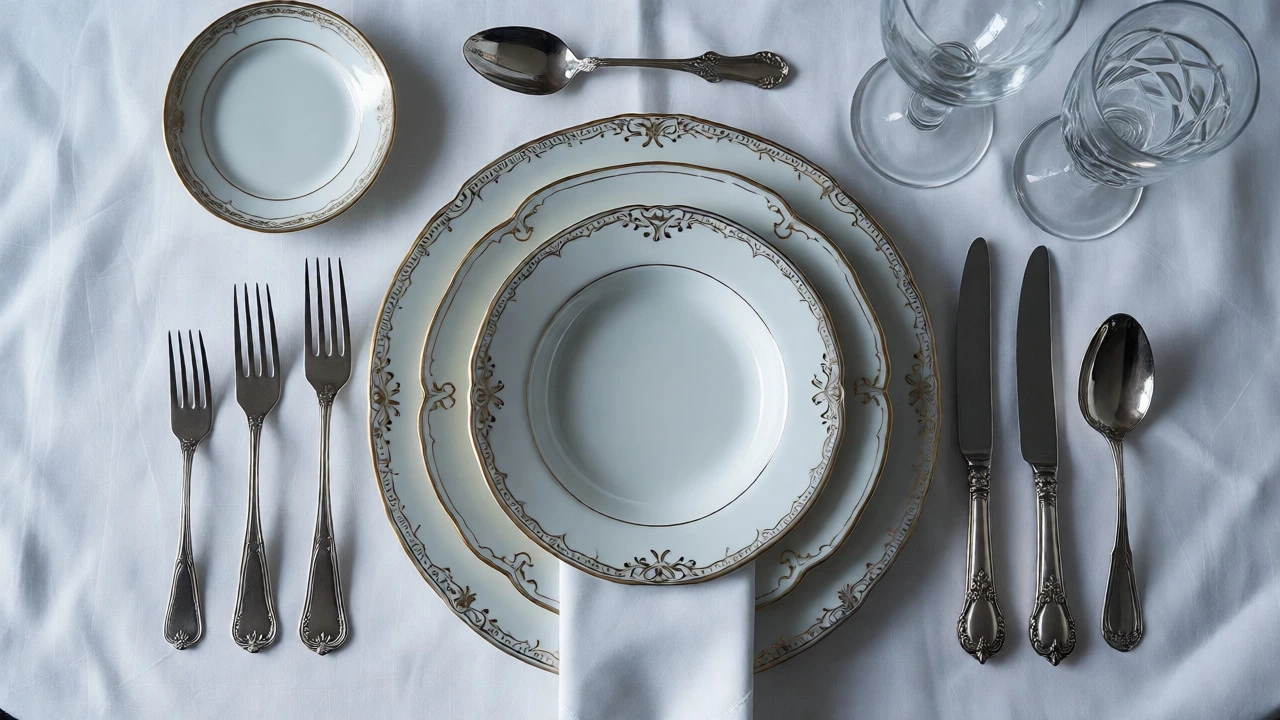
In the UK, we follow European etiquette rules, which differ slightly from American ones. Here is the standard layout for a formal dinner:
- The Charger Plate: A large decorative plate placed under the dinner plate. It catches crumbs and adds visual height. Removed before dessert.
- Dinner Plate: The main vessel for the entrée. Typically 10-12 inches in diameter.
- Salad/Dessert Plate: Smaller (7-9 inches), stacked on top of the dinner plate or served after the main course.
- Soup Bowl: Placed on top of the dinner plate if soup is served first. Otherwise, served separately.
- Bread and Butter Plate: Small plate (5-6 inches) placed above the forks on the left side.
- Cups and Saucers: For tea or coffee, brought out after the meal or with dessert.
Everyday settings are simpler. Usually, you just need a dinner plate and a bowl. Do you really need a charger plate for Tuesday night pasta? Probably not. Save the extras for holidays.
Buying Tips: What to Look For
Shopping for dishes is emotional. You imagine beautiful meals. But practicality wins long-term. Here is my checklist for buying a new set:
- Stackability: Can you fit 12 plates in your cupboard? Curved rims save space; flat rims look modern but take up vertical room.
- Chip Resistance: Ask yourself: Will I hand-wash these? If no, choose stoneware or reinforced porcelain. Bone china chips if dropped on tile floors.
- Color Consistency: Natural clays vary in color. If you buy a "white" set, check reviews for yellow or grey tints. Matte finishes hide fingerprints better than gloss.
- Microwave Safety: Metal accents (gold rims) spark in microwaves. Ensure the label says "Microwave Safe" if you plan to reheat leftovers on the plate.
- Dishwasher Durability: Cheap glazes fade after 50 washes. Look for "commercial grade" or "hotel ware" labels if you want longevity.
Pro Tip: Buy a few extra pieces. Breakage happens. Finding a match three years later is nearly impossible unless you stick to major brands like Wedgwood, Royal Doulton, or IKEA’s FÄRGKLAR series, which maintain stock longer.
Common Mistakes When Naming Your Collection
People often mislabel their collections, leading to bad purchases.
Mistake 1: Calling everything "China." Unless it is bone china or fine porcelain, it is not china. Saying "I'm washing the china" implies delicacy. If you are scrubbing grease off stoneware, call it dishes or crockery.
Mistake 2: Ignoring the "Open Stock" option. Many high-end brands sell individual pieces (open stock) rather than boxed sets. This lets you replace chipped items without buying a whole new service. Check if the brand offers open stock before committing to a 16-piece box.
Mistake 3: Mixing styles poorly. Rustic stoneware clashes with sleek minimalist porcelain. Stick to one aesthetic theme per set. Mixing patterns is trendy but risky. Start with neutral solids, then add patterned accent plates later.
Final Thoughts: Choose Based on Lifestyle
So, what is a set of dishes called? Technically, it is dinnerware if it holds food, tableware if it includes utensils and drinks, and china if it is fancy. But practically, it is whatever makes your life easier.
If you host dinner parties weekly, invest in a versatile porcelain set that transitions from casual to formal. If you have young children, buy durable stoneware in bright colors. If you love cooking, prioritize microwave-safe, oven-proof materials over aesthetics.
Don't get hung up on the terminology. Focus on the attributes: durability, safety, and style. The right set will last decades, surviving thousands of meals and countless dishwasher cycles. Choose wisely, and your table will thank you.
Is there a difference between dinnerware and crockery?
In the UK, "crockery" is a common colloquial term for all dishes, including plates, bowls, and cups. "Dinnerware" is more specific to plates and bowls used for meals. Crockery can sometimes imply older or heavier traditional ceramics, while dinnerware sounds more modern and retail-focused.
How many pieces are in a standard service for 4?
A standard service for 4 usually contains 16 pieces: 4 dinner plates, 4 salad/dessert plates, 4 soup/cereal bowls, and 4 mugs. However, definitions vary by retailer. Always check the itemized list inside the box to confirm exactly what is included.
Can I mix different brands in one set?
Yes, mixing brands is popular. It allows you to combine durability (like stoneware) with elegance (like porcelain). Just ensure the sizes are compatible (e.g., salad plates fit on dinner plates) and the colors complement each other. Neutral tones mix easiest.
What is the most durable material for everyday dishes?
Stoneware is generally the most durable for everyday home use. It is thicker than porcelain and resistant to chipping and cracking. Tempered glass (like CorningWare) is also highly durable but may lack the aesthetic appeal of ceramic. Melamine is unbreakable but cannot be microwaved safely.
Why is bone china so expensive?
Bone china contains 30-50% animal bone ash, which strengthens the clay and creates translucency. The production process is complex and requires high firing temperatures. Its strength-to-weight ratio is superior to regular porcelain, allowing for thinner, lighter, yet stronger plates. This craftsmanship and material cost drive up the price.