
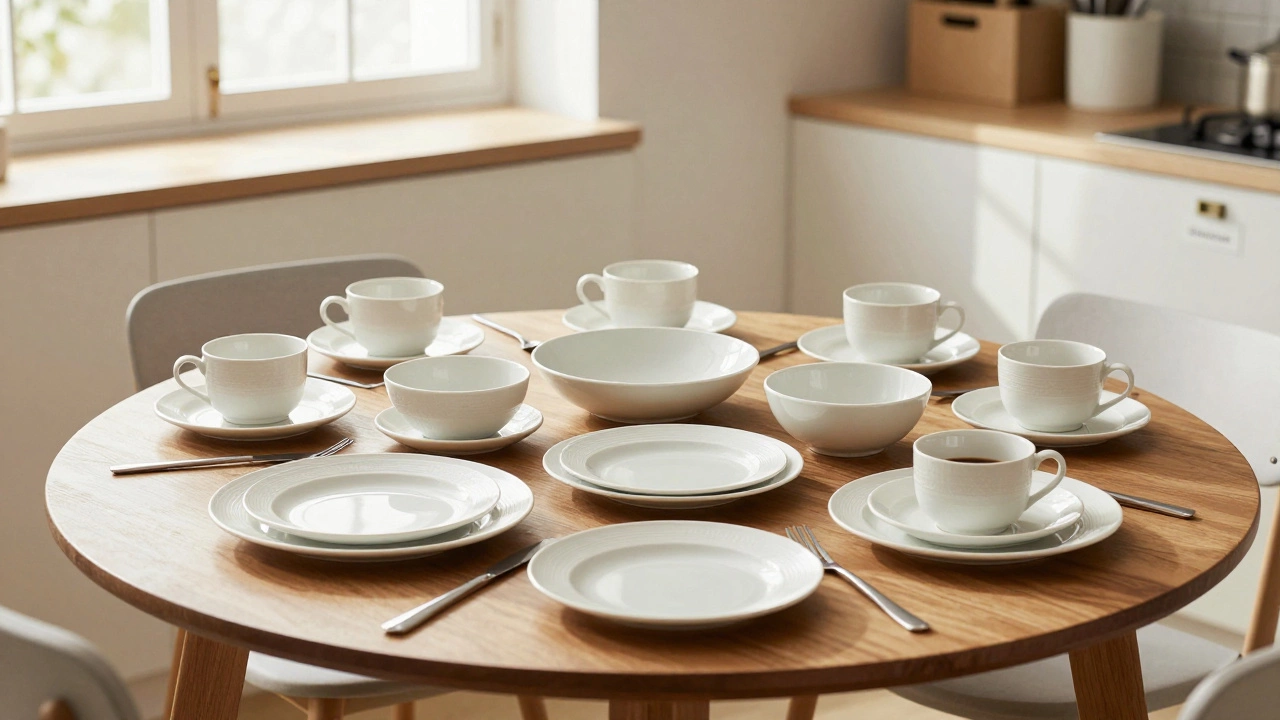
Dinnerware Terminology Quiz
How well do you know dinnerware terms?
Test your understanding of the correct terms for kitchenware with this quick quiz. See if you can identify what's what when it comes to plates, cups, and other tableware.
When you’re setting the table for dinner, you don’t say, "I need more cups, saucers, and plates." You just say, "I need more dinnerware." That’s the word people actually use - and it covers everything from your morning coffee cup to the dessert plate you serve pie on. If you’ve ever searched for another word for cups, saucers, and plates, the answer isn’t some fancy synonym. It’s simpler than you think.
Dinnerware is the word you’re looking for
Dinnerware is the blanket term for all the ceramic or porcelain items used to serve and eat food at the table. That includes plates, bowls, cups, saucers, mugs, and even teapots or serving dishes if they’re part of the same set. It’s not just about meals - it’s about the whole system of eating from a matched set. If you bought a set of white plates, matching mugs, and little saucers for your espresso cups, you bought dinnerware.
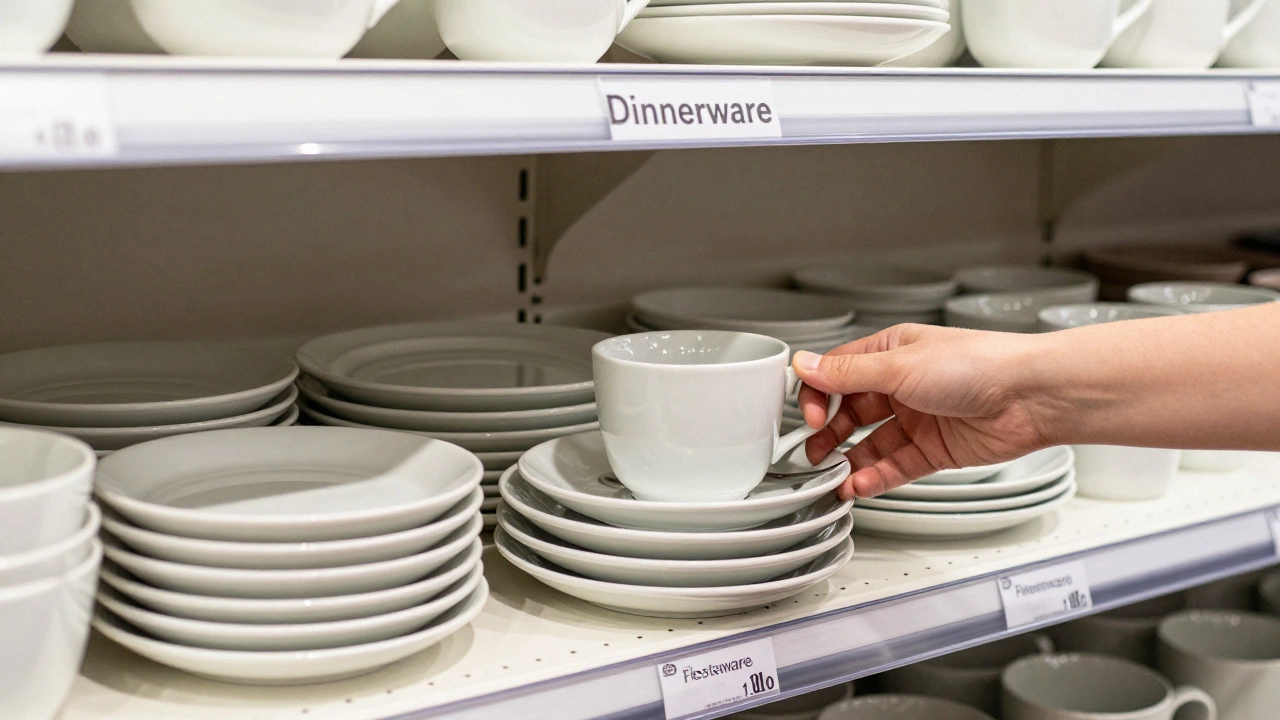
People say "dinnerware" because it’s practical. No one walks into a store and asks for "cups and saucers and plates." They ask for "a 12-piece dinner set" or "new dinnerware." Retailers label shelves "Dinnerware," not "Cups and Plates Section." Even manufacturers like Corelle, Fiestaware, or Lenox sell their products under the dinnerware category.
Tableware is broader - and often confused
Don’t mix up dinnerware with tableware. Tableware includes everything on the table: cutlery (forks, knives, spoons), glassware (wine glasses, water tumblers), and dinnerware. So dinnerware is a subset of tableware. If you’re buying new plates and cups, you’re shopping for dinnerware. If you’re replacing forks and wine glasses too, you’re upgrading your whole tableware collection.
Think of it like this: dinnerware = plates, cups, saucers. Tableware = dinnerware + flatware + glassware. You can’t use "tableware" to mean just your plates and cups - it’s too broad. But you can always use "dinnerware" to mean exactly what you’re asking for.
Chinaware and porcelain? Not quite right
You might hear "chinaware" or "porcelain" used to describe plates and cups. Those describe the material, not the category. Chinaware refers to fine ceramic made from kaolin clay - often high-end, delicate, and glazed. Porcelain is a type of chinaware that’s fired at very high temperatures. But not all plates are porcelain. Some are stoneware, earthenware, or even melamine (plastic for outdoor use).
So if you say "I need new chinaware," someone might picture delicate teacups with gold trim - not your everyday coffee mug or cereal bowl. That’s why "chinaware" doesn’t work as a replacement for "cups, saucers, and plates." It’s too specific to material and style.
Flatware? No - that’s utensils
Some people accidentally say "flatware" when they mean plates and cups. That’s a common mistake. Flatware means knives, forks, and spoons - the metal pieces you hold in your hand. The word comes from the flat shape of spoons and forks, not from the dishes you eat from. Mixing up flatware and dinnerware is like calling your shoes "socks." They go together, but they’re not the same thing.
Why this matters: shopping and organizing
If you’re replacing broken dishes or setting up a new home, using the right word saves time. Go to a store and ask for "dinnerware," and you’ll be shown shelves with plates, bowls, mugs, and saucers. Ask for "cups and saucers and plates," and you’ll get a confused look. Online? Type "dinnerware set" into Amazon or Target’s search bar. You’ll get 10,000 results. Type "cups saucers plates," and you’ll get scattered, unrelated items - like a single teacup or a plate with no matching mug.
Same goes for storage. If you’re organizing your kitchen cabinets, label a bin "Dinnerware," not "Plates and Cups." It’s cleaner, clearer, and matches how everyone else organizes. Manufacturers even design storage solutions for dinnerware - stackable plates with spacers, mug racks, saucer trays. They don’t make "cup-saucer-plate organizers."
What’s included in a standard dinnerware set?
A typical dinnerware set for four people includes:
- 4 dinner plates (10.5-11 inches)
- 4 salad plates or dessert plates (8-9 inches)
- 4 soup bowls or cereal bowls (6-7 inches)
- 4 coffee or tea cups
- 4 matching saucers
Some sets add serving pieces - a large platter, a gravy boat, or a sugar bowl. But the core is always plates, bowls, cups, and saucers. That’s dinnerware. No need to list each item separately.
Real-world examples
Let’s say you’re hosting a brunch. You need:
- Plates for pancakes
- Cups for coffee
- Saucers for the espresso shots
- Bowls for fruit
You don’t say, "I need to buy plates, cups, saucers, and bowls." You say, "I need a brunch dinnerware set." Or if you’re shopping online: "16-piece dinnerware set for 4." That’s how real people talk. That’s how stores organize.
Even in restaurants, they don’t say "We serve food on plates, cups, and saucers." They say, "Our dinnerware is hand-thrown stoneware." Or, "We use bone china dinnerware." It’s the industry standard.
Why the confusion exists
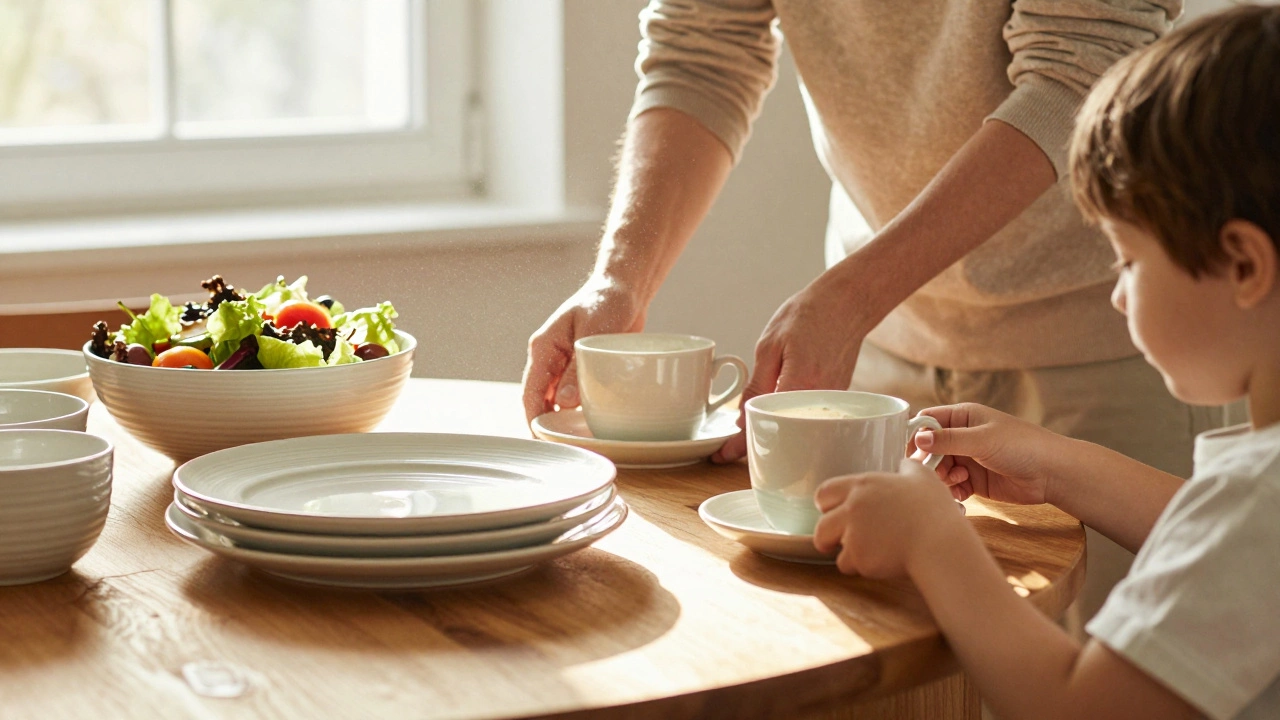
People get confused because we describe things by their function. A cup holds liquid. A saucer catches drips. A plate holds food. But language evolves to group things that belong together. Just like "furniture" covers chairs, tables, and sofas - even though each has a different use - "dinnerware" covers all tableware made of ceramic or porcelain.
It’s the same reason we say "clothing" instead of "shirts, pants, socks, and jackets." Efficiency wins. And in kitchens, dinnerware is the efficient term.
What about glass or plastic?
Not all dinnerware is ceramic. Some sets are made of tempered glass (like Pyrex) or durable plastic (like melamine for picnics). But they’re still called dinnerware. A plastic plate set for kids? Dinnerware. A glass wine tumbler and matching juice cup? Also dinnerware if it’s part of a matched set.
The key isn’t the material - it’s the function. If it’s used to serve or eat food from the table and is part of a coordinated collection, it’s dinnerware.
Final answer
Another word for cups, saucers, and plates? Dinnerware. It’s precise, widely used, and understood by retailers, manufacturers, and homeowners alike. Skip the long list. Use the one word that covers it all.
Is "tableware" the same as "dinnerware"?
No. Tableware includes dinnerware (plates, cups, saucers) plus flatware (forks, knives, spoons) and glassware (glasses, mugs). Dinnerware is just the ceramic or porcelain part. So all dinnerware is tableware, but not all tableware is dinnerware.
Can I use "chinaware" instead of "dinnerware"?
Not really. Chinaware refers to fine, often decorative, porcelain made from a specific clay. It’s a material type, not a category. Most everyday plates and cups aren’t chinaware - they’re stoneware or earthenware. Using "chinaware" might make people think you want fancy, delicate pieces.
What about "flatware"? Is that for plates and cups?
No. Flatware means eating utensils - forks, knives, and spoons. It has nothing to do with plates or cups. Mixing up flatware and dinnerware is a common mistake, but they’re completely different categories.
Do I need to buy a full set of dinnerware?
No. You can mix and match. Many people buy just a few extra plates or mugs to replace broken ones. But if you’re starting fresh, a full set (usually 4-12 pieces) is easier to coordinate and store. Sets also often come with matching saucers and bowls.
What’s the difference between a saucer and a coaster?
A saucer is part of dinnerware - it’s a small plate designed to hold a cup, especially teacups or espresso cups. A coaster is usually made of cork, wood, or plastic, and sits under a cup to protect surfaces. Saucers are meant to be used with the cup; coasters are just for protection.