
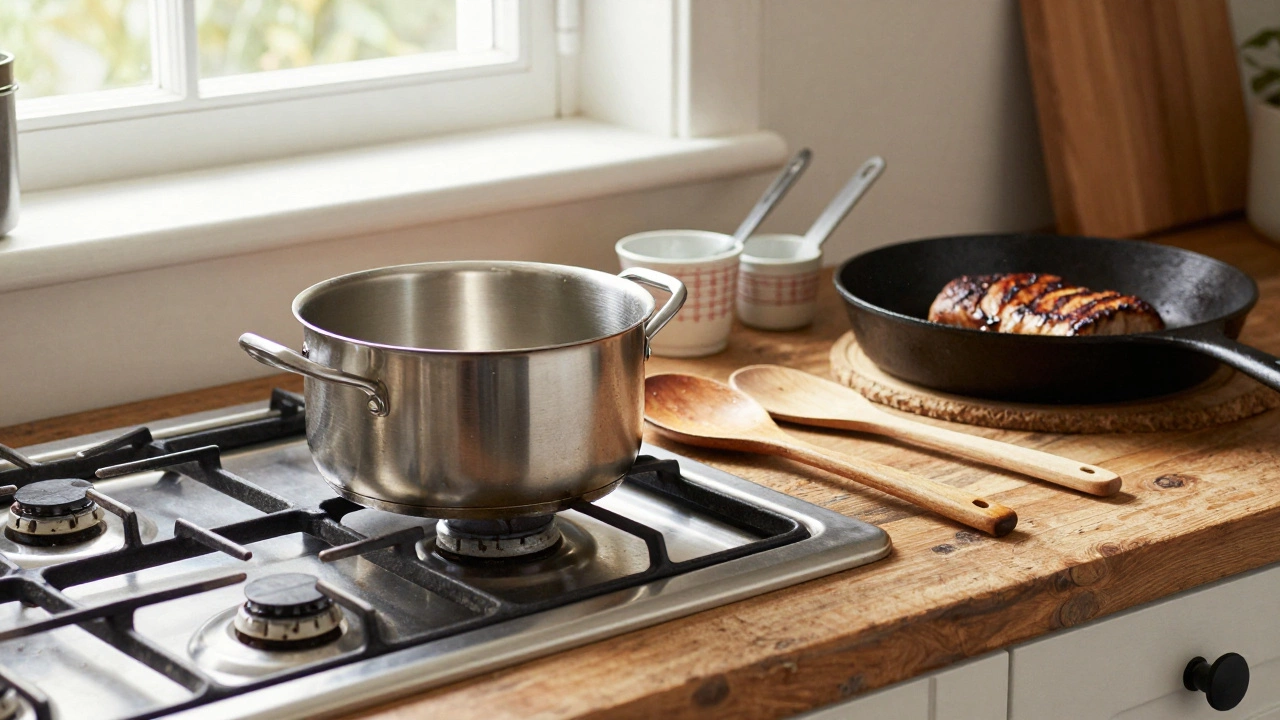
When you walk into a kitchen, what do you see? Pots, spatulas, knives, measuring cups, mixing bowls? All of those are kitchenware. It’s not just fancy gadgets or expensive sets sold in stores. Kitchenware is everything you use to prepare, cook, serve, and store food at home. It’s the quiet backbone of every meal you make - from scrambled eggs to Sunday roast.
What exactly counts as kitchenware?
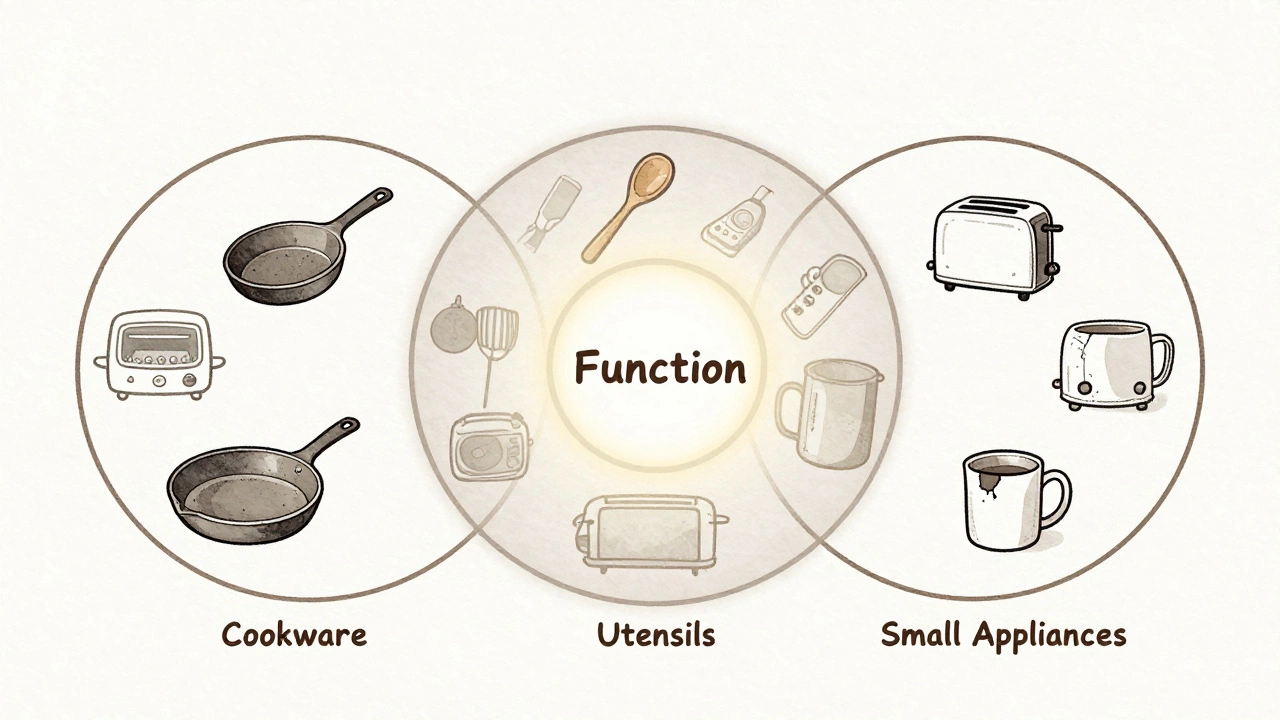
Kitchenware covers a wide range of items, but it’s easiest to break it down into three main groups: cookware, utensils, and small appliances.
Cookware includes pots, pans, baking sheets, and casseroles. Think of your stainless steel saucepan, your cast iron skillet, or that ceramic baking dish you use for lasagna. These are the containers that hold food while it’s being heated. They’re made from materials like aluminum, stainless steel, cast iron, ceramic, or non-stick coatings - each with its own pros and cons.
Utensils are the tools you handle directly. Spoons, spatulas, tongs, whisks, peelers, can openers, and colanders all fall here. These are the things you reach for without thinking. A wooden spoon doesn’t scratch your pan. A silicone spatula scrapes every last bit of batter from the bowl. A sharp chef’s knife is the most-used tool in most kitchens.
Small appliances are electric or mechanical devices that make cooking easier. Think blenders, toasters, coffee makers, food processors, electric kettles, and rice cookers. These aren’t always considered kitchenware by everyone, but they’re just as essential. If you use it regularly to prepare food, it’s kitchenware.
Even things like measuring cups, mixing bowls, and oven mitts are kitchenware. They might seem small, but without them, cooking becomes messy, inaccurate, or even unsafe.
What’s NOT kitchenware?
Not everything in the kitchen counts. Dishes like plates, bowls, and glasses are tableware - used for serving and eating, not preparing food. Cutlery like forks and knives used at the table are also tableware, even if they’re stored in the kitchen drawer.
Storage containers like Tupperware or glass jars are often grouped with kitchenware, but technically they’re part of food storage solutions. Still, most people include them because they’re used daily in meal prep.
Big appliances like refrigerators, ovens, and dishwashers are kitchen equipment, not kitchenware. They’re built-in or heavy-duty machines. Kitchenware is the handheld, portable, or smaller items you pick up and use directly.
Why does knowing what kitchenware is matter?
Understanding what counts as kitchenware helps you shop smarter. If you’re setting up your first kitchen, you don’t need to buy everything at once. Start with the essentials: a good knife, a cutting board, a large pot, a frying pan, a wooden spoon, a spatula, and measuring tools. That’s it. You can make a full meal with just those.
Once you know the categories, you can spot gaps. Maybe you bake often but don’t have a silicone baking mat. Or you boil water every morning but never bought an electric kettle. Knowing the difference between cookware and utensils helps you build a functional kitchen, not just a crowded one.
It also helps when you’re replacing things. A worn-out spatula? Replace it. A scratched non-stick pan? Time for a new one. You don’t need to upgrade everything - just fix what’s broken or outdated.
What materials are common in kitchenware?
Material matters. It affects how well something cooks, how long it lasts, and how easy it is to clean.
- Stainless steel is durable, doesn’t react with food, and works on all stovetops. It’s great for pots and pans, but food can stick if you don’t use enough oil.
- Cast iron holds heat incredibly well. A well-seasoned cast iron skillet can last generations. It’s perfect for searing meat or baking cornbread.
- Non-stick coatings (like Teflon) make cleanup easy and reduce oil use. But they scratch easily and shouldn’t be used with metal utensils. Most last 3-5 years with regular use.
- Wood is gentle on pans and doesn’t conduct heat. Great for spoons and spatulas, but needs hand-washing and occasional oiling to avoid cracking.
- Silicone is heat-resistant, flexible, and safe for non-stick surfaces. Ideal for spatulas, baking molds, and lids.
- Ceramic is non-reactive and great for baking. It’s beautiful to serve in, but can chip or crack if dropped.
There’s no single best material. It depends on what you cook and how you use it. A home cook in Bristol might use a cast iron pan for weekend stews and a non-stick pan for weekday eggs. That’s perfectly normal.
How to build a basic kitchenware set
You don’t need 50 pieces. Here’s what you actually need to cook well:
- A chef’s knife (8-10 inches) - the most important tool in the kitchen.
- A cutting board - wood or plastic, just make sure it’s stable.
- A large pot (4-6 quarts) - for boiling pasta, soups, or stews.
- A frying pan (10-12 inches) - non-stick or cast iron.
- A wooden spoon - gentle, durable, and versatile.
- A spatula - silicone or heat-resistant plastic.
- A whisk - for eggs, sauces, or batters.
- A measuring cup and spoons - accuracy matters in baking.
- A colander - for draining pasta or washing veggies.
- A mixing bowl - stainless steel or glass works best.
That’s 10 items. With these, you can cook most meals from scratch. Add more as you need them - like a slow cooker, a grater, or a baking sheet.
When to replace kitchenware
Some things wear out faster than others. Here’s when to toss or replace:
- Non-stick pans - if the coating is peeling or scratched, throw it out. Tiny flakes can get into your food.
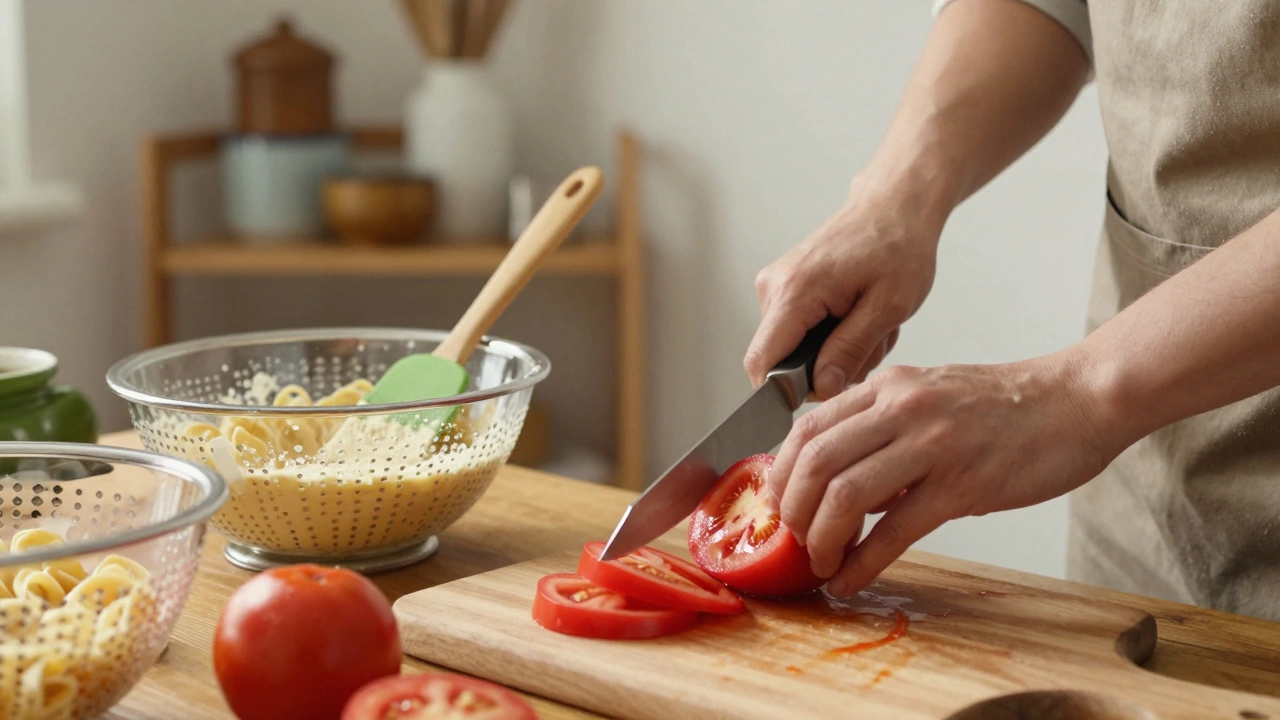
- Knives - if you can’t slice a tomato cleanly, it’s time to sharpen or replace.
- Wooden spoons - if they’re cracked or stained deep in the grain, bacteria can hide there.
- Plastic containers - if they’re warped, cracked, or stained, replace them. Heat and time degrade plastic.
- Utensils - if handles are loose or melting, stop using them. Safety first.
Don’t feel guilty about replacing things. Good kitchenware lasts, but nothing lasts forever. A well-maintained knife lasts 10 years. A non-stick pan lasts 3. That’s normal.
Common myths about kitchenware
There’s a lot of noise around kitchen tools. Here’s what’s true:
- Myth: You need expensive brands. Truth: Many affordable brands (like IKEA, Joseph Joseph, or even store brands) work just as well. Focus on function, not logo.
- Myth: More pieces = better kitchen. Truth: A 120-piece set is mostly useless gadgets you’ll never use. Stick to what you need.
- Myth: Copper cookware is the best. Truth: Copper conducts heat beautifully, but it’s expensive, heavy, and needs polishing. Most home cooks do fine with stainless steel or cast iron.
- Myth: You must match everything. Truth: Mixing materials looks more lived-in and practical. A wooden spoon next to a stainless steel pot? Perfect.
Final thought: Kitchenware is about function, not form
Kitchenware isn’t about having the most beautiful set on display. It’s about making food easier, safer, and more enjoyable. A chipped mug doesn’t ruin your coffee. A worn spatula doesn’t make you a bad cook. What matters is that you use your tools regularly and replace them when they stop working.
Start simple. Use what you have. Upgrade slowly. Your kitchen doesn’t need to look like a magazine spread. It just needs to work.
Is a toaster considered kitchenware?
Yes, a toaster is kitchenware because it’s a small appliance used directly in food preparation. Even though it’s electric, it’s handheld, used daily, and not built into the kitchen like an oven. Other examples include blenders, kettles, and food processors.
What’s the difference between cookware and kitchenware?
Cookware is a subset of kitchenware. Cookware refers only to pots, pans, and baking dishes - items that hold food while cooking. Kitchenware includes cookware plus utensils, small appliances, and tools like measuring cups and colanders. So all cookware is kitchenware, but not all kitchenware is cookware.
Are plates and bowls kitchenware?
No, plates and bowls are tableware. They’re used for serving and eating food, not preparing it. Kitchenware is for cooking and prep. Tableware is for the table. Though both are in the kitchen, they serve different roles.
Do I need non-stick pans?
Not necessarily. Non-stick pans are great for eggs, pancakes, or delicate fish, but they don’t brown food as well as cast iron or stainless steel. Many home cooks use both: a non-stick pan for delicate foods and a cast iron or stainless steel pan for searing and frying. It’s about having the right tool for the job.
What kitchenware lasts the longest?
Cast iron cookware, stainless steel pots, and high-quality wooden spoons can last decades - even generations - with proper care. A well-seasoned cast iron skillet, for example, improves with age. A good chef’s knife, sharpened regularly, can last 20+ years. These are investments, not disposable items.
Next steps: Start with what you have
Don’t rush out to buy a new set. Look in your kitchen drawer right now. What do you use every day? What’s broken or missing? Make a list. Replace one thing at a time. A new knife. A better spatula. A second pot. Slowly, your kitchen will become the one you actually enjoy using.
Kitchenware isn’t about perfection. It’s about progress. And every meal you make with it? That’s the real reward.