
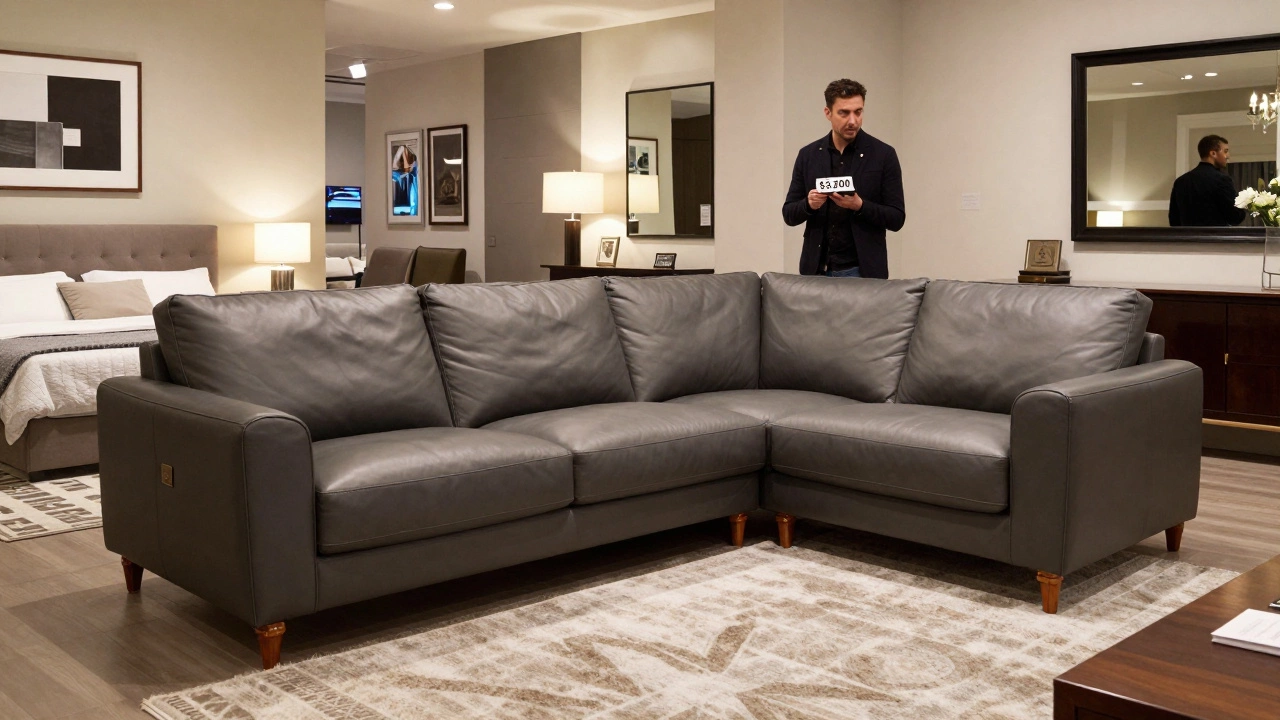
Couch Markup Calculator
Calculate Retail Price
Compare Pricing Models
Traditional Store
Standard markup: 200-400%
Online Brand
Typical markup: 100-150%
Why This Matters
Understanding markup helps you avoid paying too much for furniture. The average retail price is 2-4 times the manufacturing cost in traditional stores.
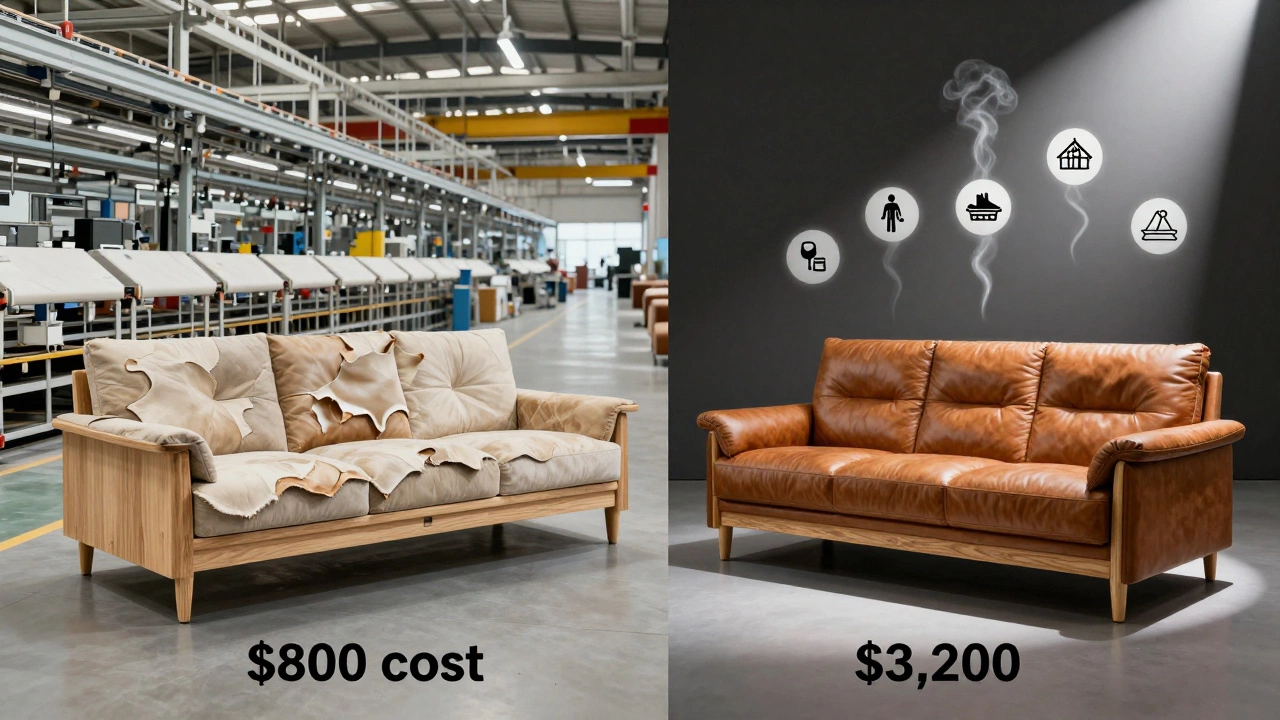
Example: A couch costing $800 to make sells for $2,400-$3,200 in showrooms (300% markup), but only $1,600-$2,000 with online brands (200% markup).
By comparing prices across different retailers, you can save hundreds or even thousands of dollars on your next purchase.
Ever walked into a furniture store, looked at a couch you loved, and then checked the price tag only to think, There’s no way this costs that much to make? You’re not wrong. The average markup on couches is between 200% and 400%. That means if a couch costs $800 to build, you’ll likely pay $2,400 to $3,200 for it in a showroom. This isn’t some shady trick-it’s how the furniture industry has worked for decades. But knowing this changes how you shop.
Where Does the Money Go?
That $3,000 couch isn’t just sitting on a shelf waiting for you. A big chunk of the price pays for the store’s overhead: rent in a high-traffic area, staff salaries, lighting, displays, and marketing. A showroom in a luxury mall in Bristol or London can cost over £50,000 a year just to lease. Then there’s the cost of moving the couch from the factory to the store-freight, handling, insurance. All of that gets baked into the final price.
But here’s the real kicker: the actual materials and labor to build a decent sofa rarely top $700. Even high-end models with solid wood frames, kiln-dried lumber, and 8-way hand-tied springs usually cost manufacturers between $600 and $1,200 to produce. That’s it. The rest? It’s the markup.
Why Do Some Couches Cost So Much More?
Not all markups are the same. A basic polyester-covered sofa from a big-box store might only have a 150% markup. But a designer brand like Restoration Hardware or a custom Italian leather sectional? Those can hit 600% or higher. Why?
Brand name plays a huge role. When you buy a couch with a name like B&B Italia or Poltrona Frau, you’re paying for reputation, design patents, and the feeling that you’re owning something exclusive. Then there’s fabric. A top-grade Italian leather hides $200 worth of hide under a $1,500 price tag. A performance fabric like Crypton or Sunbrella adds $100-$200 to the cost but gets marked up by $800+ because it’s marketed as “stain-resistant” and “pet-friendly.”
Customization also inflates the price. Pick a different leg style? Add piping? Change the cushion firmness? Those are tiny tweaks on the factory floor, but in-store, they’re sold as “personalized luxury” and priced accordingly.
How to Spot a Fair Markup
You don’t need to be a furniture engineer to know when you’re getting a fair deal. Here’s how:
- Check the frame. Solid hardwood (like oak or maple) is a sign of quality. Particleboard or plywood? That’s budget territory. A good frame costs $150-$300 to make.
- Look at the springs. Eight-way hand-tied springs are the gold standard. If the couch has sinuous springs (S-shaped metal coils), it’s still decent but not premium. If it’s just foam with no springs? Skip it.
- Ask for the manufacturer. Most big-name stores don’t make their own furniture. They source it from factories in China, Vietnam, or the Midwest. Ask, “Who actually makes this?” If they hesitate or say, “It’s our exclusive design,” that’s a red flag.
- Compare online. Brands like Burrow, Article, and Joybird sell directly to you. Their couches often cost 40-60% less than the same style in a physical store. Why? No showroom, no sales staff, no rent.
The Direct-to-Consumer Revolution
Over the last five years, online furniture brands have flipped the script. Companies like Article, Floyd, and Medley cut out the middleman entirely. They build the couches in factories, ship them directly to your door, and skip the showroom markup. A leather sofa that costs $3,200 at a local store? You can get the exact same one from Article for $1,899. Same materials. Same craftsmanship. Same warranty.
Some people still prefer to sit on a couch before buying. Fair. But here’s the trick: go to a showroom, test the couches, take notes on the model number or fabric code, then search online. You’ll often find the same couch for half the price. One customer in Bristol did this with a West Elm sectional-found the identical model on Wayfair for £1,100 less.
What About Custom Upholstery?
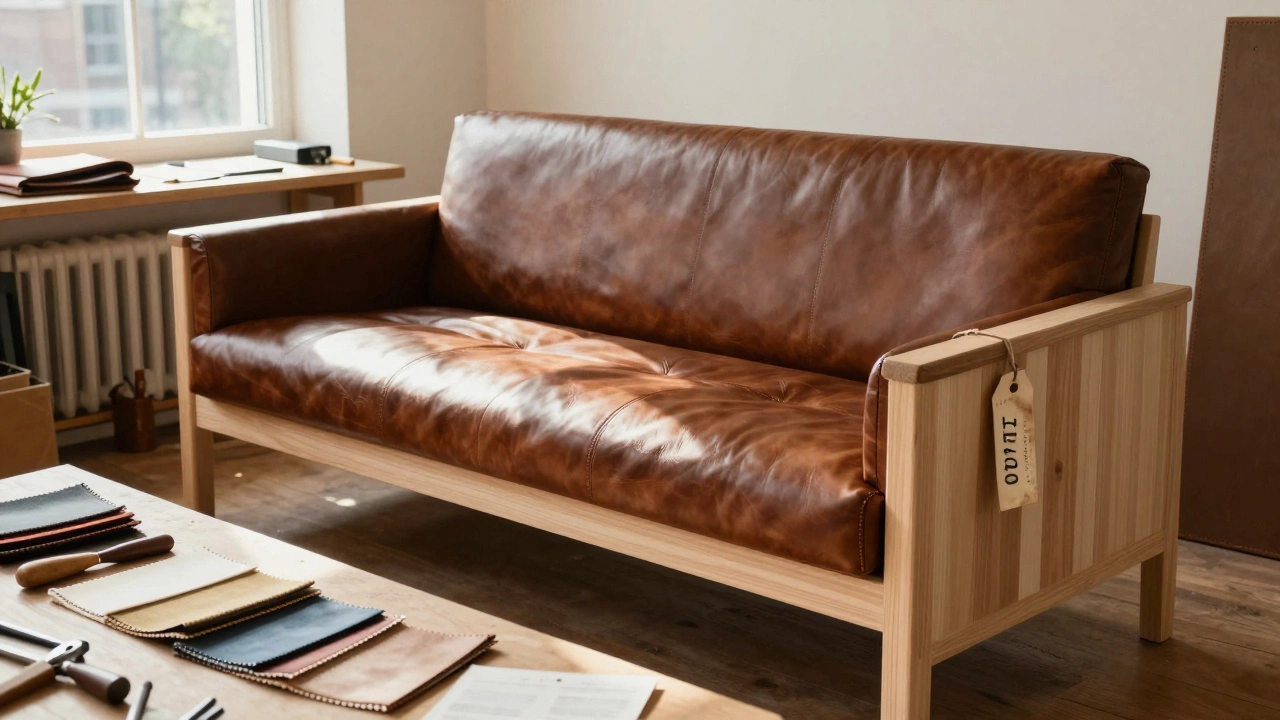
If you want something truly unique, a local upholsterer can reupholster an old frame or build one from scratch. This is where you get the best value. A skilled craftsman in Bristol might charge £800-£1,500 to build and cover a custom sofa using your fabric. That’s still less than the markup on a $3,000 store-bought couch-and you get full control over every detail.
Plus, you’re supporting local work. And if you ever want to change the look? Just reupholster it again. Most factory-made couches are glued and stapled together. They’re not meant to be repaired. Custom pieces are built to last decades.
The Hidden Cost of Cheap Couches
Buying the cheapest couch might seem smart at first. But if it starts sinking after six months, or the fabric pills and fades in a year, you’re not saving money-you’re just paying twice. The average American replaces their sofa every 7-10 years. In the UK, it’s closer to 12. But a well-made couch can last 20+ years. That’s why the real math isn’t about the sticker price-it’s about cost per year.
Example: A $1,500 couch that lasts 15 years costs you £100 a year. A $500 couch that falls apart in 4 years? That’s £125 a year. The cheaper one costs more over time.
How to Negotiate (Yes, You Can)
Most people don’t know you can haggle on furniture. But showrooms often have a lot of flexibility, especially at the end of the month or quarter when sales reps are chasing targets. Ask if they can match an online price. Ask if they have floor models or discontinued styles on sale. Sometimes, they’ll knock off 15-25% just to clear space.
Don’t be afraid to say: “I saw this exact model online for £X. Can you match it?” Most stores will at least offer free delivery or a free throw pillow.
Final Rule: Know Your Numbers
Here’s a simple trick: if you can find the manufacturer’s name, search for it online. Most factories list their wholesale prices. For example, if a couch is made by a company called “Furniture Source Co.,” type that into Google. You’ll often find their catalog or contact info. Call them and ask: “What’s your wholesale price for model XYZ?”
Once you know the factory cost, you can calculate the markup yourself. If the retail price is more than 3x the wholesale, you’re paying a heavy premium. If it’s under 2.5x, you’re getting a good deal.
The truth is, couches aren’t expensive because they’re hard to make. They’re expensive because stores know you won’t ask how much it really costs. Once you know the numbers, you stop overpaying-and you start making smarter choices.
Is 300% markup normal for couches?
Yes, 200% to 400% markup is standard in traditional furniture stores. A couch that costs $800 to build often sells for $2,400-$3,200. Online direct-to-consumer brands typically mark up only 100% to 150% because they skip showrooms and middlemen.
Can I trust the "sale" prices in furniture stores?
Be careful. Many stores inflate the original price just to make the sale price look better. Always check the same model online or ask for the manufacturer’s name. If you can find the wholesale price, you’ll know if the "discount" is real.
Why are leather couches so much more expensive?
Not because the leather is rare-but because of how it’s marketed. A full-grain hide costs about $150-$250, but stores charge $1,000+ extra for the word "leather." Real leather lasts decades; fake leather peels after a few years. Pay for quality, not just the label.
Do custom-made couches have less markup?
Yes. A local upholsterer typically charges cost-plus-maybe 30% to 50% over materials and labor. You’re paying for craftsmanship, not branding. A custom sofa built with solid wood and your chosen fabric often costs less than a pre-made designer couch.
Should I buy a couch online?
If you’re comfortable with return policies and can find reviews, yes. Brands like Article, Burrow, and Joybird offer free shipping, easy returns, and transparent pricing. You can test the same model in a showroom first, then buy online at a lower price.