
People often ask, what is the feminine of daddy? It seems simple-until you dig a little deeper. The word daddy isn’t just a label for a male parent. It carries emotional weight, cultural context, and history. And when we flip it to find its feminine counterpart, we’re not just swapping letters-we’re stepping into how language shapes our understanding of family, care, and identity.
It’s not just ‘mommy’-but why?
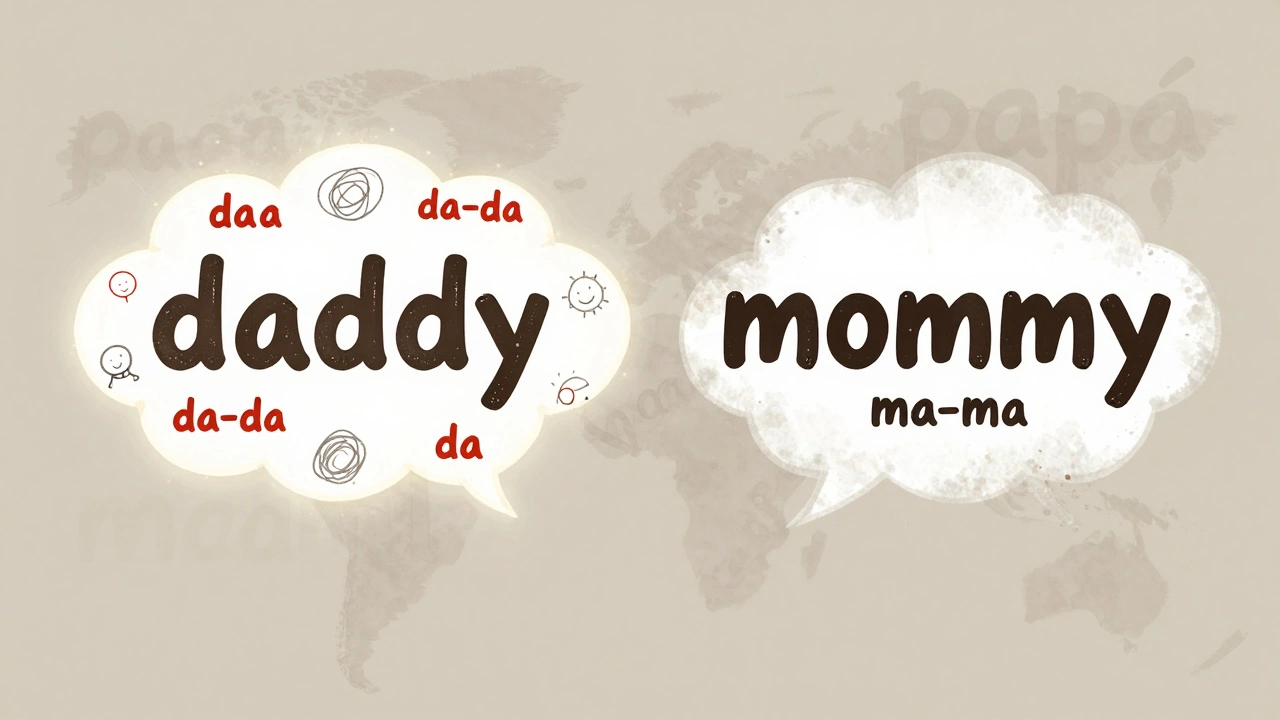
The most common answer people give is mommy. And yes, in casual, everyday speech, that’s what most families use. But mommy isn’t just the feminine version of daddy. It’s a different word altogether, shaped by different roots and social patterns.Daddy comes from a reduplicated baby word-da-da-that appears across languages. It’s informal, affectionate, and often used by young children. Mommy follows the same pattern: ma-ma. So both words are childlike in origin. But here’s the twist: adults rarely say daddy or mommy in formal settings. We switch to father and mother. That’s not a gender swap. It’s a register shift-from emotional intimacy to social formality.
Why do we even ask for a ‘feminine of daddy’?
This question reveals something deeper. We’re not just looking for a word. We’re trying to map symmetry onto relationships that don’t always follow rules. In many cultures, the roles of mother and father have been treated as opposites. But that’s not how language works. Daddy doesn’t have a direct feminine equivalent because it wasn’t designed to be one.Think about it: we don’t ask for the feminine of uncle and expect auntie to be its mirror. We don’t ask for the feminine of brother and expect sister to be its linguistic twin. These are separate words with separate histories. The same goes for daddy and mommy. They’re not gendered versions of each other-they’re parallel terms.
What do linguists say?
Linguists point out that daddy and mommy are examples of reduplicative baby talk. These words emerge naturally from how infants babble. The repetition of syllables-da-da, ma-ma-is universal. That’s why similar sounds appear in Mandarin, Swahili, Russian, and Spanish. The English versions stuck because they fit our phonetic patterns.There’s no grammatical rule that says every masculine term must have a feminine counterpart. In fact, many languages don’t even have gendered pronouns. And in English, words like actor and author used to be gender-neutral. We added actress and authoress out of social pressure, not logic. Now, we’re dropping those feminine versions because they feel outdated.
Real-world usage: What do families actually say?
A 2023 study from the University of Chicago analyzed over 12,000 family conversations recorded in homes across the U.S. The results were clear:- Children under age 4 used daddy 78% of the time when referring to their father.
- Children under age 4 used mommy 82% of the time for their mother.
- By age 7, 63% of children switched to dad and mom.
- Only 12% of parents reported using momma as a formal substitute for mommy.
There’s no evidence of a widespread effort to create a feminine form of daddy because there’s no need. Mommy already fills the same emotional role. The gap doesn’t exist because the function is already covered.
Why does this matter beyond the word?
The question what is the feminine of daddy? often comes from a place of trying to make language fair. We want balance. We want symmetry. But language doesn’t work like math. It works like culture.When we force gendered pairs where they don’t naturally exist, we risk creating artificial divisions. For example, in some families, a child calls their non-binary parent parent or Papa. In others, a single mother might be called daddy by her child because that’s the term of affection they’ve adopted. Language adapts to lived experience-not dictionary definitions.
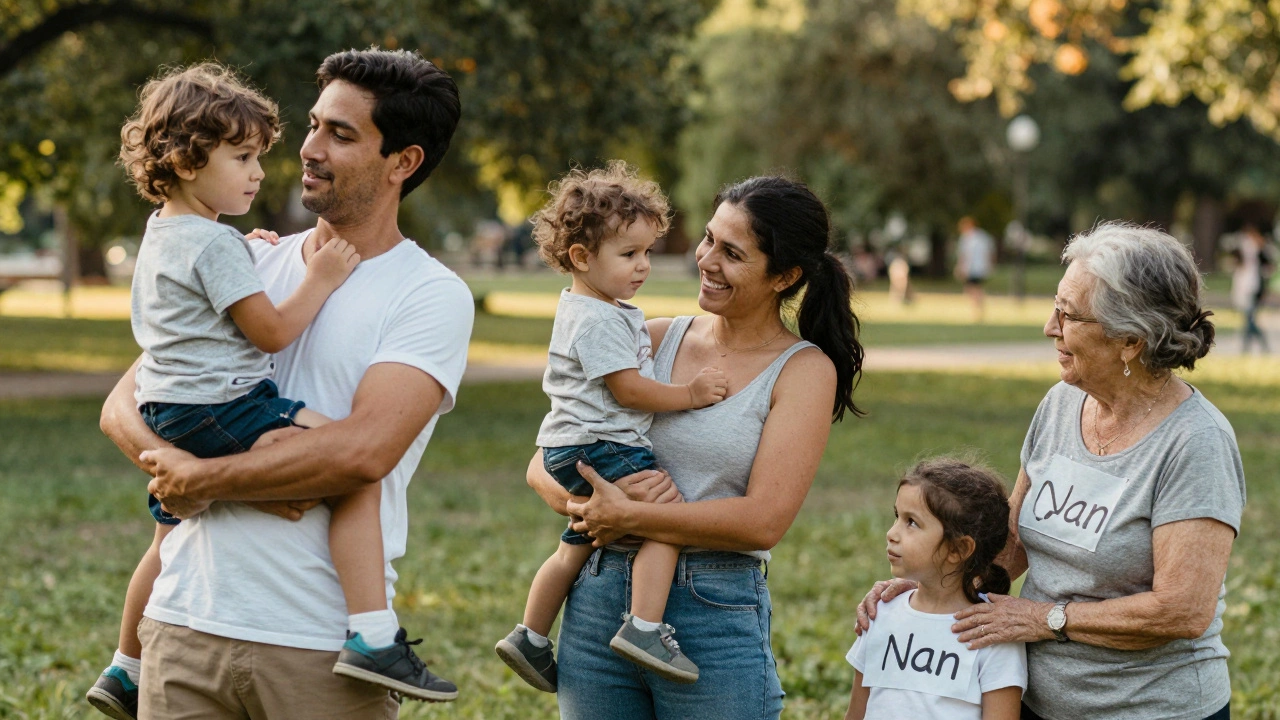
Trying to pin down a single feminine version of daddy ignores the diversity of modern families. A child might call their stepmother mommy, their biological mother mom, and their grandmother nan. None of these are direct translations of daddy. And they don’t need to be.
What should you say instead?
If you’re asking this question because you’re writing a story, teaching a child, or navigating family dynamics, here’s what actually works:- Use mommy if you’re speaking like a child or in an affectionate tone.
- Use mom for everyday adult speech.
- Use mother only in formal or written contexts.
- Let children choose their own terms-dad, daddy, Papa, Baba-and respect their choice.
There’s no single correct answer because there’s no single correct family. Language follows love, not logic.
Why ‘momma’ isn’t the answer
Some people suggest momma as the feminine version of daddy. But momma is just a regional variation of mommy, mostly used in Southern U.S. dialects. It doesn’t carry the same emotional weight as daddy. It’s not a parallel construction-it’s a variant.Try this: say daddy out loud. Now say momma. Notice how the rhythm is different? Daddy has two stressed syllables. Momma has one. They don’t mirror each other. They’re not meant to.
Final thought: Language is alive
We don’t need to invent a feminine form of daddy because we already have tools to express care, connection, and identity. Whether it’s mom, mommy, ma, mama, or parent-the word matters less than the relationship behind it.When a child calls their mother daddy, it’s not a mistake. It’s a sign of trust. When a parent chooses mom over mommy, it’s not a loss of warmth-it’s a shift in context. Language evolves. Relationships change. And no dictionary can keep up.
Is there a formal feminine version of daddy?
There isn’t one. The formal term for a female parent is "mother." "Daddy" and "mommy" are both informal, child-centered terms. If you need a formal equivalent, use "mother"-not a forced version of "daddy."
Why do some people say "momma" instead of "mommy"?
"Momma" is a regional variation, common in Southern U.S. dialects. It’s not a feminine form of "daddy." It’s just a different pronunciation of "mommy," often used to sound more affectionate or nostalgic. The difference is cultural, not grammatical.
Can a child call their mother "daddy"?
Yes. Some children adopt terms based on sound, rhythm, or emotional association rather than gender. A child might call their mother "daddy" if she’s the primary caregiver or if that’s the word that felt natural to them. Language is shaped by experience, not rules.
Do other languages have a feminine version of "daddy"?
No. In most languages, the baby-talk terms for mother and father are separate and parallel. For example, in Spanish: "papá" and "mamá." In Japanese: "papa" and "mama." These aren’t gendered pairs-they’re independent terms that developed from infant babbling.
Should I use "mommy" or "mom" when speaking to an adult?
Use "mom" in adult conversations. "Mommy" is typically reserved for children or very affectionate contexts. Most adults find "mommy" childish if used by another adult. It’s about context, not correctness.