
Window Covering Recommendation Tool
Find Your Perfect Window Covering
Your Recommended Window Covering
Pro Tip
Windows aren’t just openings in your walls-they’re the first thing people notice when they walk into your home. And what you put over them? That’s the silent statement you’re making about your style, comfort, and even your mood. So what’s actually on trend right now in 2025? If you’ve been scrolling through Pinterest or walking past showrooms and feeling overwhelmed, you’re not alone. The answer isn’t one single thing. It’s a mix of practicality, texture, and quiet luxury that’s reshaping how we think about window coverings.
Sheer curtains are back-but not the way you remember
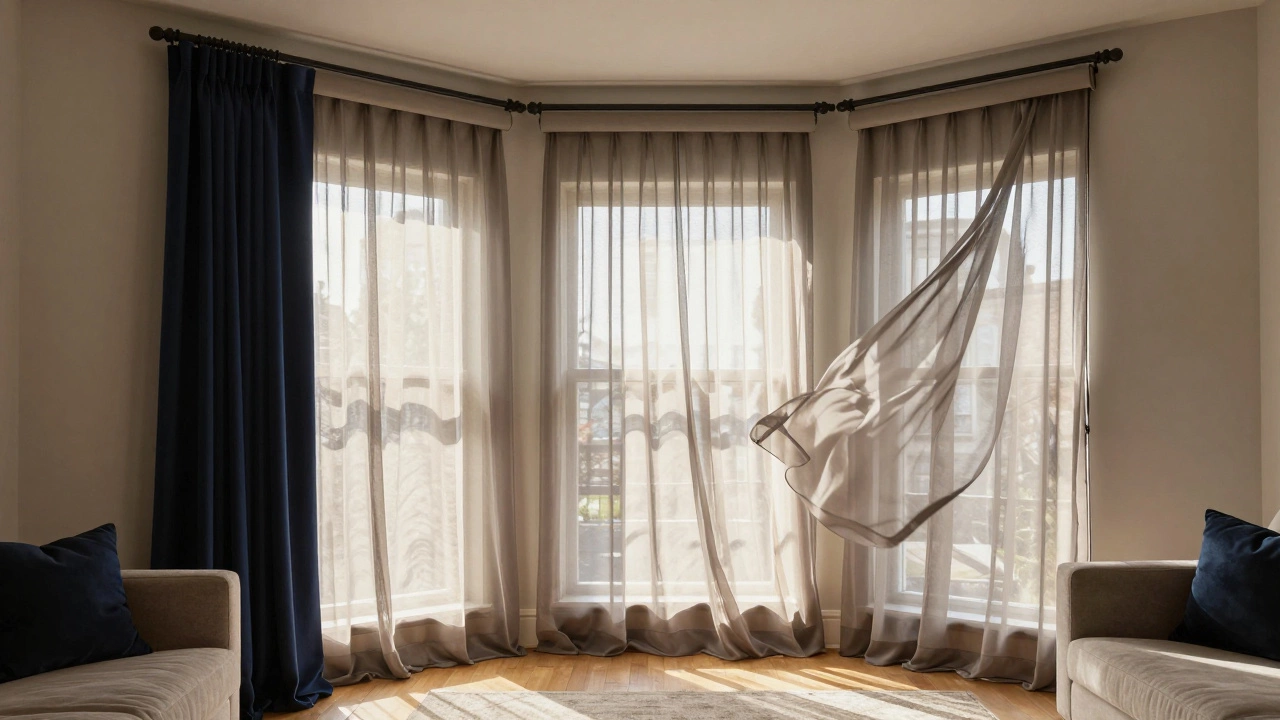
Remember those thin, white, flowy curtains from the 90s? The ones that billowed in the breeze but gave zero privacy? Those are gone. Today’s sheer curtains are smarter. They’re made from blended fabrics-linen, cotton, and a touch of polyester-that hold their shape without looking cheap. And they’re layered. Not with heavy drapes, but with slim, motorized roller shades underneath. This combo gives you control: let in soft morning light without frying your sofa, then pull the shade down when you want to watch TV in peace.
Brands like IKEA and John Lewis now offer these in muted tones: oat, sage, and warm greige. No more blinding white. No more lace. Just quiet, natural texture that blends into any decor. In Bristol, where homes often have bay windows and old sash frames, these sheers are everywhere. They soften the light without blocking it, which matters when you’re dealing with 100-year-old windows that don’t close perfectly.
Roller shades dominate-especially blackout and solar
If you’ve ever tried to sleep with a streetlight shining through your window, you know why blackout roller shades are the most sold window covering in the UK right now. They’re not bulky like traditional blinds. They roll up into a slim cassette, invisible when not in use. And they come in colors that match your walls, not fight them.
But it’s not just about blocking light. Solar shades are the quiet hero of 2025. These let you see outside while blocking 90% of UV rays and heat. That’s huge if you’ve got a south-facing living room that turns into a sauna by 2 p.m. They’re made from woven fiberglass or polyester with a micro-perforated weave. You can still read a book in the afternoon, but your armchair won’t fade. And they’re not just for homes-offices, nurseries, and even Airbnb rentals are installing them fast.
Motorization is no longer a luxury. You can control them with voice commands, phone apps, or even set them to rise and fall with the sun. A 2024 survey by the UK Home Improvement Association found that 68% of new installations included motorized shades, up from 32% just three years ago.
Wooden blinds? Still around-but only if they’re real
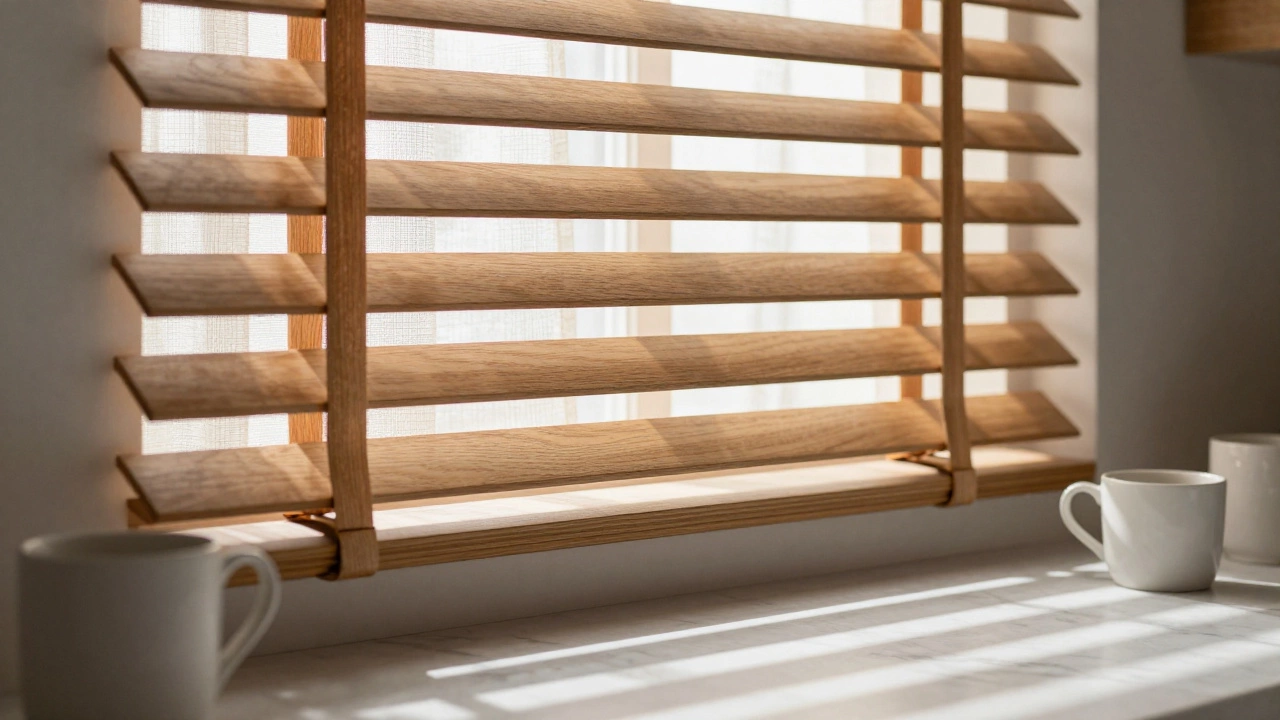
Plastic faux wood blinds? They’re fading out. People are tired of them peeling, cracking, and looking like they came from a 2008 home improvement store. Real wood blinds are making a comeback, but not the heavy, dark ones. Today’s versions are slimmer, lighter, and stained in natural tones-walnut, ash, and even bleached oak.
They work best in kitchens, bathrooms, and home offices where you want structure without the coldness of metal. And they’re paired with soft linen curtains for contrast. It’s a balance: clean lines from the wood, warmth from the fabric. In Bristol’s Victorian terraces, where natural light is limited, these blinds help define spaces without closing them off.
One thing to watch: avoid blinds with too many slats. The trend is toward wider slats-75mm to 100mm. They look more modern and cast softer shadows. Narrow slats feel dated.
Blackout curtains are no longer just for bedrooms
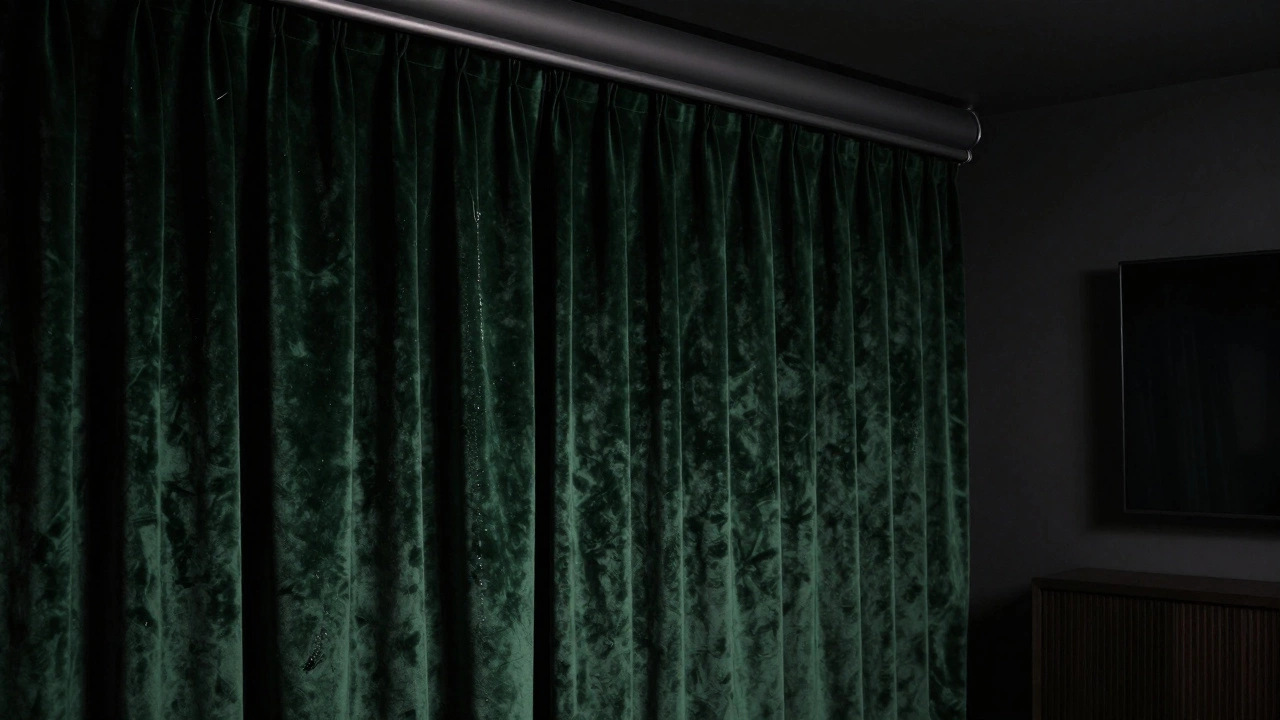
Yes, you still need them for sleep. But now, people are using them in media rooms, home gyms, and even dining areas. Why? Because they’re not ugly anymore. Modern blackout curtains come in velvet, bouclé, and even textured cotton. They’re lined, but the lining doesn’t show. The front is designed to be the star.
Deep navy, charcoal, and forest green are the top colors-not black. Black feels too harsh unless you’re going for a dramatic, moody aesthetic. Most people want richness, not a cave. And the hems? They’re floor-length, with a slight puddle. Not exaggerated, just enough to feel intentional. It’s the same idea as a well-tailored suit: the length tells you it’s meant to be there.
Brands like M&S Home and Habitat have started offering blackout curtains with thermal insulation built in. That’s a game-changer for older homes in the UK. One homeowner in Clifton told me her heating bill dropped 18% after installing them in her living room. That’s not a gimmick-it’s physics.
Layering is the secret no one talks about
Forget the old rule: one covering per window. Today’s best-looking windows have three layers. Not because they’re fancy, but because they’re functional.
Here’s the standard combo: a motorized solar shade on the inside (for light control), a sheer curtain in the middle (for softness and privacy during the day), and a blackout curtain on the outside (for night or TV time). You don’t need to open all three. You pick one based on the time of day and what you’re doing.
It sounds complicated, but it’s not. You install the shade first, then hang the sheer on a rod just in front of it. The blackout curtain goes on a separate, wider rod so it doesn’t block the sheers. It’s all about visual depth. And it’s why you see so many windows in London and Bristol looking like they belong in a magazine-without looking staged.
What’s out? And what’s overrated?
Let’s be clear: some things are officially done.
- Valances-they collect dust and look dated. Even the ones with ruffles.
- Vertical blinds-they’re still in offices, but homes? Rare. They feel institutional.
- Heavy brocade drapes-unless you’re redoing a 1980s mansion, skip them. Too much.
- White cotton curtains-they yellow fast and show every speck of dirt. Stick to off-whites or warm neutrals.
And while smart home tech is booming, don’t fall for the hype. A $300 motorized curtain system that only works with Alexa? If you don’t use Alexa, it’s a waste. Stick to systems that work with Google Home, Apple HomeKit, or even manual controls. Simplicity wins.
What to buy if you’re starting from scratch
Here’s a simple plan if you’re redecorating:
- Start with solar shades. They solve the biggest problem: too much light and heat.
- Add sheer curtains. Pick a color that matches your sofa or rug. It ties the room together.
- For bedrooms and media rooms, go with blackout curtains in a rich tone. Navy, deep green, or warm grey.
- Don’t buy hardware from the same store as your curtains. Get rods and brackets that match your style-matte black, brushed brass, or natural wood.
- Measure twice. Window coverings that are too short look cheap. They should hit the floor or pool slightly.
And here’s a pro tip: buy your curtains a few inches longer than you think you need. You can always hem them down. You can’t make them longer.
Why this matters more than you think
Window coverings aren’t just about blocking sunlight. They’re about controlling your environment. In a city like Bristol, where winters are long and summers can be surprisingly hot, what you put on your windows affects your comfort, your energy bill, and even your sleep quality.
People are finally realizing that window treatments aren’t an afterthought. They’re a core part of home design. The right ones make a room feel calm. The wrong ones make it feel chaotic.
Right now, the most popular window covering isn’t a single product. It’s a system. One that gives you light when you want it, privacy when you need it, and quiet comfort all year round.
Are blackout curtains worth it for rooms other than bedrooms?
Yes, especially in media rooms, home offices, and even dining areas. Blackout curtains reduce glare on screens, block streetlights, and improve sleep quality if you work night shifts. Modern versions come in stylish fabrics like velvet and bouclé, so they don’t look clinical. They also help insulate windows, which can lower heating bills in older homes.
What’s the best material for curtains in a humid bathroom?
Avoid cotton and linen-they mildew. Look for polyester blends with a water-resistant finish or vinyl-coated fabrics. Brands like IKEA and Next offer bathroom-specific curtains that dry quickly and resist mold. Pair them with a simple roller shade for extra privacy without the hassle of washing.
Do motorized window coverings add value to a home?
Not dramatically in resale value, but they do make a home feel more modern and high-end. Buyers notice smart features, especially in urban areas like Bristol or Brighton. If you’re selling, highlight them as a convenience, not a luxury. A system that works with voice control or a phone app is a selling point, especially for younger buyers.
Can I mix different types of window coverings in one room?
Absolutely. In fact, it’s the most popular approach in 2025. Layering a solar shade with sheer curtains and blackout drapes gives you full control over light and privacy. Just make sure the colors and textures work together. Stick to a cohesive palette-like all neutrals or one accent color-and use different heights to create depth.
How often should I replace my window coverings?
There’s no set rule, but most people replace them every 7-10 years. Signs it’s time: fading colors, frayed edges, broken mechanisms, or if they no longer match your decor. If your curtains are stained, warped, or don’t close properly, it’s better to replace them than repair. Modern materials last longer and offer better insulation, so upgrading can save money on energy bills over time.