
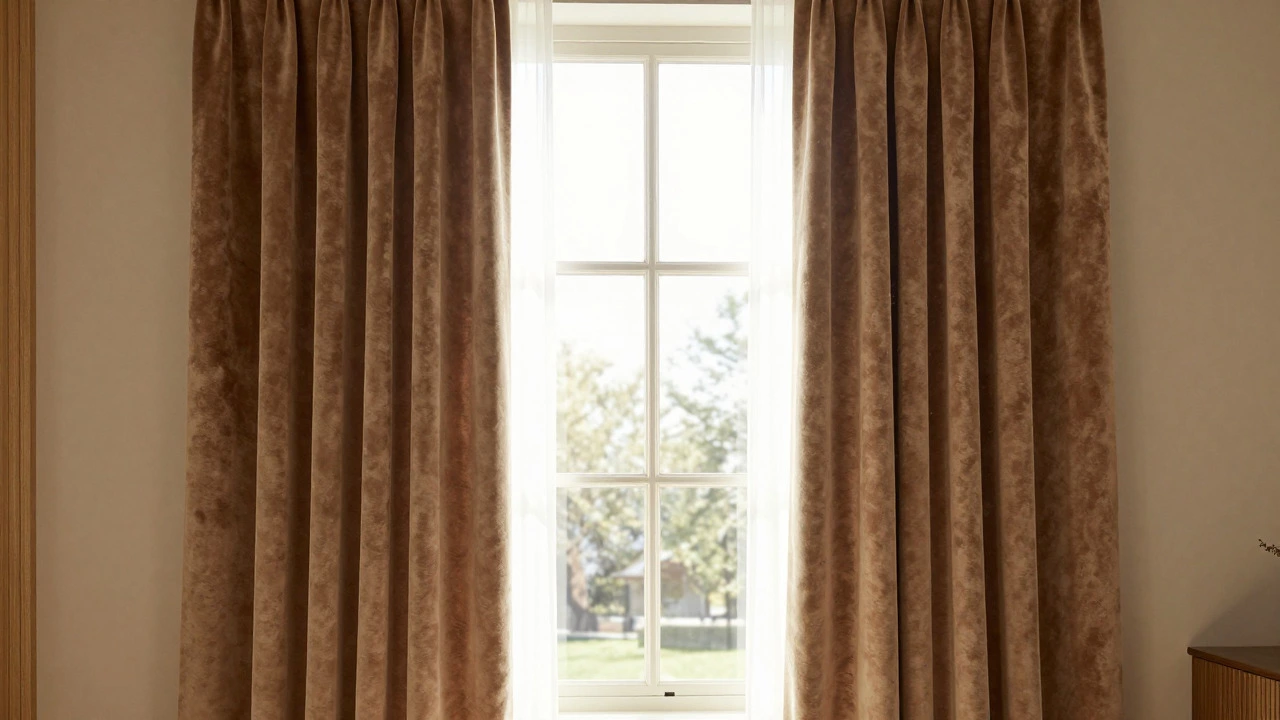
Curtain Sizing Calculator
Total Rod Length
--
Includes extension beyond frame.
Panel Width (Each)
--
Width per panel for 2 panels.
Curtain Length
--
From rod to hem.
Visual Representation
Ever hung a pair of curtains only to realize they look like sad little flaps dancing in the breeze? You are not alone. Most people buy standard sizes off the rack without measuring their windows properly, leading to that awkward, unfinished look. The good news is that interior designers use a few simple rules of thumb to make any window look taller, wider, and infinitely more expensive than it actually is.
You do not need a degree in architecture to get this right. You just need a tape measure, a drill, and an understanding of proportion. Whether you are dealing with a tiny bathroom window or a massive floor-to-ceiling bay in your living room, these guidelines will help you avoid common pitfalls and create a polished look.
The Golden Ratio: Width and Fullness
The most critical mistake people make is buying curtains that are too narrow. When closed, cheap-looking curtains pull tight across the rod, creating wrinkles and looking strained. To fix this, you need to understand the concept of "fullness."
The general rule of thumb for curtain width is to multiply the width of your rod by two. If your rod is 40 inches wide, you need curtains that total 80 inches in width when flat. This gives you a 2x fullness ratio. For a more luxurious, hotel-style drape, aim for a 3x ratio. So, for that same 40-inch rod, you would want curtains totaling 120 inches wide.
Here is how to calculate this practically:
- Measure the rod: Measure from the left bracket to the right bracket, not the length of the fabric itself.
- Multiply by 2 or 3: This is your target total width for both panels combined.
- Check the panel size: If you are buying two panels, divide your target number by two. If you need 120 inches total, each panel should be 60 inches wide.
If you are using sheer fabrics, lean toward the 3x ratio because thin materials show every wrinkle. Heavy velvets or linens can often get away with the 2x ratio because their weight helps them fall smoothly.
Height Matters: How High Should You Hang Them?
Where you place the curtain rod changes the entire perception of your room’s height. A common error is hanging the rod directly above the window frame. This chops up the wall and makes the ceiling feel lower.
The professional trick is to mount the rod higher than you think. Aim for 4 to 6 inches above the top of the window frame. If you have high ceilings, you can go even higher-up to 12 inches. Alternatively, a foolproof method is to hang the rod halfway between the top of the window and the ceiling. This draws the eye upward, making the room feel airy and grand.
On the other end, what about the bottom? There are three main styles here, depending on the function of the room:
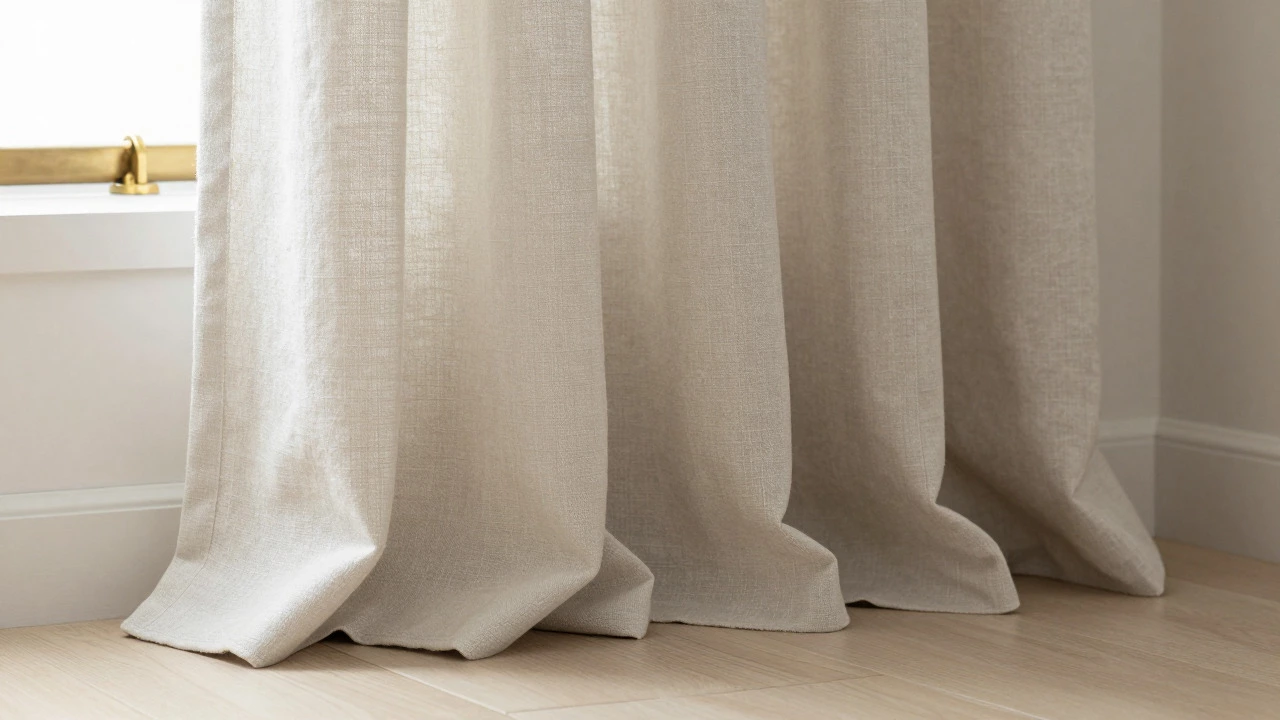
- Floating: The hem stops about half an inch above the floor. This is ideal for high-traffic areas or rooms with pets, as it keeps the fabric clean and prevents tripping hazards.
- Kissing: The fabric gently touches the floor but does not pool. This is the most versatile option, offering a clean, tailored look suitable for almost any room.
- Puddling: The fabric pools several inches on the floor. This creates a dramatic, formal look but requires frequent dry cleaning and can be a fire hazard if near radiators.
In my experience living in older homes in Bristol, where floors aren't always perfectly level, the "kissing" style is usually the safest bet. It hides minor unevenness without creating a tripping hazard.
Width Beyond the Frame
Another part of the rule of thumb involves how far the rod extends beyond the window frame. If you hang the brackets right at the edge of the window, your curtains will block light when opened because they overlap the glass.
To solve this, extend the rod 3 to 6 inches beyond the window frame on each side. For very wide windows, you might even go up to 10 inches. This ensures that when you draw the curtains back, they stack neatly against the wall, allowing maximum natural light to enter the room.
This small adjustment makes a huge difference in functionality. It also makes the window appear wider than it actually is, which is another win for visual proportions.
Choosing the Right Hardware
Your choice of rod and hardware supports the overall aesthetic. A delicate plastic rod on heavy blackout curtains will sag over time. Conversely, an overly thick industrial pipe might overwhelm a small, cozy bedroom window.
Consider the weight of your fabric. Light sheers need thinner rods, while heavy lined drapes require sturdy metal or wood rods with center support brackets if the span is wider than 4 feet. Center supports prevent the middle of the rod from drooping, keeping your curtains looking crisp.
Also, think about the finials (the decorative ends). They add character but take up space. Make sure your calculations for rod length account for the finials so your curtains don’t hit them when fully open.
Common Mistakes to Avoid
Even with the right measurements, execution errors can ruin the look. Here are a few pitfalls to watch out for:
- Ignoring the header type: Grommet curtains are easy to install but can look casual. Pinch pleats offer a more tailored, traditional look but require special hooks. Ensure your rod diameter matches the grommet hole if you choose that route.
- Buying standard lengths: Standard lengths are often 84 or 96 inches. If your window is 90 inches from rod to floor, you will have to hem them anyway. Buying ready-made curtains that match your exact measurement saves money on alterations.
- Forgetting about blinds: If you have blinds or shutters behind the curtains, ensure the curtains are long enough to cover them completely when closed. Nothing looks messier than seeing slats peeking out from under the curtain hem.
Practical Examples for Different Rooms
Let’s apply these rules to real-life scenarios.
The Living Room: You have a large window that is 60 inches wide and 72 inches tall. You want a formal look.
1. Width: Rod extends 6 inches past each side = 72 inches total rod width. Multiply by 3 for fullness = 216 inches total fabric width. Each panel needs to be 108 inches wide.
2. Height: Mount rod 6 inches above the frame. If the frame is 84 inches from the floor, the rod is at 90 inches. For a kissing hem, cut curtains to 90 inches. If using standard 96-inch panels, hem them by 6 inches.
The Bedroom: You need blackout curtains for a 40-inch wide window.
1. Width: Rod extends 4 inches past each side = 48 inches total rod width. Multiply by 2.5 for moderate fullness = 120 inches total fabric width. Each panel needs to be 60 inches wide.
2. Height: Mount rod halfway between window top and ceiling. Let’s say that puts the rod at 96 inches from the floor. Buy 96-inch panels for a perfect kiss-on-the-floor look.
Final Thoughts on Proportions
Remember, rules are meant to be bent once you understand them. If you have a quirky architectural feature, like a slanted ceiling or a window seat, adapt the guidelines to fit your space. The goal is balance. Your curtains should frame the window, not compete with it.
Taking the time to measure twice and cut once pays off. The difference between amateur and professional-looking curtains often comes down to these simple proportional adjustments. With the right width, height, and fullness, your windows will become a focal point rather than an afterthought.
How wide should curtains be compared to the window?
Curtains should be at least twice the width of the curtain rod for a standard look, or three times the width for a fuller, more luxurious appearance. This ensures that when the curtains are closed, they drape elegantly without pulling tight across the rod.
How high should I hang my curtain rod?
Ideally, hang the curtain rod 4 to 6 inches above the window frame. For a more dramatic effect that makes ceilings look higher, position the rod halfway between the top of the window and the ceiling.
Should curtains touch the floor?
Yes, for the best aesthetic, curtains should either "kiss" the floor (touching lightly) or float just half an inch above it. Puddling on the floor is an option for formal settings but requires more maintenance.
How far should the curtain rod extend beyond the window?
The rod should extend 3 to 6 inches beyond the window frame on each side. This allows the curtains to stack fully off the glass when open, maximizing natural light and making the window appear wider.
Do I need to hem my curtains?
If your measured length from the rod to the desired hemline does not match the standard length of the curtains you bought, yes. Hemming is crucial for achieving the "kissing" or "floating" look, as standard sizes rarely match custom window heights exactly.