
Pro Kitchenware Simulator
Select the tools you currently own or use regularly in your kitchen. This simulator will evaluate your setup based on professional chef priorities: durability, versatility, and speed.
Your Pro Score
Not Started
Select tools to see how your kit compares to a professional line cook's station.
You walk into a professional kitchen, and the noise hits you first. The hiss of searing meat, the rhythmic thud-thud-thud of a knife hitting a board, the clatter of metal on metal. It’s chaotic to an outsider, but there’s a method to the madness. And that method relies heavily on what is in the chef's hands. You might think pros use fancy gadgets with twelve functions. They don’t. They use boring, heavy, reliable tools that do one thing perfectly.
If you’ve ever wondered why your home-cooked steak doesn’t taste like the one at your favorite bistro, or why your vegetables turn to mush while theirs stay crisp, it’s rarely just about skill. Often, it’s about the kit. Home cooks often buy for aesthetics-shiny handles, cute colors. Chefs buy for survival and speed. Let’s break down exactly what sits in a pro’s station, why they choose these specific items, and how you can steal their setup without spending a fortune.
The Knife Is Not Just a Cutting Tool
Ask any head chef what their most important possession is, and they won’t say their stove or their mixer. They’ll point to their knife roll. But not just any knife. The standard issue for most line cooks is a simple set: a chef’s knife, a paring knife, and sometimes a bread knife. That’s it. No vegetable choppers, no avocado slicers, no gadget-heavy sets from infomercials.
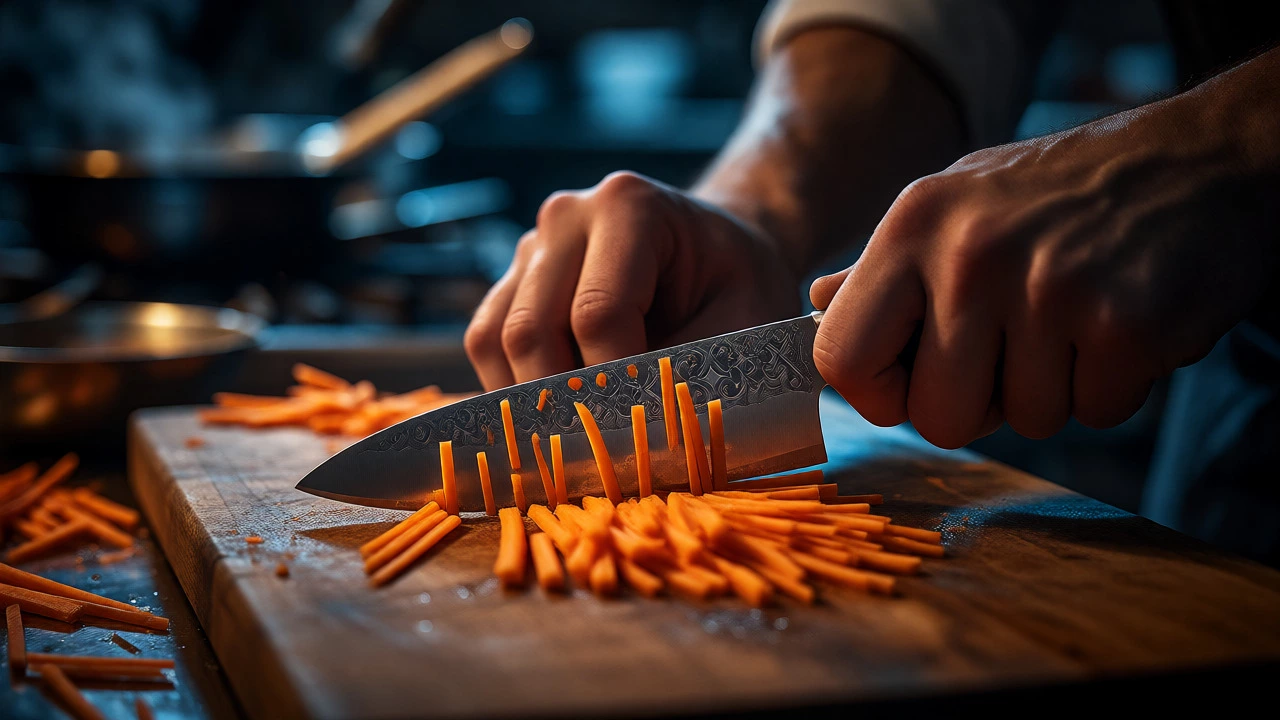
Why so few? Because speed matters. In a busy service, fumbling through a drawer of specialized tools costs seconds. Seconds add up to minutes, which add up to cold food. A skilled cook can julienne carrots faster with a sharp 8-inch chef’s knife than you can with a machine, and the result is better because you have control over the pressure.
| Knife Type | Typical Blade Length | Primary Function | Why Pros Choose It |
|---|---|---|---|
| Chef’s Knife | 8-10 inches (20-25 cm) | All-purpose cutting, chopping, slicing | Versatility; allows rocking motion for herbs |
| Paring Knife | 3-4 inches (7-10 cm) | Peeling, intricate work, garnishes | Precision; fits in hand for detailed tasks |
| Serrated Knife | 8-10 inches | Bread, tomatoes, soft-skinned fruits | Grips slippery skins without crushing flesh |
| Boning Knife | 5-6 inches | Breaking down poultry, fish, meats | Thin blade navigates around bones easily |
Notice I didn’t mention expensive Japanese Damascus steel knives. While some chefs swear by them, many prefer German-style stamped blades (like Wüsthof or Zwilling J.A. Henckels) because they are tougher. They can take a beating, hit a bone occasionally without chipping, and are easier to sharpen on a whetstone during a shift. For home cooks, this is key: buy one good chef’s knife and learn to sharpen it. Skip the block set.
Cookware That Survives Abuse
Home kitchens are gentle places. We wash pans gently, avoid metal utensils on non-stick, and store pots carefully. Professional kitchens are war zones. Pans get stacked hot-on-hot, scraped with metal spatulas, and thrown into industrial sinks. So, what survives?
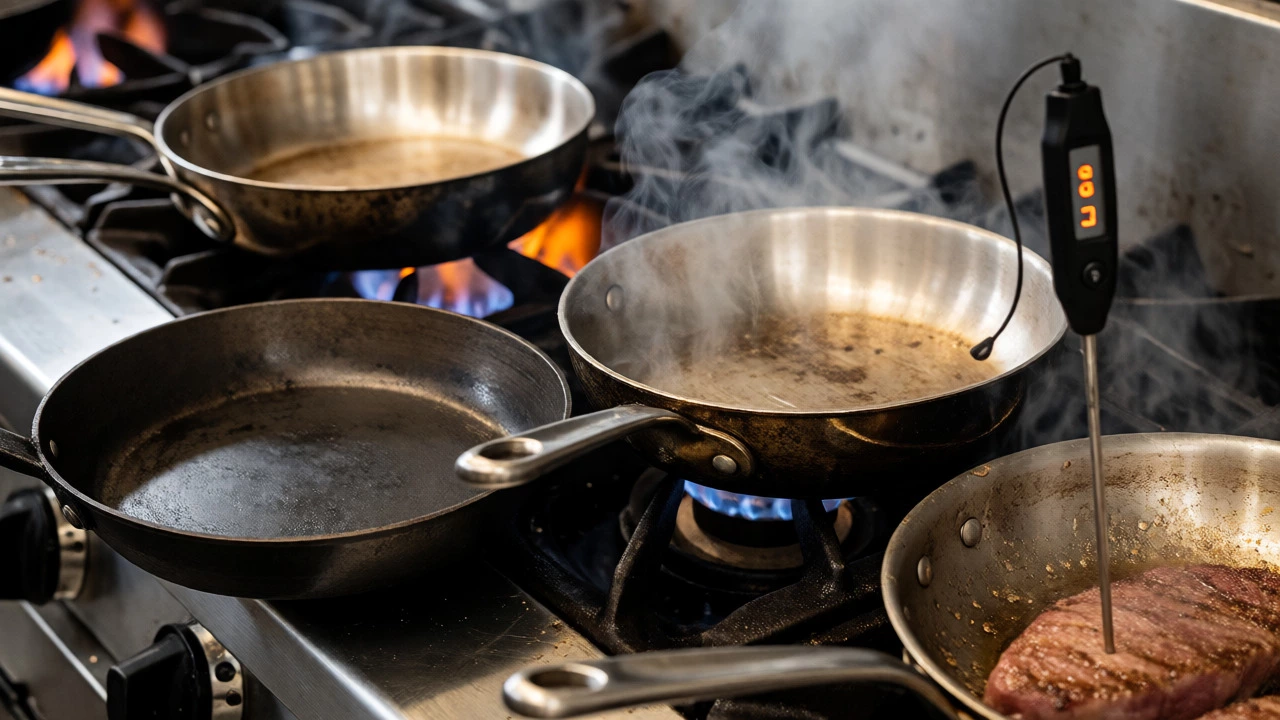
Three materials dominate the professional world: stainless steel, carbon steel, and cast iron. Non-stick is almost extinct in high-end restaurants. Why? Because you can’t build fond (those tasty brown bits stuck to the pan) on Teflon. Fond is the base of sauces, gravies, and deglazing liquids. If you want restaurant-quality flavor, you need a surface that browns food aggressively.
Stainless steel clad pans are the workhorse. Look for "tri-ply" or "5-ply" construction. This means layers of aluminum or copper sandwiched between stainless steel. The core conducts heat fast; the outer layer is durable and non-reactive. Brands like All-Clad popularized this, but mid-range options now offer similar performance. A pro will have a sauté pan, a saucepan, and a stockpot in various sizes, all matching this profile.
Then there’s carbon steel. This is the secret weapon for searing. Think of it as cast iron’s lighter, smoother cousin. It heats up incredibly fast and develops a natural non-stick patina (seasoning) over time. French chefs love carbon steel for omelets and crepes because it responds instantly to flame adjustments. It requires maintenance-you must dry it immediately after washing and oil it lightly-but the payoff is a pan that lasts a lifetime and improves with age.
Cast iron still has its place, specifically for high-heat roasting and baking. A cast-iron skillet goes straight from stovetop to oven, making it perfect for cornbread or finishing a steak. However, it’s heavy. Line cooks don’t want to lift 10 pounds repeatedly when plating dishes, so they reserve cast iron for specific tasks where heat retention outweighs weight.
The Prep Station Essentials
Before cooking starts, prep happens. This is where mise en place (everything in its place) becomes real. You’ll see certain tools repeated across every station.
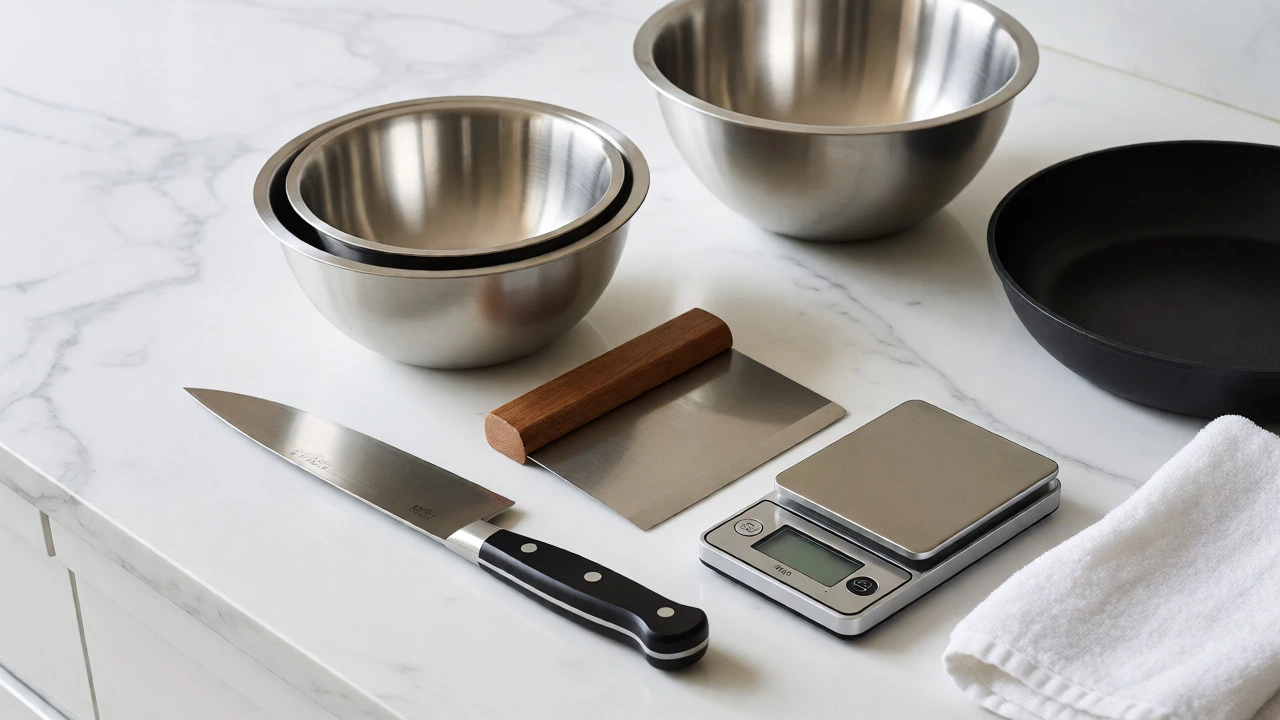
- Bench Scraper: Also called a dough scraper. It’s a flat piece of stainless steel with a wooden handle. It looks like a ruler. It’s used to gather chopped veggies off the board, scrape flour off the counter, and divide dough. It’s cheap, indestructible, and saves your back from bending down to pick up scraps.
- Mixing Bowls: Stainless steel, nested sets. Glass bowls crack if dropped. Plastic bowls stain and retain smells. Steel bowls are lightweight, stackable, and can go into boiling water or ice baths. Pros often keep three sizes: small for garnishes, medium for mixing, large for tossing salads.
- Colanders and Strainers: Fine-mesh strainers are critical for sauces. Coarse colanders drain pasta. Chefs often keep a chinois (a cone-shaped sieve) for clarifying stocks, though home cooks can skip this unless they’re making consommé.
You’ll also notice scales everywhere. Digital scales, not measuring cups. Accuracy is non-negotiable in baking and precise seasoning. A gram scale costs $20 and changes your cooking life more than a new blender. Recipes in professional kitchens are written by weight, not volume. Flour packs differently depending on humidity; grams don’t lie.
Heat Sources and Temperature Control
Home stoves max out at maybe 15,000 BTUs per burner. Commercial ranges push 25,000 to 30,000. This difference explains why restaurant steaks have a crusty exterior and rare interior while yours often cook evenly throughout. You can’t replicate commercial heat at home, but you can manage temperature better with the right tools.
Enter the instant-read thermometer. This isn’t the old glass tube kind that takes two minutes to read. Pros use digital probe thermometers that give a reading in 2-3 seconds. Brands like Thermapen are industry standards because they are accurate and fast. Guessing doneness leads to overcooked chicken or undercooked pork. A thermometer removes the guesswork.
Another overlooked tool is the timer. Not your phone’s app, but a dedicated mechanical or digital timer. Phone timers get buried under notifications. A loud, physical timer ensures nothing burns while you’re distracted by a customer question or a spilled drink. Some chefs even wear wrist timers, though that’s getting into niche territory.
Plating and Finishing Tools
Chefs eat with their eyes first. Plating requires precision tools that home cooks often ignore.
Tweezers: Long, stainless steel tweezers allow you to place microgreens, edible flowers, or delicate fish skin exactly where you want them. Your fingers are too clumsy and warm for fine details.
Squeeze Bottles: Sauces, oils, and vinaigrettes go into squeeze bottles. This controls flow rate and prevents drips on the rim of the plate. It’s cleaner and faster than ladling.
Offset Spatula: An angled blade lets you spread frosting, smooth purees, or lift cakes without knuckles hitting the surface. It’s essential for clean presentation.
And finally, the towel. Every chef carries a white cotton towel tucked into their apron string. It’s used to grab hot pans, wipe spills, dry hands, and polish plates. It’s multi-functional, absorbent, and bleach-safe. Paper towels leave lint and shred when wet. Cotton wins.
Buying Smart: What You Can Skip
You don’t need everything listed above to cook like a pro. Start with the basics. Invest in a good chef’s knife, a heavy-bottomed stainless steel sauté pan, a carbon steel skillet for searing, and a reliable digital scale. Add a bench scraper and a thermometer. That’s your starter kit.
Skip the garlic press (use a knife), the egg separator (use your hands), the avocado slicer (use a spoon), and the potato ricer (unless you make gnocchi weekly). These gadgets clutter drawers and rarely improve results. Focus on techniques, not tools.
Remember, the best kitchenware isn’t the most expensive-it’s the stuff you actually use. A $200 knife gathering dust is worth less than a $50 knife you sharpen monthly. Buy quality where it matters (knife, pan, thermometer), save elsewhere (bowls, scrapers, tongs).
Do chefs really use non-stick pans?
Rarely for main cooking. Most professional kitchens avoid non-stick because it cannot withstand high heat needed for searing and does not develop fond for sauces. They may use non-stick for eggs or delicate fish, but stainless steel and carbon steel are preferred for versatility and durability.
What brand of knives do most chefs use?
There is no single brand, but Wüsthof, Zwilling J.A. Henckels, Shun, and Global are very common. Many chefs prefer German brands for durability and ease of sharpening, while others prefer Japanese brands for sharper edges. The choice often depends on personal preference and maintenance habits.
Why do chefs carry their own knives?
Hygiene, safety, and familiarity. Shared knives in restaurants can be poorly maintained, dull, or improperly sanitized. Chefs train extensively with their specific knife balance and edge angle. Using someone else’s tool disrupts muscle memory and increases the risk of injury.
Is carbon steel hard to maintain?
It requires more care than stainless steel but less than cast iron. You must dry it thoroughly after washing to prevent rust and apply a thin layer of oil. Acidic foods (tomatoes, wine) should not sit in the pan for long periods as they can strip the seasoning. With basic care, it lasts decades.
Do I need a professional-grade range at home?
No, but you need good heat management. A heavy pan retains heat well, compensating for lower BTU output. Cast iron and thick-clad stainless steel help mimic commercial heat retention. Learning to preheat your pan properly is more important than having a 30,000 BTU burner.