
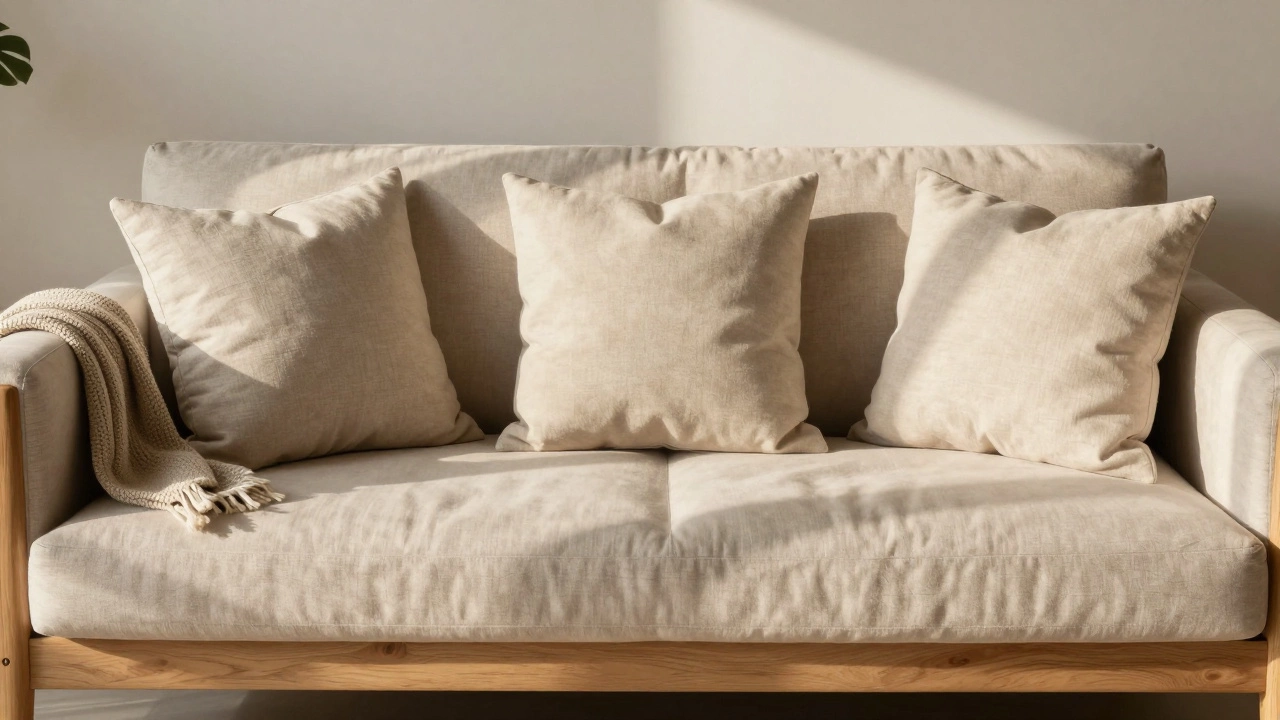
Couch Cushion Size Calculator
This size fits your couch proportionally. It maintains comfort without being too deep for your seat depth.
Getting the right cushion size for your couch isn’t just about looks-it’s about comfort, support, and making your space feel finished. Too small, and your couch looks empty. Too big, and you can’t sit properly. It’s a common mistake people make when redecorating, especially after buying a new sofa or moving into a new home.
Start by measuring your couch
Before you buy a single cushion, grab a tape measure. Don’t guess. Measure the width of your couch seat from arm to arm. Most standard three-seater sofas are between 72 and 90 inches wide. A two-seater usually runs 50 to 65 inches. Write this number down.Now measure the depth of the seat-from the front edge to where the back cushion starts. This is usually 20 to 24 inches for modern sofas. You’ll need this to figure out how deep your cushions should be.
Don’t forget to check the height of the seat back. If your couch has a low back (under 20 inches), you’ll want shorter cushions. High-back sofas (24+ inches) can handle taller cushions. Cushions that are too short for a tall back look like they’re slipping away.
Standard cushion sizes that work
Most people stick to a few reliable sizes because they just work. Here’s what’s commonly used:- 18x18 inches - Perfect for smaller sofas or accent cushions. Great for modern, minimalist designs.
- 20x20 inches - The most popular size. Fits most standard three-seater sofas and looks balanced.
- 22x22 inches - Ideal for larger, deeper couches. Gives a plush, inviting look.
- 24x24 inches - Best for sectionals or oversized sofas. Looks bold and luxurious.
These sizes aren’t rules-they’re starting points. The key is proportion. If your couch is long and low, go bigger. If it’s compact and high, stick to 20x20 or smaller.
How many cushions should you use?
There’s no magic number, but there’s a rhythm that feels right. For a three-seater sofa, three cushions usually look balanced: one on each end and one in the middle. Four cushions work too-two on each side-but only if the couch is wide enough (80+ inches). Too many cushions on a small couch make it feel cluttered.For a two-seater, two cushions are ideal. One might look lonely. Three can look messy. Two gives symmetry and leaves room to sit without fighting over cushions.
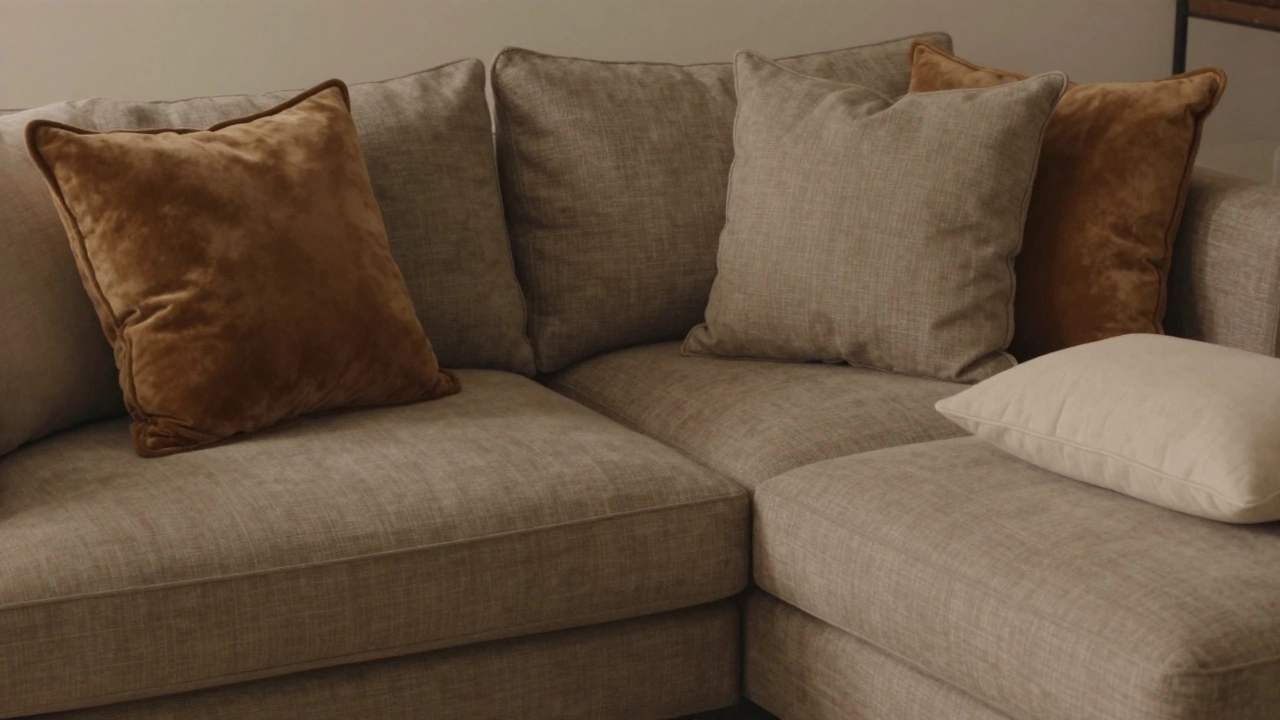
Sectionals? Start with four to six. Place larger cushions (22x22 or 24x24) on the main seating areas and smaller ones (16x16 or 18x18) on the chaise or corner. Keep it uneven for a lived-in look-don’t line them up like soldiers.
Shape matters more than you think
Most people think square cushions are the only option. They’re not. Rectangle cushions (like 12x20 or 14x22) are great for adding length to a couch. They’re especially useful on deep, low sofas where square cushions can get lost.Round or bolster cushions work well as accents. A single long bolster down the center of a sofa can create a cozy, inviting vibe. But don’t overdo it. Two or three bolsters max on a standard couch. More than that turns your living room into a hotel lobby.
Also, avoid mixing too many shapes. Stick to two at most-say, squares with one long bolster. Too many shapes make the space feel chaotic instead of curated.
Filler matters as much as size
A 20x20 cushion can look flat and lifeless if it’s filled with cheap polyester. Look for cushions with down blends or high-density foam. Down-filled cushions puff up nicely and hold their shape longer. Foam gives firm support-good if you sit for hours reading or watching TV.A good rule of thumb: if you can press your thumb deep into the cushion and it doesn’t spring back, it’s not going to last. You want that quick rebound. Also, check the cover. Zippered covers are a must. You’ll need to wash them eventually.
Don’t buy cushions without knowing what’s inside. Many online sellers don’t list the fill. Call the company or check the product details. A 20x20 cushion with 90% down and 10% feather will feel better and last longer than one with 100% polyester.
Seasonal changes and layering
In winter, thicker, heavier cushions in wool or velvet make the couch feel cozier. In summer, switch to lighter cotton or linen. You don’t need to buy new cushions every season-just swap covers. That’s why zippered covers are worth the extra £10.Layering is a trick professionals use. Place a slightly smaller cushion (like 16x16) on top of a larger one (20x20). It adds depth and texture. The top cushion should be a different pattern or color-something that pops. This creates visual interest without adding bulk.
Don’t layer more than two cushions per spot. Three layers look like you’re trying too hard. One or two is enough to make it look intentional.

What doesn’t work
Here are the most common mistakes:- Using 12x12 cushions on a large sofa-they look like throw pillows, not sofa cushions.
- Putting all identical cushions in a straight line-makes the space feel stiff.
- Choosing cushions that are the same color as the sofa-no contrast means no definition.
- Buying cushions that are too deep for the seat-they slide forward and block your legs.
- Ignoring the armrests-cushions should sit flat on the seat, not hang over the arms.
Also, avoid ultra-trendy sizes like 14x14 or 26x26 unless your couch is custom-made. These sizes rarely fit standard furniture and end up looking out of place.
Test before you buy
If you’re buying online, check the return policy. Many stores let you return cushions if they don’t fit. Order two sizes-say, 20x20 and 22x22-and try them both on your couch. Sit on it. Lie on it. Watch how they look from across the room.Take a photo. Sometimes what looks good in the store looks wrong in your lighting. Natural light changes everything. Wait until evening to make the final call.
If you can, visit a store and sit on a couch with the cushion sizes you’re considering. Feel the firmness. See how they sit. You’ll know right away if something feels off.
Final tip: Match your lifestyle
If you have kids or pets, go for durable, washable covers in darker colors. If you entertain often, pick easy-to-rearrange cushions that bounce back. If you’re a reader who likes to sink in, go for deeper, softer fills.The best cushion size isn’t the one everyone else uses. It’s the one that fits your couch, your body, and your life. Measure twice. Buy once. And don’t be afraid to mix sizes if it feels right.
What size cushion should I use for a 3-seater sofa?
For a standard three-seater sofa (72-90 inches wide), 20x20 inch cushions are the most common and balanced choice. You can use three of them-one on each end and one in the middle. If your sofa is larger or deeper, 22x22 inch cushions work better and look more luxurious.
Can I use 18x18 cushions on a big couch?
You can, but they’ll look small and underwhelming on a large couch. 18x18 cushions are best for two-seaters, accent chairs, or as decorative top layers on larger cushions. On a wide sofa, they create a gap that makes the seating feel disconnected.
Should all my couch cushions be the same size?
Not necessarily. Mixing sizes-like using 20x20 with one 22x22-can add visual interest. But keep the shapes consistent (all square or all rectangular). Avoid mixing square and round unless you’re going for a very intentional, designer look.
How do I know if my cushion is too deep?
If your cushion slides forward when you sit, or if your legs can’t rest comfortably on the seat because the cushion blocks them, it’s too deep. A good cushion depth should match your seat depth-usually 20 to 24 inches. Anything deeper than that can make sitting feel awkward.
Are down-filled cushions worth the extra cost?
Yes, if you want comfort and longevity. Down-filled cushions (with a blend of feathers) are softer, mold to your body, and hold their shape longer than polyester. They’re more expensive, but they last years and feel better after daily use. For high-traffic sofas, they’re a smart investment.