
Find Your Perfect Shelf Liner Alternative
Your Recommended Solution
You know the feeling. You peel back that sticky, yellowing paper from your kitchen cabinets, and it leaves behind a mess that takes twenty minutes to scrub off. Or maybe you just hate the look of those cheap, patterned rolls that make your pantry feel like a thrift store from 1998. If you are looking for shelf liner alternatives, you are not alone. Traditional adhesive or non-adhesive paper liners are outdated, messy, and frankly, unnecessary in 2026.
The good news? There are dozens of better options depending on what you need protection against. Do you want to stop spills? Keep things from sliding? Or just add a touch of style without the glue residue? Let’s break down the best substitutes so you can pick the one that actually works for your life.
Why You Should Ditch Traditional Shelf Liners
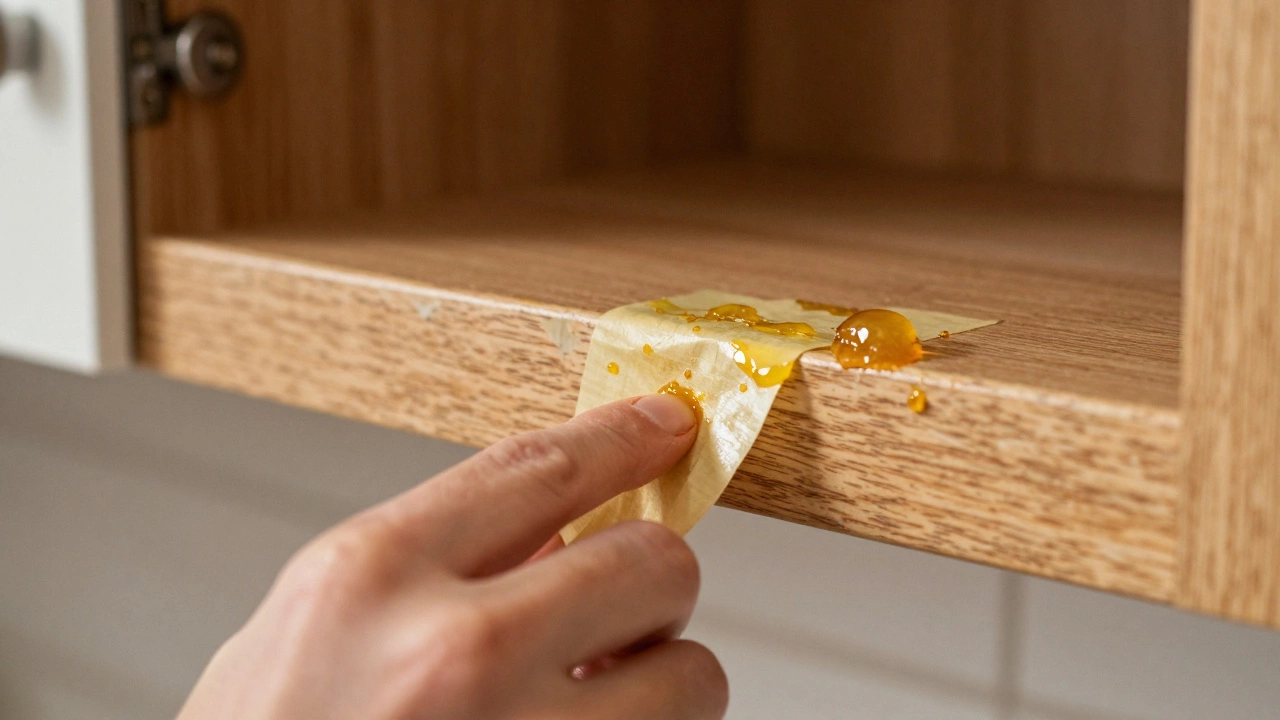
Before we get to the solutions, let’s talk about why the old stuff fails. Most standard shelf liners come in two types: adhesive-backed vinyl or non-adhesive woven paper/plastic. The adhesive kind sounds great until you try to remove it. It bonds to the wood or laminate, and pulling it up often rips the finish right off your cabinet. Even if you use heat to soften the glue, you are left with a gummy residue that attracts dust and dirt over time.
The non-adhesive woven types slide around constantly. Have you ever opened a cupboard door and watched a sheet of liner drift toward the edge? It looks sloppy and offers zero protection against heavy pots or sharp knife tips. Plus, neither option is breathable. Moisture gets trapped underneath, which can lead to mold growth in humid areas like bathrooms or under-sink storage. Modern alternatives solve these specific problems by being removable, stable, and often more durable.
Best All-Around Alternative: Removable Silicone Mats
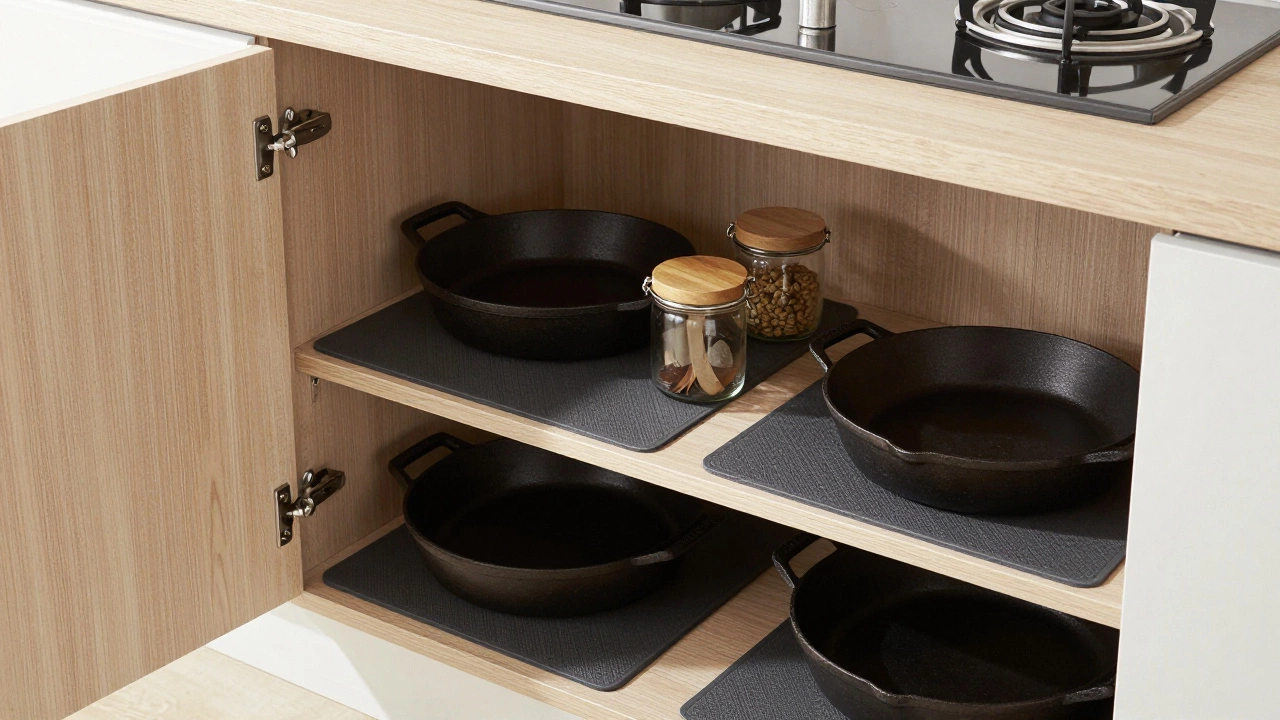
If you want something that stays put but doesn’t require glue, silicone mats are the gold standard. These are thick, flexible sheets made from food-grade silicone. They have a slightly textured surface that grips items in place, preventing jars from rolling or pans from sliding when you open the cabinet door.
Here is why they win:
- No Residue: Since there is no adhesive, you can lift them out, wipe them down, and put them back. No sticky mess.
- Heat Resistance: You can place hot baking sheets directly onto a silicone mat without worrying about melting or warping. Most handle temperatures up to 450°F (230°C).
- Easy Cleaning: Spilled oil? Just rinse the mat under hot water or toss it in the dishwasher. Paper liners absorb grease and become gross; silicone repels it.
I keep a set of black silicone mats in my Bristol apartment’s kitchen cupboards. When I pull out a heavy cast-iron skillet, the mat cushions the bottom and keeps the metal from scratching the cabinet floor. It also catches any crumbs that fall through rack gaps, making cleanup a breeze.
For Style and Protection: Acrylic or Glass Inserts
If you are going for a clean, modern look, consider custom-cut acrylic or tempered glass inserts. This is particularly effective for open shelving or glass-fronted cabinets where aesthetics matter as much as function.
Acrylic is lighter than glass and less likely to shatter if a heavy box falls on it. You can order these cut to size online or at local hardware stores. They sit flush on the shelf, providing a hard, impermeable barrier against liquids. Wine bottles, for instance, can leak slowly over time. A plastic liner might warp under the weight, but acrylic holds its shape perfectly.
Glass is heavier and feels more premium, but it requires careful handling during installation. Both options are ideal for displaying collectibles, books, or decorative items where you want the shelf itself to remain pristine. Just be aware that nothing grips well on smooth glass or acrylic. If you have small items like spice jars, they will slide easily unless you use non-slip pads underneath them.
Budget-Friendly Option: Felt Pads and Drawer Liners
Not every shelf needs a full cover. Sometimes, you only need protection at contact points. For this, felt pads and specialized drawer liners are excellent low-cost alternatives.
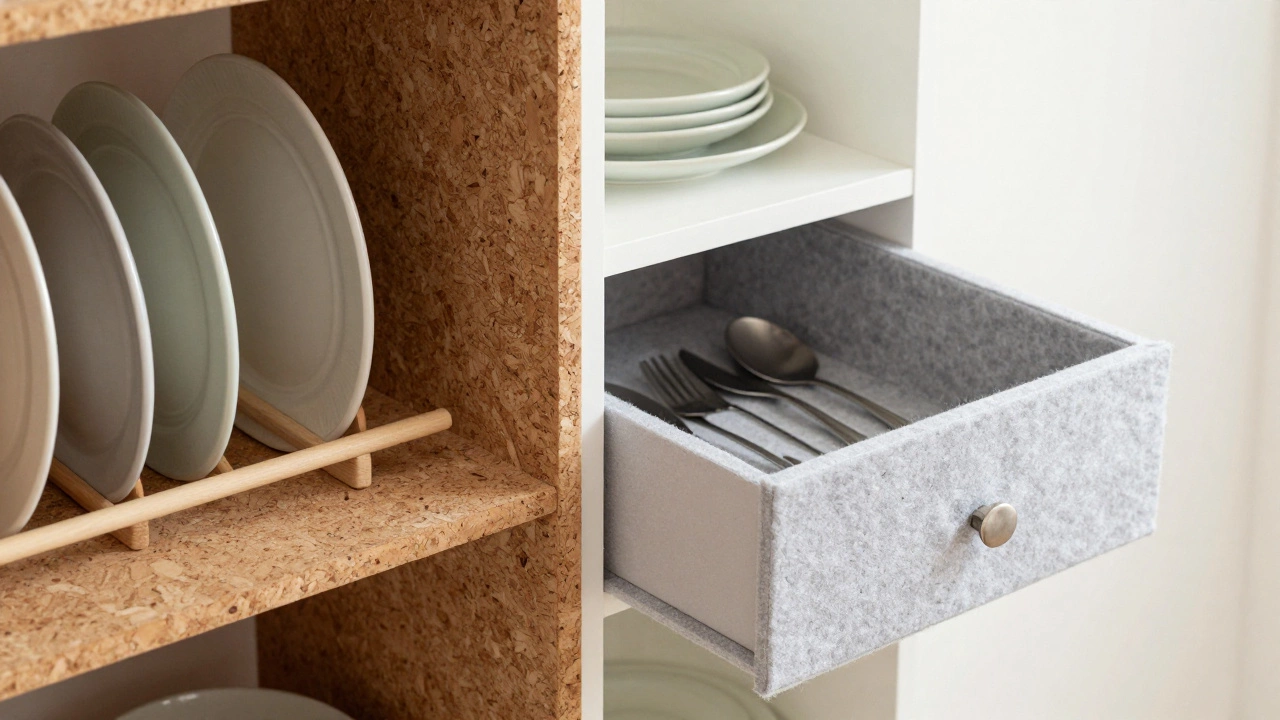
Felt pads are tiny circles of fabric with adhesive backing. Stick them under the feet of vases, lamp bases, or heavy cookware. They prevent scratches and reduce noise when items shift. For larger areas, such as deep drawers holding silverware or office supplies, felt drawer liners provide a soft cushion. Unlike paper, felt does not tear easily and adds a layer of sound dampening, so drawers don’t slam as loudly.
A pro tip: Look for wool-felt blends rather than synthetic polyester. Wool is naturally moisture-wicking and resistant to odors, which is crucial for shoe storage or bathroom cabinets. Synthetic felt can trap smells and degrade faster in humid environments.
For Heavy-Duty Storage: Rubberized Floor Mats
Are you organizing a garage, basement, or utility closet? Kitchen-grade solutions won’t survive the weight of tools, paint cans, or car parts. Here, rubberized floor mats designed for workshops or gyms are the way to go.
These mats are thick, dense, and incredibly durable. They absorb shock, protect concrete floors, and resist chemicals like oil or gasoline. You can buy them by the roll and cut them to fit your shelves or floor spaces. They often have a textured surface that provides traction, keeping heavy boxes from sliding during earthquakes or sudden movements.
While they aren’t pretty enough for a dining room hutch, they are unbeatable for functional storage. I use interlocking rubber tiles in my garage workbench area. They catch sawdust and oil drips, and I can sweep them clean without worrying about absorbing fluids into the material.
Eco-Conscious Choice: Cork Sheets
If sustainability is a priority, cork is a fantastic renewable resource. Harvested from the bark of cork oak trees without cutting down the tree, cork is biodegradable, lightweight, and naturally antimicrobial.
Cork sheets provide a warm, natural aesthetic that fits well in rustic or Scandinavian-style homes. They offer moderate protection against scratches and minor spills. However, cork is porous, so it is not suitable for areas prone to heavy liquid exposure, like under sinks. Seal the edges with a water-based polyurethane if you plan to use it in damp areas.
Cork is also great for pinning notes or recipes in kitchen pantries, adding functionality beyond just lining. It creates a soft surface that protects delicate ceramic plates from chipping when stacked.
Comparison Table: Choosing the Right Alternative
| Material | Best For | Durability | Removability | Cost |
|---|---|---|---|---|
| Silicone Mats | Kitchen cabinets, oven racks | High | Easy (No glue) | Moderate |
| Acrylic/Glass | Open shelving, display cases | Very High | Easy (Lift out) | High |
| Felt Pads/Liners | Drawers, delicate decor | Medium | Easy | Low |
| Rubber Mats | Garage, workshop, heavy tools | Extreme | Easy | Moderate |
| Cork Sheets | Pantries, eco-friendly homes | Low-Medium | Easy (if unglued) | Low |
How to Install Without Damage
Regardless of the material you choose, proper installation ensures longevity and prevents damage to your existing furniture. Here is a simple process:
- Clean Thoroughly: Remove all items from the shelf. Wash the surface with mild soap and water to remove grease and dust. Let it dry completely. Any dirt trapped underneath will create bumps and cause the liner to shift.
- Measure Twice: Measure the width and depth of the shelf. Subtract half an inch from each dimension to ensure the liner sits flush without curling over the edges.
- Cut Carefully: Use sharp scissors for silicone or felt. For acrylic or glass, use a utility knife with a straight edge guide, or have it professionally cut. Rough edges can scratch items placed on top.
- Test Fit: Place the liner on the shelf before finalizing. Check for stability. If it slides, add small dots of double-sided tape to the corners (not the center) to hold it in place temporarily.
- Replace Items: Put your belongings back. Ensure heavy items are distributed evenly to prevent sagging in softer materials like cork or felt.
Common Mistakes to Avoid
One big error people make is using adhesive liners in rental properties. Landlords often charge for damaged cabinetry. Always opt for non-adhesive solutions if you rent. Another mistake is ignoring ventilation. In closets, air circulation helps prevent musty smells. Solid plastic liners can trap humidity. Choose breathable fabrics like cotton or wool blends for wardrobe storage instead.
Also, avoid mixing materials. Don’t put a silicone mat on top of a waxed wooden shelf without testing first. Some waxes can react with silicone, causing discoloration. Always test a small corner area first.
Can I use parchment paper as a shelf liner?
Parchment paper is not recommended for long-term shelf lining. While it is heat-resistant and non-stick, it tears easily and offers no structural protection. It is best used for temporary projects or baking, not for protecting cabinets from daily wear and tear.
Are silicone shelf liners safe for food contact?
Yes, most high-quality silicone mats are food-safe and BPA-free. They are commonly used in kitchens for baking sheets and countertops. Always check the product label for FDA approval or food-grade certification to ensure safety.
How do I clean silicone shelf mats?
Silicone mats are dishwasher safe. For hand washing, use warm soapy water and a soft sponge. Avoid abrasive cleaners or steel wool, which can scratch the surface. Rinse thoroughly and air dry before replacing them on the shelf.
What is the best liner for under-sink cabinets?
For under-sink areas, waterproof and chemical-resistant materials are essential. Rubberized mats or sealed acrylic sheets work best because they withstand cleaning products and potential leaks. Avoid porous materials like cork or felt, which can absorb moisture and develop mold.
Do shelf liners help with organization?
Yes, many liners feature grid patterns or compartments that help visualize space and organize small items. Silicone mats with raised edges can contain spills, while felt liners reduce clutter noise. Proper lining makes it easier to see what you have and keep everything in its designated spot.