
Rug Longevity Estimator
Your Rug's Expected Longevity
Key Recommendations
If you’ve ever bought a rug that looked great for six months and then started looking worn out by year one, you’re not alone. Rugs take a beating-kids running, pets scratching, shoes dragging in dirt. The truth is, not all rugs are built to last. Some unravel at the edges. Others flatten into a lifeless pile. And a few actually get better with time. So what type of rugs last the longest? It’s not about price tags or fancy designs. It’s about the material, the weave, and how it’s made.
Wool Rugs Are the Gold Standard for Longevity
Wool is the most durable natural fiber for rugs. It’s naturally resilient, meaning it bounces back after being crushed underfoot. A high-quality wool rug can last 20 to 30 years-or even longer-with proper care. That’s not marketing. That’s what rug makers in Nepal, India, and Turkey have known for centuries. Wool fibers have a natural crimp that helps them spring back after compression. Even in high-traffic areas like hallways and living rooms, wool holds up better than synthetic alternatives.
Look for wool rugs with a tight, hand-knotted weave. These are made by artisans tying individual knots by hand, often over hundreds of hours. A rug with 100+ knots per square inch is going to outlast a machine-made rug with 50 knots. Brands like Karastan and Safavieh use premium wool blends that resist fading and shedding. Wool also naturally repels dirt and stains. Spill coffee? Blot it, and the stain won’t sink in like it would on nylon.
Hand-Knotted vs. Machine-Made: Why Construction Matters
Two rugs can look identical on the shelf, but one might fall apart in two years while the other lasts decades. The difference? Construction.
Hand-knotted rugs are made by tying each tuft of yarn individually to the foundation. This creates a dense, sturdy base that can handle heavy foot traffic. These rugs are often made with wool or silk and are common in Persian, Turkish, and Tibetan designs. They’re expensive, yes-but they’re heirlooms. You can pass them down.
Machine-made rugs, on the other hand, are glued or stitched together. They’re faster to produce and cheaper. But the glue can break down over time, especially in humid climates. The backing can peel, and the fibers can pull loose. If you see a rug labeled “power-loomed,” it’s machine-made. It’s fine for low-traffic areas, but don’t expect it to survive a busy family room for more than five years.
Other Long-Lasting Rug Materials to Consider
Wool isn’t the only option. Some synthetic fibers hold up surprisingly well.
- Polypropylene (Olefin): This is the top synthetic choice for outdoor rugs and indoor spaces with kids or pets. It’s stain-resistant, doesn’t absorb moisture, and won’t fade in sunlight. It won’t feel as soft as wool, but it’s nearly indestructible. Used in commercial spaces like hotels and hospitals, it’s built for abuse.
- Nylon: Often found in high-end carpeting, nylon is tough, resilient, and holds color well. It’s more expensive than polypropylene but softer and more comfortable underfoot. Look for nylon rugs with a twist pile-they resist matting better than flat-weave styles.
- Jute and Sisal: These natural fibers are strong and eco-friendly. They’re perfect for dry areas like bedrooms or dining rooms. But avoid them in kitchens or bathrooms. Moisture makes them brittle. They don’t bounce back like wool, so they flatten faster under heavy furniture.
What to Avoid: Rugs That Don’t Last
Some rugs look stylish but are ticking time bombs.
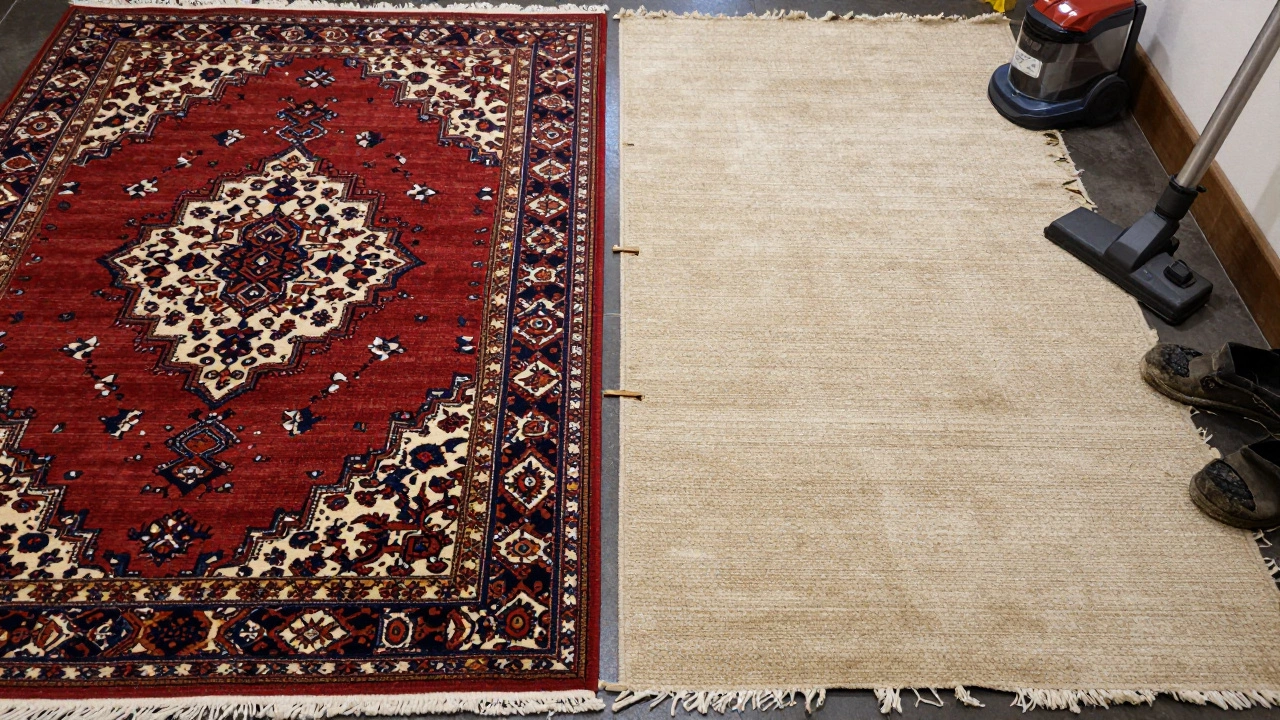
- Acrylic rugs: Often sold as “affordable wool,” acrylic feels cheap and pills easily. It doesn’t hold up to vacuuming or foot traffic. You’ll see fuzz balls forming within months.
- Low-pile polyester rugs: These flatten quickly and look dirty even when clean. They’re often glued to a backing that peels off after a year or two.
- Thin, lightweight area rugs: If you can pick it up with one hand and it flutters like a bedsheet, it’s not built to last. Durable rugs have weight and density.
Also avoid rugs with synthetic backings that aren’t latex-free. Latex can break down, causing the rug to curl or slip. Look for cotton or jute backing instead.
How to Make Your Rug Last Longer
Even the best rug won’t survive neglect. Here’s how to extend its life:
- Use a rug pad. It prevents slipping, reduces wear on the backing, and absorbs impact from footsteps. Felt or rubber pads are best.
- Vacuum weekly. Use a vacuum without a beater bar on delicate rugs like jute or silk. For wool and nylon, a standard vacuum is fine.
- Rotate the rug every six months. This evens out wear patterns, especially under furniture or in high-traffic paths.
- Spot clean spills immediately. Blot, don’t rub. Use mild soap and water. Avoid harsh chemicals-they strip natural oils from wool.
- Get professional cleaning every 2-3 years. Steam cleaning can damage some fibers. Ask for dry cleaning or low-moisture methods.
Real-World Durability: What Works in a UK Home
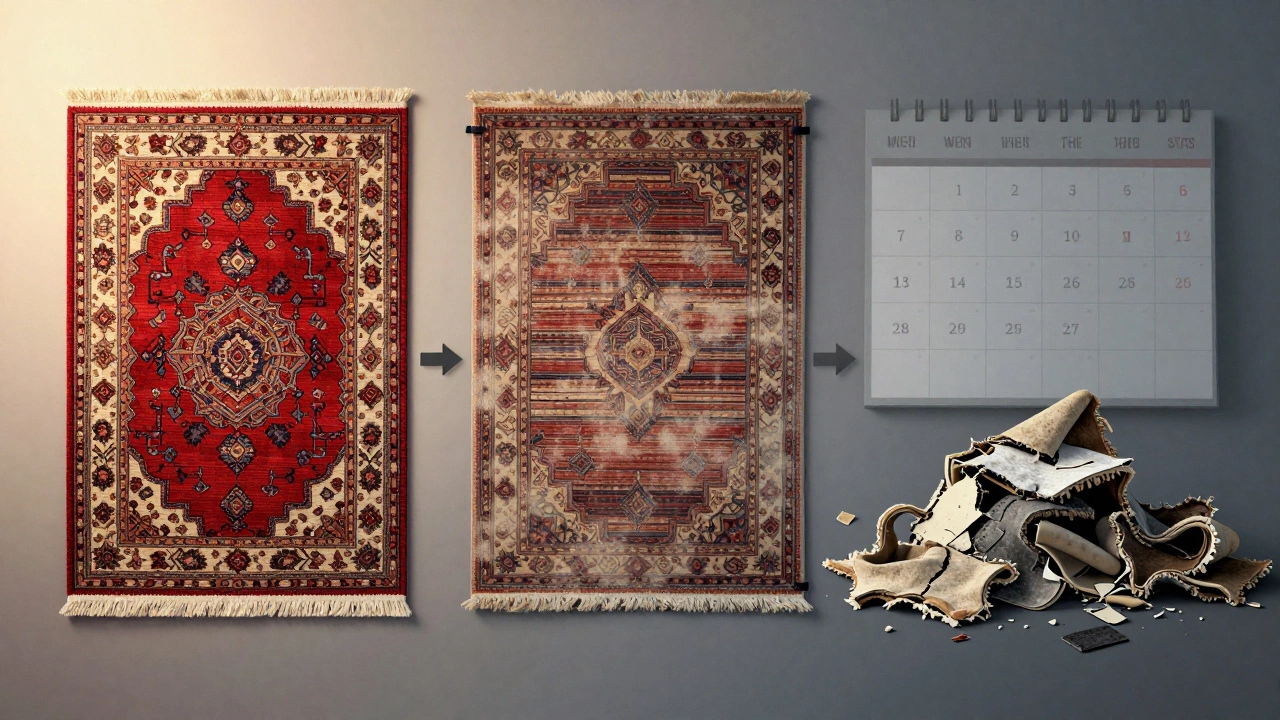
Living in Bristol, I’ve seen what works in damp, busy households. Wool rugs handle our rainy boots and muddy dogs better than anything else. Polypropylene rugs in the kitchen and mudroom? Perfect. They’re easy to hose down if needed.
A friend of mine has a 22-year-old Persian wool rug in her hallway. It’s faded slightly from sunlight, but the weave is still tight. No fraying, no flattening. She cleaned it once, in 2018, and it still looks like it belongs in a museum. Meanwhile, her neighbor bought a $150 nylon rug from a big-box store. It’s already thin in the center after three years.
Durability isn’t about how much you spend upfront. It’s about how long it lasts. A $500 wool rug that lasts 25 years costs less per year than a $100 rug that needs replacing every 3 years.
Bottom Line: Choose Wisely
The longest-lasting rugs are made from wool, hand-knotted, and properly cared for. If budget is tight, go for a high-quality polypropylene rug in high-wear zones. Avoid acrylic, thin synthetics, and cheap machine-made rugs. Your floor will thank you-and so will your wallet in the long run.
Are wool rugs worth the higher price?
Yes, if you want a rug that lasts decades. Wool naturally resists stains, static, and wear. It’s fire-resistant and biodegradable. While a wool rug might cost 3-5 times more than a synthetic one, it lasts 5-10 times longer. Over time, the cost per year is far lower.
Can I use a rug in a bathroom or kitchen?
Only if it’s made of polypropylene or another moisture-resistant synthetic. Avoid wool, jute, or cotton in wet areas-they absorb water, mildew, and warp. Look for rugs labeled “indoor/outdoor” or “bath-safe.” Always use a non-slip pad underneath.
How do I tell if a rug is hand-knotted?
Flip it over. Hand-knotted rugs have a fuzzy, uneven back with visible knots. Machine-made rugs have a smooth, uniform backing, often with glued-on fabric. The pattern on the back of a hand-knotted rug will mirror the front. Also, hand-knotted rugs are heavier and more expensive-usually $500+ for a 5x8.
Do rug pads really make a difference?
Absolutely. A good rug pad prevents the rug from sliding and reduces friction between the rug and the floor. This cuts down on wear and tear by up to 70%. It also adds cushioning, making the rug more comfortable to walk on. Skip the pad, and your rug will wear out faster-especially on hardwood or tile.
Is a thicker rug always more durable?
Not necessarily. Thickness doesn’t equal durability. A thick, loosely woven rug can flatten quickly. What matters is density-how many knots or fibers are packed into each square inch. A thin, tightly woven wool rug can outlast a thick, low-density synthetic one. Look for high knot counts or dense pile, not just height.
If you’re shopping for a rug that will still look good in 10 years, focus on material and construction-not just color or pattern. Wool is the benchmark. Polypropylene is the practical backup. Everything else is temporary.