
Storage Unit Price Estimator
Save up to 30% on storage units by renting during off-peak seasons. Based on industry data showing January/February rates 23% lower than June.
Your Estimated Savings
Selected Unit:
Move Date:
Climate Control:
Peak Season Rate:
Off-Peak Rate:
Monthly Savings:
Total Annual Savings:
If you’re thinking about renting a storage unit, you’re probably hoping to save money. And you’re right to care about the price - storage isn’t just a monthly expense, it’s a long-term commitment. But here’s the thing: not all months are created equal when it comes to storage unit pricing. The cost can swing by 20% or more depending on when you sign up. So when are storage units cheapest? The answer isn’t random. It’s tied to seasons, moving trends, and how storage companies fill their spaces.
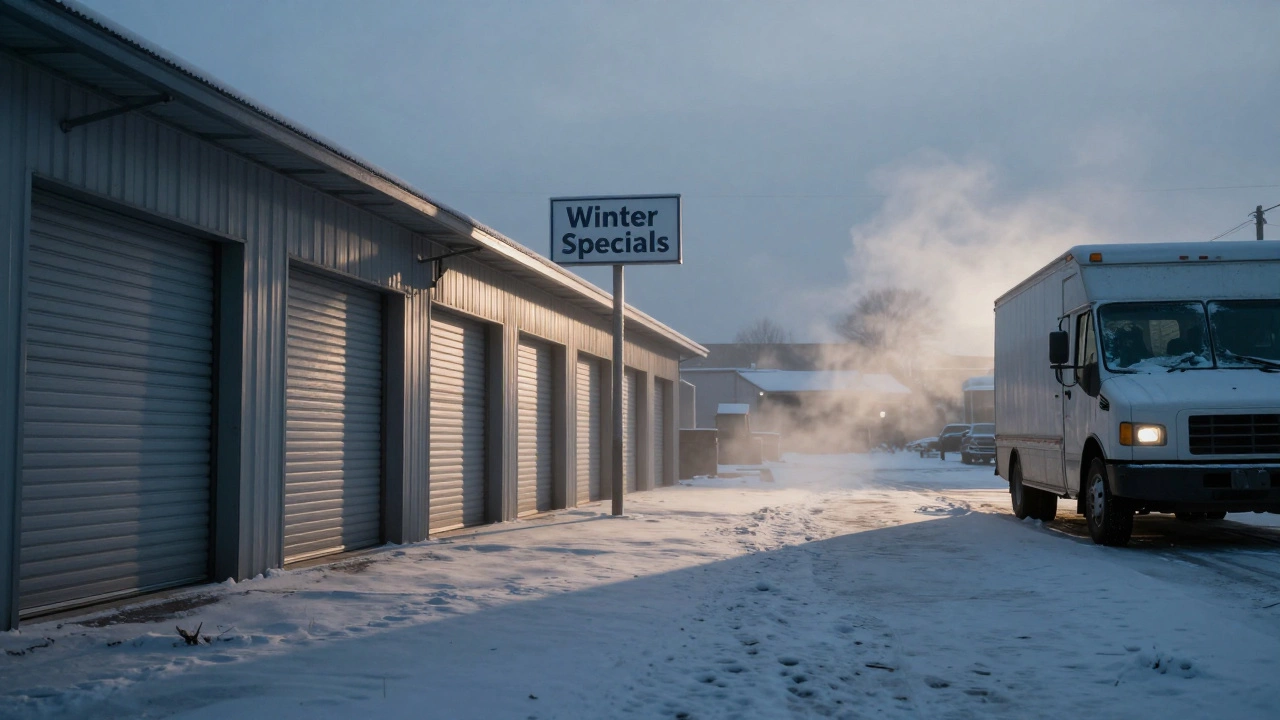
Winter is the cheapest time to rent a storage unit
January and February are the quietest months for storage rentals. Why? Because most people move in spring and summer. After the holidays, the rush to downsize, relocate, or declutter dies down. That means storage facilities have empty units and fewer customers. To fill those spaces, they drop prices. You’ll often see deals like 50% off the first month, free truck rental, or even two months free if you sign a 12-month lease.
A 2024 survey by SelfStorage.com found that storage rates in January were, on average, 23% lower than in June. In cities like Chicago, Atlanta, and Phoenix, discounts hit 30% or more during this window. That’s not a small savings - it could mean $100 to $200 off your first few months.
Why spring and summer cost more
March through August is peak moving season. Families move for school, jobs, or downsizing after tax season. College students pack up dorms. People renovate homes and need temporary space. Demand spikes, and prices follow. Facilities know people are in a hurry and less likely to shop around. That’s when you’ll see the highest rates - sometimes even $50 more per month than in winter.
Also, many facilities run “move-in specials” in spring, but those are usually bait-and-switch tactics. The advertised low rate often applies only to the first month, then jumps back up. If you’re moving in May, don’t assume you’re getting a deal - compare the long-term cost, not just the first-month offer.
Early fall can be a hidden sweet spot
September and October are quieter than summer but busier than winter. Still, you can find good deals. Why? Because the big summer rush is over, and the holiday season hasn’t kicked in yet. Some facilities start offering early-bird discounts to lock in tenants before December.
Plus, a lot of people who moved in spring realize they don’t need all their storage space anymore. They cancel, leaving units available. That’s when managers get creative with pricing to fill them. Call around. Ask if they have any openings or “last-minute” discounts. You’d be surprised how often they’ll match a competitor’s rate just to avoid a vacancy.
How to spot real deals - not fake discounts
Not every “sale” is a real savings. Here’s how to tell the difference:
- Watch for the fine print: “50% off first month” sounds great - until you see the regular rate is $150. That’s still $75 a month after the discount. Compare that to a $90 rate without a promo in January.
- Check the lease length: Some deals require a 12-month lease. If you’re not sure you’ll need storage that long, you could end up paying more in penalties if you cancel early.
- Ask about hidden fees: Administrative fees, insurance add-ons, or gate access charges can add $10-$20 to your monthly bill. Make sure you’re comparing total cost, not just the base rate.
- Look at the unit size: A $50 unit might sound cheap, but if it’s only 5x5 and you need a 10x10, you’re not saving anything.
The best deals come from transparency. Ask for a written quote that includes all fees. If they won’t give it to you over the phone, walk away. Reputable companies don’t hide costs.
Timing your move can save you hundreds
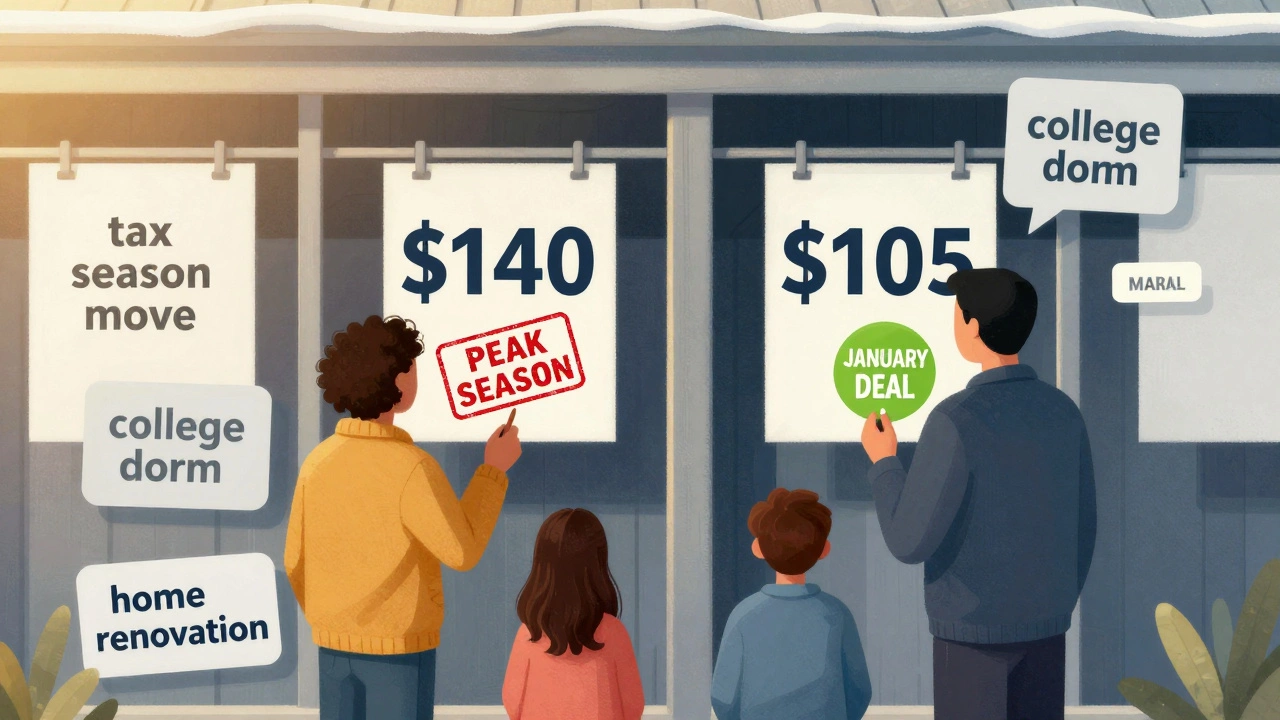
Let’s say you need a 10x10 unit. The average rate in June is $140. In January, it’s $105. That’s $35 a month saved. Over a year, that’s $420. Even if you only need storage for six months, you’re still saving $210 - enough to cover a new mattress, a deep cleaning service, or a weekend trip.
Plan ahead. If you know you’ll need storage in April, don’t wait until March to start looking. Begin in January. Call 3-5 facilities. Ask for their lowest rate for a 10-month lease. Some will give you a better deal just because you’re planning ahead. Others might let you lock in a January rate even if you move in later.
Other ways to cut storage costs
Even if you can’t rent in winter, you can still save:
- Go smaller: Most people overestimate how much space they need. Measure your stuff first. A 5x10 unit holds the contents of a two-bedroom apartment - you might not need a 10x15.
- Use climate control only if you need it: If you’re storing books, clothes, or electronics in a dry climate, skip climate control. It adds $20-$40 a month.
- Pay upfront: Many facilities offer 5-10% off if you pay for 6 or 12 months in advance.
- Ask for a referral discount: If a friend uses the same facility, ask if they can refer you. Some places give $25-$50 off for both parties.
What to do if you’re stuck renting in peak season
Life doesn’t always wait for the best time to move. If you need storage in July, don’t panic. Here’s how to still get a fair deal:
- Call multiple locations: Chain stores (like Public Storage or U-Haul) tend to have fixed pricing. Independent facilities are more flexible. They’ll negotiate to compete.
- Ask for a price match: Say you found a similar unit for $110 nearby. Can they match it? Most will, especially if they’re not fully booked.
- Look for units on upper floors: Units on the ground floor or with drive-up access cost more. Second or third-floor units without elevators are cheaper - and just as secure if the facility is well-managed.
- Check for corporate or military discounts: Many facilities offer 5-15% off for teachers, veterans, or first responders. Don’t assume you don’t qualify - ask.
What to avoid
Don’t fall for these traps:
- Signing a month-to-month lease at peak price: You’re paying more than you need to. Even if you’re unsure how long you’ll need storage, try for a 6-month lease. It’s often cheaper than month-to-month.
- Choosing the first facility you visit: It’s easy to rush when you’re stressed about moving. But one call can save you $50 a month. Take 20 minutes to compare.
- Ignoring location: A $70 unit 10 miles away might cost you more in gas and time than a $90 unit closer to home. Factor in convenience.
Real-world example: How one family saved $500
In January 2025, the Carter family moved out of their three-bedroom house to downsize. They didn’t need to store everything, but they had a lot of seasonal items - winter coats, holiday decorations, and their kids’ outgrown toys. They called five facilities. One offered a 10x10 unit for $95 a month with two months free. They signed a 12-month lease. Their regular rate would’ve been $135. They saved $480 in the first year. Plus, they got a free moving truck for the day.
They didn’t get lucky. They just waited.
Are storage units cheaper in January or February?
Both January and February are the cheapest months to rent storage units. January usually has the deepest discounts because it’s the slowest month overall. February is almost as good, especially if you’re looking for last-minute deals after New Year’s resolutions lead to decluttering. Rates typically start rising in March.
Do storage units ever go on sale in summer?
Yes, but those sales are usually marketing tricks. Summer is peak season, so facilities raise prices. The “deals” you see - like 50% off the first month - are designed to get you in the door, not save you money long-term. The base rate is often inflated to make the discount look bigger. Always compare the monthly rate after the promo ends.
Can I negotiate storage unit prices?
Absolutely. Especially at smaller, independent facilities, managers have flexibility to adjust rates. Call ahead, mention you’re comparing prices, and ask if they can beat a competitor’s quote. Even a $10 discount per month adds up over time. Don’t be shy - they’d rather have you at a lower rate than leave the unit empty.
Is it cheaper to rent a storage unit online or in person?
Online bookings sometimes offer exclusive discounts - especially from big chains like Extra Space Storage or Life Storage. But you’ll often get a better deal by calling directly. Online deals are usually automated and can’t be adjusted. A live person can offer a custom rate, free move-in truck, or waived administrative fee. Always call before you click.
Should I rent a climate-controlled unit?
Only if you’re storing sensitive items like wood furniture, leather, electronics, important documents, or musical instruments - especially in areas with hot summers or freezing winters. For clothes, boxes of books, or seasonal decor, a standard unit is fine. Climate control adds $20-$40 a month. Skip it unless you really need it.
Next steps: How to lock in the best rate
Start by making a list of what you need to store. Measure your items. Decide if you need climate control. Then, in early January, call three storage facilities near you. Ask for their lowest rate on a 10x10 unit with a 12-month lease. Write down the total monthly cost - including all fees. Compare them. Pick the one that gives you the best value, not just the lowest headline price. Lock it in. Then forget about it until next January, when you can do it all over again.