
Mirror Distortion Simulator
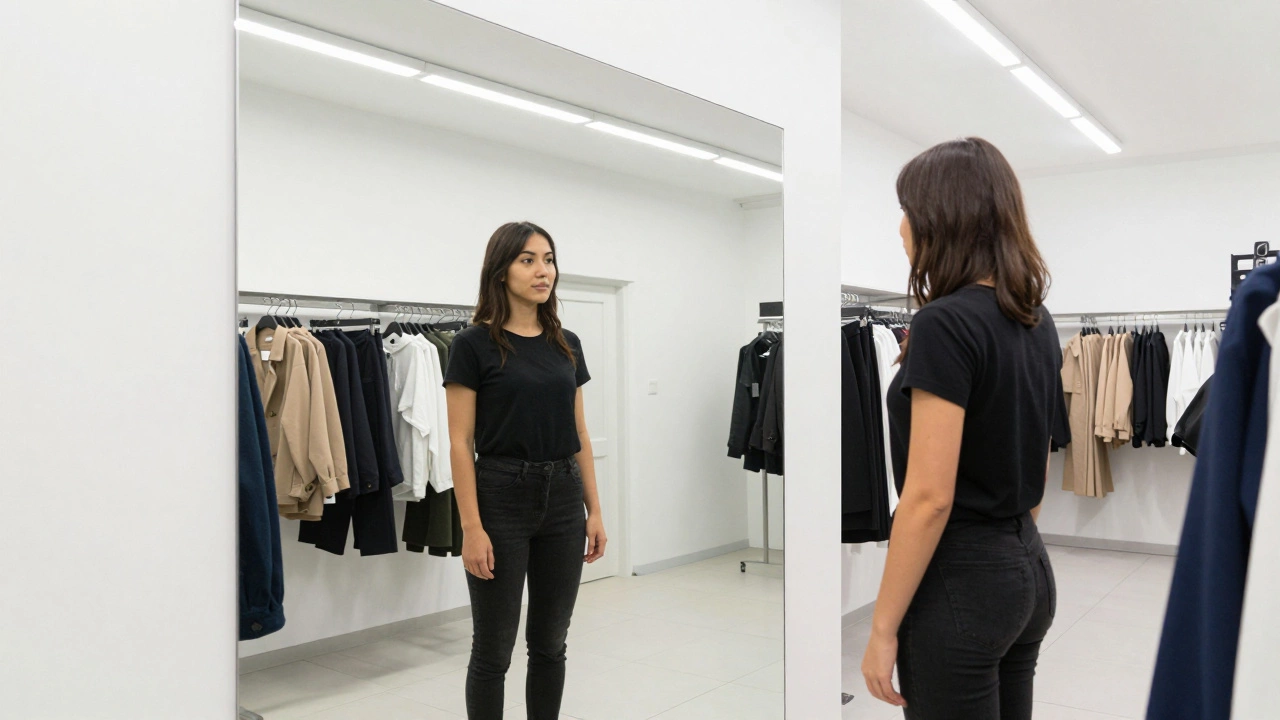
You walk into a fitting room, see yourself in the mirror, and think, "I look great." Then you head to the bathroom, catch a glimpse of yourself in the mirror there, and suddenly you look exhausted, pale, or strangely skewed. It’s enough to make anyone question their own eyes. Why does the same face look like two different people depending on which piece of glass you're standing in front of?
The truth is, you aren't seeing a perfect duplicate of yourself. You're seeing a version of yourself filtered through physics, chemistry, and the way your brain interprets light. Between the quality of the glass and the way light hits your skin, your reflection is often a lie.
Quick Takeaways: Why Your Reflection Changes
- Glass Quality: Cheaper mirrors often warp or bend, distorting your shape.
- Lighting: Overhead lights create harsh shadows that emphasize wrinkles or acne.
- Silvering: The reflective coating can degrade or be applied unevenly.
- Psychology: Your mood and the environment change how you perceive your features.
The Physics of the Glass
Not all mirrors are created equal. When we talk about a mirror, we're actually talking about a piece of glass with a reflective coating on the back. Mirror Distortion is a phenomenon where the physical flatness of a mirror is compromised, leading to a reflected image that is stretched, compressed, or curved.
If a mirror is slightly bowed-even by a fraction of a millimeter-it acts like a lens. A mirror that curves slightly inward (concave) can make you look thinner or taller, which is why some clothing stores are accused of using "skinny mirrors." On the flip side, a slight outward curve (convex) can make you look wider. Most cheap mirrors found in big-box stores use thinner glass that bends more easily under its own weight or during installation, meaning your reflection is literally warping as you move.
Then there's the thickness. High-end mirrors use thicker, float-glass processes to ensure a perfectly flat surface. Thinner glass is more prone to "waves." If you've ever seen a mirror that makes your head look slightly oval or your shoulders look tilted, you're seeing the result of poor manufacturing tolerances in the glass slab itself.
The Magic (and Misery) of Lighting
Lighting is usually the biggest culprit when you feel you look "worse." The way light interacts with your skin is governed by Specular Reflection, which is the mirror-like reflection of light from a surface, where a single incoming ray is reflected in a single outgoing direction.
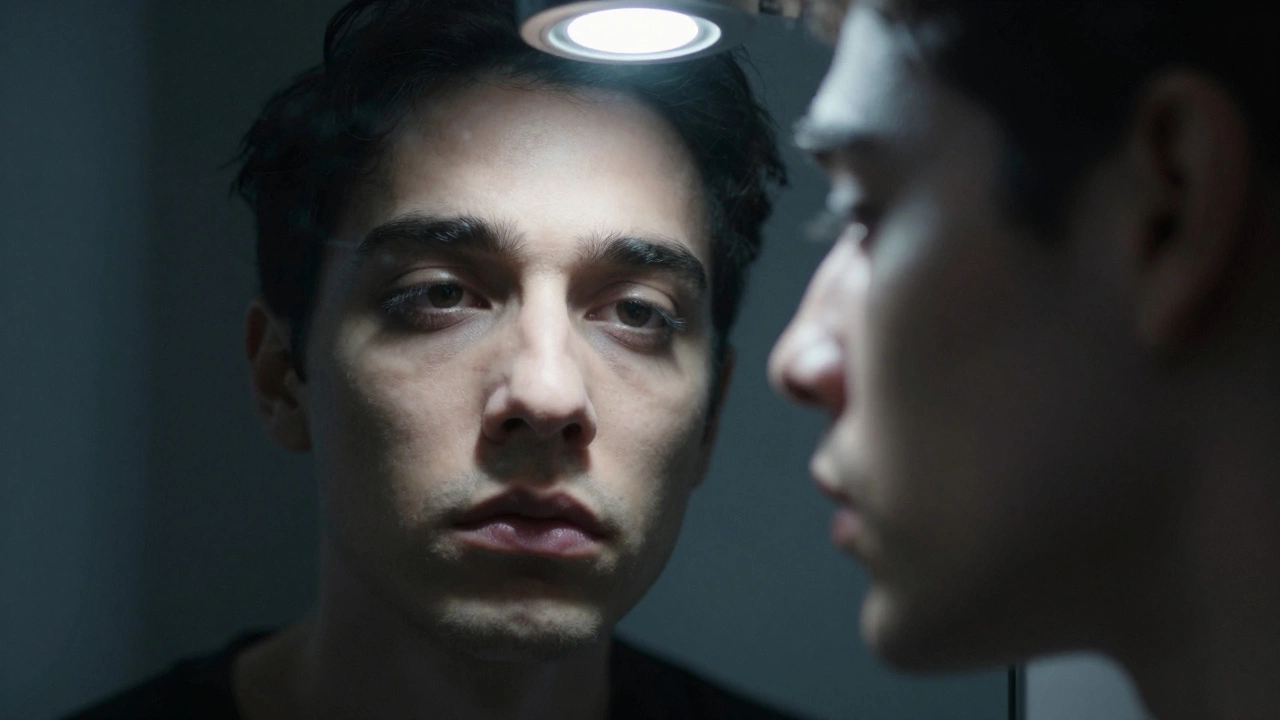
Consider the dreaded bathroom mirror. Most bathrooms use overhead spotlights or recessed cans. This creates "top-down" lighting, which casts deep shadows into the sockets of your eyes, under your nose, and beneath your chin. These shadows mimic the appearance of aging or fatigue. This is why you might look ghostly or tired in the morning, but look vibrant in a room with soft, diffused natural light from a window.
Warm light (yellow tones) tends to smooth out skin imperfections and make you look healthier. Cool light (blue tones), common in many commercial mirrors and offices, highlights every pore, red spot, and fine line. If you feel you look "worse" in a specific mirror, check the bulbs. You're likely seeing the high-contrast effect of cold, overhead lighting hitting your skin at a steep angle.
| Factor | Effect on Image | Common Location |
|---|---|---|
| Overhead Cool Light | Deep shadows, emphasizes flaws | Public restrooms, Gyms |
| Diffused Natural Light | Softens features, natural skin tone | Bedrooms, Near windows |
| Slightly Concave Glass | Taller, slimmer appearance | Fitting rooms |
| Thin/Warped Glass | Distorted proportions, "wavy" look | Cheap home decor mirrors |
Silvering and the Chemistry of Reflection
The part of the mirror that actually does the reflecting is the metallic coating on the back, known as the silvering. In the past, this was actual silver. Today, most mirrors use Aluminum Coating, which is a thin layer of aluminum sprayed onto the back of the glass to create a reflective surface.
If the aluminum isn't applied perfectly evenly, or if the protective paint over the aluminum begins to peel (oxidation), you get "desilvered" spots. Even if you can't see a giant black hole in the mirror, microscopic irregularities in the coating can affect the color cast of the reflection. Some mirrors have a slight green tint because of the iron content in the glass. This can make your skin look sallow or sickly, even if the lighting is perfect. This is why "low-iron glass" mirrors are more expensive-they remove those impurities to give you a color-accurate reflection.
The Psychology of Perception
It's not all physics. Your brain plays a massive role in how you feel about what you see. This is tied to Cognitive Bias, which is a systematic error in thinking that affects the decisions and judgments that people make.
When you look in a mirror you trust (like the one in your own bedroom), you are in a "safe" psychological state. You know the lighting and the angle. When you move to an unfamiliar mirror, your brain is more critical. You start searching for flaws. Because you aren't used to the specific distortion of that new mirror, your brain interprets the slight difference as "I look worse" rather than "This glass is slightly curved."
There is also the factor of the "Mere-Exposure Effect." You are used to your mirrored image, but the mirrored image is a flip of your real face. Because most people's faces aren't perfectly symmetrical, seeing yourself in a different mirror with a slightly different angle can trigger a sense of "uncanniness." Your brain recognizes you're not quite the version of yourself it expects, and it often labels that discrepancy as unattractive.
How to Find the "True" You
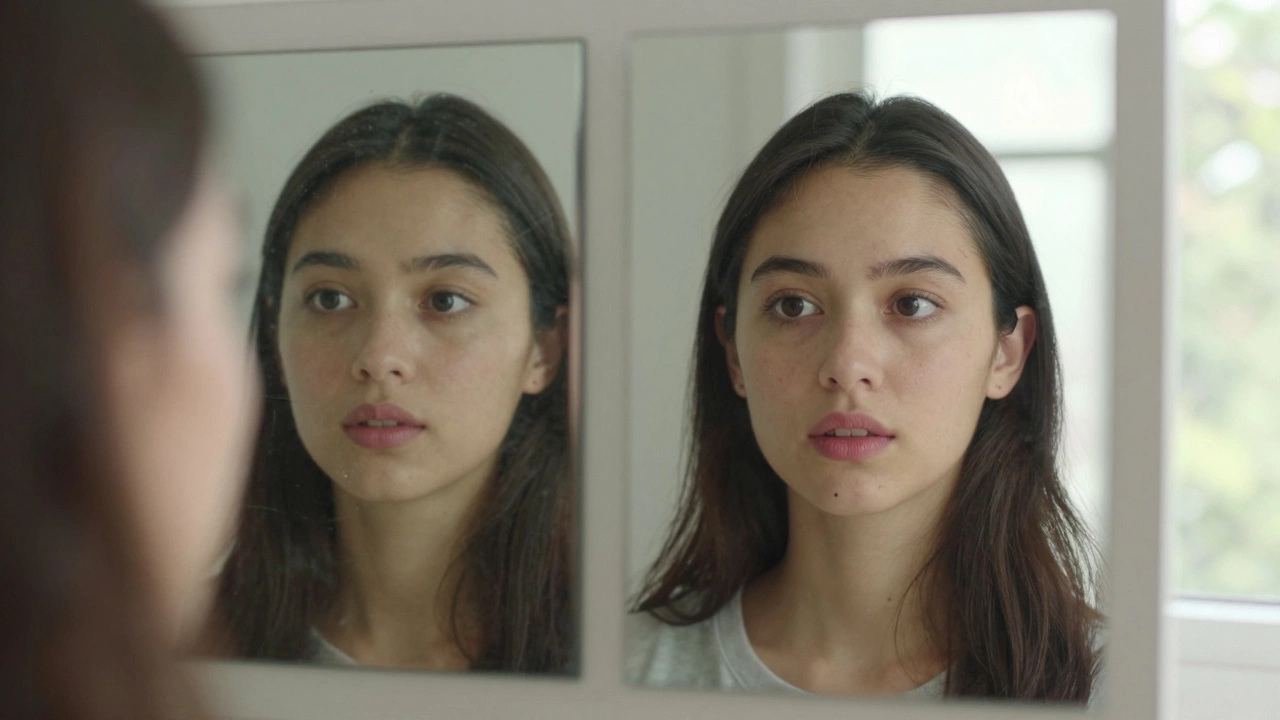
If you're trying to get an accurate idea of how you actually look to other people, stop relying on a single mirror. The best way to counteract mirror distortion is to use multiple points of reference.
First, move toward a window. Natural, indirect sunlight is the gold standard for color accuracy. Second, step back. When you stand two inches from a mirror, any slight warp in the glass is magnified. Standing five to ten feet away flattens the image and gives a more realistic perspective of your proportions.
Finally, understand that no mirror is a 100% perfect representation. Even the most expensive professional mirrors have a tiny margin of error. If you feel you look "off" in a particular mirror, remember that the mirror is the variable, not your face. You aren't changing; the glass is just lying to you.
Why do I look thinner in some store mirrors?
This is often due to a slight concave curve in the glass. When a mirror curves inward, it compresses the image horizontally and stretches it vertically, which creates a slimming effect. Some retailers intentionally use these mirrors to make clothes look more flattering.
Why does my skin look yellow or green in some mirrors?
Standard glass contains iron oxide, which gives it a naturally greenish tint. In thick mirrors or cheap glass, this tint becomes more noticeable, casting a sickly hue over your skin. High-quality "low-iron" glass minimizes this effect for a more realistic color.
Do selfies show me how I actually look?
Not exactly. Phone cameras use wide-angle lenses which can distort features-especially if the phone is close to your face (making your nose look larger). Also, most front-facing cameras flip the image, which can feel strange because you're used to the mirror version of yourself.
Can lighting actually change my face shape?
While lighting doesn't change your bone structure, it changes the shadows. Harsh overhead lighting creates deep pits under the eyes and cheeks, which can make a round face look more gaunt or an athletic face look tired and sunken.
How can I tell if a mirror is warped?
Move your head slowly from side to side while looking at a straight line in the background (like a door frame or a tile line) reflected in the mirror. If that straight line seems to bend, wiggle, or curve as you move, the glass is warped.
Next Steps for a Better View
If you're tired of the "bathroom mirror shock," try these simple changes to your environment:
- Swap your bulbs: Replace cool white LEDs with "soft white" or "warm" bulbs to reduce harsh shadows.
- Add side lighting: Place lamps on either side of your mirror rather than relying on a single overhead light. This fills in the shadows under your eyes.
- Check your mirror mount: If you have a flexible mirror glued to a wall, it might be warping. Ensure mirrors are mounted to a perfectly flat surface.
- Trust the natural light: When in doubt, the version of you seen in a brightly lit room with a window is almost always the most accurate.