
Bathroom Accessory Planner
Generate a cohesive list of bathroom accessories based on your room's style and size.
Walk into most bathrooms and you’ll find the same tired routine: a plastic bin for towels, a generic soap dispenser that clashes with the tiles, and maybe a sad little plant struggling in the corner. It’s functional, sure, but it feels like an afterthought. Your bathroom is one of the most used rooms in your home, yet it often gets the least amount of design love. That changes today.
Accessorizing isn’t just about making things look pretty-it’s about creating a space that works as hard as it looks good. When you get the details right, your morning shower becomes a spa ritual, and getting ready for the day feels less like a chore and more like a routine you actually enjoy. The key? Balance. You need items that serve a purpose while elevating the aesthetic.
The Foundation: Start With a Cohesive Palette
Before you buy a single towel or candle, look at what you already have. What are your wall colors? What’s the tone of your fixtures-brushed nickel, matte black, chrome? If you start throwing random colors and metals together, your bathroom will feel chaotic rather than curated. Pick two main colors and one accent color. Stick to them.
If your tiles are neutral white or grey, you have freedom. Go for warm woods, soft creams, or bold terracotta accents. If your walls are dark navy or forest green, keep accessories light to create contrast. Think of your bathroom accessories as the jewelry for the room-they should complement, not overpower.
- Neutral Base: White, beige, or grey towels and mats.
- Metal Consistency: Match your towel bars, toilet paper holder, and mirror frame. Mixing metals can work, but only if you’re experienced. For beginners, stick to one finish.
- Accent Color: Introduce this through small items like a bath mat, soap dispenser, or artwork.
Towels: More Than Just Absorbency
Towels are the biggest visual element in any bathroom. Cheap, thin towels make even the most expensive marble counter look cheap. Invest in high-quality cotton towels in varying sizes. You need bath sheets for post-shower drying, hand towels for sinks, and washcloths for face washing or exfoliating.
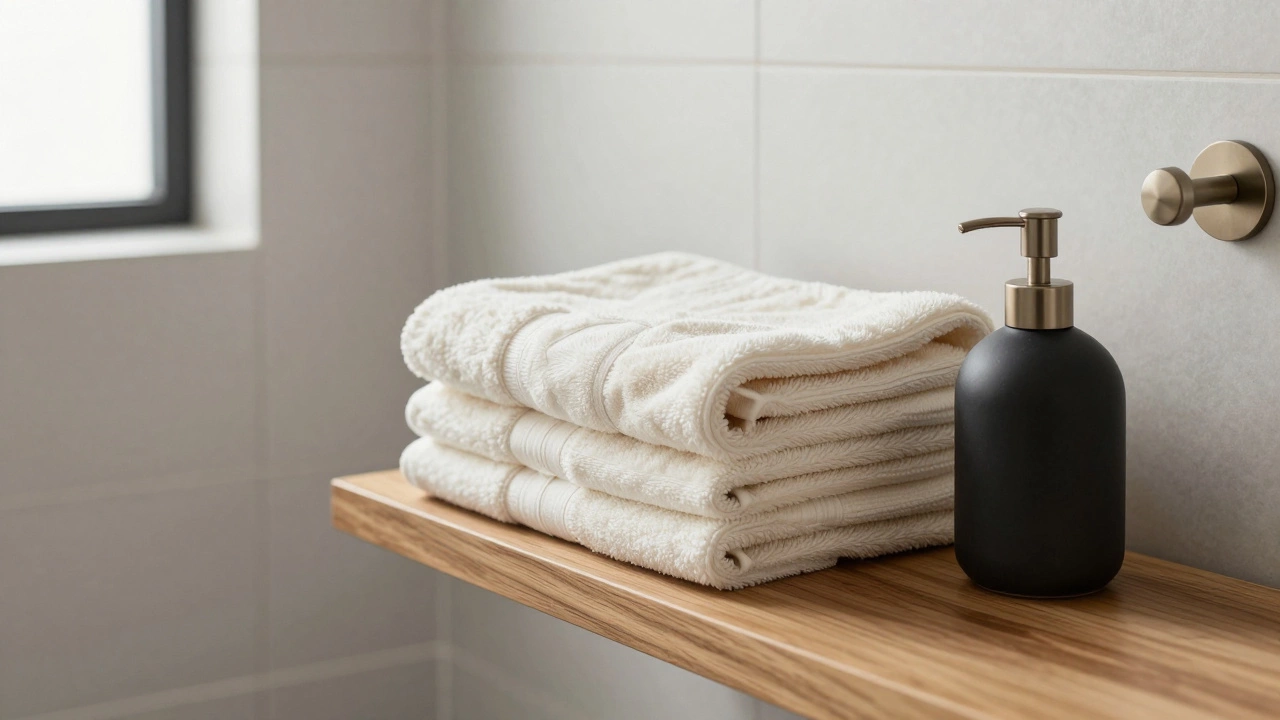
Here’s a pro tip: don’t just hang them on a bar. Fold them neatly on a shelf or stack them in a woven basket. This adds texture and makes the space feel organized and hotel-like. Rotate your towels every few months to keep the look fresh without buying new ones.
| Type | Best Material | Placement Tip |
|---|---|---|
| Bath Sheet | 100% Cotton (GOTS certified) | Hung flat on a heated rail or folded on a lower shelf |
| Hand Towel | Cotton-Linen Blend | Within reach of the sink, hung on a ring or bar |
| Washcloth | Soft Cotton | Stacked in a ceramic jar or open basket near the tub |
Storage That Doesn’t Scream "Clutter"
We all have too many bottles. Shampoo, conditioner, body wash, lotion, toothpaste, floss, skincare serums... it adds up fast. The secret to accessorizing well is hiding the ugly stuff. Use decorative containers to store everyday items.
Swap those colorful plastic shampoo bottles for sleek, uniform glass or ceramic dispensers. Label them simply if needed, but ideally, let the shape speak for itself. For smaller items like cotton swabs, hair ties, and razors, use small trays or divided organizers on your countertop. Keep the surface clear except for one or two statement pieces.
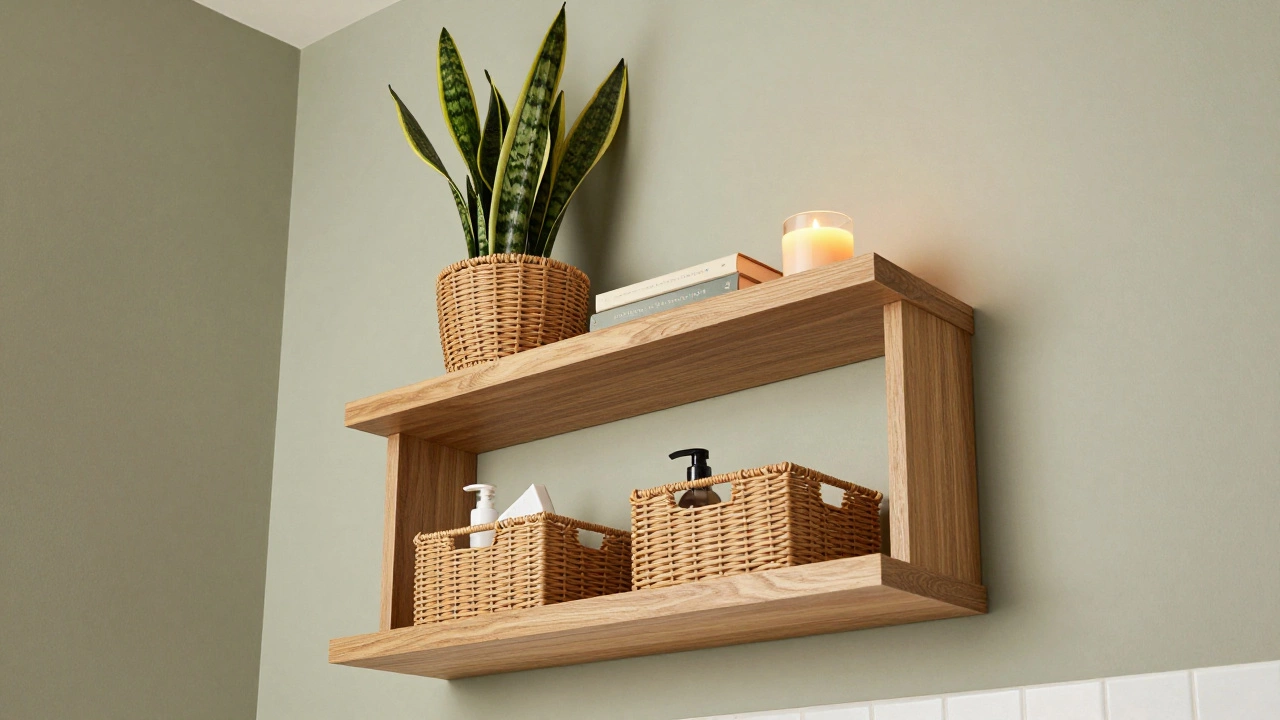
If you lack counter space, look vertical. Floating shelves made of wood or metal add warmth and utility. Place a small potted plant, a stack of magazines, and a candle on the top shelf. Store toiletries in baskets on the lower shelves. This draws the eye up and creates layers of interest.
Lighting: The Mood Maker
Most people ignore lighting when accessorizing, but it’s crucial. Harsh overhead lights are unflattering and cold. Add warmth with table lamps or sconces near the mirror. Look for fixtures with fabric shades or frosted glass to diffuse the light.
Candles are another easy win. They don’t just smell good; they add flickering light that instantly relaxes the atmosphere. Choose unscented candles if you’re using strong-smelling soaps, or go for subtle scents like eucalyptus, lavender, or cedarwood. Avoid overly sweet fragrances-they can clash with cleaning products.
Natural Elements: Bring Life In
A bathroom without life feels sterile. Plants are the easiest way to fix this. But not all plants thrive in humidity. Stick to low-maintenance options like snake plants, pothos, or ferns. They tolerate moisture well and purify the air.
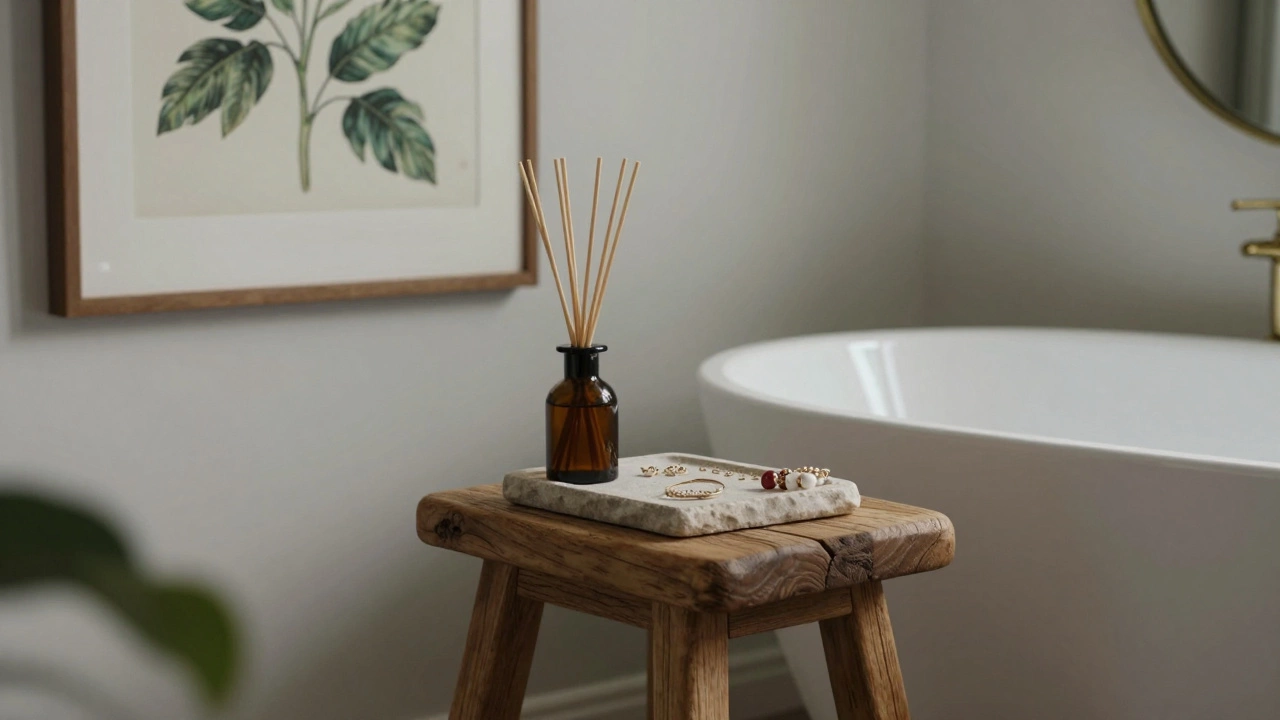
If you don’t have a green thumb, fake plants work too-just make sure they look realistic. Pair them with natural materials like bamboo, rattan, or stone. A wooden stool next to the tub, a stone tray for jewelry, or a wicker basket for laundry adds texture and warmth that counters the hard surfaces of tile and porcelain.
The Finishing Touches: Art & Mirrors
Don’t forget the walls. A large mirror reflects light and makes the room feel bigger. If your current mirror is basic, consider framing it or adding a gallery wall around it. Waterproof art prints or framed botanical illustrations work well here.
Finally, think about scent. A reed diffuser or essential oil burner keeps the air fresh without the chemical sting of aerosol sprays. This is the last detail that tells guests, "This space was thoughtfully designed."
Common Mistakes to Avoid
Accessorizing is easy to mess up if you overdo it. Here are three pitfalls to watch out for:
- Too Many Items: Less is more. Every object should earn its place. If it doesn’t serve a function or bring joy, toss it.
- Ignoring Scale: Tiny accessories in a large bathroom get lost. Large items in a small bathroom overwhelm. Match the size of your decor to the size of the room.
- Forgetting Function: Pretty vases are great, but if they block your toothbrush holder, they’re useless. Prioritize flow and accessibility.
Next Steps for Your Space
Start small. Pick one area-the sink counter, the bathtub edge, or the floor-and style it completely. See how it feels. Then move to the next zone. Don’t rush to buy everything at once. Visit local markets or online shops slowly, letting your style emerge naturally. Your bathroom should reflect who you are, not just what’s trending.
What are the best materials for bathroom accessories?
Look for water-resistant materials like ceramic, glass, stainless steel, and treated wood. Avoid untreated fabrics or paper-based items near showers. Ceramic jars and glass dispensers are durable and easy to clean.
How do I choose the right color scheme?
Start with your existing fixtures and tiles. If they’re neutral, you can experiment with bold colors. If they’re patterned or dark, stick to lighter accessories to balance the space. Always test paint swatches or fabric samples in your actual bathroom lighting.
Can I mix different metal finishes?
Yes, but it requires skill. A safe approach is to pick one dominant metal (e.g., brushed nickel) and use a second metal (e.g., brass) sparingly in small accents like candle holders or picture frames. Avoid mixing three or more finishes unless you’re working with a designer.
What plants survive in a humid bathroom?
Snake plants, pothos, peace lilies, and ferns thrive in humidity. Ensure they get indirect light. If your bathroom has no windows, opt for artificial plants that mimic these species closely.
How often should I update my bathroom decor?
You don’t need to overhaul it yearly. Swap out seasonal items like candles, throws, or artwork every few months. Replace worn-out towels and mats annually. Major updates can happen every 3-5 years as trends shift.