
Rug & Couch Sizing Visualizer
Configuration
There is nothing quite as jarring as walking into a living room where the rug looks like it was thrown down by accident. You’ve spent hours picking the perfect sofa, maybe even the right paint color for the walls, but if the area rug doesn’t sit right with that couch, the whole room feels off. It’s not just about aesthetics; it’s about comfort, flow, and making your space feel intentional.
Coordinating a rug with a couch isn’t about following rigid rules from a design textbook. It’s more like learning how to dance together. Sometimes you lead, sometimes you follow, and sometimes you just need to make sure you’re both on the same floor. Whether you have a sleek modern sectional or a chunky vintage armchair, getting this pairing right can transform a cluttered corner into a cozy sanctuary.
The Golden Rule of Sizing
If there is one thing every designer agrees on, it’s this: most people buy rugs that are too small. We all want to save money, and a smaller rug is cheaper. But a tiny rug in a large room makes the furniture look like it’s floating in a sea of bare floor. It shrinks the room instead of defining it.
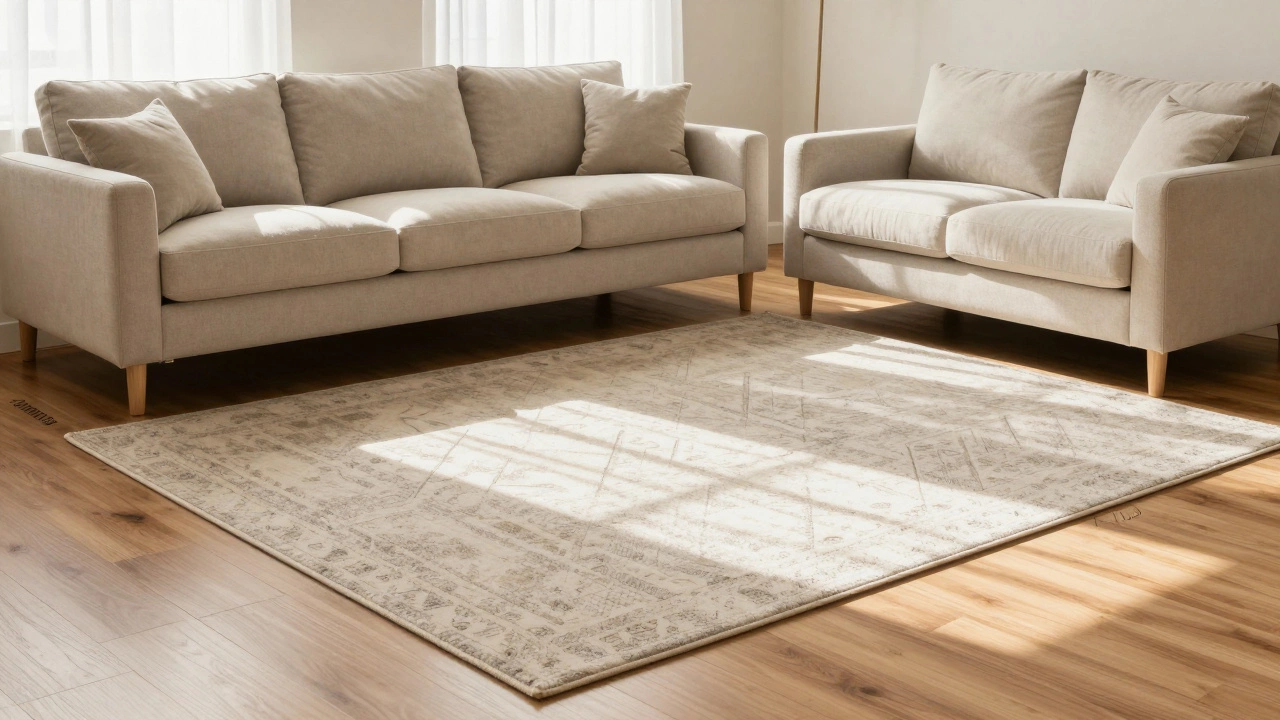
Think of the rug as an anchor. Its job is to hold the seating arrangement together. For a standard three-seater sofa, you generally want a rug that is at least 5x7 feet or, better yet, 8x10 feet. The goal is to ensure that the front legs of your couch (and ideally the chairs opposite it) rest on the rug. This creates a visual platform that groups the furniture into a cohesive conversation area.
- All Legs On: The most spacious and elegant look. Every piece of furniture sits entirely on the rug. Best for open-plan spaces.
- Front Legs On: The most common and practical approach. The front legs of the sofa and chairs touch the rug, while the back legs stay off. This defines the zone without overwhelming the floor.
- All Legs Off: Avoid this unless you have a very specific minimalist aesthetic or a huge room where the rug acts as a separate island. It often makes the room feel disjointed.
Measure your space before you shop. If your sofa is 80 inches wide, a 6-foot rug might leave only a few inches of border on each side, which looks cramped. An 8-foot rug gives you that breathing room designers talk about.
Color Coordination Without Matching Perfectly
A common mistake is trying to match the rug exactly to the couch fabric. If you have a beige sofa, you don’t necessarily need a beige rug. In fact, identical colors can make the room look flat and boring. Instead, aim for harmony through contrast or complement.
Look at your couch and identify its secondary colors. Maybe your grey sofa has subtle blue undertones, or your cream linen has hints of warm yellow. Pull those shades into the rug. A neutral base rug with patterned accents in those secondary colors ties the room together beautifully.
| Couch Color | Rug Strategy | Why It Works |
|---|---|---|
| Neutral (Grey, Beige, White) | Bold Pattern or Deep Solid | Adds interest and anchors the light furniture |
| Bold (Red, Navy, Green) | Neutral Base with Subtle Texture | Calms the room and lets the sofa be the star |
| Patterned | Solid Color or Geometric Minimalist | Prevents visual chaos and provides balance |
If you love color, use the 60-30-10 rule. Let the walls be 60%, the furniture (including the rug) be 30%, and accessories be 10%. Your rug should either support the dominant color or provide a sophisticated contrast to it.
Texture and Material Matters
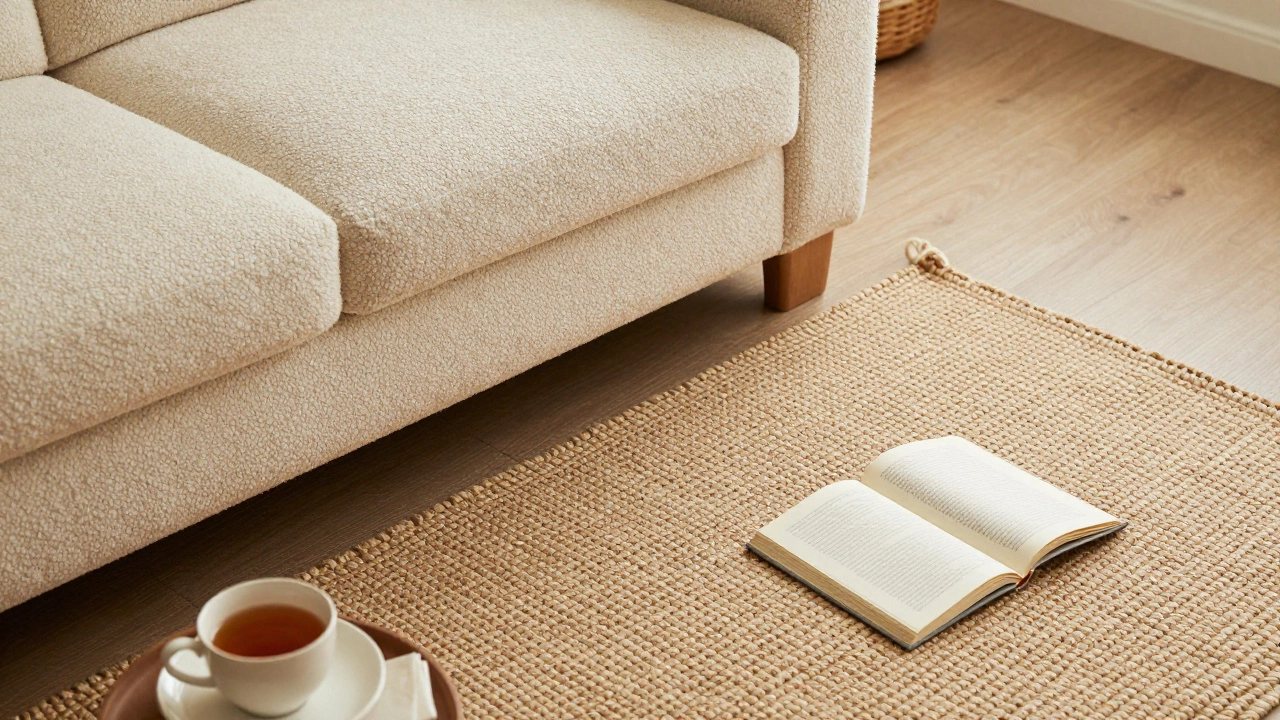
Color gets all the attention, but texture is what makes a room feel expensive. If your couch is smooth leather, a plush wool or high-pile shag rug adds necessary softness and warmth. Conversely, if you have a thick, bouclé fabric sofa, a flat-weave cotton or jute rug provides a nice textural counterpoint.
Consider the lifestyle of the room. A family with kids and pets might benefit from a low-pile synthetic rug that is easy to clean and durable. A quiet reading nook might call for a luxurious silk blend or a hand-knotted Persian style rug that invites barefoot relaxation.
Don’t overlook the edge of the rug. A rolled fringe can add a traditional touch, while a cut-edge finish looks more modern and streamlined. Make sure the rug’s border width complements the scale of your furniture. A thin border on a massive rug can get lost, while a thick border on a small rug can overwhelm it.
Style Alignment: Modern vs. Traditional
Your rug should speak the same design language as your couch. A mid-century modern sofa with tapered wooden legs pairs well with a geometric, abstract, or tribal-patterned rug. A classic Chesterfield sofa with deep button tufting looks best with an oriental or traditional patterned rug.
Mixing styles can work, but it requires confidence. If you have a very contemporary, minimalist sofa, avoid overly ornate, busy traditional rugs unless you want a deliberate eclectic clash. Instead, choose a rug with clean lines and simple motifs. Consistency in style helps the eye move smoothly around the room.
Practical Tips for Testing Your Choice
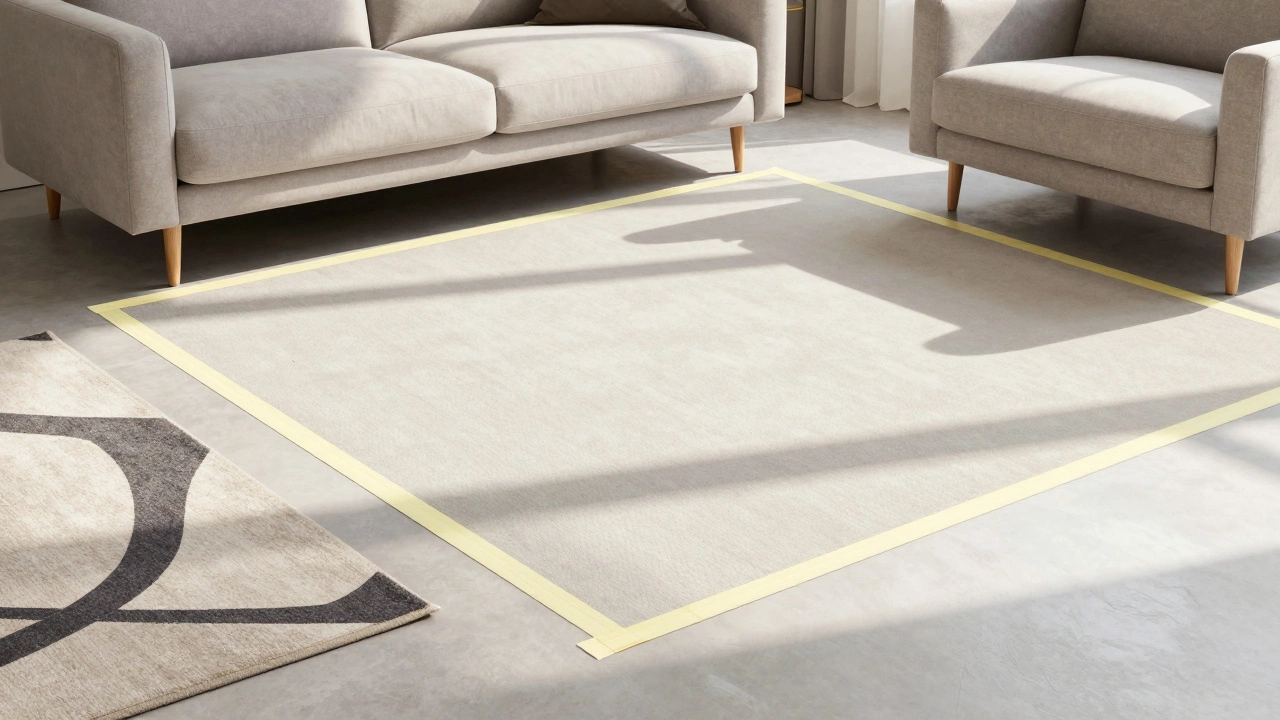
Before you commit to buying a large, expensive rug, test it out. Use painter’s tape to mark the dimensions of the rug you’re considering on your floor. Walk around the taped area for a day. Does it feel too small? Too big? Do you trip over the imaginary edges?
Lighting also changes how colors appear. A rug that looks perfect under store lights might look completely different in your living room’s natural morning light or evening lamp glow. Always try to view rug samples in your actual space during different times of the day.
Finally, consider the transition. How does the rug meet the floor? If you have hardwood floors, leaving a consistent border of wood visible (usually 6-12 inches) frames the rug nicely. If you have carpet, layering a rug on top can add definition, but ensure the combined thickness doesn’t create a tripping hazard.
Should my rug be bigger than my couch?
Not necessarily wider, but it should extend beyond the sides of the couch. Ideally, the rug should be wide enough so that there is at least 6 to 12 inches of rug visible on either side of the sofa. This prevents the couch from looking like it’s sitting on top of the rug rather than integrated with it.
Can I put a rug under only part of my couch?
Yes, having the front legs of the couch on the rug is a standard and effective design choice. However, avoid having only the very front edge of the couch touching the rug while the rest hangs off. This looks accidental and unstable. Aim for either all front legs on, or all legs on.
What if my couch is L-shaped?
L-shaped sectionals require larger rugs, typically 9x12 feet or larger. Ensure that the main seating area rests on the rug. If the rug is too small, the sectional will dominate the space and look bulky. A large rug grounds the sectional and makes the room feel more spacious.
How do I coordinate a patterned rug with a patterned couch?
Mixing patterns can be tricky. Choose one pattern to be dominant and the other to be subordinate. For example, if your couch has a bold floral print, pick a rug with a subtle geometric stripe or a solid color that picks up one hue from the couch. Vary the scale of the patterns to avoid visual competition.
Is it okay to have bare floor between the rug and the wall?
Absolutely. In fact, it’s recommended. Leaving 6 to 12 inches of floor visible between the rug and the wall helps define the room’s boundaries and prevents the rug from looking like a wall-to-wall carpet. It creates a framed effect that enhances the overall layout.