
Mesoamerican Mirror Explorer
Select a mirror type to learn about its history and significance.
Obsidian
Aztec / OlmecHematite
ZapotecPyrite
Maya / MixtecJade
MayaModern Souvenir
Tourist MerchandiseSelect a Mirror
Click on any mirror card to reveal its historical context, material properties, and spiritual meaning.
The Mystery of the Black Stone
When you hear the term Mexican mirrors, your mind might race toward two very different images. You might picture a polished black stone used by ancient shamans to peer into the future. Or, you might think of the cheap, novelty hand mirrors sold in souvenir shops along the border, often featuring colorful folk art or cartoonish designs.
Both are correct, but they belong to entirely different worlds. To understand what these mirrors truly are, we have to separate the sacred from the commercial. One is a window into the spiritual practices of the Mesoamerican civilizations; the other is a piece of modern tourism merchandise. If you are looking for the historical truth, we need to look back thousands of years to the heart of the Aztec Empire.
Aztec Obsidian: The Mirror of Truth
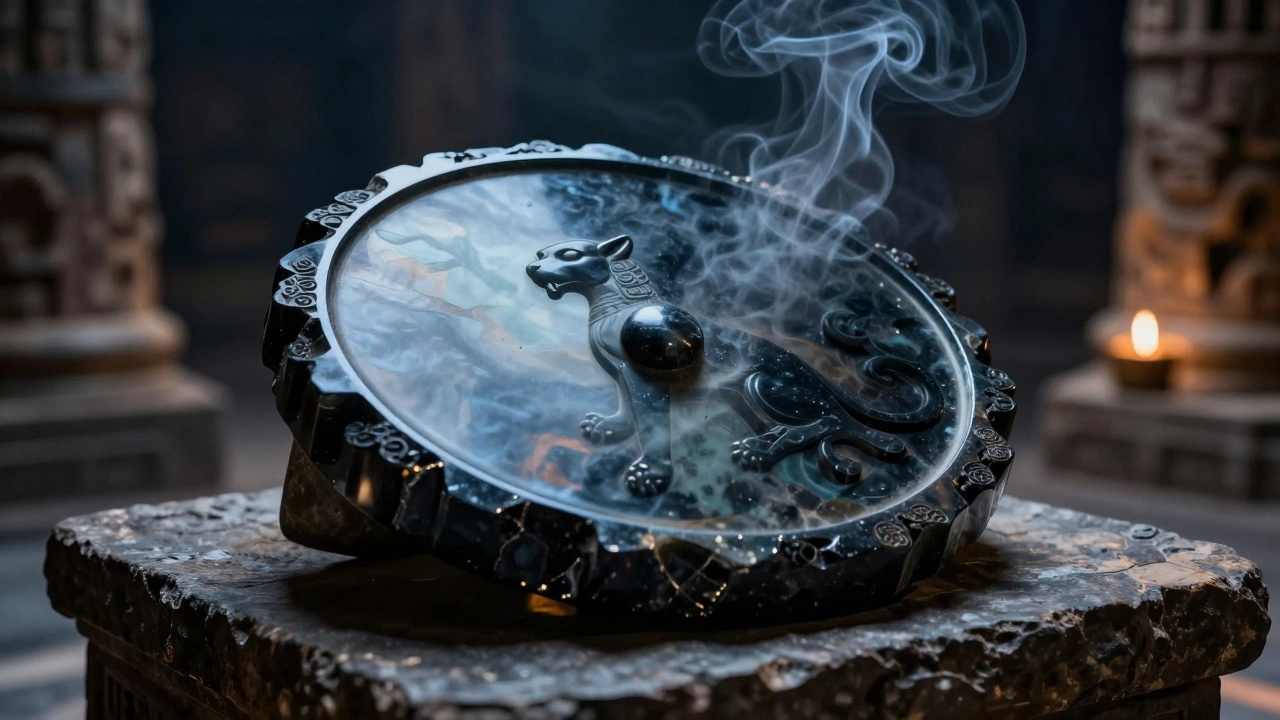
In the pre-Columbian era, specifically within the Aztec (Nahua) culture, the mirror was not just a tool for grooming. It was a portal. The most revered of these were known as Telpochtli, which translates roughly to "youth" or "young man," but functionally referred to the sacred mirror itself. These mirrors were crafted from obsidian, a volcanic glass that forms when lava cools rapidly.
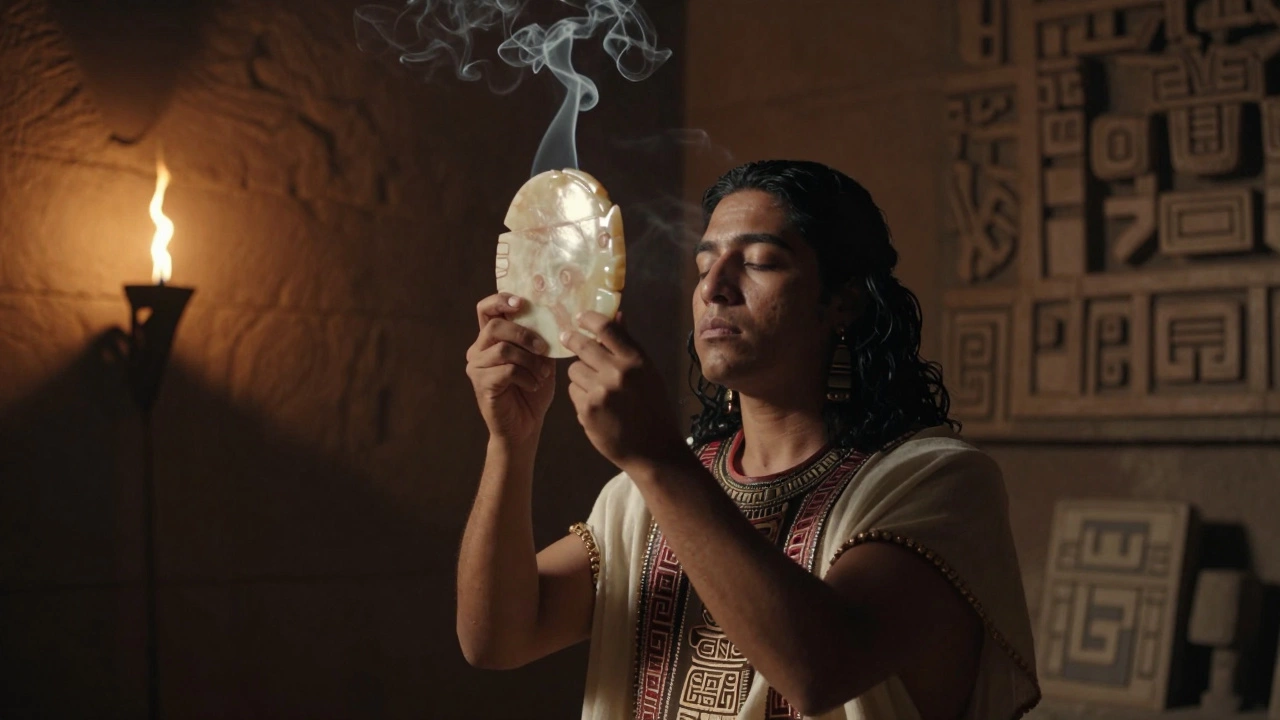
Obsidian is unique because it can be knapped to an edge sharper than a surgical steel scalpel. When polished, it becomes incredibly reflective, almost like a dark pool of water. For the Aztecs, this surface was believed to hold the power of Tlilpilli, the deity of obsidian mirrors. Priests and shamanic figures, known as ticitl, would use these mirrors for scrying-gazing into the reflective surface to receive visions, diagnose illnesses, or communicate with the gods.
The connection between the mirror and divination was deep. The Aztecs believed that the darkness of the obsidian represented the unknown future or the underworld (Mictlan). By looking into it, one could see beyond the veil of the present moment. This wasn't mere superstition; it was a structured part of their cosmology. The mirror was often associated with the god Tezcatlipoca, whose name means "Smoking Mirror." He was a complex deity representing destiny, night, and sorcery.
Beyond the Aztecs: A Widespread Tradition
While the Aztecs are the most famous users of these mirrors, they were not alone. The tradition of using polished stone mirrors spans across Mesoamerica. The Olmecs, who predated the Aztecs by over a thousand years, also created small, polished hematite and obsidian mirrors. Later, the Maya civilization utilized similar objects, though they often favored materials like jade or pyrite alongside obsidian.
The difference lies in the context. In some cultures, these mirrors were status symbols buried with elites, signifying their power to see the unseen. In others, they were strictly ritualistic tools kept in temples. What unites them is the belief that the reflective surface held magical properties. Unlike glass mirrors, which became common only after European contact, stone mirrors required significant effort to create. This labor added to their value and spiritual weight.
| Material | Primary Culture | Reflectivity | Spiritual Association |
|---|---|---|---|
| Obsidian | Aztec, Olmec | High (when polished) | Tezcatlipoca, Divination |
| Hematite | Olmec, Zapotec | Moderate | Blood, Life Force |
| Pyrite (Fool's Gold) | Maya, Mixtec | Sparkling | Sun, Lightning |
| Jade | Maya | Low (polished) | Fertility, Water |
The Modern Souvenir: A Different Story
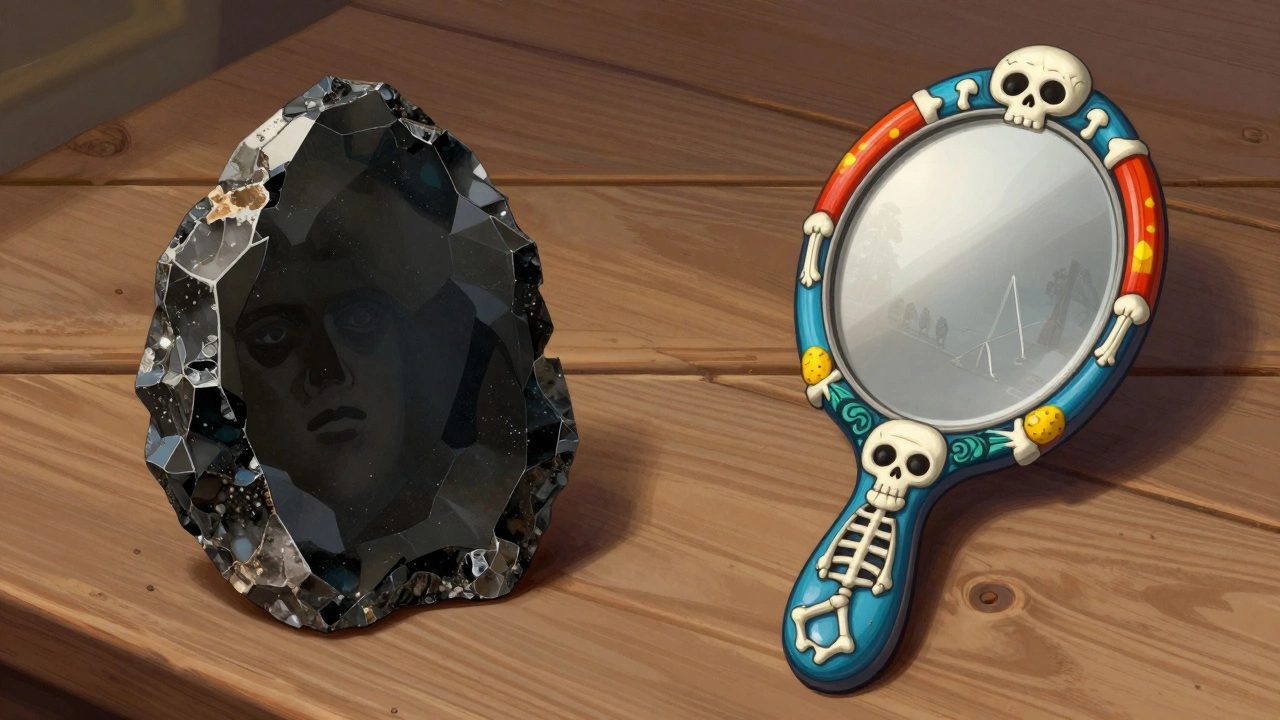
If you walk into a gift shop in Tijuana, Cancún, or even a suburban mall in the United States, you will likely find another type of "Mexican mirror." These are typically made of standard glass with a silver backing, encased in plastic, wood, or metal frames decorated with motifs like skulls, marigolds, or sombrero-wearing skeletons.
These items have no connection to the ancient ritual practice. They are mass-produced goods designed for tourists who want a tangible reminder of their trip. While they may feature artistic elements inspired by Mexican folk art (arte popular), they do not possess the historical or spiritual significance of the obsidian telpochtli. Confusing the two is common, but it’s important to distinguish between a cultural artifact and a commodity.
That said, there is a growing market for authentic-looking reproductions. Artisans in Mexico today sometimes craft mirrors from genuine obsidian shards, polishing them to mimic the ancient style. These are often sold to collectors, New Age practitioners, or interior designers seeking a rustic, mystical aesthetic. If you buy one of these, you are purchasing a modern craft item that honors an ancient technique, not an archaeological relic.
Why Obsidian? The Science Behind the Magic
You might wonder why obsidian was chosen over other stones. From a scientific perspective, obsidian is ideal for several reasons. First, its conchoidal fracture allows artisans to shape it with precision. Second, when heated slightly and polished with abrasive powders (like crushed quartz or sand), it achieves a high-gloss finish that rivals glass.
However, the choice was also symbolic. Obsidian is formed from fire (volcanoes) and water (cooling lava). In Mesoamerican thought, this duality made it a powerful mediator between opposing forces. Furthermore, the deep black color absorbs light rather than reflecting it brightly, creating a sense of depth. This visual effect enhances the experience of scrying, as the viewer’s eye struggles to focus on a distinct image, leading to altered states of perception.
Modern psychologists note that staring at ambiguous surfaces can trigger pattern recognition in the brain, causing people to see faces or shapes that aren’t there. The ancients interpreted these patterns as messages from the divine. Whether you view it as magic or psychology, the mechanism remains the same: the mirror acts as a focal point for meditation and introspection.
Using Mexican Mirrors Today
Today, interest in these mirrors has revived among various groups. Some people use them for decorative purposes, appreciating their sleek, dark appearance in home interiors. Others engage in modern scrying practices, drawing on the ancient techniques for mindfulness or creative inspiration.
If you are interested in using a mirror for meditation, here are a few steps to consider:
- Choose the right environment: Dim lighting helps reduce glare and encourages inward focus.
- Cleanse the space: Many practitioners burn sage or palo santo to clear negative energy before beginning.
- Set an intention: Decide what question or insight you are seeking before you start gazing.
- Relax your eyes: Don’t stare intensely. Soften your gaze and let the reflection blur slightly.
- Record your impressions: Keep a journal nearby to note any images, feelings, or thoughts that arise.
Remember, whether you use a genuine obsidian piece or a modern reproduction, the power lies in your own mind. The mirror is merely a tool to help quiet the noise of daily life.
Collecting Authentic Pieces
For those interested in history, collecting authentic pre-Columbian mirrors is a serious endeavor. Genuine artifacts are rare and highly regulated. Most countries, including Mexico, have strict laws against the export of archaeological objects. Buying an "ancient" mirror online without provenance documents is risky and often illegal.
Legitimate museums, such as the National Museum of Anthropology in Mexico City, house many of these treasures. Visiting these institutions provides a chance to see the craftsmanship up close. For collectors, focusing on modern artisan-made pieces supports local craftspeople while allowing you to own a beautiful object with cultural resonance.
Always ask questions about the origin of the material. Is it ethically sourced obsidian? Was it made by a recognized artisan? Transparency ensures that your purchase respects both the culture and the environment.
Are Mexican mirrors real?
Yes, but the term refers to two different things. Historically, "Mexican mirrors" refer to ancient obsidian or stone mirrors used by Aztec and other Mesoamerican cultures for divination. Today, the term is also used for modern souvenir mirrors sold to tourists, which are usually made of glass and have no historical significance.
What is the spiritual meaning of a Mexican mirror?
In ancient Aztec culture, the mirror was a sacred object associated with the god Tezcatlipoca. It was believed to allow priests to see into the future, communicate with spirits, and gain insight into hidden truths. The black obsidian surface represented the unknown and the underworld.
Can I buy an authentic ancient Mexican mirror?
It is extremely difficult and often illegal to buy authentic pre-Columbian mirrors. Most countries prohibit the trade of archaeological artifacts to protect cultural heritage. Items sold online as "ancient" are frequently fakes or modern reproductions. Legitimate examples are found in museums.
How were Aztec mirrors made?
Aztec mirrors were made from obsidian, a volcanic glass. Artisans would shape the stone using pressure flaking techniques and then polish it with abrasive materials like sand or crushed quartz. Sometimes, they would heat the stone slightly to enhance the polish, creating a highly reflective surface.
What is the difference between a Mexican mirror and a regular mirror?
A regular mirror is made of glass with a metallic coating, providing a clear, bright reflection. A traditional Mexican mirror is made of polished stone, usually obsidian, which provides a darker, deeper reflection. Historically, the stone mirror was used for spiritual purposes, while the glass mirror is used for practical grooming.
Who is Tezcatlipoca?
Tezcatlipoca is a major deity in Aztec mythology, known as the "Smoking Mirror." He is associated with the night sky, winds, adversity, temptation, strife, rulership, and destiny. His name reflects his connection to obsidian mirrors, which were considered his physical manifestation on Earth.