
Sofa Cushion Longevity & Comfort Estimator
Configure Your Sofa
Analysis Result
You sit down after a long day, sink into your sofa, and feel that familiar dip in the seat. It’s annoying, but it’s also a sign that your sofa cushions are wearing out. We’ve all been there. You bought a beautiful piece of furniture, maybe even paid extra for "premium" seating, only to find yourself fluffing the pillows every hour or sitting on what feels like a brick within two years. The frustration isn’t just about comfort; it’s about value. Why do some sofas last decades while others sag by Christmas?
The answer lies in the filling. Not all cushion materials are created equal. Some are designed for cloud-like softness that flattens quickly, while others prioritize structural integrity over immediate plushness. If you want a sofa that stays supportive and comfortable for five, ten, or even twenty years, you need to understand the mechanics of cushion fillings. Let’s break down exactly which materials hold up best and why.
The Gold Standard: High-Density Polyurethane Foam
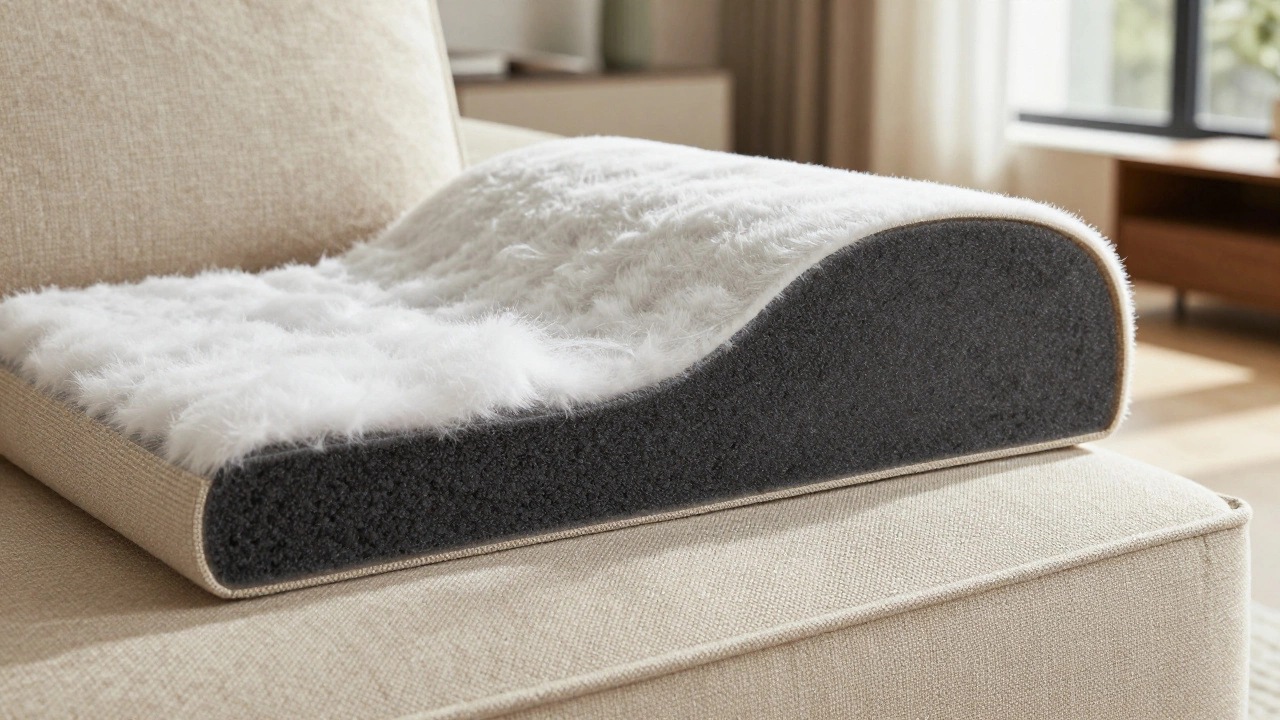
When we talk about longevity, high-density polyurethane foam is the most durable material available for mass-produced sofa cushions. This isn’t the cheap, spongy stuff you find in budget department store sofas. That low-density foam breaks down rapidly because its cell structure collapses under repeated pressure. High-density foam, however, has a tighter cellular structure that resists compression set-the technical term for permanent deformation.
To identify quality foam, look at the density rating, measured in pounds per cubic foot (PCF). For a living room sofa that sees daily use, you want a density of at least 1.8 PCF. Anything below 1.5 PCF will likely flatten within eighteen months. For heavier users or high-traffic areas, aim for 2.0 PCF or higher. The industry standard for premium durability often sits between 2.2 and 3.0 PCF. At this density, the foam retains its shape and resilience for many years, providing consistent support without bottoming out.
There is a trade-off, though. Higher density usually means firmer support. If you prefer a deep, sinking feeling, pure high-density foam might feel too rigid. However, modern manufacturing has improved this significantly. Many manufacturers now use multi-layer foam constructions, placing a softer top layer over a dense base. This gives you the initial comfort of soft foam with the long-term durability of the high-density core. Just be aware that if the top layer wears through, you’ll feel the firm base underneath, which can feel uneven.
The Luxury Option: Down and Feather Blends
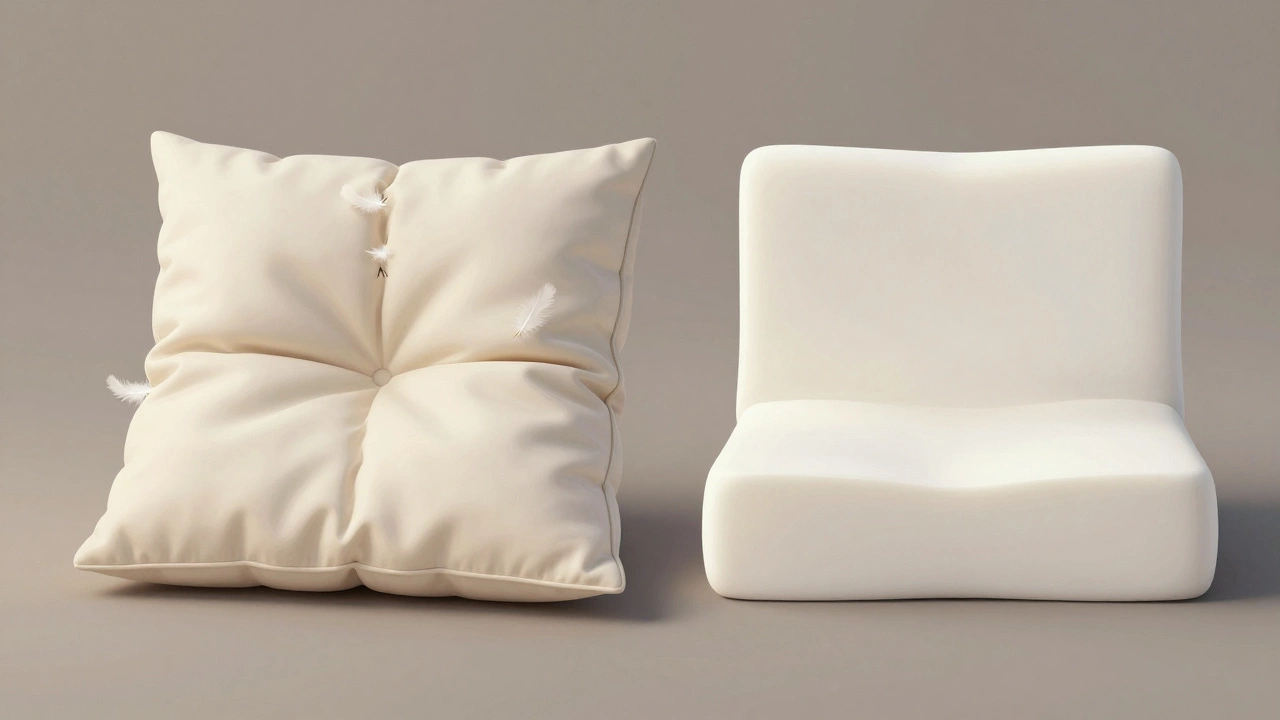
On the other end of the spectrum, you have down and feather cushions are known for their luxurious, moldable comfort but require regular maintenance to maintain shape. Pure down comes from the undercoating of geese or ducks and offers incredible loft and breathability. It conforms to your body perfectly, creating a custom fit every time you sit. But here’s the catch: down does not have inherent structural memory. It compresses easily and spreads out.
If you buy a sofa with pure down cushions, you are committing to a lifestyle of constant fluffing. Without regular attention, these cushions will slump and lose their volume, looking deflated and uncomfortable. While the material itself doesn’t degrade quickly-it can last decades if cared for-the aesthetic and functional "longevity" suffers because they don’t stay in place. For most people seeking a "set it and forget it" solution, pure down is risky.
A more practical approach is using down-blend fills. These mix down clusters with synthetic fibers or feathers to add weight and structure. A common ratio is 70% down to 30% feather or fiber. This blend provides much of the luxurious feel of pure down but adds enough resistance to keep the cushion from collapsing entirely. Still, expect to fluff them once or twice a week. They are long-lasting in terms of material life, but short-lasting in terms of convenience.
The Best of Both Worlds: Hybrid Fillings
This brings us to the sweet spot for most homeowners: hybrid cushions combine a foam core with a down or fiber wrap to balance durability and comfort. Imagine a dense foam block wrapped in a thick layer of polyester fiber or down. The foam core provides the structural backbone, preventing the cushion from flattening permanently. The outer wrap adds a layer of softness, making the seat feel less rigid and more inviting.
Hybrid cushions are increasingly popular in mid-to-high-end furniture because they solve the primary complaints of both foam and down. They don’t require daily fluffing like pure down, and they don’t feel as hard as pure high-density foam. In my experience testing various sofas in Bristol showrooms, hybrid seats tend to maintain their appearance and comfort level for five to seven years with minimal effort. After that, you might notice slight settling, but they rarely look "worn" unless the fabric cover is damaged.
One thing to watch for with hybrids is the quality of the wrapping. If the fiber layer is too thin, it will compress quickly, leaving you sitting directly on the foam edge, which can be uncomfortable. Look for cushions where the wrap is substantial-often described as "encased" or "wrapped" rather than just "topped." This ensures the transition from soft surface to firm support is gradual and pleasant.
The Role of Fabric and Construction
It’s not just about what’s inside the cushion; it’s how it’s held together. The cushion cover fabric plays a critical role in protecting the filling from wear, tear, and environmental damage. Even the best foam will deteriorate faster if exposed to sunlight, moisture, or abrasive friction. Tight-woven fabrics like linen, cotton blends, and performance synthetics (such as Crypton or Sunbrella) offer superior protection compared to loose weaves or delicate silks.
Consider the weave count. A higher thread count generally means a denser fabric that resists pilling and snagging. If you have pets or children, this is non-negotiable. Pet claws can shred loose weaves, exposing the filling to dirt and debris, which accelerates breakdown. Additionally, removable covers are a huge advantage for longevity. Being able to wash the cover regularly prevents oils, sweat, and dirt from penetrating the foam or down, which can cause clumping and odor over time.
Construction method matters too. Zippers should be sturdy metal or heavy-duty plastic, not cheap nylon that snaps open. Internal ties or loops that secure the cover to the cushion insert prevent shifting. When the cover shifts, it creates friction points that wear out the fabric and distort the filling. A well-constructed cushion keeps the inner and outer layers aligned, ensuring even wear across the entire surface.
Comparison of Cushion Types
| Material Type | Durability (Years) | Maintenance Level | Comfort Feel | Best For |
|---|---|---|---|---|
| High-Density Foam (>1.8 PCF) | 10+ | Low | Firm, Supportive | Daily use, back support |
| Pure Down | 15+ (material) | High (daily fluffing) | Soft, Moldable | Luxury lounging, guest rooms |
| Down-Blend (70/30) | 8-10 | Medium (weekly fluffing) | Plush, Balanced | Comfort seekers who mind maintenance |
| Hybrid (Foam Core + Wrap) | 7-12 | Low | Balanced Soft/Firm | Most households, best overall |
| Low-Density Foam (<1.5 PCF) | 1-3 | None | Initial softness, quick sag | Budget buys, temporary use |
Extending the Life of Your Cushions
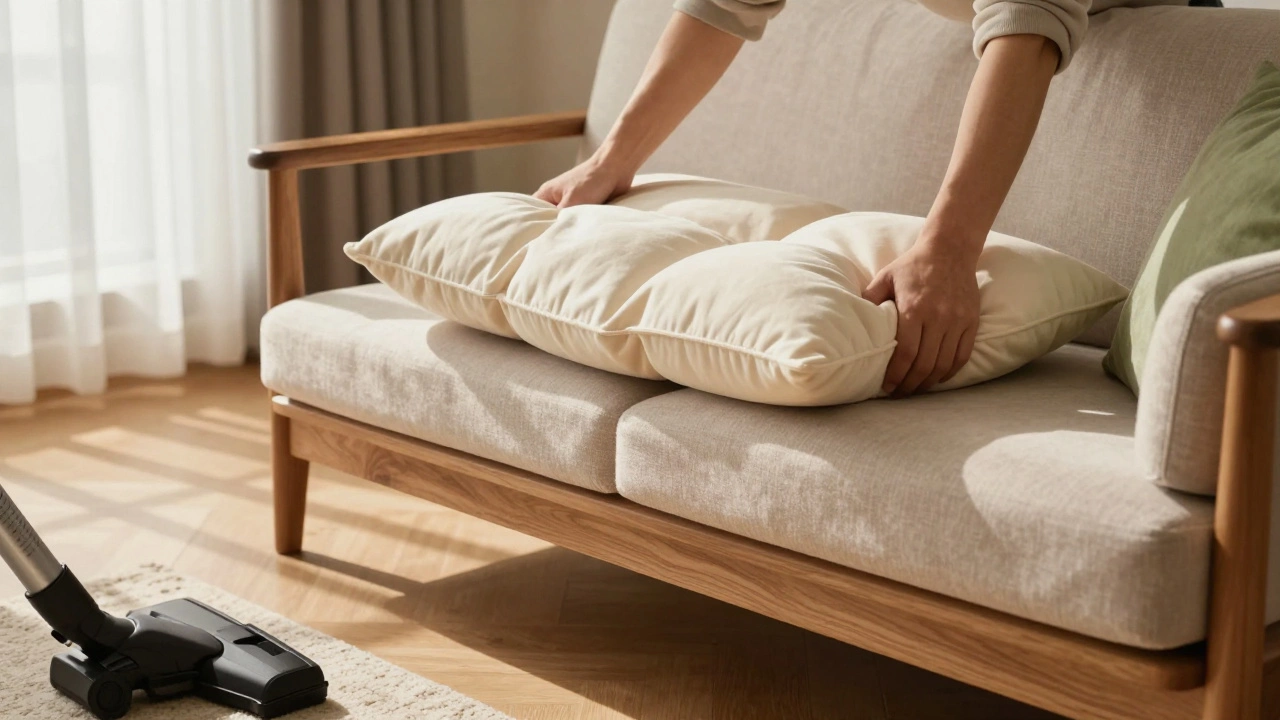
Even the best materials need care. To maximize the lifespan of your sofa cushions, start with rotation. Flip and rotate the cushions every few weeks. This distributes the weight evenly, preventing one side from compressing more than the other. Most people sit on the same spots repeatedly, creating dips. Simple rotation can add years to the life of your seating.
Avoid direct sunlight. UV rays break down the chemical bonds in foam and fade fabrics. If your sofa is near a large window, use curtains or blinds during peak hours. Heat also accelerates foam degradation, so keep your sofa away from radiators or fireplaces. Moisture is another enemy; spills should be blotted immediately, not rubbed, to prevent liquid from soaking into the core.
For down and hybrid cushions, occasional professional cleaning or steam cleaning can restore loft and remove embedded dust. For foam, vacuuming the surface regularly removes abrasive particles that can cut fibers and work their way down. Don’t neglect the underside; dust bunnies accumulate there and can harbor pests that damage the fabric.
When to Replace vs. Refurbish
Sometimes, despite your best efforts, cushions reach their end. How do you know when it’s time to replace them? If the foam has developed permanent cracks or crumbles when pressed, it’s done. If down cushions no longer spring back after fluffing, the fill has lost its elasticity. In these cases, buying new inserts is often cheaper and easier than reupholstering the entire sofa frame.
Refurbishing is an option if the sofa frame and springs are still solid. You can order custom-cut foam or down inserts to match your existing covers. This is particularly cost-effective for high-quality frames with worn-out padding. Many local upholsterers in the UK offer this service, allowing you to upgrade to higher-density foam or switch from foam to hybrid without buying a whole new sofa. It’s a sustainable choice that extends the life of your furniture significantly.
How can I tell if my sofa cushions are high-density foam?
Press firmly into the cushion with your hand. High-density foam will resist compression and spring back quickly. Low-density foam will feel spongy and leave an indentation that takes seconds or minutes to disappear. If possible, check the manufacturer’s specifications for density ratings (PCF). A rating above 1.8 PCF indicates high density.
Are hybrid cushions worth the extra cost?
Yes, for most people. Hybrid cushions offer the best balance of comfort and durability. They provide the soft touch of down or fiber without the high maintenance or lack of support. While they may cost slightly more than basic foam, they last longer and require less upkeep, making them a better value over time.
Why do my down cushions always look flat?
Down naturally compresses and spreads out. This is normal behavior, not necessarily a defect. To combat this, fluff your cushions daily by lifting and shaking them. Consider adding a foam core insert beneath the down layer if you want more structural support without losing the luxurious feel.
Can I fix sagging foam cushions myself?
If the foam is intact but compressed, you can sometimes restore loft by placing the cushions in a dryer on low heat with tennis balls to fluff them. However, if the foam has broken down chemically or cracked, replacement is necessary. Custom foam inserts are widely available online and from local upholstery suppliers.
What is the best cushion type for pet owners?
High-density foam with a tight-weave, stain-resistant fabric cover is ideal. Avoid down or loose-fiber fills, as pet hair and dander can get trapped and difficult to clean. Removable, machine-washable covers made from performance fabrics like Crypton offer the best protection against accidents and wear.