
Couch Cushion Longevity Calculator
Configure Your Cushion
High-Resilience (HR) Foam
Best DurabilityHigh-Density Polyurethane (2.0+ PCF)
Good DurabilityDown-Foam Hybrid
Moderate DurabilityMedium-Density Foam (1.6-1.9 PCF)
AveragePolyester Fiberfill / Low Density
Poor DurabilityEstimated Lifespan
- Rotate cushions monthly to prevent dips.
You sit on your sofa every single day. It’s where you watch TV, read books, and crash after a long week. But have you ever noticed that sinking feeling in the middle of your couch? That uncomfortable dip isn’t just annoying; it’s a sign that your cushions are failing. Most people assume all cushions are created equal, but they aren’t. Some materials hold their shape for decades, while others flatten out within months.
Choosing the right couch cushions is about more than just comfort. It’s an investment in your furniture’s lifespan. If you want a seat that stays supportive and doesn’t look saggy after a year, you need to understand what’s inside them. Let’s break down which materials actually last and why some fail so quickly.
The Core Material: Foam Density Matters Most
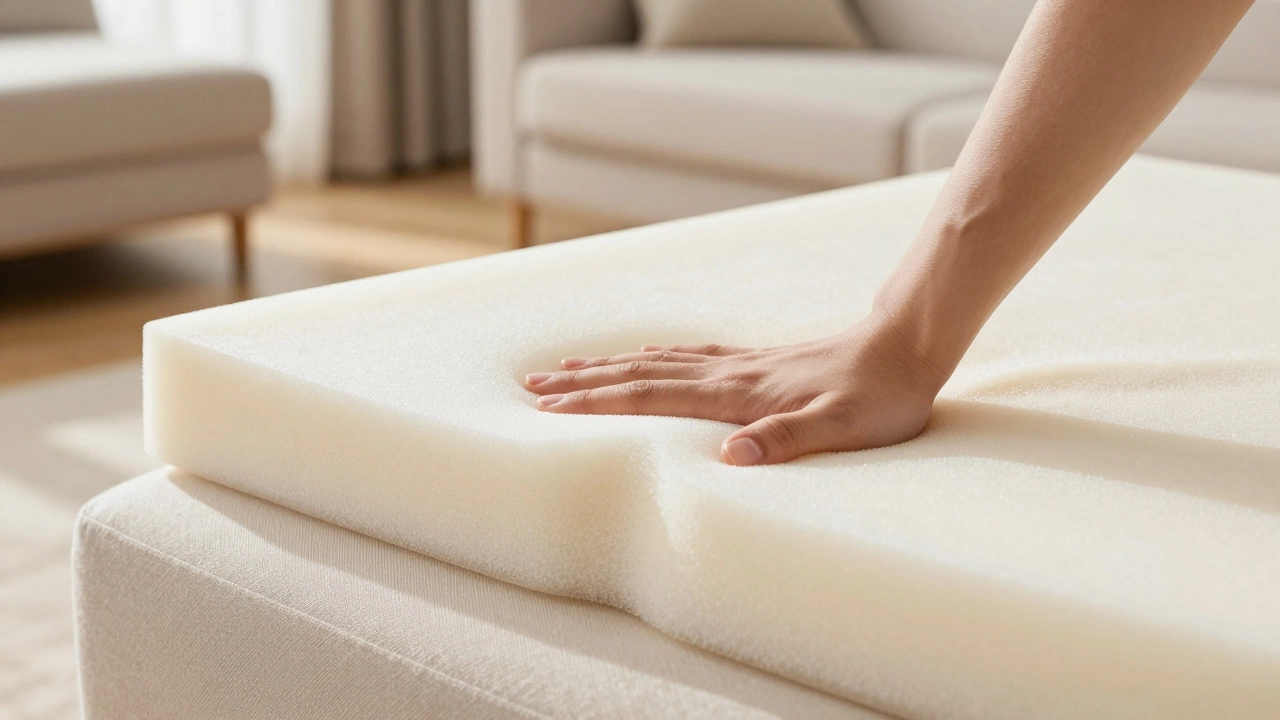
When we talk about longevity, foam is usually the hero-or the villain. Not all foam is the same. Cheap sofas often use low-density polyurethane foam. This stuff feels soft at first, but it breaks down rapidly under pressure. Think of it like a cheap sponge; once you squeeze it too many times, it loses its bounce back. In the world of upholstery, this is called 'compression set.' Once the foam cells collapse, they don’t recover.
To get cushions that last, you need to look at density, not just firmness. Density refers to how much material is packed into a cubic foot. For a durable couch, you want high-resilience (HR) foam or polyurethane foam with a density of at least 1.8 pounds per cubic foot (PCF). Ideally, aim for 2.0 PCF or higher. This type of foam can withstand years of daily sitting without losing its structure. It’s the difference between a mattress that sags in six months and one that lasts ten years.
Here is a quick breakdown of foam types:
- Low-Density Foam (0.6-1.5 PCF): Found in budget furniture. Flattens quickly. Avoid if you want longevity.
- Medium-Density Foam (1.6-1.9 PCF): Standard for mid-range sofas. Decent life span, but may soften over time.
- High-Density Foam (2.0+ PCF): The gold standard for durability. Resists sagging and maintains support.
- High-Resilience (HR) Foam: A specialized polyurethane foam with excellent bounce-back properties. Often used in premium seating.
The Role of Down and Feather Blends
Down feathers provide that luxurious, cloud-like feel. However, pure down cushions are notorious for needing constant fluffing. They shift around and lose their loft if not maintained. While down itself is incredibly durable-it can last for generations-the way it performs in a cushion depends entirely on the blend.
Pure down cushions will eventually compress and require re-fluffing multiple times a day to look presentable. This isn't necessarily a failure of the material, but it might be a failure of convenience for your lifestyle. If you want the look of down with better structural integrity, look for a down-feather blend. A common mix is 70% down and 30% feathers. The feathers provide a bit more body and resistance to shifting, while the down adds plushness.
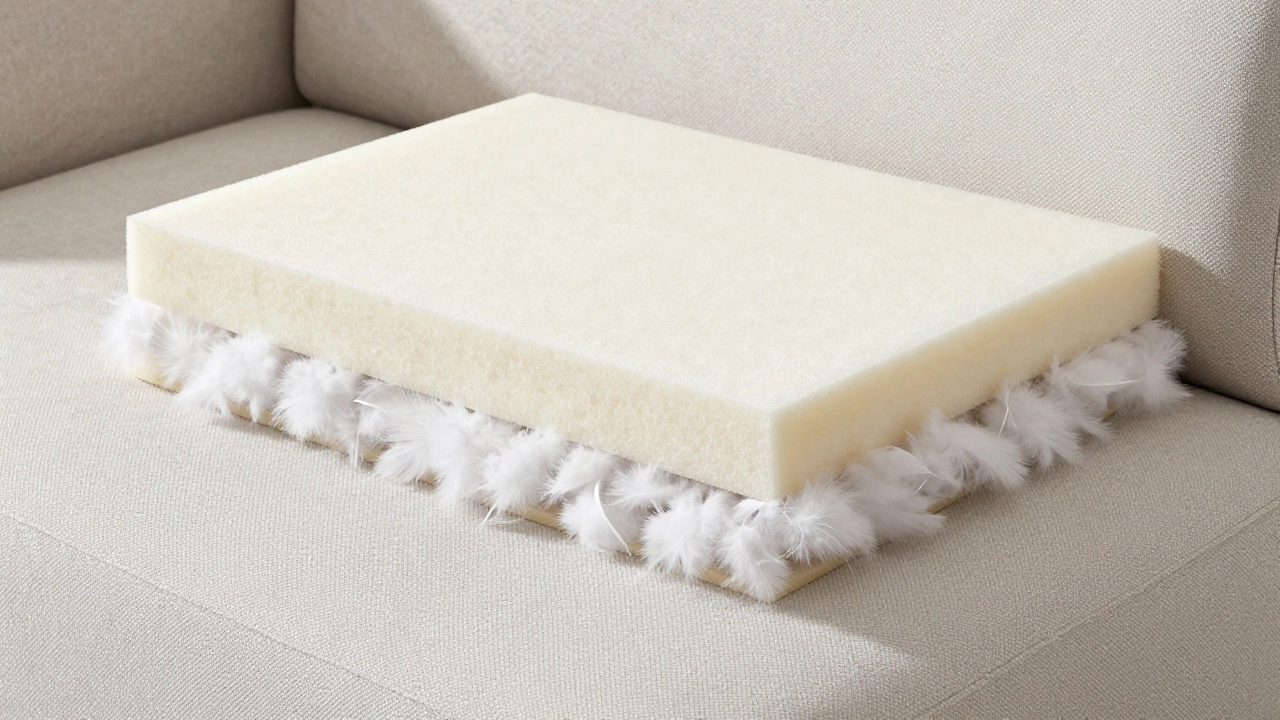
For maximum durability with a down aesthetic, consider a core wrap construction. This involves wrapping a high-density foam core in a layer of down or fiberfill. You get the supportive base of the foam, which prevents sagging, combined with the soft, moldable surface of the down. This hybrid approach offers the best of both worlds: long-term shape retention and immediate comfort.
Fiberfill and Polyester: The Budget Option
Polyester fiberfill is the most common filling in affordable sofas. It’s lightweight, hypoallergenic, and inexpensive. However, it has a significant downside: it compacts easily. Over time, the fibers mat together, creating hard lumps and thin spots. Unlike foam, which compresses uniformly, fiberfill tends to clump.
If you must use fiberfill, look for 'high-loft' polyester. This type is engineered to resist compression better than standard batting. Even then, expect these cushions to need replacement or re-stuffing within two to three years with heavy use. They are great for guest rooms or occasional chairs, but not for your primary family sofa.
Construction Quality: It’s Not Just About Filling
The filling is only half the battle. How the cushion is constructed determines whether that filling stays in place. A poorly made cover will allow the filling to escape or shift, ruining the shape regardless of the material quality.
Look for tight-woven fabrics. Loose weaves let small particles of down or fiber leak out over time. Additionally, check the stitching. Box-stitching or baffle-box construction helps keep the filling evenly distributed. Baffle boxes create separate compartments within the cushion, preventing the down or foam from migrating to one side. This is crucial for maintaining an even surface.
The zipper quality also matters. A sturdy, metal or heavy-duty plastic zipper ensures you can remove and clean the covers without damaging them. Removable covers are essential for longevity because they protect the inner filling from stains, spills, and body oils, which can degrade materials over time.
Comparing Cushion Types for Longevity
| Material | Lifespan (Heavy Use) | Maintenance Required | Best For |
|---|---|---|---|
| High-Density Foam (2.0+ PCF) | 10+ Years | Low (Rotate occasionally) | Daily drivers, families |
| High-Resilience (HR) Foam | 15+ Years | Very Low | Premium sofas, high traffic |
| Down-Foam Hybrid | 8-10 Years | Medium (Fluff weekly) | Luxury comfort seekers |
| Pure Down | Indefinite (but shape varies) | High (Daily fluffing) | Occasional seating, aesthetics |
| Polyester Fiberfill | 2-3 Years | Medium (Re-stuffing needed) | Budget options, guest rooms |
Environmental Factors Affecting Cushion Life
Your home environment plays a bigger role in cushion longevity than you might think. Sunlight is a major enemy of foam and fabric. UV rays break down the chemical bonds in polyurethane foam, causing it to become brittle and crumble. If your sofa sits near a large window, consider using UV-protective window film or rotating the cushions regularly to expose different areas to light.
Humidity is another factor. High moisture levels can lead to mold growth inside cushions, especially if they are made of natural materials like down or cotton. Ensure your living room is well-ventilated. Conversely, extremely dry air can cause leather-wrapped cushions to crack. Maintaining a stable indoor humidity level between 40% and 50% helps preserve all types of cushion materials.
Maintenance Tips to Extend Cushion Life
Even the best cushions need care. Here are practical steps to keep them looking new:
- Rotate Regularly: Turn your cushions 180 degrees every month. This ensures even wear and prevents permanent dips in the spots where you sit most often.
- Fluff Daily (for Down/Fiber): Give down and fiberfill cushions a good shake and fluff each morning. This restores loft and prevents permanent compression.
- Clean Covers Promptly: Stains and body oils can degrade fabric and fillings. Vacuum removable covers monthly and wash them according to care labels. Spot clean non-removable covers immediately.
- Avoid Sitting on Edges: Hanging off the edge of the sofa puts excessive stress on the frame and the outer edges of the cushions, leading to premature sagging.
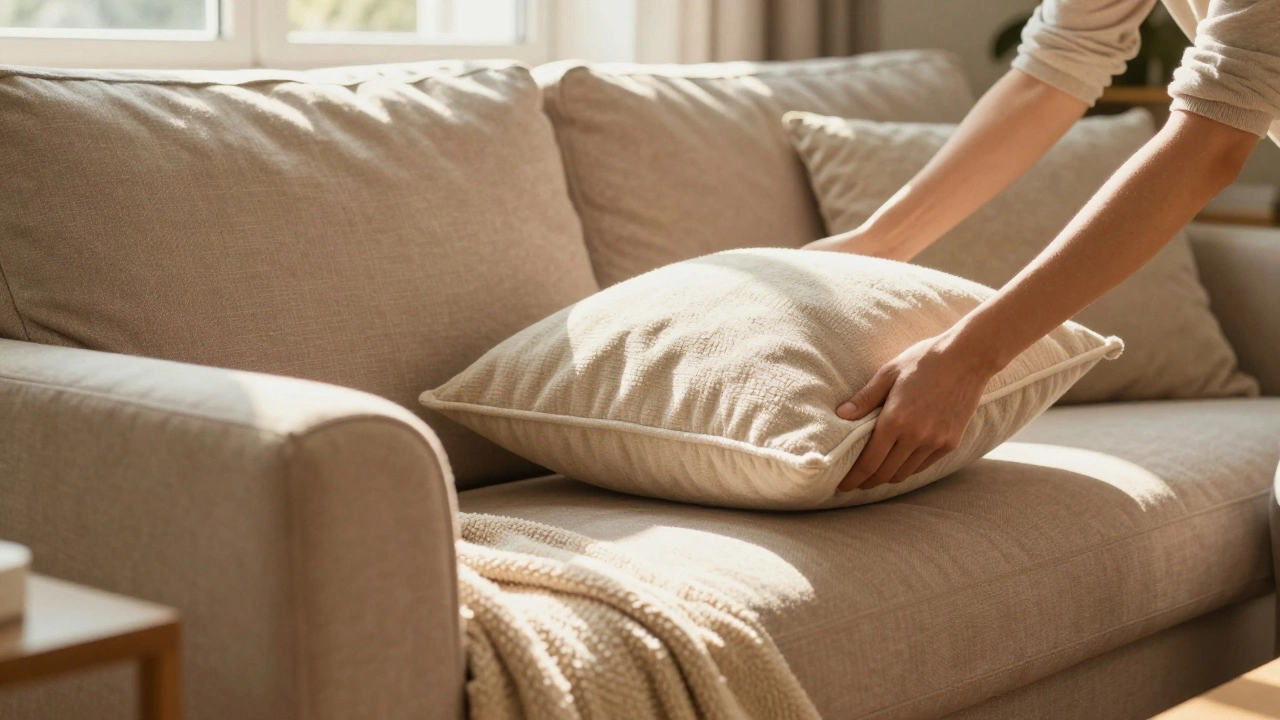
- Use a Sofa Protector: A breathable slipcover or throw blanket can shield cushions from direct contact with skin oils, pet claws, and accidental spills.
When to Replace vs. Restuff
Sometimes, cushions reach the end of their road. Knowing when to replace them versus when to restuff can save you money. If the foam is crumbling or breaking apart, it’s time for a full replacement. You can buy replacement foam inserts online, cut to size, and slide them into existing covers. This is often cheaper than buying new cushions.
If the foam is intact but just compressed, you might be able to add a topper. A thin layer of high-resilience foam placed on top of the old cushion can restore comfort without the cost of a complete overhaul. However, if the internal springs (in spring-down cushions) are broken or rusted, the entire cushion assembly should be replaced.
How do I know if my couch cushions are low density?
Press firmly into the cushion with your hand. If it feels very soft and takes a long time to bounce back, or if you can easily press your fingers deep into it, it’s likely low-density foam. Low-density foam also tends to feel lighter than high-density foam of the same size. Check the manufacturer's specifications if available; anything below 1.8 PCF is considered low to medium density.
Are memory foam couch cushions durable?
Memory foam is comfortable but not always the most durable for high-traffic seating. It conforms closely to your body, which some find too soft for long-term support. High-quality memory foam can last 5-7 years, but it retains heat and may soften faster in warm climates compared to high-resilience polyurethane foam.
Can I fix sagging couch cushions?
Yes, depending on the cause. If the foam is compressed, you can insert a thinner piece of high-density foam on top to restore height. If the issue is uneven distribution of down or fiber, simply removing the cover and thoroughly fluffing the filling can help. For spring-down cushions, replacing the springs or adding a foam topper is a viable repair option.
What is the best cushion type for pets?
High-density foam with a tightly woven, scratch-resistant fabric cover is best for homes with pets. Avoid loose down or feather fills, as claws can damage the cover and allow filling to escape. Microfiber or performance fabrics like Crypton are excellent choices because they repel stains and resist tearing.
Do expensive couches always have better cushions?
Not necessarily. Price often reflects brand name, design, or fabric quality rather than internal construction. Always ask about foam density and core construction. A mid-priced sofa with 2.0 PCF high-resilience foam will outlast a luxury sofa with low-density foam and decorative down layers.