
Storage Cost-Per-TB Calculator
Enter Storage Details
Analysis Result
Comparison with Market Average
Visualizing your price against a typical 5TB External HDD (£16/TB):
You have a massive library of 4K videos, years of family photos, or perhaps you are building a home server to host your own cloud. The question isn't just about capacity anymore; it is about value. You want the most space for the least amount of money. But which device actually gives you that?
The answer depends entirely on whether you need speed or just raw capacity. If you are looking for the absolute lowest price tag for moving large amounts of data around, the winner is clear. If you are looking for the cheapest way to store data long-term without paying monthly fees, the landscape shifts slightly. Let’s break down the real costs, because marketing labels like 'budget' can be misleading.
The Heavyweight Champion: External Hard Disk Drives (HDDs)
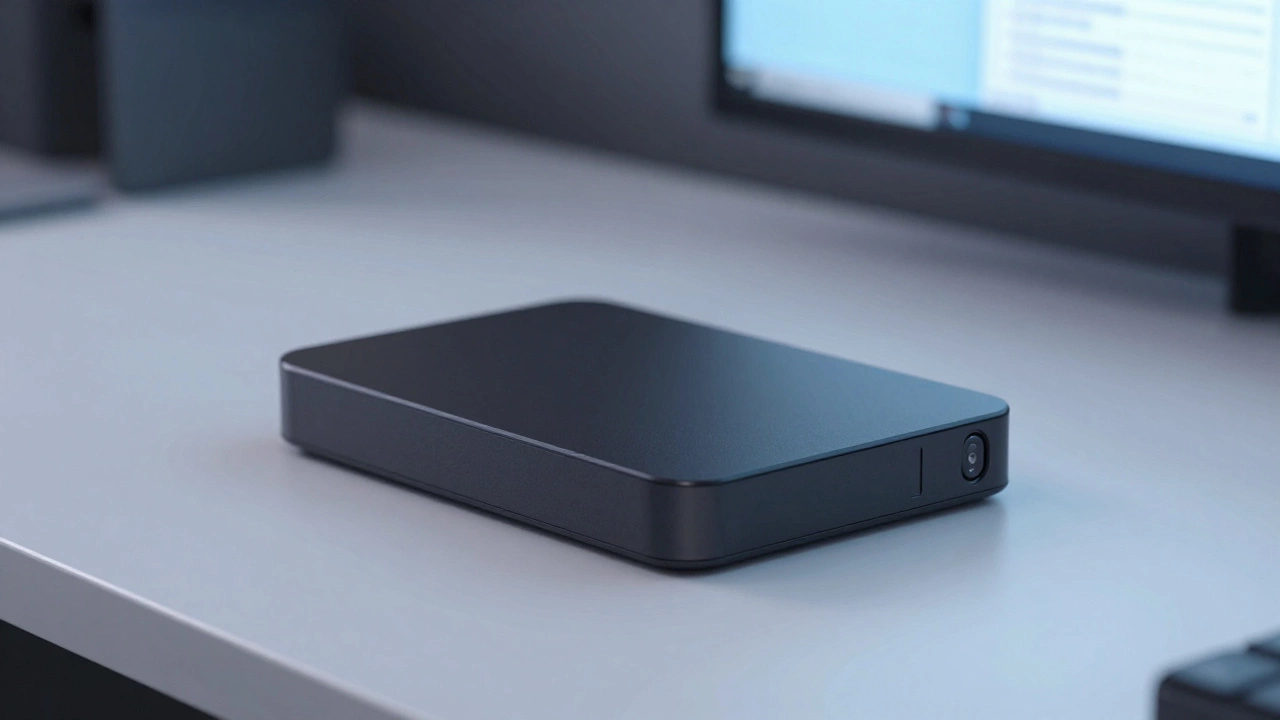
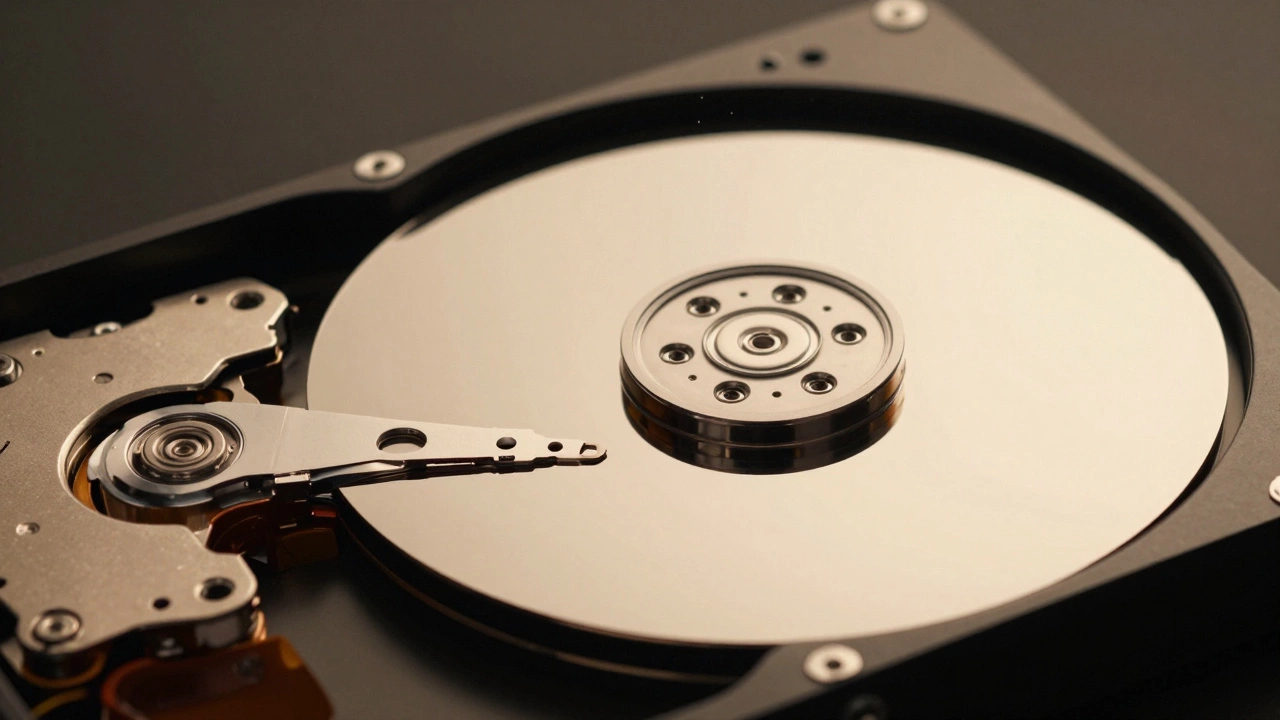
When we talk about the least expensive storage device in terms of upfront cost and cost-per-terabyte, the traditional mechanical Hard Disk Drive (HDD) sits at the top of the podium. These devices use spinning magnetic platters and a moving read/write head. They have been around since the early days of computing, and while they are slower than modern alternatives, they are incredibly efficient at storing huge amounts of data cheaply.
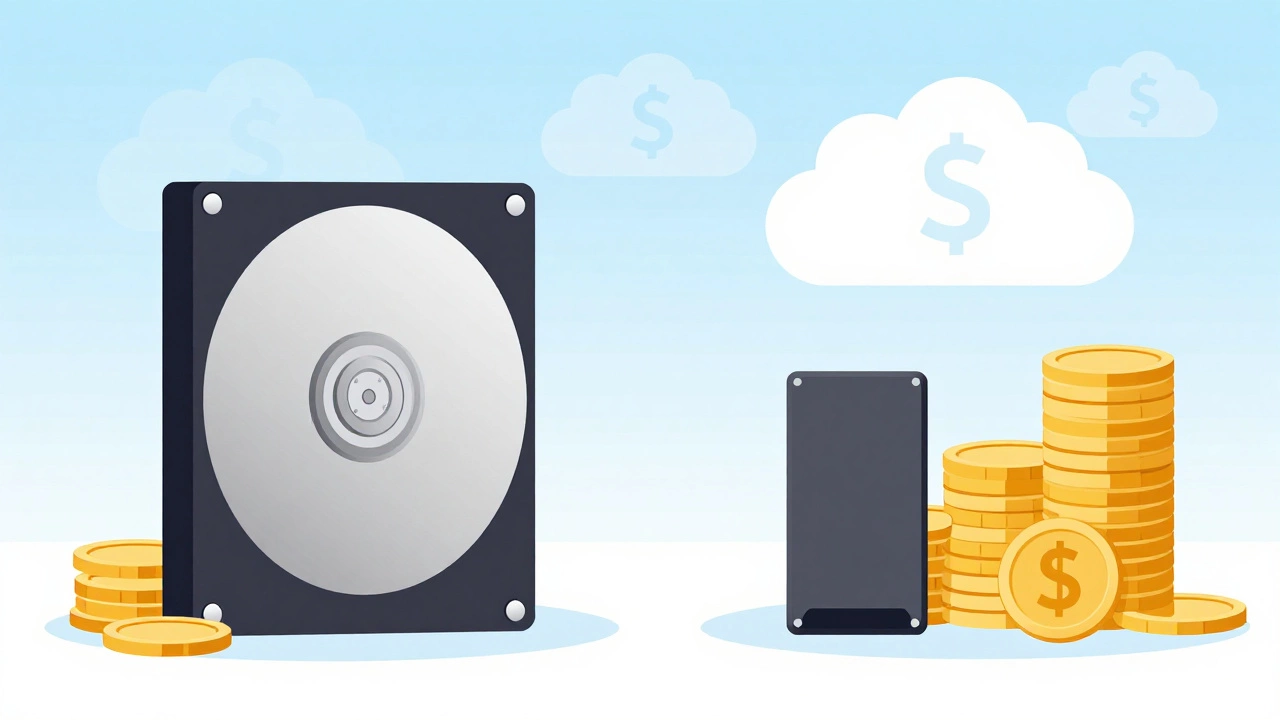
In mid-2026, you can still find 4TB to 8TB external HDDs from major manufacturers like Western Digital and Seagate for surprisingly low prices. A typical 5TB external USB drive often retails between £70 and £90. That breaks down to roughly £14-£18 per terabyte. Compare that to Solid State Drives (SSDs), where even entry-level models might cost £80-£100 for just 1TB. The math is undeniable: HDDs offer nearly five to six times more storage for your money compared to consumer-grade SSDs.
| Device Type | Typical Capacity | Average Price (GBP) | Cost Per TB |
|---|---|---|---|
| External HDD | 5TB | £80 | £16/TB |
| Internal HDD | 8TB | £120 | £15/TB |
| SATA SSD | 1TB | £70 | £70/TB |
| NVMe SSD | 2TB | £130 | £65/TB |
Why are they so cheap? Manufacturing magnetic media is a mature process. Factories have been refining the production of platters for decades, driving down unit costs significantly. While SSD prices have dropped, the underlying flash memory technology remains more complex and expensive to produce at scale compared to the simple mechanics of an HDD.
Internal vs. External: Does It Matter for Price?
If you are comfortable opening your computer case or NAS (Network Attached Storage) enclosure, internal HDDs are often slightly cheaper than their external counterparts. An external drive includes a plastic casing, a USB-to-SATA bridge chip, and sometimes extra power management features. By buying an internal 8TB desktop drive and placing it in a simple USB enclosure yourself, you can sometimes shave off another £10-£15 from the total cost.
However, for most users, the convenience of a plug-and-play external drive outweighs the minor savings. The performance difference is negligible for file transfers via USB 3.0 or higher. Both will max out the bandwidth of the connection before the drive itself becomes a bottleneck. So, if ease of use is part of your equation, stick with the pre-assembled external HDD.
The Cloud Illusion: Is Free Storage Really Free?
Many people argue that cloud storage services like Google Drive, Dropbox, or OneDrive are the 'cheapest' option because many offer 5GB to 15GB for free. This is true only if you never exceed that tiny limit. As soon as you need serious storage-say, 2TB-the monthly subscription model starts to add up quickly.
Let’s do the math. A standard 2TB cloud plan might cost you £10 per month. Over one year, that is £120. Over five years, that is £600. In contrast, a 2TB external HDD costs around £50 upfront and then nothing else. After just 12 months, the physical drive has paid for itself compared to the cloud subscription. For long-term archival of photos, videos, or backups, physical media is almost always cheaper than renting space from a tech giant.
Cloud storage shines in accessibility and redundancy. If your house burns down, your cloud files survive. But if your goal is purely financial efficiency for static data, the cloud is a luxury, not a bargain.
USB Flash Drives: The Trap of Small Capacities
You might think a USB flash drive is the cheapest option because you can buy a small one for £5. But look at the cost-per-terabyte. A 128GB USB drive might cost £10. Extrapolate that to 1TB, and you are looking at roughly £80 per terabyte. Now compare that to the £16 per terabyte for an HDD. Flash drives are convenient for transferring a few documents or installing an operating system, but they are terrible value for bulk storage.
Additionally, high-capacity USB drives (above 1TB) often suffer from slow write speeds and durability issues. They are designed for portability, not for holding your entire digital life. Avoid them for anything other than temporary file transfers.
Enterprise Tape: The Niche King
For those who truly want the absolute lowest cost per petabyte, Linear Tape-Open (LTO) technology is the undisputed champion. LTO-9 tapes can hold 18TB of native data and cost around £100-£150 each. That puts the cost at roughly £6-£8 per terabyte. However, there is a catch: you need a tape drive, which costs hundreds or thousands of pounds.
LTO is used by enterprises, libraries, and scientific institutions for cold storage. It is not practical for the average user. You cannot easily browse files on a tape drive; it is sequential access only. Unless you are archiving exabytes of data for compliance reasons, skip this. For consumers and small businesses, the HDD remains the sweet spot between accessibility and cost.
Durability and Hidden Costs
Cheap storage can become expensive if it fails. HDDs are mechanical devices, meaning they have moving parts that can wear out or break if dropped. SSDs have no moving parts and are much more resistant to shock. If you are traveling with your storage device, an SSD might be worth the premium for peace of mind.
However, for stationary storage-like a drive sitting in a drawer or on a desk-an HDD is reliable enough for most users. To mitigate risk, follow the 3-2-1 backup rule: keep 3 copies of your data, on 2 different types of media, with 1 copy offsite. This doesn't change the fact that HDDs are the cheapest primary storage, but it highlights why you should never rely on a single device for critical data.
How to Choose the Right Cheap Storage
Here is a quick decision guide based on your needs:
- Best for Bulk Media (Photos/Videos): Buy a large capacity (4TB+) External HDD. Look for brands like WD Elements or Seagate Expansion.
- Best for Speed + Value: If you need faster load times for games or software, consider a SATA SSD. It is more expensive per TB but much faster than an HDD.
- Best for Long-Term Archival: Use an HDD stored in a cool, dry place. Rotate drives every few years to prevent magnetic decay.
- Best for Portability: A small SSD (500GB-1TB) is worth the extra cost if you carry it daily. It won’t break if you drop it in your bag.
Remember, the 'least expensive' device is the one that meets your needs without forcing you to upgrade sooner than necessary. Buying a cheap 1TB drive today when you really need 4TB means you will spend more in the long run replacing it. Always aim for the highest capacity you can afford within the HDD category to get the best price-per-unit ratio.
Is an SSD cheaper than an HDD in 2026?
No. While SSD prices have dropped, HDDs remain significantly cheaper per terabyte. A 5TB HDD costs roughly £80, while a 5TB SSD would cost several hundred pounds. HDDs are the budget choice for capacity; SSDs are the choice for speed.
What is the cheapest way to store 10TB of data?
The cheapest way is to buy two 5TB or one 10TB internal or external Hard Disk Drive (HDD). Internal drives may save you a few pounds by removing the external casing cost. Avoid cloud subscriptions for this volume unless you need immediate remote access, as the monthly fees will exceed the drive cost within a year.
Do cheap hard drives fail faster?
Not necessarily. Budget external HDDs from reputable brands like WD and Seagate use similar components to their premium lines. The main difference is often the warranty length and build quality of the casing. For stationary use, a budget HDD is perfectly reliable. Just avoid dropping it.
Should I buy a larger drive to save money?
Yes. The cost-per-terabyte decreases as capacity increases. A 1TB drive might cost £40 (£40/TB), while an 8TB drive might cost £120 (£15/TB). Buying the largest drive you can afford now is usually more economical than buying multiple smaller drives later.
Are USB flash drives good for long-term storage?
No. USB flash drives are prone to data loss over time if not powered periodically, and they are expensive per gigabyte. They are also easy to lose. Use them for temporary transfers, not for archiving important memories or documents.