

Kitchen Item Classifier
Enter the name of a kitchen item to see how it is categorized.
Ready to classify
Type an item above to begin
You’re standing in the aisle of a department store, staring at two identical-looking sets of stainless steel spoons. One box says "Kitchen Utensils." The other says "Kitchenware." You pick up a fork from one set and a spatula from the other. They look exactly the same. So why do retailers split them into different categories? And more importantly, does it actually matter when you are trying to equip your home?
The confusion is completely understandable. In casual conversation, we use these terms interchangeably. But if you want to shop smart, organize your cupboards efficiently, or just sound like you know what you are talking about at a dinner party, there is a distinct difference. It comes down to scope and function. Simply put, kitchenware is the umbrella term for everything in your kitchen, while utensils are the specific handheld tools you use to prepare and serve food.
Defining the Umbrella: What is Kitchenware?
To understand the difference, we first need to look at the broader category. Kitchenware is the collective term for all equipment, appliances, and tools used in a kitchen for preparing, cooking, storing, and serving food. Think of it as the entire ecosystem of your culinary space.
If you walk into a professional restaurant kitchen, everything you see falls under kitchenware. This includes:
- Cookware: Pots, pans, skillets, and baking sheets that go directly onto heat sources.
- Bakeware: Muffin tins, cake pans, and roasting trays designed for oven use.
- Appliances: Toasters, blenders, microwaves, and stand mixers.
- Serveware: Plates, bowls, glasses, and platters.
- Storage: Tupperware, canisters, and vacuum seal bags.
- Utensils: The handheld tools (which we will define next).
When you buy a "kitchenware set," you might expect a mix of pots, pans, and maybe some basic tools. It is a broad commercial term used by retailers to group high-value items together. If you search for kitchenware online, you will likely find everything from a £500 induction hob to a £5 wooden spoon.
The Handheld Heroes: What Are Utensils?
Now, let’s zoom in. Utensils are small, handheld implements used for manipulating, preparing, or serving food. They are the extensions of your hands in the kitchen.
A utensil never generates heat itself (unlike a pan) and it is rarely large enough to be considered furniture or an appliance (unlike a fridge). Its primary job is interaction. You hold it; you move it; you use it to cut, stir, scoop, or flip.
Common examples include:
- Cooking Utensils: Spatulas, ladles, whisks, tongs, slotted spoons, and wooden spoons.
- Cutting Tools: Knives, peelers, and graters (though knives sometimes sit in their own "cutlery" or "knives" category).
- Serving Utensils: Salad servers, butter knives, and carving forks.
In many households, people keep their cooking utensils in a jar on the counter. These are the items you grab instinctively when you are stirring pasta or flipping a pancake. They are durable, functional, and often made from materials that withstand heat and moisture, such as silicone, wood, or stainless steel.
The Venn Diagram: Where They Overlap
This is where most people get tripped up. Because all utensils are technically part of the kitchen, they are a *subset* of kitchenware. However, not all kitchenware are utensils.
Imagine a Venn diagram. The big circle is "Kitchenware." Inside that big circle, there is a smaller circle labeled "Utensils." Outside the utensil circle, but still inside the kitchenware circle, you have your pots, pans, toasters, and plates.
Here is the rule of thumb: If you can hold it in one hand and use it to manipulate food without turning it on or putting it in the oven, it is likely a utensil. If it sits on the counter, goes on the stove, or holds the finished meal, it is kitchenware (but not a utensil).
| Item | Is it a Utensil? | Is it Kitchenware? | Primary Function |
|---|---|---|---|
| Stainless Steel Skillet | No | Yes | Cooking (Heat Conduction) |
| Silicone Spatula | Yes | Yes | Flipping/Stirring |
| Blender | No | Yes | Processing (Electric) |
| Dinner Plate | No | Yes | Serving/Holding Food |
| Chef’s Knife | Yes | Yes | Cutting/Chopping |
| Mixing Bowl | No | Yes | Holding Ingredients |
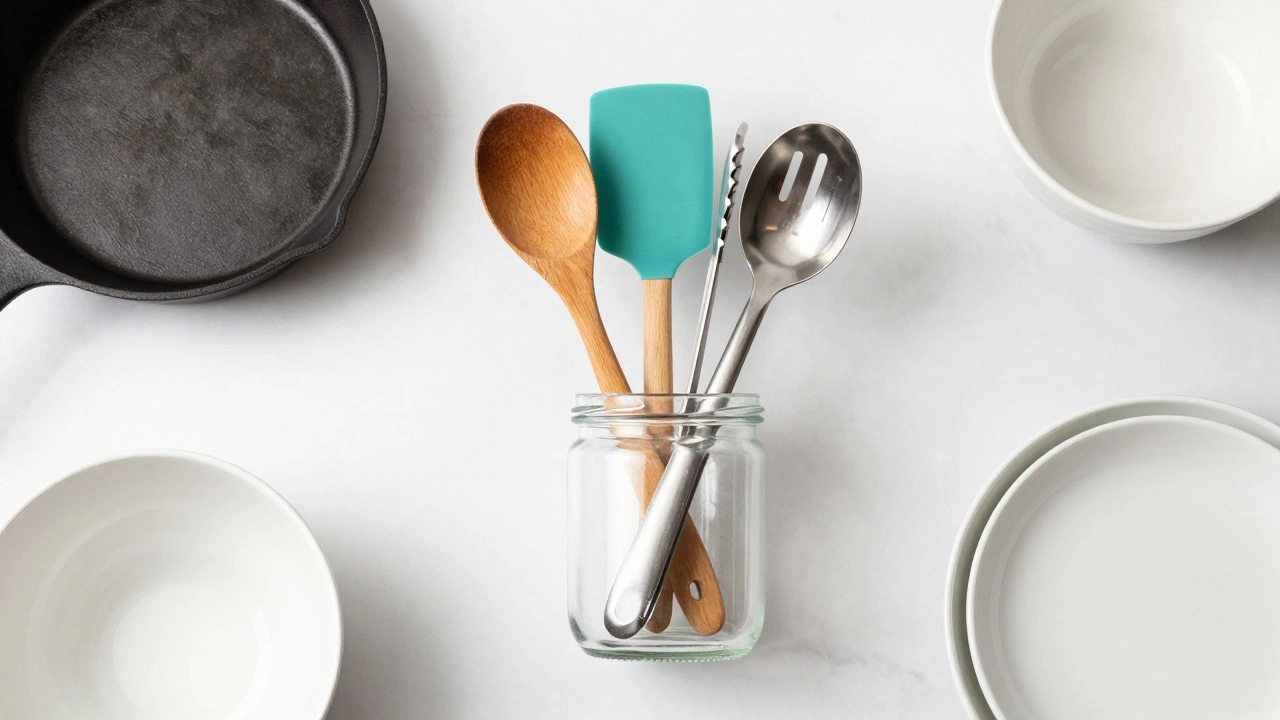
Cutlery vs. Flatware: The Third Confusion
If you thought utensils and kitchenware were confusing, wait until you hear about cutlery. In the UK, "cutlery" usually refers to eating implements: forks, knives, and spoons. In the US, this is often called "flatware."
Are forks and knives utensils? Technically, yes. They are handheld tools used to eat food. However, in retail and culinary contexts, we often separate "cooking utensils" (spatulas, whisks) from "eating utensils" (forks, spoons). When someone asks for a "kitchen utensil set," they almost always mean the cooking tools, not the dining set. If you buy a set of forks, you are buying cutlery, which is a type of serveware or flatware, distinct from the working tools of the kitchen.
Why Does This Distinction Matter?
You might ask, "So what? I’m going to cook dinner either way." Here is why knowing the difference helps you save money and reduce clutter.
1. Shopping Efficiency
When you replace broken items, being specific saves time. If your non-stick pan is scratched, searching for "new kitchenware" might show you blenders and toasters. Searching for "cookware" or "non-stick skillet" gets you straight to the product. Similarly, if you need something to whisk egg whites, searching for "kitchen gadgets" might lead you to vegetable choppers. Searching for "whisk" or "baking utensils" is precise.
2. Material Safety
Utensils and cookware interact differently with food. Your cookware (pans) needs to conduct heat evenly and resist warping. Your utensils need to be safe against that heat. Using a plastic utensil in a metal pot is fine. Using a metal utensil in a non-stick pan destroys the coating. Understanding that the spatula is a utensil and the pan is cookware reminds you that they must be compatible. Silicone utensils are popular because they bridge this gap-they are heat-resistant enough for hot cookware but soft enough not to scratch it.
3. Organization and Storage
Pots and pans are heavy and bulky. They live in lower cabinets or on racks. Utensils are small and numerous. They live in drawers or countertop jars. Mixing them up leads to chaos. You wouldn’t want to dig through a drawer of forks to find your frying pan. Categorizing your kitchen by function (storage vs. prep vs. cooking) relies on understanding these definitions.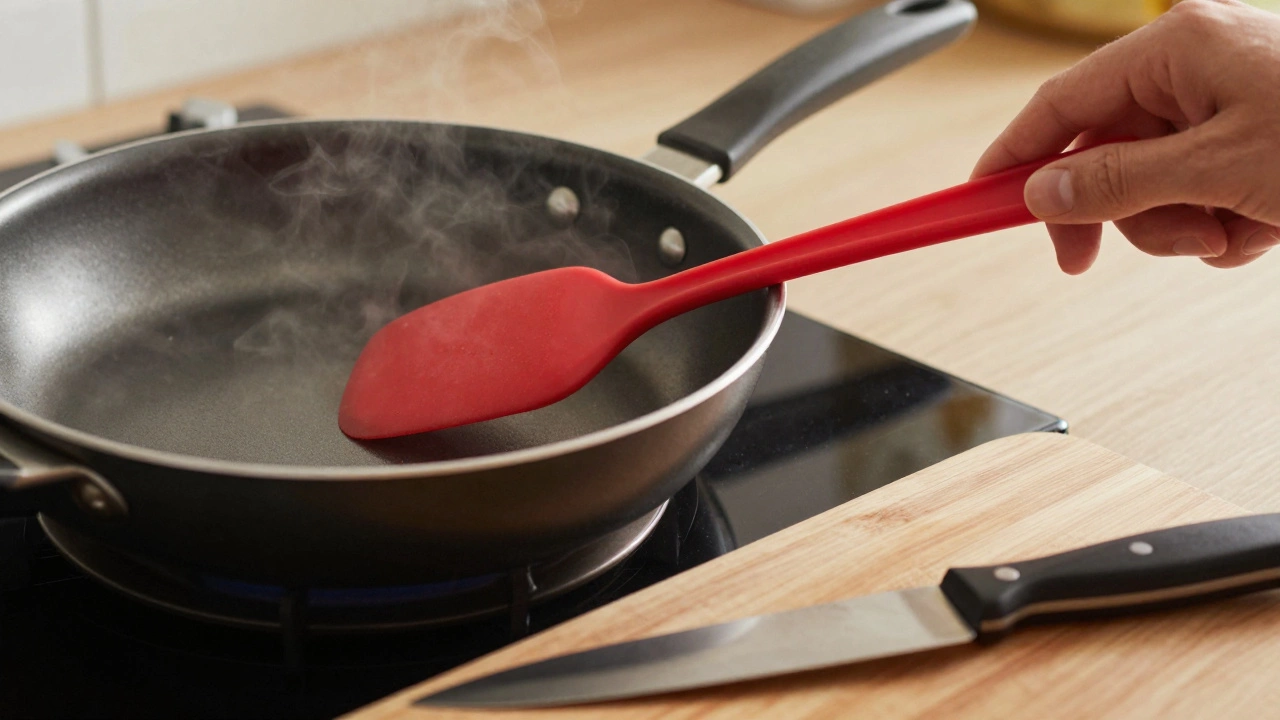
Material Matters: Choosing the Right Tools
Since utensils are the things you touch every day, the material choice is critical for both hygiene and durability. Here is a quick breakdown of common utensil materials:
- Wood/Bamboo: Great for non-stick pans because they don't scratch. They are gentle on surfaces and provide good grip. However, they can harbor bacteria if cracked and require occasional oiling to prevent drying out.
- Silicone: The modern favorite. Heat resistant up to high temperatures (often 450°F/230°C), flexible, and easy to clean. Look for food-grade silicone with a stainless steel core for better rigidity.
- Stainless Steel: Durable and hygienic. Perfect for boiling water or mixing batters. Avoid using steel utensils in non-stick cookware as they will scratch the surface.
- Plastic: Cheap and lightweight, but often melts at lower temperatures. Many plastics also degrade over time, becoming sticky or discolored. It is generally worth investing in higher-quality alternatives.
Building Your Essential Kit
If you are setting up a new kitchen, you don’t need every gadget on the market. Focus on the intersection of utility and quality. A well-rounded kitchen requires a few key pieces of cookware (a saucepan, a skillet, a stockpot) and a handful of versatile utensils.
Your essential utensil starter pack should include:
- A sturdy wooden spoon (for stirring sauces and soups).
- A silicone spatula (for scraping bowls and flipping delicate foods).
- Tongs (for gripping hot food, salads, and grilling).
- A slotted spoon (for lifting solids out of liquids, like pasta or fried onions).
- A chef’s knife (the ultimate cutting utensil).
With these five items, you can handle 90% of everyday cooking tasks. Everything else-from garlic presses to avocado slicers-is optional.
Is a knife considered a utensil?
Yes, a knife is a utensil. Specifically, it is a cutting utensil. While dining knives are often grouped under "cutlery" or "flatware," kitchen knives used for preparation are definitely utensils because they are handheld tools used to manipulate food.
What is the difference between cookware and bakeware?
Both are types of kitchenware, but they serve different purposes. Cookware refers to vessels used on the stovetop or for general cooking, such as pots, pans, and skillets. Bakeware refers specifically to containers used in the oven, such as muffin tins, loaf pans, and baking sheets.
Can I use metal utensils with non-stick pans?
It is not recommended. Metal utensils can scratch the non-stick coating, reducing its effectiveness and potentially causing harmful particles to flake into your food. Stick to silicone, wood, or heat-resistant plastic utensils for non-stick cookware.
Are appliances considered kitchenware?
Yes. Appliances like blenders, toasters, and microwaves fall under the broad umbrella of kitchenware. They are distinct from utensils because they are typically electric, larger, and perform automated functions rather than requiring manual manipulation.
What is the best material for long-lasting utensils?
Stainless steel and high-quality wood are the most durable options. Stainless steel is virtually indestructible and hygienic, while wood lasts for decades if properly oiled. Silicone is also excellent for longevity regarding heat resistance, though it can tear over many years of heavy use.